|
|
|
|
Classic Bikes
Custom Bikes
Individual
Racing Bikes AJP
AJS
Aprilia
Ariel
Avinton / Wakan
Bajaj
Benelli
Beta
Bimota
BMW
Brough Superior
BRP Cam-Am
BSA
Buell / EBR
Bullit
Bultaco
Cagiva
Campagna
CCM
CF Moto
Combat Motors
Derbi
Deus
Ducati
Excelsior
Fantic
GASGAS
Ghezzi Brian
Gilera
GIMA
Harley Davidson
Hero
Highland
Honda
Horex
Husaberg
Husqvarna
Hyosung
Indian
Jawa
Kawasaki
KTM
KYMCO
Laverda
Lazareth
Magni
Maico
Mash
Matchless
Mondial
Moto Guzzi
Moto Morini
MV Agusta
MZ / MuZ
NCR
Norton
NSU
Paton
Peugeot
Piaggio
Revival Cycles
Roland Sands
Royal Enfield
Sachs
Sherco
Sunbeam
Suzuki
SWM
SYM
Triumph
TVS
Ural
Velocette
Vespa
Victory
Vincent
VOR
Voxan
Vyrus
Walt Siegl
Walz
Wrenchmonkees
Wunderlich
XTR / Radical
Yamaha
Zero
Video
Technical
Manufacturer List Contact
|
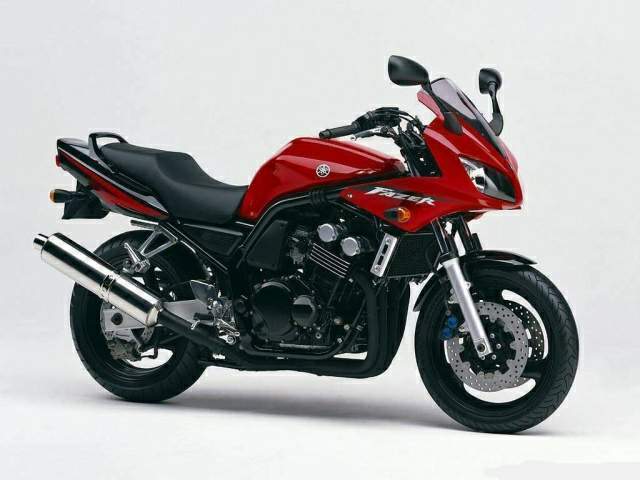
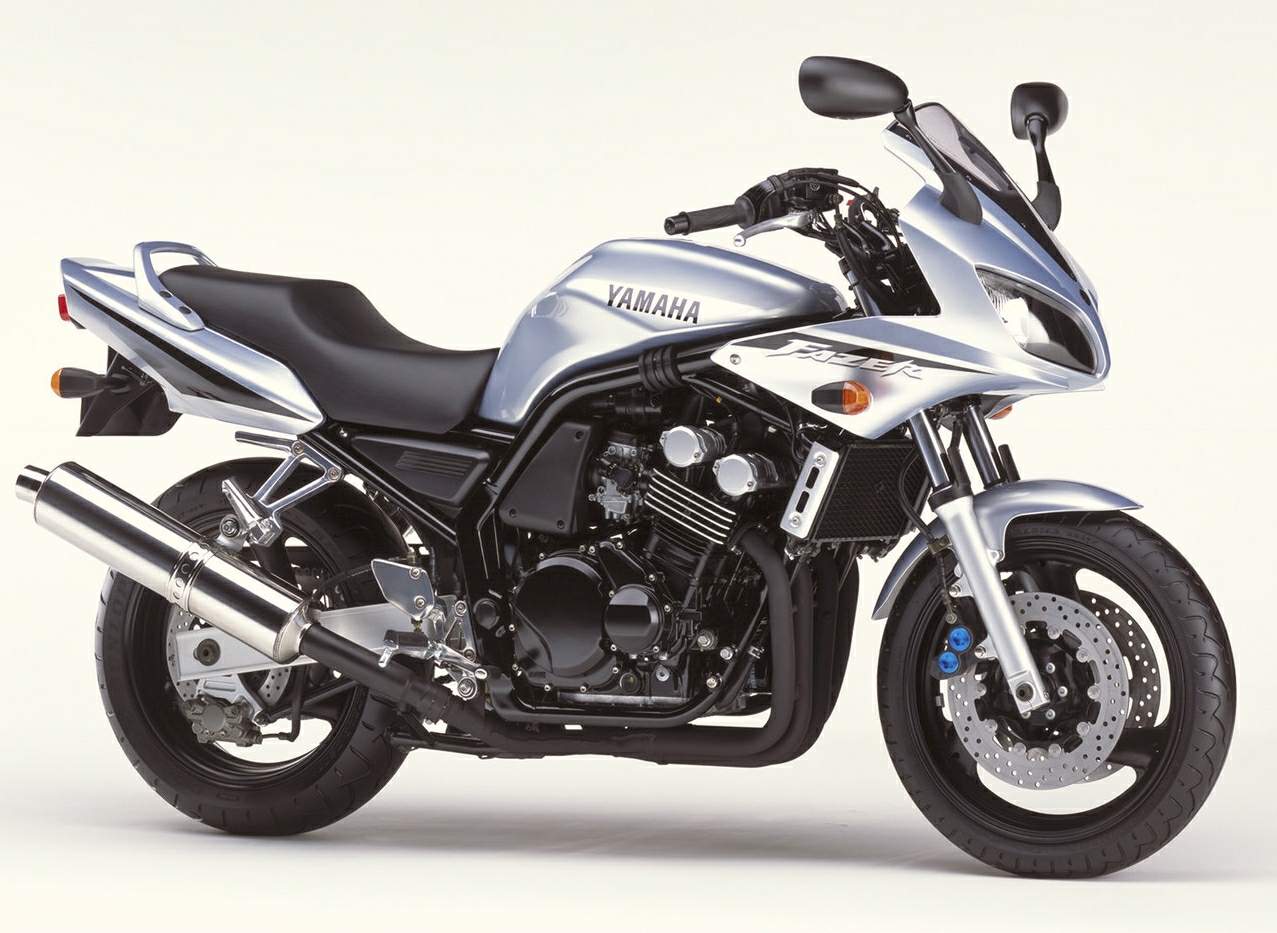
Yamaha FZS 600 Fazer
"Yamaha's Fazer looked like a straightforward budget offering when it first M. appeared in 1997. Styled like the Japanese-market Fazer 400, the Fazer 600 used a re-tuned version of the Thundercat engine, in a steel-tube frame. But the high-performance front brake calipers - shared with the Rl superbike - and aluminium monoshock rear suspension hinted at sportier performance than the likes of Suzuki's Bandit 600, the budget 600 market leader at the time.
On the road, the Fazer is an excellent performer. The 599cc engine is fitted with smaller carburettors than on the Thundercat, providing the Fazer with superior low-down and mid-range torque for effortless, fast progress. The maximum speed of around 232km/h (145mph) quickly appears, but it is the friendly, easy delivery of the power that most impresses.
The basic but capable chassis blends remarkable sporting prowess with the comfort and usability of a long-distance machine, while the brakes provide the best performance in its class, by a long chalk. Power, feel and progression are all present, and the Fazer's low weight makes the brakes even more impressive.
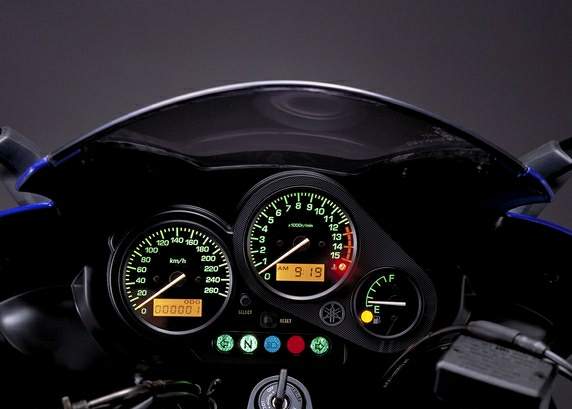
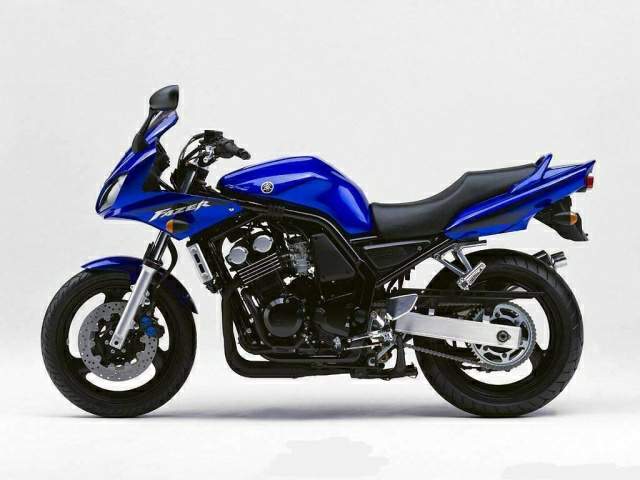
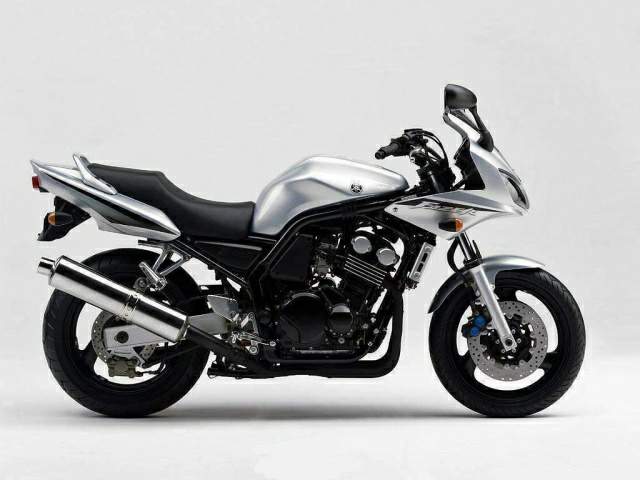
Unlike the Bandit or Hornet, the Fazer comes only as a half-faired model. The small twin headlight unit provides impressive wind- and weather-protection, although its styling wasn't initially to everyone's taste, and the headlights performed rather poorly at night. For 2000, the Fazer received a minor update, in the shape of a larger-capacity fuel tank, up 2 liters (0.4 gaT) to 20 liters (4.4 gaT), while the dash received a new digital clock and the forks gained preload adjusters. The extra tank capacity further improved the already impressive range, making the Fazer even more user-friendly. In 2002, the Fazer saw a more significant revision. A new fairing, based around the FZS1000 Fazer 1000 design updated its styling and markedly improved headlight performance. The tank also received another capacity increase to 22 liters (4.8 gal): easily enough for 320km (200 miles) between fill-ups.
The Yamaha FZS600 Fazer is one of the most successful and well-regarded middleweight motorcycles of the late 1990s and early 2000s. Produced from 1998 to 2004, it offered a compelling blend of sportbike-derived performance, everyday usability, and relative affordability. The 2002 model marked a significant visual and practical update, introducing the distinctive “Foxeye” fairing that aligned it more closely with its bigger sibling, the FZS1000 Fazer.
Background and Development The first-generation models (1998–2001) featured a somewhat boxy fairing with rectangular headlights. For 2002, Yamaha introduced a major restyle under the model code 5RT. The new front fairing adopted a sharper “Foxeye” headlight design similar to the FZS1000, along with a more sculpted fuel tank and updated instrument panel. Exhaust downpipes switched to stainless steel (improving corrosion resistance compared with earlier steel versions), and the fuel tank grew to 22 litres. Production continued into 2003, with sales stretching into 2004 before European emissions regulations (Euro 2) forced its discontinuation. It was succeeded by the FZ6 Fazer.
Engine and Performance The engine is smooth and flexible, with usable mid-range that makes it well suited to real-world riding. It is happy to cruise at motorway speeds without excessive vibration and responds willingly when the revs climb, reflecting its SuperSport origins. Top speed is typically quoted in the 130–140 mph (210–225 km/h) range depending on conditions and gearing, with acceleration figures around 0–60 mph in roughly 3.4–3.8 seconds. Real-world fuel economy is strong for the class—often in the mid-to-high 40s mpg (Imperial), with careful riding pushing into the 50s—giving a practical range of 140–180 miles from the 22-litre tank. Transmission is a six-speed gearbox with chain final drive. The clutch is a conventional wet multi-plate unit. The gearbox is functional though some owners describe the shift action as a little clunky by modern standards.
Chassis, Handling and Braking Braking is a highlight: dual 298 mm front discs gripped by four-piston callipers (derived from the R1) provide strong, progressive stopping power, backed by a 245 mm rear disc with a two-piston caliper. Tyres are typically 110/70 or 110/60-ZR17 front and 160/60-ZR17 rear. Seat height is a relatively accessible 790 mm (31.1 in), and the upright riding position with a modest fairing makes the bike comfortable for commuting, touring and spirited road riding. Dry weight is around 189–193 kg depending on exact specification, with kerb weight commonly cited near 205–214 kg.
Ownership Considerations Pros include strong mid-range performance, excellent brakes, comfortable ergonomics, good fuel range, and proven durability. Cons centre on the relatively soft stock suspension, the carburetted engine’s age in a fuel-injected world, and the need for careful inspection of older examples for corrosion or wear.
Legacy
|
|
|
Any corrections or more information on these motorcycles will be kindly appreciated. |