|
|
|
|
Classic Bikes
Custom Bikes
Individual
Racing Bikes AJP
AJS
Aprilia
Ariel
Avinton / Wakan
Bajaj
Benelli
Beta
Bimota
BMW
Brough Superior
BRP Cam-Am
BSA
Buell / EBR
Bullit
Bultaco
Cagiva
Campagna
CCM
CF Moto
Combat Motors
Derbi
Deus
Ducati
Excelsior
Fantic
GASGAS
Ghezzi Brian
Gilera
GIMA
Harley Davidson
Hero
Highland
Honda
Horex
Husaberg
Husqvarna
Hyosung
Indian
Jawa
Kawasaki
KTM
KYMCO
Laverda
Lazareth
Magni
Maico
Mash
Matchless
Mondial
Moto Guzzi
Moto Morini
MV Agusta
MZ / MuZ
NCR
Norton
NSU
Paton
Peugeot
Piaggio
Revival Cycles
Roland Sands
Royal Enfield
Sachs
Sherco
Sunbeam
Suzuki
SWM
SYM
Triumph
TVS
Ural
Velocette
Vespa
Victory
Vincent
VOR
Voxan
Vyrus
Walt Siegl
Walz
Wrenchmonkees
Wunderlich
XTR / Radical
Yamaha
Zero
Video
Technical
Manufacturer List Contact
|
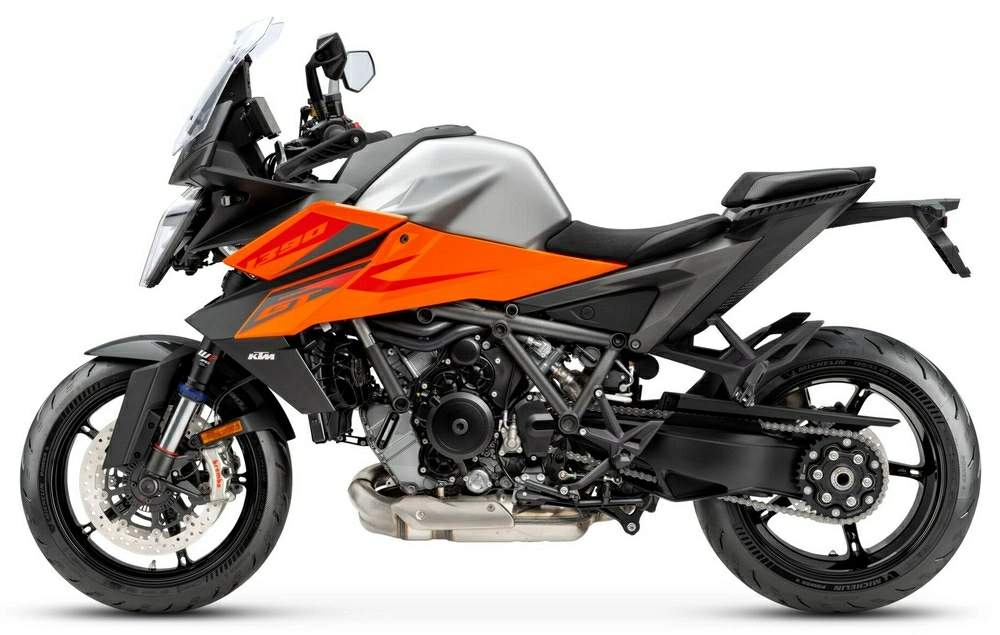
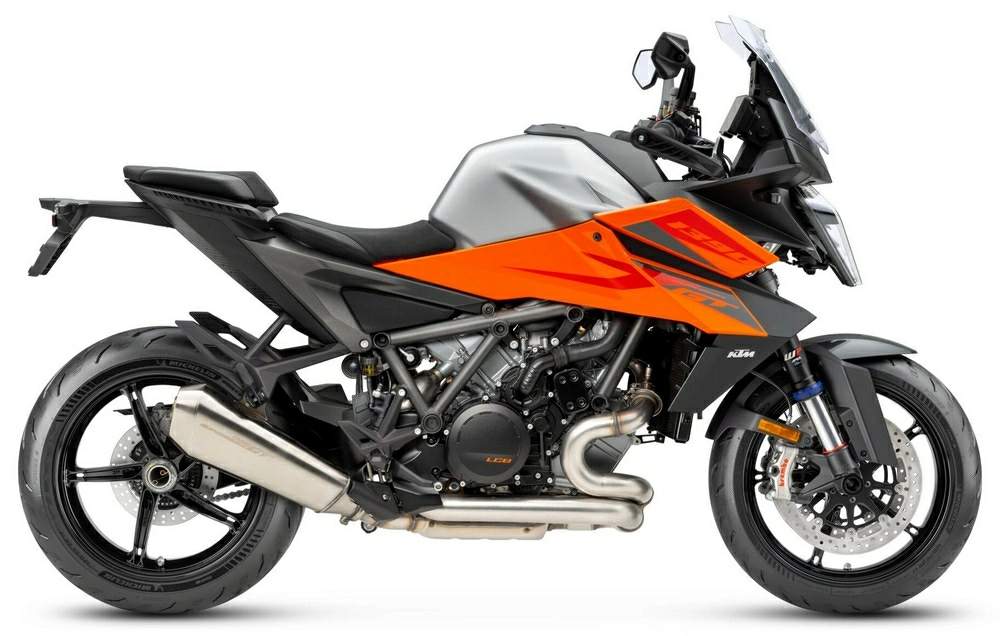
KTM 1390 Super Duke GT/EVO
Positioned as the most aggressive sport-tourer in its class, it blends the performance DNA of the 1390 Super Duke R EVO with genuine long-distance comfort. KTM calls it the “Long Distance Beast” and “Adrenaline Express” — a bike that delivers uncompromising dynamism without sacrificing everyday usability or touring capability.
Engine and Performance Key upgrades include KTM’s CamShift variable valve-lift system, larger 60 mm throttle bodies, a 40 mm wider radiator, a redesigned airbox with central ram-air intake, and injectors rotated 90 degrees. These changes broaden the power delivery and improve mid-range response. The valve-clearance inspection interval has been doubled to approximately 37,000–60,000 km (depending on source), significantly reducing ownership costs. Fuel economy is quoted at around
6.1–6.2 L/100 km (≈45.6 mpg US) for the manual version and slightly higher (≈6.6
L/100 km or 42.8 mpg) for the AMT EVO. The slimmer 19.5-litre tank (including 3
litres reserve) is smaller than the old 23-litre unit, yielding a theoretical
range of roughly 300–320 km.
Transmission
GT EVO: KTM’s AMT (Automated Manual Transmission). This clutchless system uses a centrifugal slipper clutch and electromechanical actuator for shifts claimed in just 50 milliseconds. Riders can choose fully automatic mode or manual shifting via the foot lever or bar-mounted paddles (P-N-1-2-3-4-5-6 sequence, with Park locking the gearbox). Stalling is impossible. The AMT carries no claimed weight penalty.
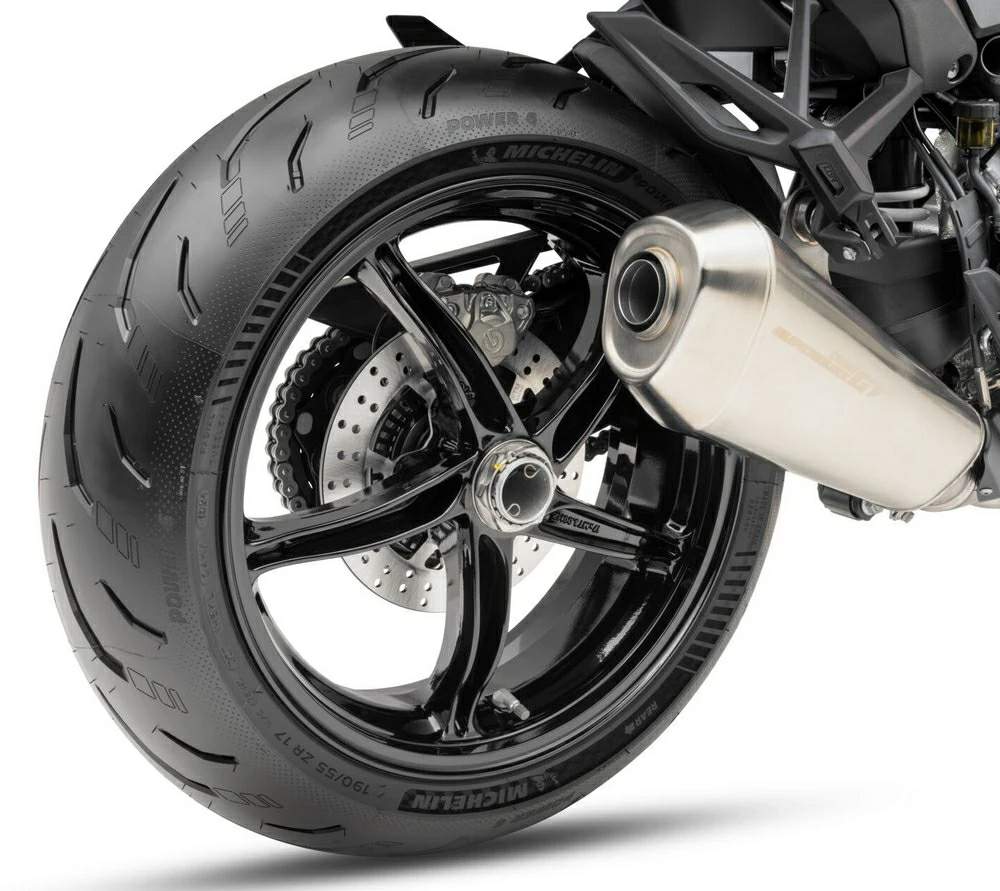
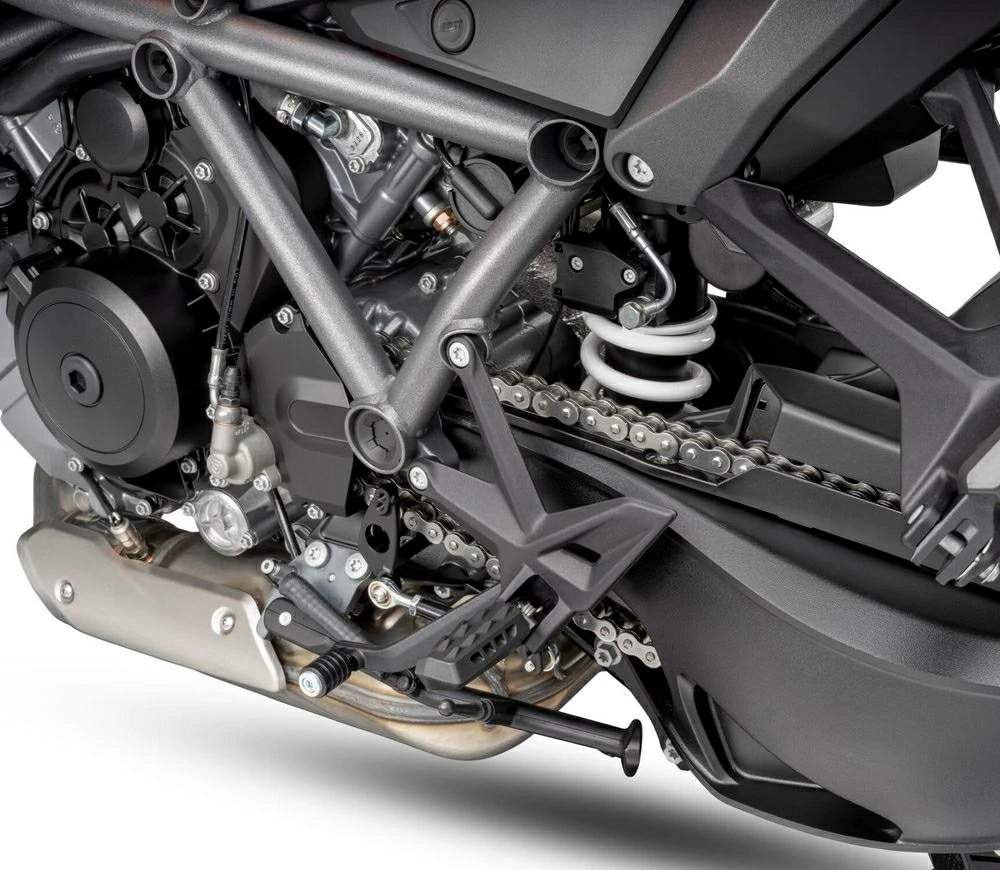
Chassis, Suspension and Brakes Suspension is third-generation WP Apex Semi-Active Technology (SAT). The 48 mm inverted “thru-rod” fork offers 125 mm of travel and is lighter than before, while the linkage rear shock provides 140 mm of travel with electronic preload (Soft / Standard / High). Standard damping modes include Auto, Comfort, Street and Sport; Track, Pro and Anti-Dive are optional. A WP steering damper is standard. Braking comes from Brembo Stylema four-piston radial monoblock calipers gripping 320 mm floating discs up front, paired with a two-piston caliper and 240 mm disc at the rear. A self-venting master cylinder no longer requires bleeding, and the lever offers adjustable ratios (19/20/21 mm). Cornering ABS is standard with multiple modes, including new Supermoto+ (allowing controlled rear-wheel lock and slide up to 8°) and Sport. Wheels are 17-inch cast aluminium (3.5 × 17 front, 6.0 × 17 rear) fitted with dual-compound Michelin Power 6 tyres (120/70 ZR17 front, 190/55 ZR17 rear) that save about 1.2 kg compared with the previous fitment.
Electronics, Rider Aids and
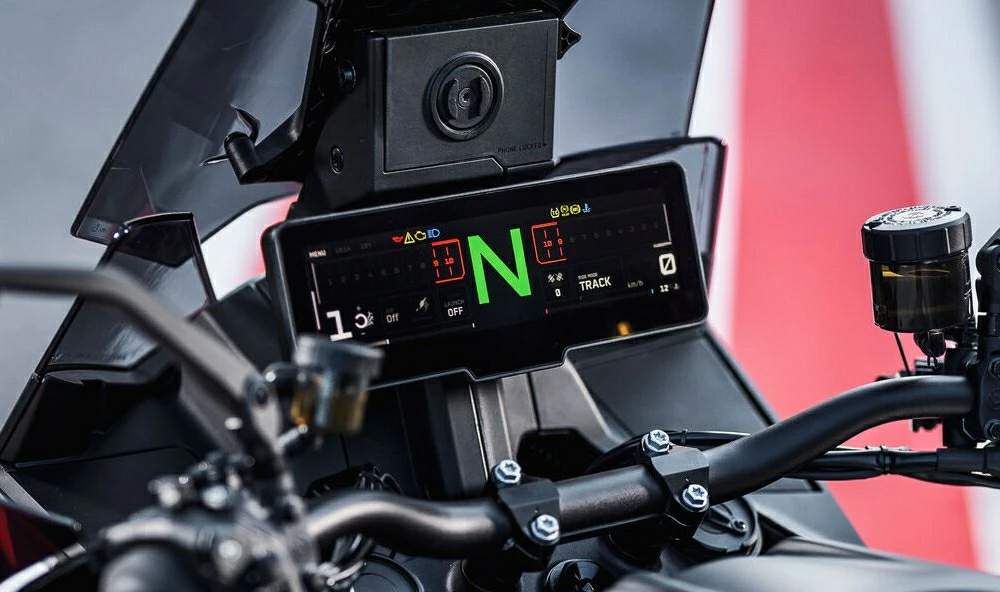
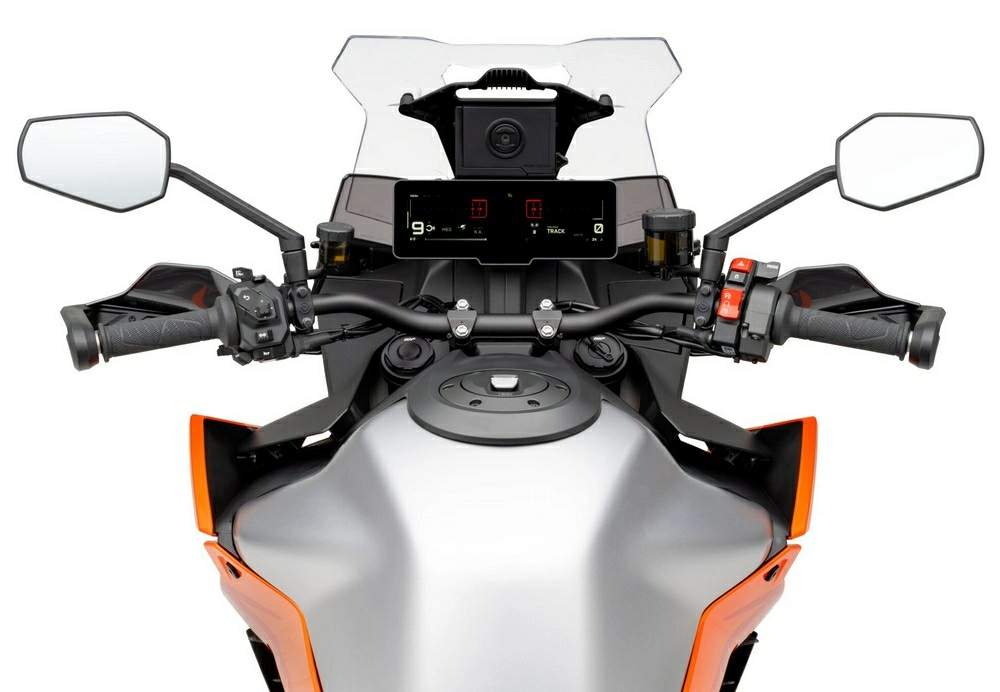
Cockpit Standard ride modes are Rain (power limited), Street, Sport and one Custom mode. Track mode and two additional Custom modes are optional. A six-axis IMU supports cornering ABS, traction control, anti-wheelie (five levels, can be disabled), Motor Slip Regulation, and more. Front radar delivers adaptive cruise control as standard on both versions. Optional extras include Quickshifter+, enhanced cornering TC, and engine-brake control — available individually rather than only in packs. A TPMS with separate track-pressure settings is also available.
Ergonomics, Styling and
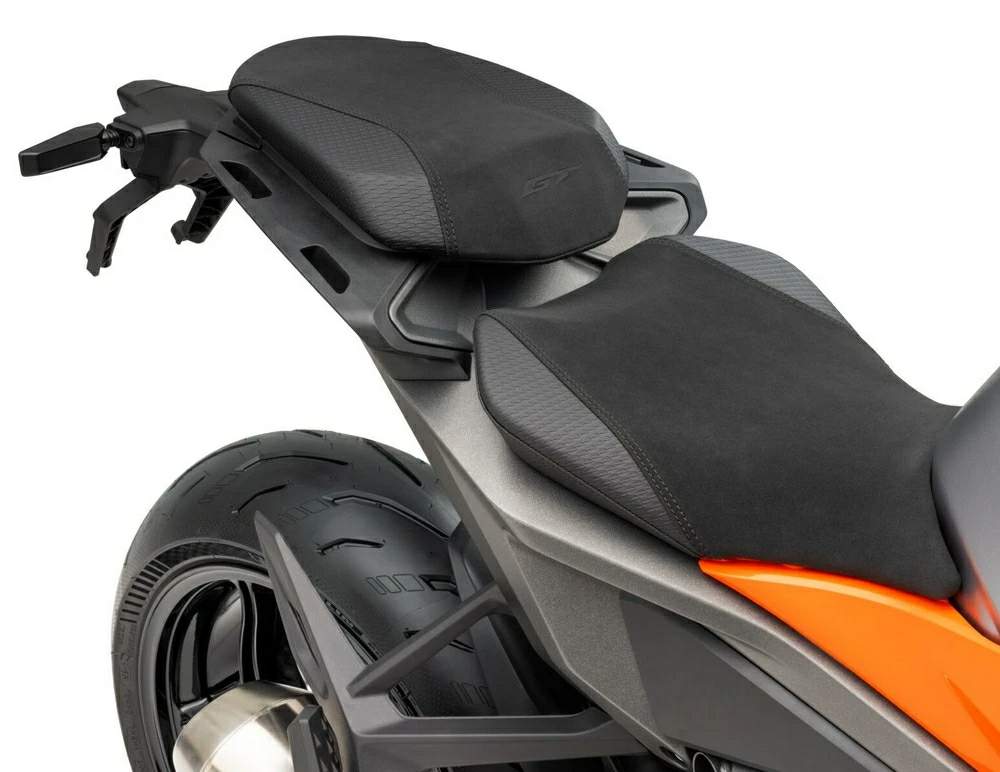
Practicality Styling is more compact and muscular than the previous generation, with a lower profile, new LED headlight (automatic low beam, projector high beam, ambient-sensing DRL, and three-segment cornering lights), and integrated brake lights in the indicators for a cleaner tail. The overall look retains the aggressive Super Duke family identity while adding touring practicality. Dry weight is quoted at 213 kg (470
lb) for both versions; wet/ready-to-ride weight is approximately 228 kg (503
lb).
|
|
|
Any corrections or more information on these motorcycles will be kindly appreciated. |