|
|
|
|
Classic Bikes
Custom Bikes
Individual
Racing Bikes AJP
AJS
Aprilia
Ariel
Avinton / Wakan
Bajaj
Benelli
Beta
Bimota
BMW
Brough Superior
BRP Cam-Am
BSA
Buell / EBR
Bullit
Bultaco
Cagiva
Campagna
CCM
CF Moto
Combat Motors
Derbi
Deus
Ducati
Excelsior
Fantic
GASGAS
Ghezzi Brian
Gilera
GIMA
Harley Davidson
Hero
Highland
Honda
Horex
Husaberg
Husqvarna
Hyosung
Indian
Jawa
Kawasaki
KTM
KYMCO
Laverda
Lazareth
Magni
Maico
Mash
Matchless
Mondial
Moto Guzzi
Moto Morini
MV Agusta
MZ / MuZ
NCR
Norton
NSU
Paton
Peugeot
Piaggio
Revival Cycles
Roland Sands
Royal Enfield
Sachs
Sherco
Sunbeam
Suzuki
SWM
SYM
Triumph
TVS
Ural
Velocette
Vespa
Victory
Vincent
VOR
Voxan
Vyrus
Walt Siegl
Walz
Wrenchmonkees
Wunderlich
XTR / Radical
Yamaha
Zero
Video
Technical
Manufacturer List Contact
|
Royal Enfield Continental GT 750
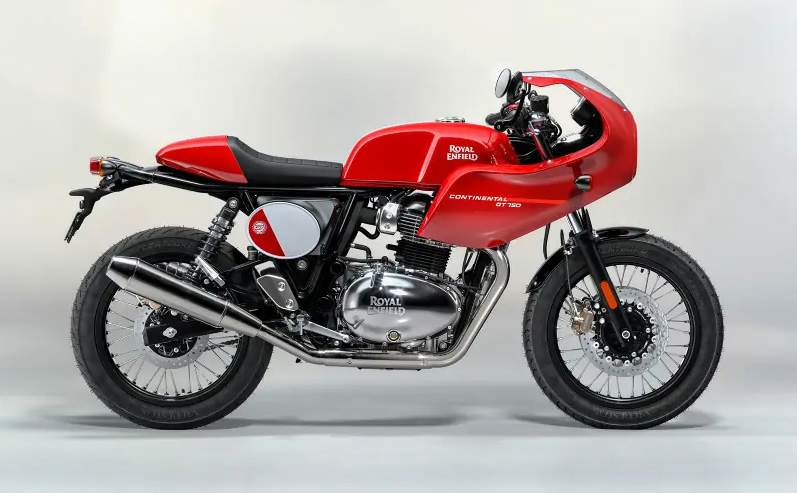
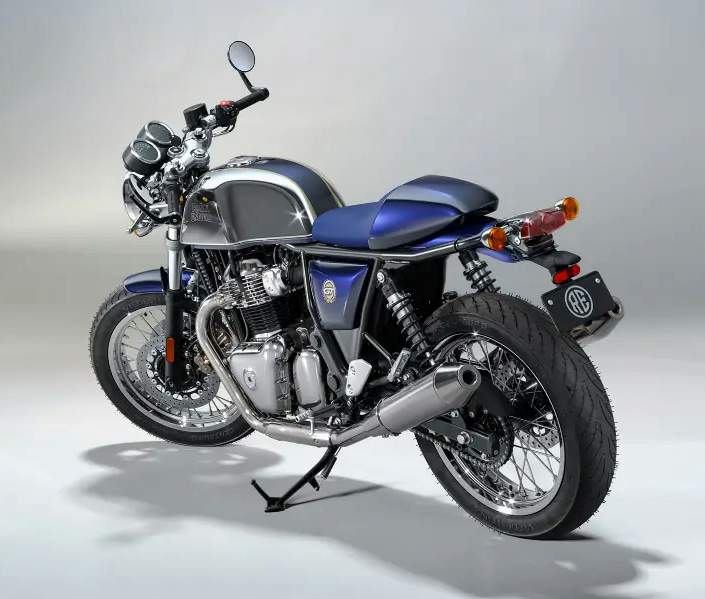
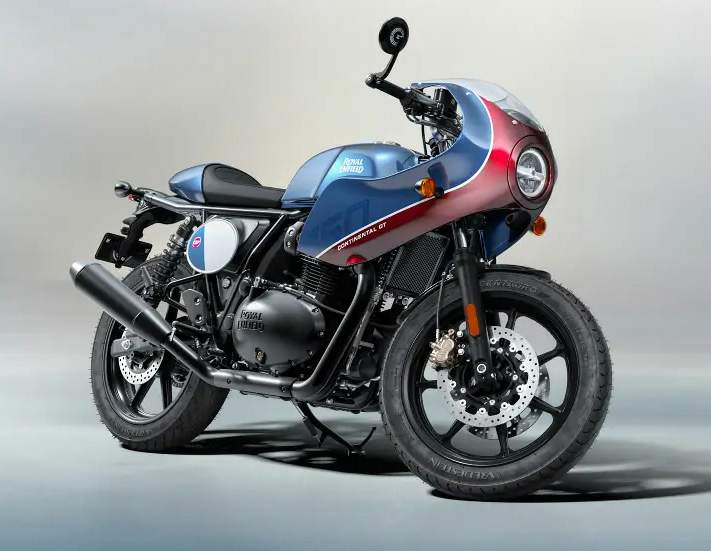
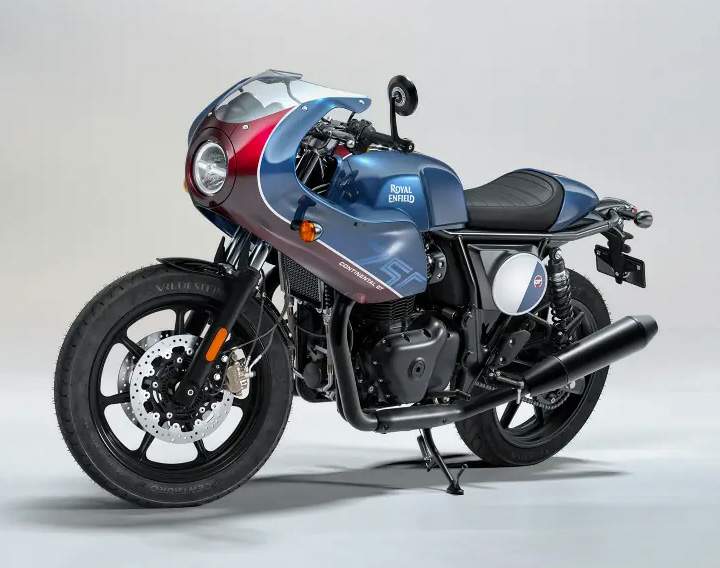
From a press release issued by Royal Enfield : Royal Enfield took another major step into higher-capacity unveiling the Continental GT 750 alongside the Himalayan 750. The new café racer marks the evolution of one of the company’s most loved modern models, the Continental GT 650, and is officially positioned as Royal Enfield’s highest-performance production motorcycle to date.
From 650 to 750: Building on a Proven Formula At its core is an uprated version of the brand’s new 743cc air/oil-cooled, SOHC parallel-twin engine — the same platform introduced in the Himalayan 750. While the adventure bike’s version is tuned for strong low-to-midrange torque (55 hp at 7,000 rpm and 63 Nm at 5,000 rpm), the Continental GT receives a higher-performance calibration aimed at stronger top-end power and a more engaging character. Exact figures have not been released, but Royal Enfield has confirmed it will be the most powerful production model in the company’s history. A higher redline (around 7,500 rpm) and longer final gearing are expected to support higher top speeds, with instruments reading up to 125 mph. Key engine differences from the Himalayan include a cable-actuated throttle (instead of ride-by-wire) and a traditional twin-exhaust system with separate silencers on each side, preserving the classic café-racer soundtrack.
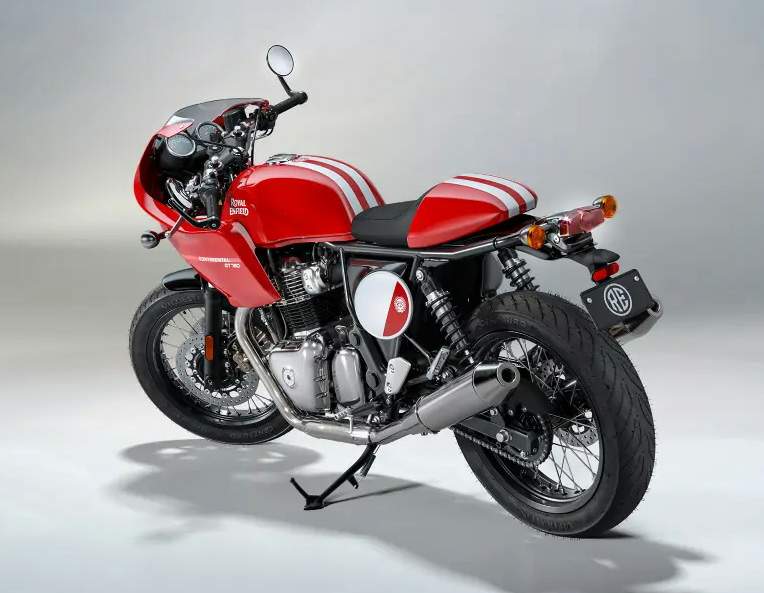
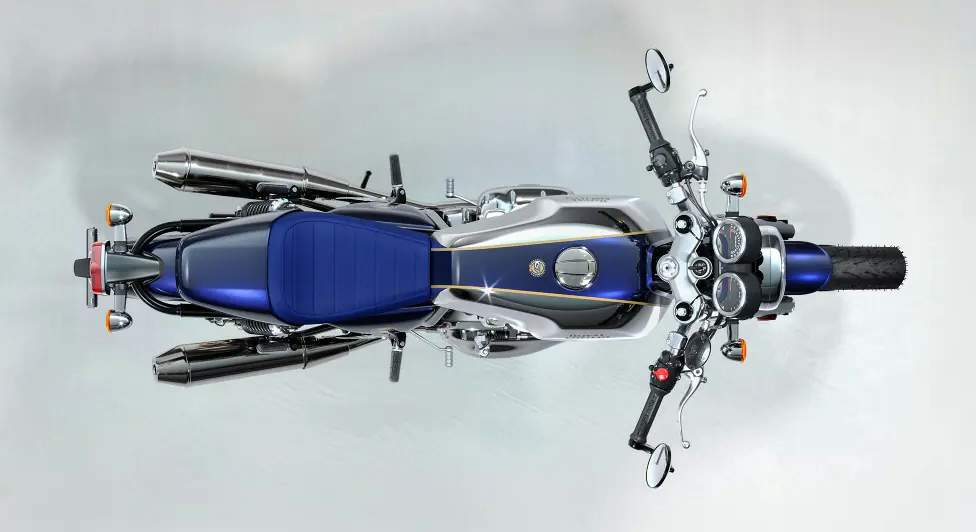
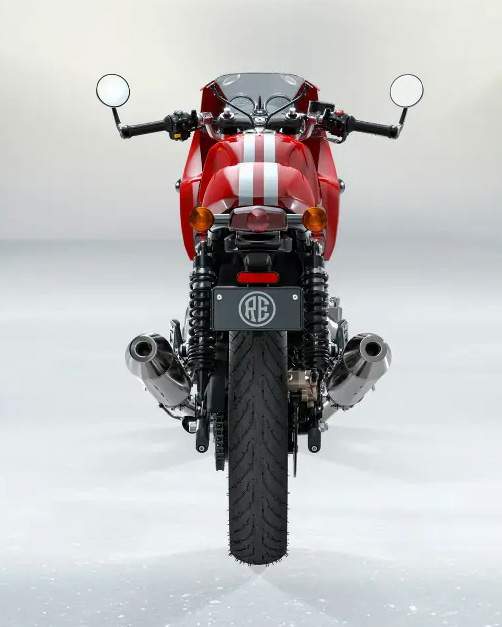
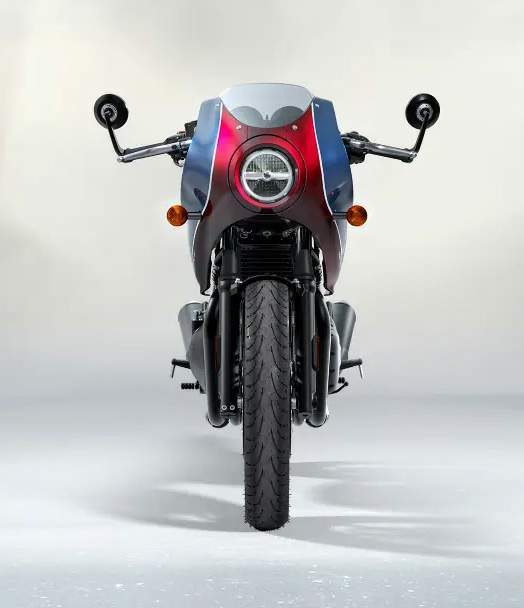
Design: Two Distinct Personalities • Unfaired (Master Clean): Closest to the classic Continental GT silhouette. Clean lines, round headlight, sculpted tank, chrome finishes, and a more upright, everyday café-racer riding position. • Faired (Red Line and TT Blue): Features a distinctive quarter fairing, race-style number boards, lower clip-on handlebars, and a more committed, sporty posture. These versions lean harder into the “racer” half of the café-racer formula. All versions retain signature elements: bar-end mirrors, a single-piece seat with removable pillion cowl, and the classic twin-pod instrument layout. The new hybrid cluster combines sweeping analogue needles for speed and rpm with a small colour TFT display at the bottom for additional information. Metal switchgear cubes add a premium tactile feel. Colour options shown at the launch include Master Clean (chrome-heavy unfaired), Red Line, and the two-tone TT Blue. Wheel choices vary by variant — wire-spoked with tubed Vredestein Centauro ST tyres on some, and alloy wheels with tubeless tyres on the TT Blue.
Chassis, Suspension and Brakes A significant upgrade is the braking system: dual front discs (replacing the single disc of the 650) paired with ByBre calipers, matching the setup seen on the Himalayan 750. Dual-channel ABS is standard. The bike rolls on 18-inch wheels at both ends (110-section front, 140-section rear). Claimed seat height is approximately 833 mm (32.8 inches), and the fuel tank holds about 12.5 litres. Kerb weight is expected to be lower than the 650’s 214 kg, though official figures are still pending.
Rider Aids and Character The Continental GT 750 is a logical and exciting evolution. It delivers the extra performance many GT 650 owners wanted while offering two distinct styling and ergonomic directions. By keeping electronics minimal and focusing on engine character, chassis upgrades, and classic proportions, Royal Enfield has stayed true to the model’s soul while elevating its capability. For riders who want a modern café racer with genuine twin-cylinder charm, improved stopping power, and a step up in performance — without losing the approachable Royal Enfield personality — the Continental GT 750 looks set to be one of the most compelling options in its class when it arrives in 2027.
|
|
|
Any corrections or more information on these motorcycles will be kindly appreciated. |