|
|
|
|
Classic Bikes
Custom Bikes
Individual
Racing Bikes AJP
AJS
Aprilia
Ariel
Avinton / Wakan
Bajaj
Benelli
Beta
Bimota
BMW
Brough Superior
BRP Cam-Am
BSA
Buell / EBR
Bullit
Bultaco
Cagiva
Campagna
CCM
CF Moto
Combat Motors
Derbi
Deus
Ducati
Excelsior
Fantic
GASGAS
Ghezzi Brian
Gilera
GIMA
Harley Davidson
Hero
Highland
Honda
Horex
Husaberg
Husqvarna
Hyosung
Indian
Jawa
Kawasaki
KTM
KYMCO
Laverda
Lazareth
Magni
Maico
Mash
Matchless
Mondial
Moto Guzzi
Moto Morini
MV Agusta
MZ / MuZ
NCR
Norton
NSU
Paton
Peugeot
Piaggio
Revival Cycles
Roland Sands
Royal Enfield
Sachs
Sherco
Sunbeam
Suzuki
SWM
SYM
Triumph
TVS
Ural
Velocette
Vespa
Victory
Vincent
VOR
Voxan
Vyrus
Walt Siegl
Walz
Wrenchmonkees
Wunderlich
XTR / Radical
Yamaha
Zero
Video
Technical
Manufacturer List Contact
|
Honda Rebel CMX 500
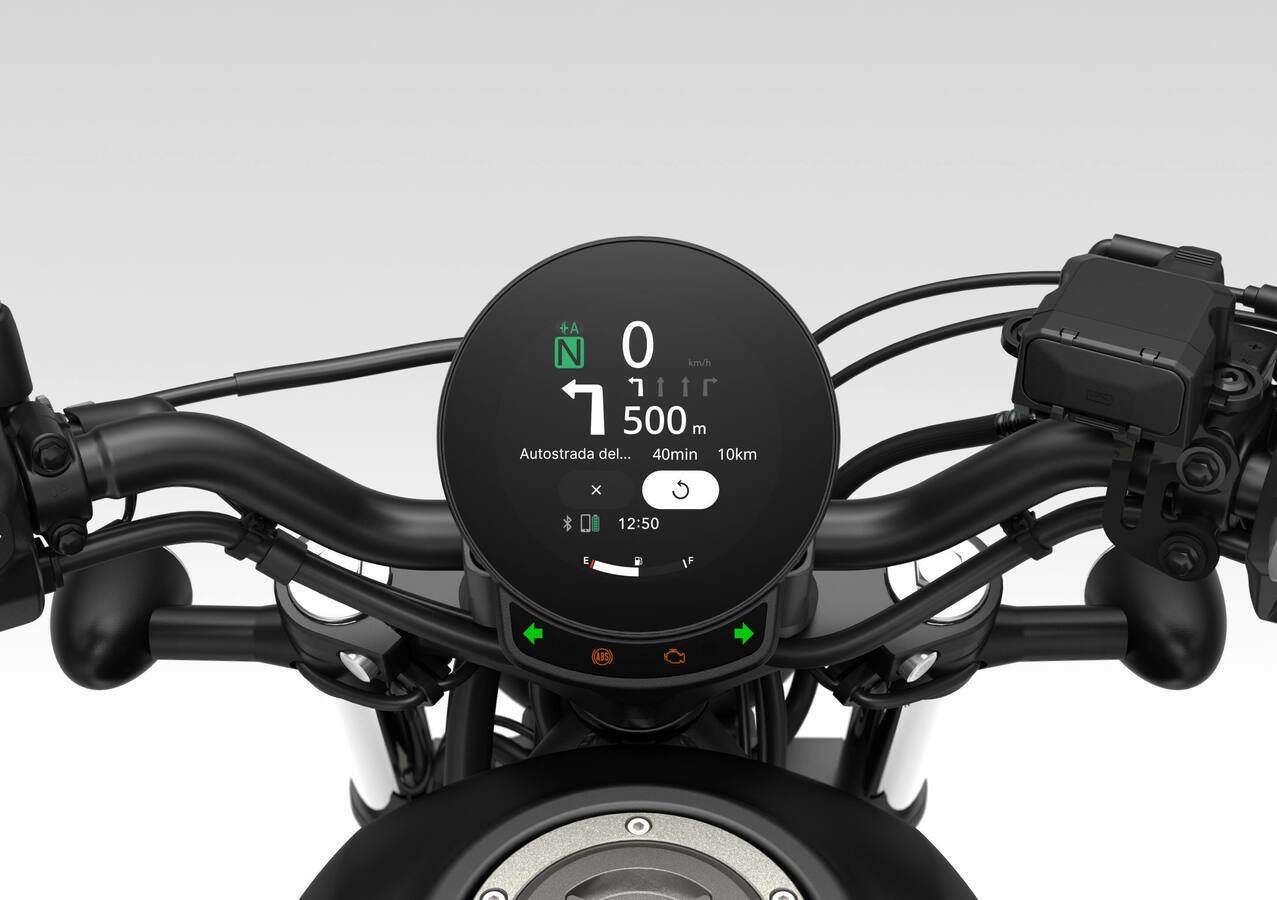
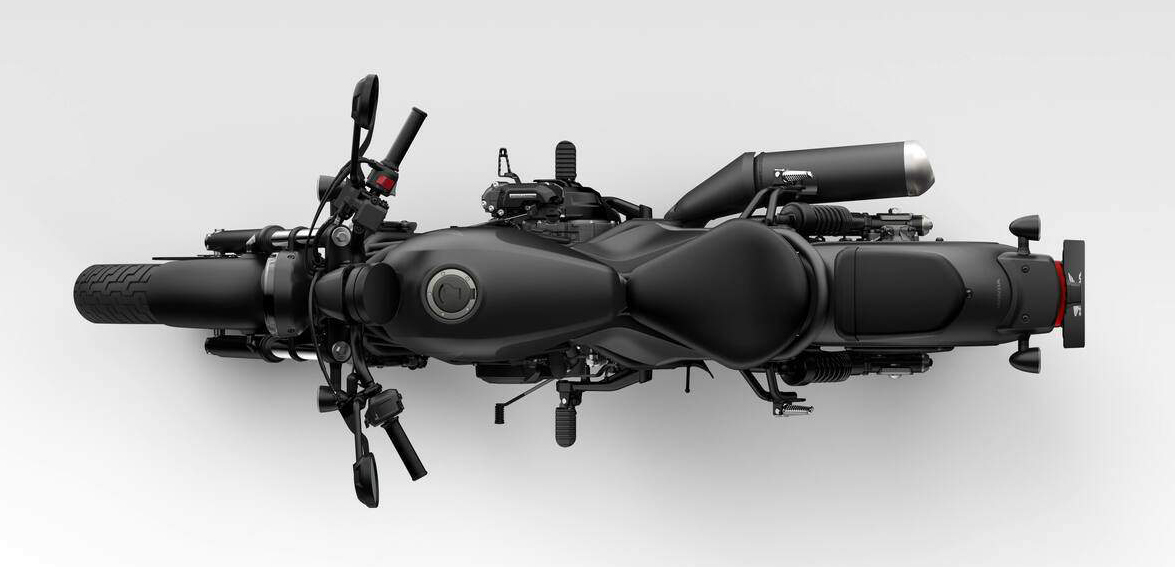
From a press release issued by Honda: Development of the Rebel began in North America, with an outlook geared toward firing the imagination of a younger generation of riders in a different way to traditional cruiser motorcycles. Powered by a 471cc parallel twin-cylinder engine, with strong bottom end torque and a smooth, linear power delivery, the Rebel is A2 licence friendly. For 25YM the engine was updated with new ECU settings and the addition of an OBD2-2 exhaust sensor. The Rebel has been designed to be a slim motorcycle with a low seat height making it easy and unintimidating to manage at low speeds. Updated and improved for 25YM, the riding position is relaxed and neutral, with gently outstretched arms matched to mid-mounted footpegs. The CMX500 Rebel’s tubular steel frame draws fresh, contemporary lines into stripped-back, fat-tyred ‘bobber’ style. Blacked out to the maximum, with the minimum of paint, it switches from solo-only to pillion-possible via two bolts. Making its debut on the model for 27YM, a new 3.5-inch
circular TFT display replaces the previous 100mm negative LCD dial. Featuring
crisper resolution and revised graphics, it pairs with an all-new six-button
control system to deliver enhanced functionality and more intuitive operation. The 27YM CMX500 Rebel will be available in the following
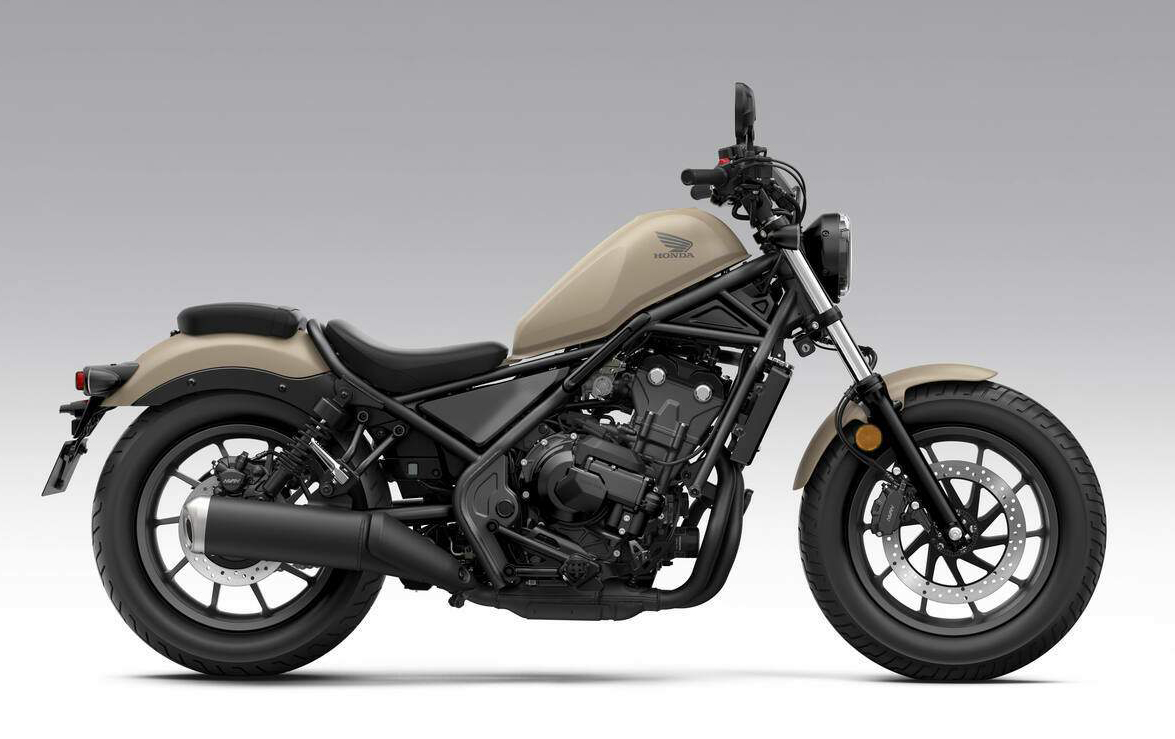
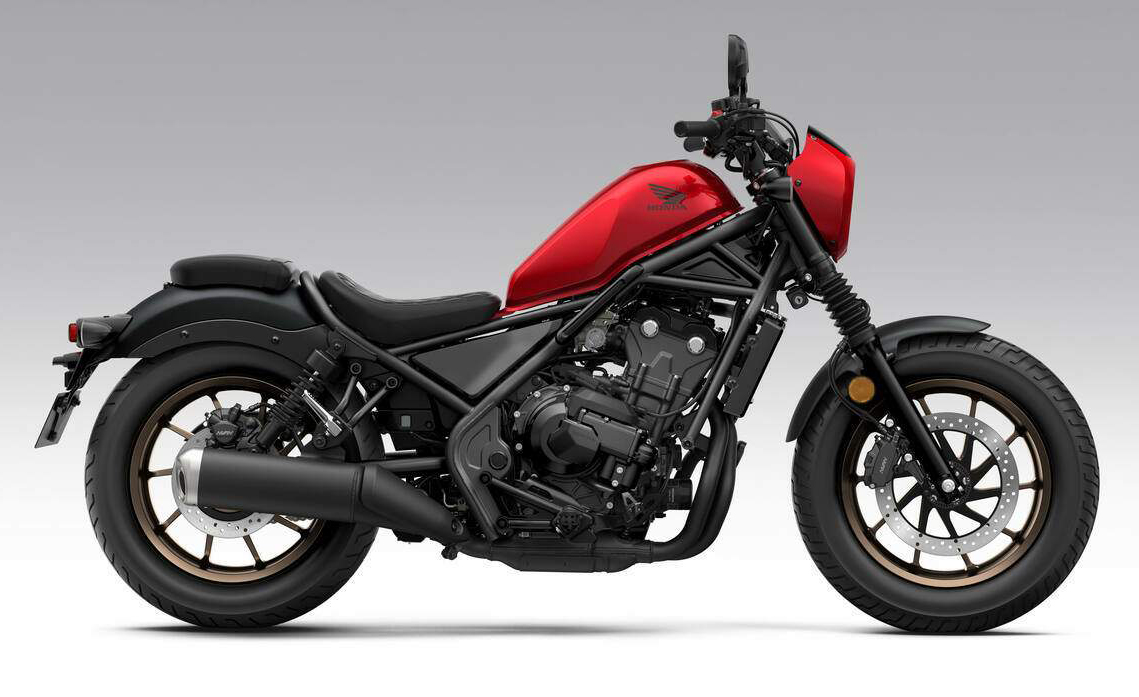
colour options: The 27YM CMX500 Rebel ‘S’ Edition will be available in the
following colour option:
Styling & Equipment Two key words ran throughout the Rebel’s development
programme: ‘Simple’ and ‘Raw’. But to do so much with so little is an art form
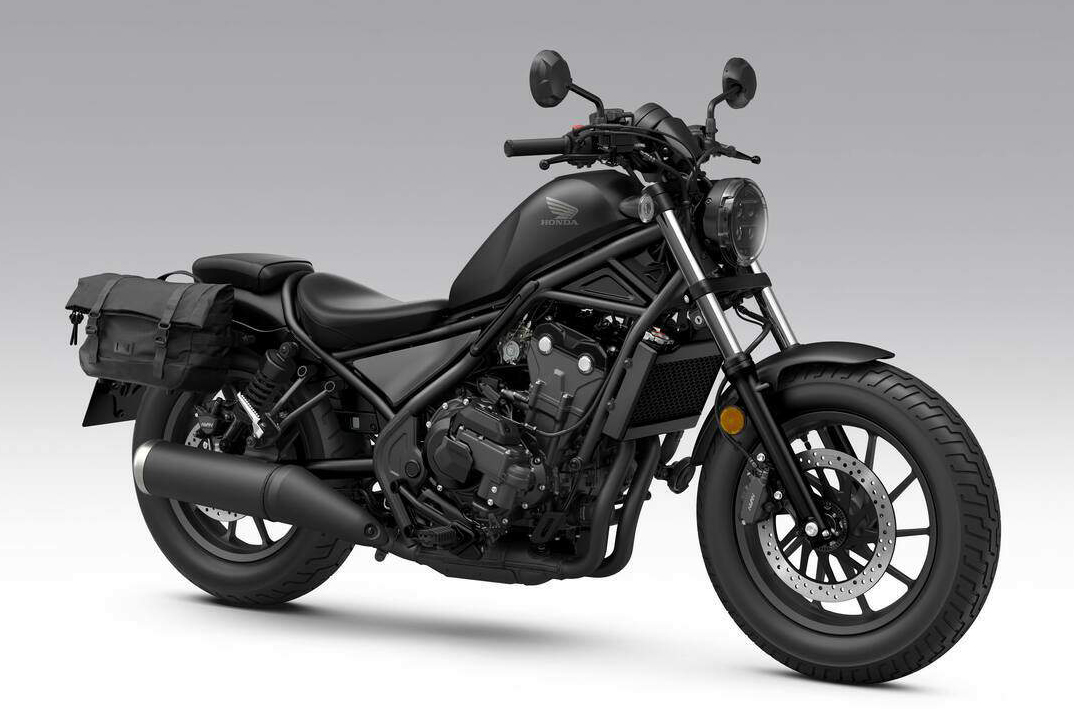
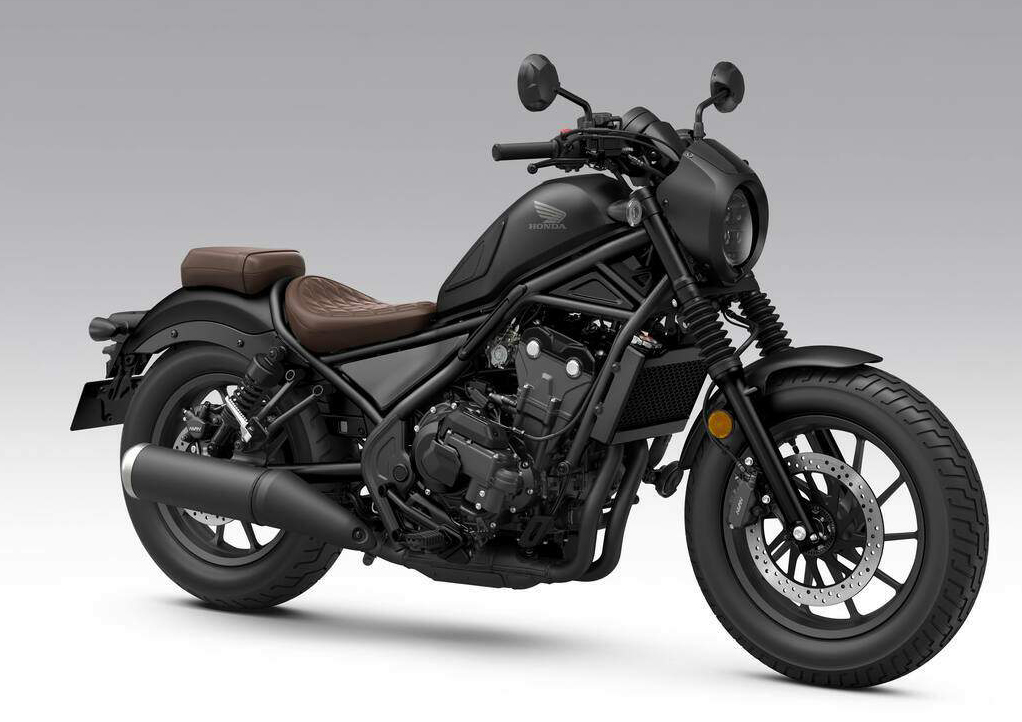
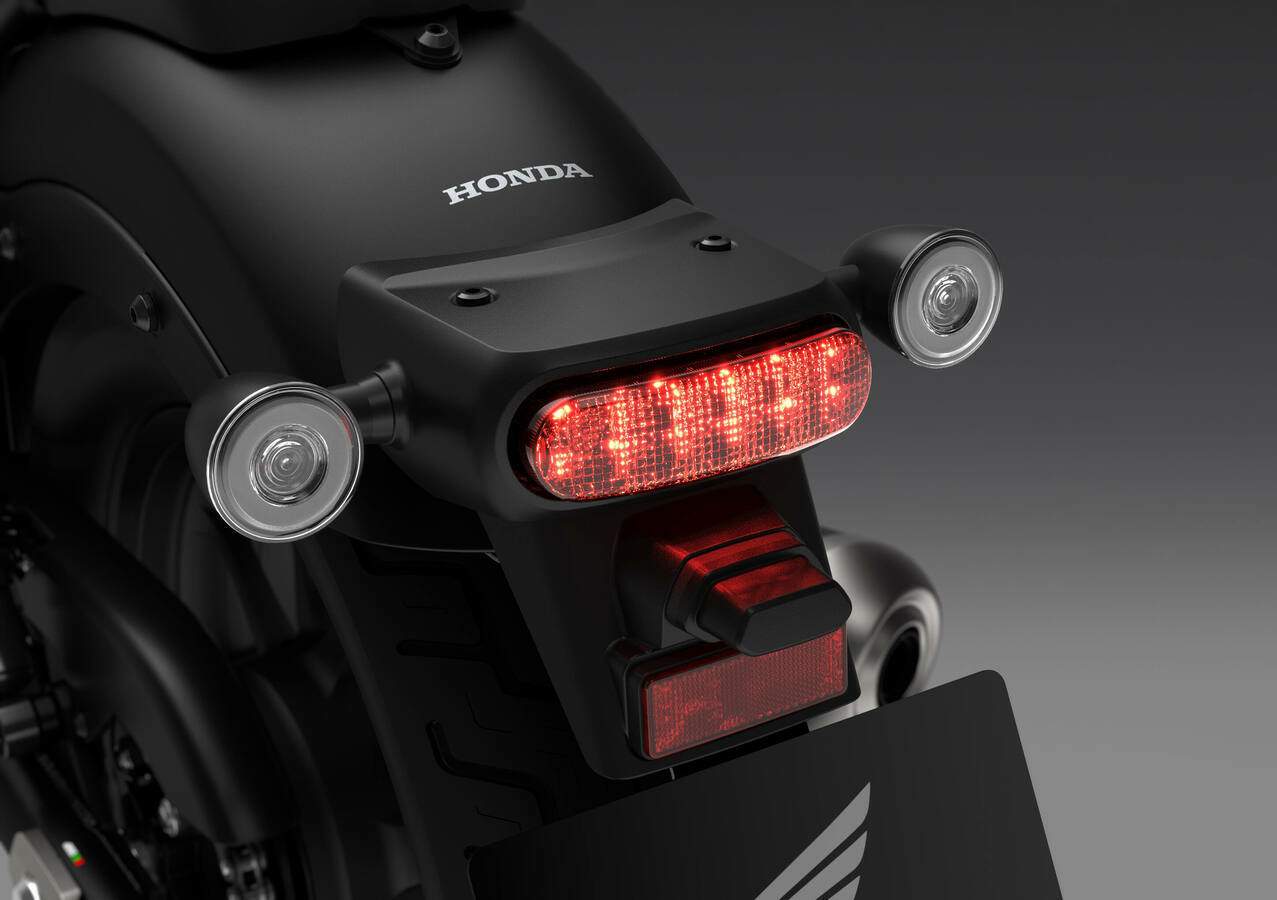
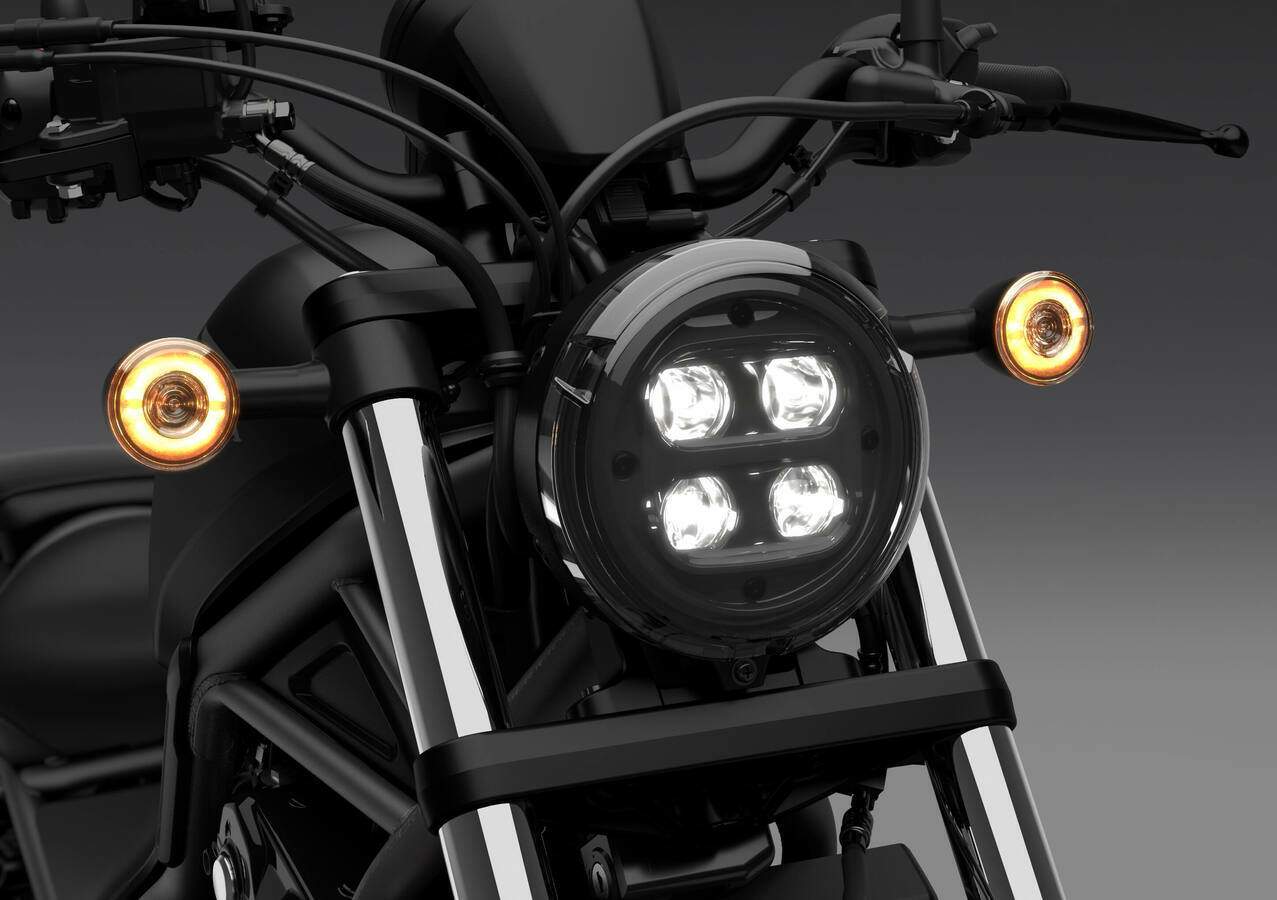
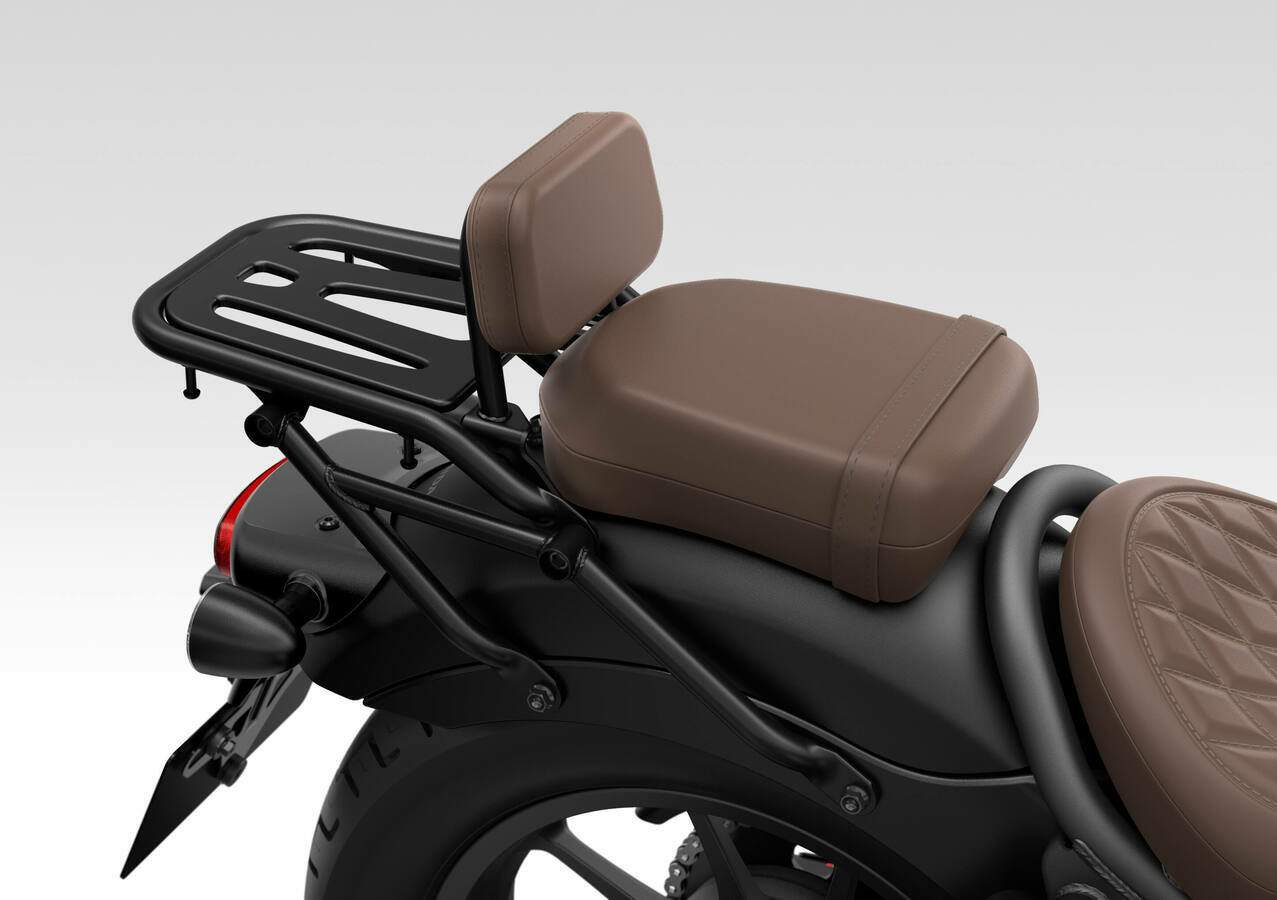
in itself; an exercise in minimalist design where every detail matters. Everything that can be is blacked out, accentuating the Rebel’s lithe design as well as underlining the subtle paintwork. All lighting is LED, and the evocative round headlight features a compact 175mm diameter lens and die-cast aluminium mount. The ultra-thin oval tail-light and licence plate light match the Rebel’s low-down stance; mini circular LED indicators measure only 55mm in diameter, with a circular position light included in the front indicators. Rider comfort was improved for 25YM through the use of a new urethane foam material for the seat. Both pillion pad and rear footpegs are easily removed to help transition between pillion and single occupancy, as well as allowing a range of accessories from the comprehensive line-up to be fitted. Optional extras include a rear rack, backrest, tank pads, high screen, nylon or leather saddlebags and much more. Headlining the updates for 27YM is the introduction of a new 3.5-inch circular TFT display, making its debut on this model and replacing the previous 100mm negative LCD dial. It offers sharper graphics and a more premium user experience. Paired with an all-new six-button control system, the system offers faster, more intuitive operation. The ‘S’ edition continues for 27YM and comes complete with factory-fit headlight cowl with smoke screen, retro front fork covers and gaiters and a special brown diamond-stitch style seat and bronze wheels. All are available individually.
Engine The 471cc 8-valve, liquid-cooled parallel twin-cylinder engine is drawn from the sporty CBR500R. For cruising duties, revised PGM-FI fuel injection mapping as well as different valve and ignition timings mean its character is shifted away from the high rpm-focused performance of the CBR to a torque-heavy bottom-end output, with smooth and linear delivery throughout the rev-range. Punchy maximum torque of 43.3Nm torque @ 6,000rpm combines with peak power of 34kW @ 8,500rpm. It’s a power unit that strikes a great balance between physical size and flexible output. Bore and stroke is set at 67mm x 66.8mm respectively, with compression ratio set at 10.7:1. Internally the cylinder head uses roller rocker arms; shim-type valve adjustment allows them to be light, for lower valve-spring load and reduced friction. A silent (SV Chain) cam chain has the surface of its pins treated with Vanadium, reducing friction with increased protection against dust. Inlet valve diameter is 26.0mm with exhaust valve diameter of 21.5mm. Friction is reduced by the addition of striations on the piston skirt (a finish that increases surface area, introducing gaps in which oil can flow for better lubrication). An AB 1 salt bath process, used after isonite nitriding, forms a protective oxidisation membrane. The crankshaft pins are phased at 180° and a primary couple-balancer sits behind the cylinders, close to the bike’s centre of gravity. The primary and balancer gears use scissor gears, reducing noise. The crank counterweight is specifically shaped for couple-balance and its light weight allows the engine to spin freely, with reduced inertia. The crankcases use centrifugally cast thin-walled sleeves. Their internal design reduces the ‘pumping’ losses that can occur with a 180° phased firing order. A deep oil sump holds 3.2L. Slick to use up or down, the six-speed gearbox is designed to offer effortless changes, especially around town. An assist/slipper clutch makes the shift lighter and smoother, and controls rear wheel ‘hop’ on rapid downshifting. The 2-1 exhaust scrubs spent gases in its catalyser, which then speeds them through its first chamber into the second resonator chamber; the sound produced has a heavy-duty pulsing feel that fits the torque delivery and exits through a 120mm diameter ‘shotgun’ style muffler.
Chassis Facilitating the Rebel’s low-slung look is an attractive tubular steel frame that grips the engine in three places. Designed to be as narrow as possible around the rider’s inseam, the frame includes an innovative rear loop that separates the thicker seat from the textured metal mudguard. At the rear, the bolt-on cast aluminium subframe provides further scope for customisation. Trail is set at 110mm with 28° rake; the 30° off-set of the forks, combined with a 1490mm wheelbase allows for a low 690mm seat height. The Rebel’s footpeg placement ensures a natural, comfortable riding position, with balanced and neutral steering. The handlebar position was finely tuned for 25YM to further rider comfort. At 230mm apart, the 41mm front fork stanchions are set wide
for handling rigidity, comfort and style; spring rates and oil volume are
optimised to give compliant damping and a smooth ride. The tubular steel
swingarm has a 45mm diameter and works twin, nitrogen-charged shock absorbers
that feature 5 step preload settings and revised bump stop rubbers that have
been re-profiled for a smoother ride.
Honda E-Clutch The Honda E-Clutch system – which debuted on the 24YM CB650R and CBR650R – brings ‘next level’ riding enjoyment and performance, allowing consistent gear changes that are faster and smoother than a quickshifter. For the first time, it will now be available on a Rebel family member - giving more young riders the opportunity to sample class-leading technology and sporty riding. As well as performance, it offers simplicity of operation. The clutch lever is not needed when pulling away or coming to a stop and there’s no need to use the lever to make a shift either up or down the gearbox. The rider simply operates the shift pedal to change gear. A half clutch position smooths the up/down shift, and the engine’s ignition timing and fuel injection are also controlled, based on parameters such as vehicle speed, throttle opening angle, engine rpm, pressure on the shift pedal, clutch motor reduction gear angle, engine countershaft speed and gear position. The clutch operation itself is performed through an actuator unit with two motors situated inside the right-hand engine cover. The Honda E-Clutch also allows the rider to select an ‘operation feel’ to set the strength of the force required on the shift pedal to make a gear change. Three settings are available: HARD, MEDIUM, and SOFT, each of which can be chosen independently for upshifting and downshifting. The technology will also advise the rider to shift down - via a symbol on the instrument panel - if it detects the motorcycle is in a high gear at a certain speed. And the system is the ultimate in versatility, as the clutch lever can be used as normal at any time. After use, the Honda E-Clutch system will re-activate after less than a second above a certain engine rpm, and after 5 seconds at lower engine speeds. Should the rider wish to turn off the system for a particular ride, this is also possible via the switchgear on the left handlebar, once the vehicle is stationary and in neutral. The change to manual operation is indicated by a letter ‘M’ on the instrument panel. Junya Ono, Large Project Leader, Honda E-Clutch: “Our Honda E-Clutch is designed to offer motorcyclists a new kind of experience that can make their riding even more fun and exciting. It also adds peace of mind and comfort to town riding or the daily commute. We hope that many riders will try this system to enjoy the unique mix of sportiness and flexibility it offers.”
Accessories Comfort Pack Travel Pack Style Pack
|
|
|
Any corrections or more information on these motorcycles will be kindly appreciated. |