|
|
|
|
Classic Bikes
Custom Bikes
Individual
Racing Bikes AJP
AJS
Aprilia
Ariel
Avinton / Wakan
Bajaj
Benelli
Beta
Bimota
BMW
Brough Superior
BRP Cam-Am
BSA
Buell / EBR
Bullit
Bultaco
Cagiva
Campagna
CCM
CF Moto
Combat Motors
Derbi
Deus
Ducati
Excelsior
Fantic
GASGAS
Ghezzi Brian
Gilera
GIMA
Harley Davidson
Hero
Highland
Honda
Horex
Husaberg
Husqvarna
Hyosung
Indian
Jawa
Kawasaki
KTM
KYMCO
Laverda
Lazareth
Magni
Maico
Mash
Matchless
Mondial
Moto Guzzi
Moto Morini
MV Agusta
MZ / MuZ
NCR
Norton
NSU
Paton
Peugeot
Piaggio
Revival Cycles
Roland Sands
Royal Enfield
Sachs
Sherco
Sunbeam
Suzuki
SWM
SYM
Triumph
TVS
Ural
Velocette
Vespa
Victory
Vincent
VOR
Voxan
Vyrus
Walt Siegl
Walz
Wrenchmonkees
Wunderlich
XTR / Radical
Yamaha
Zero
Video
Technical
Manufacturer List Contact
|
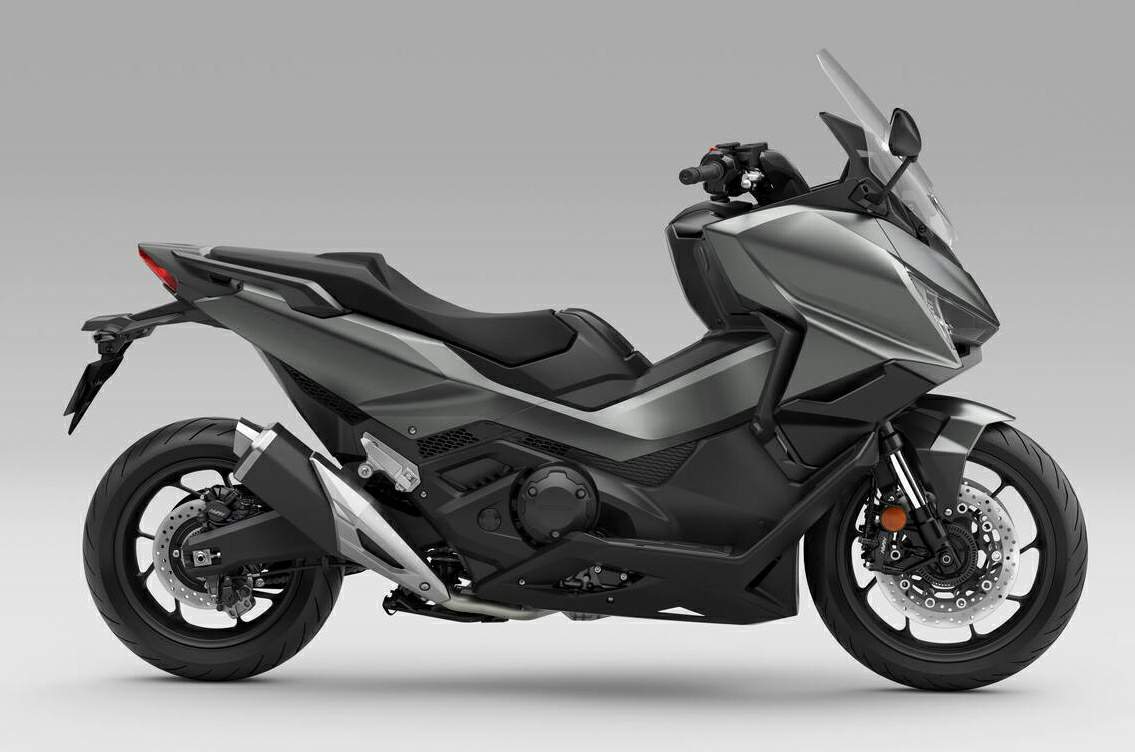
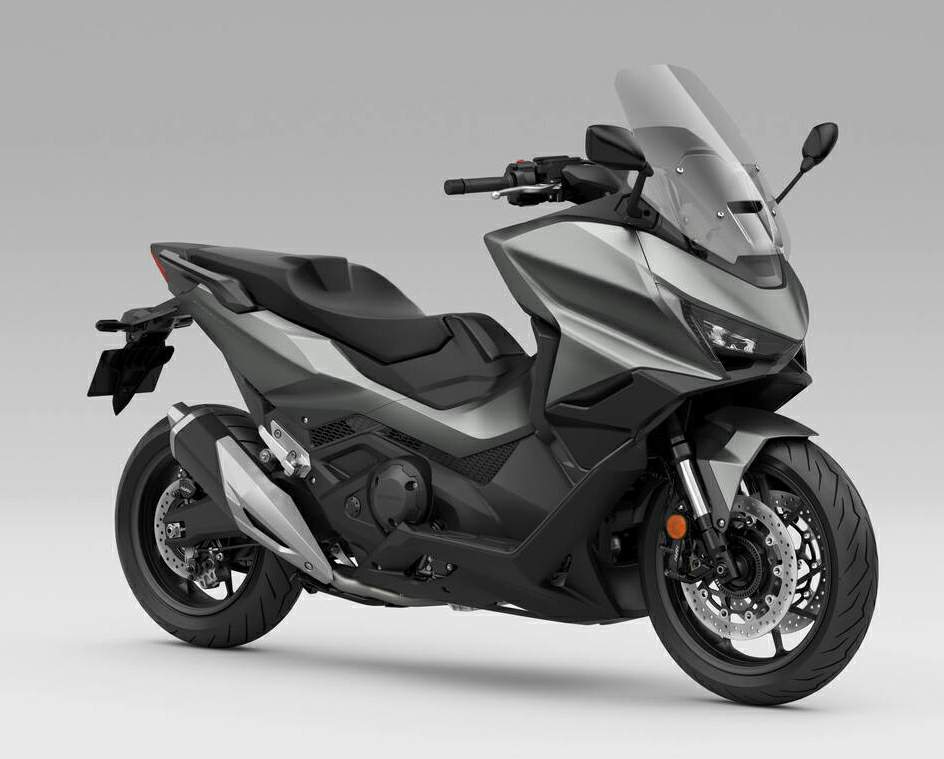
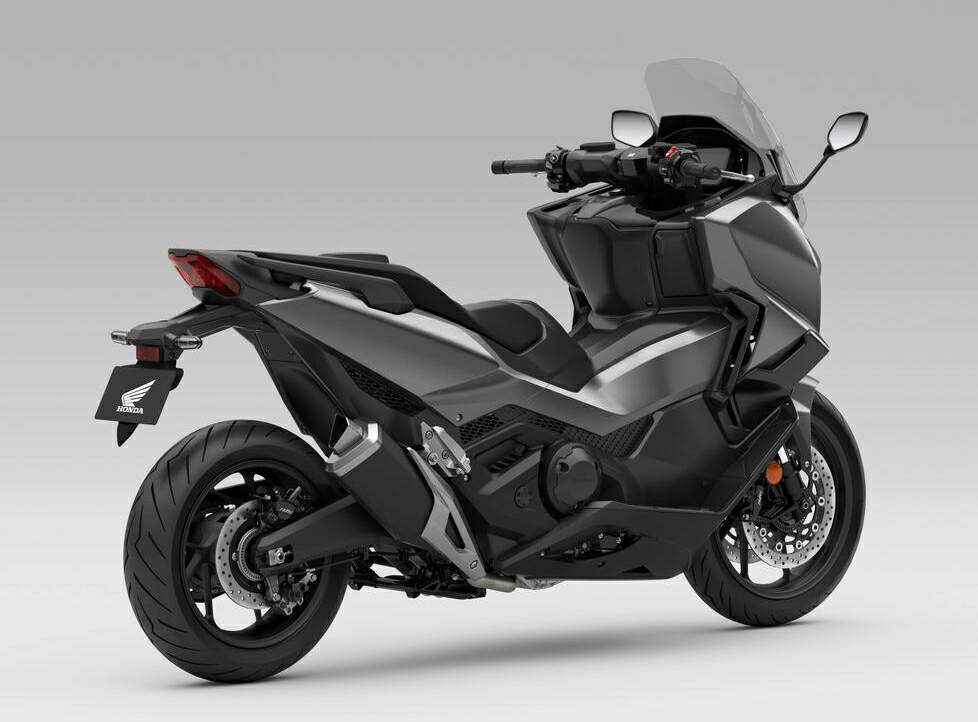
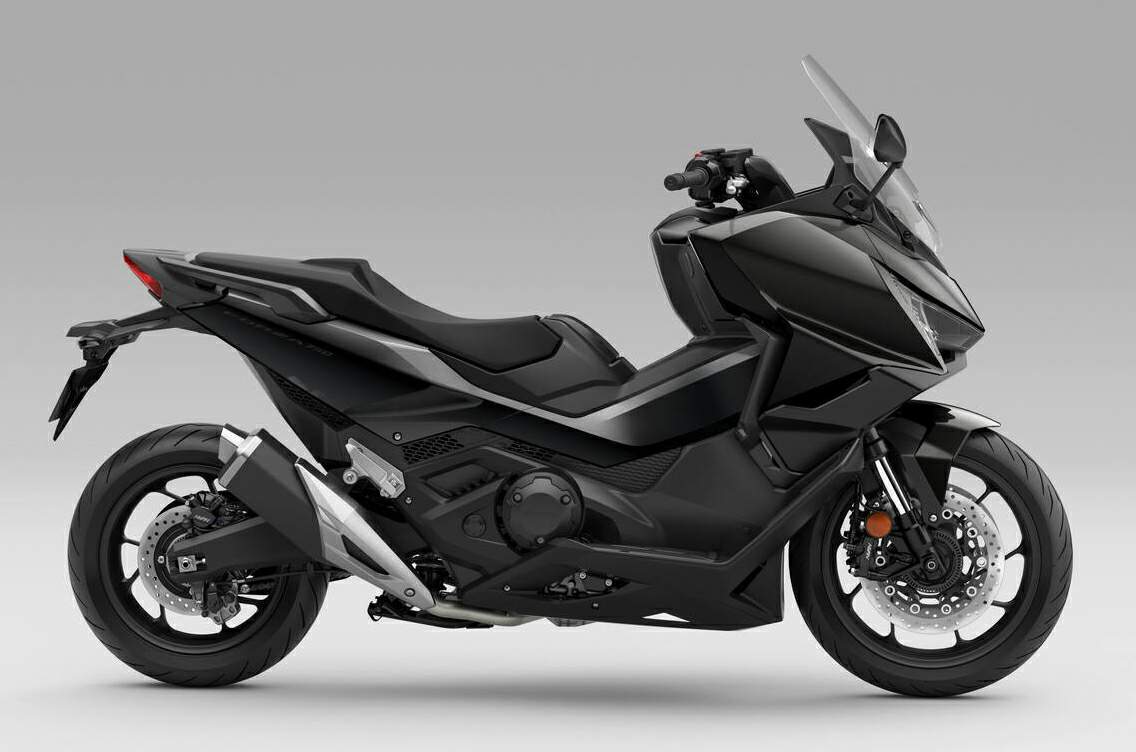
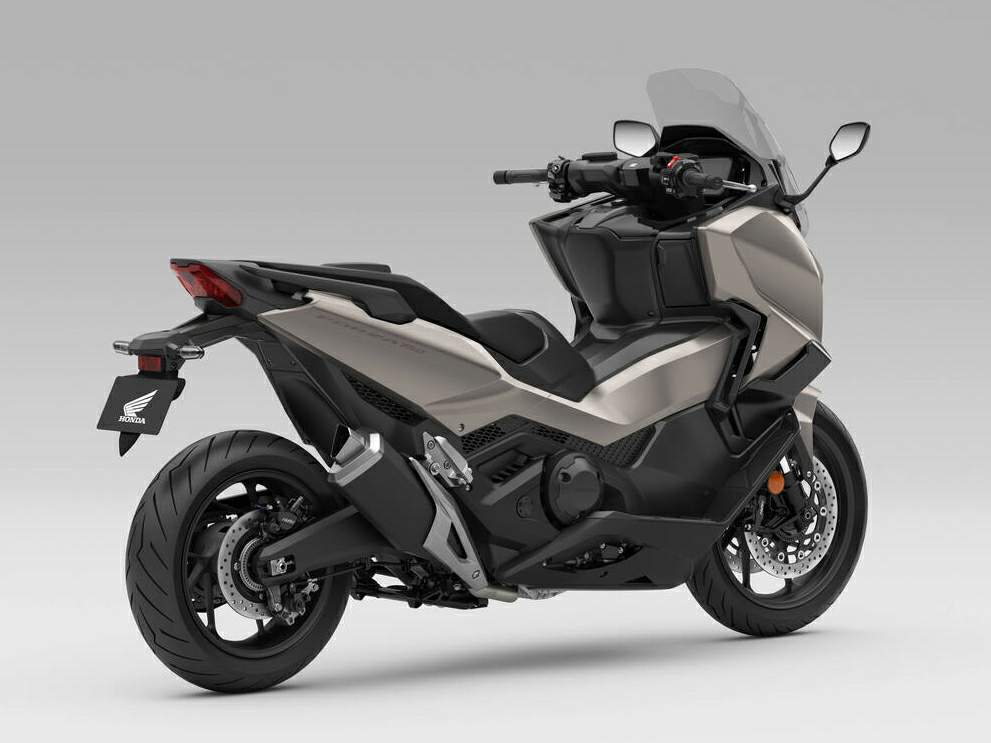
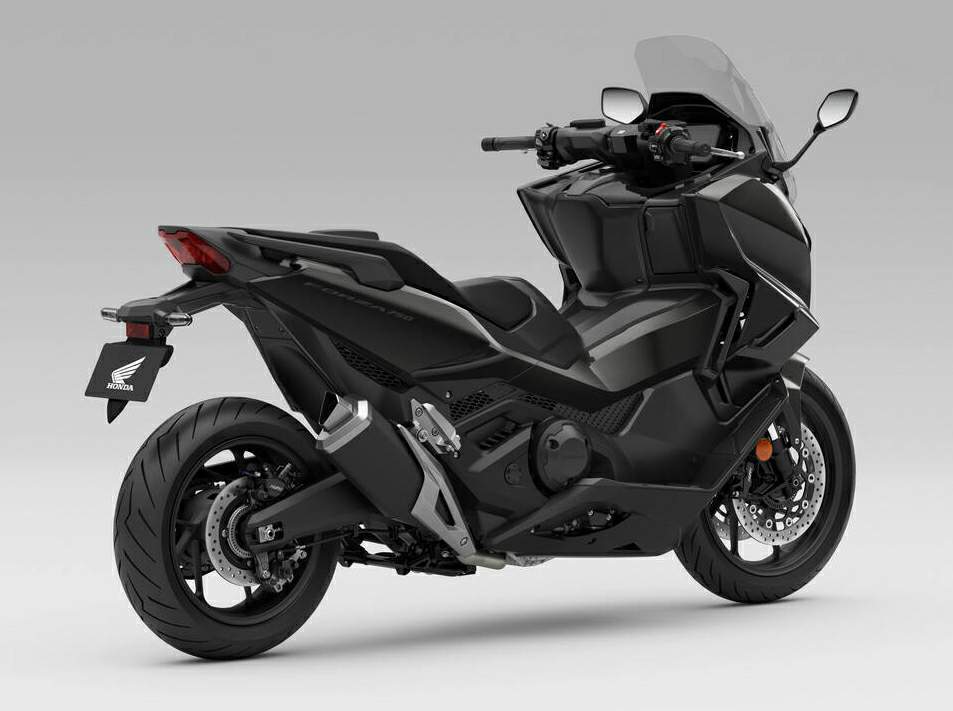
Honda Forza 750
From a press release issued by Honda: The Forza 750’s taut, angular bodywork offers ample high-speed wind protection, plenty of rider leg room and low seat height – and a distinct lack of any excess bulk. Dual headlights with Daytime Running Lights and in-built indicators led the 25YM style update while sustainability was enhanced by the use of DurabioTM material in certain areas. There’s under-seat storage space to take a full-face helmet and the handy glovebox for everyday items. An updated five-inch TFT instrument display offers Honda RoadSync linking the rider to their smartphone. Ignition, locking and seat opening is via Smart Key. Cruise control is now standard-fit.
Powered by a torquey, fuel-efficient 745cc twin-cylinder engine, Throttle By Wire (TBW) allows adjustable engine character through three default rider modes: RAIN, STANDARD and SPORT, plus a customisable USER mode. Honda Selectable Torque Control (HSTC) offers a fine level of intervention over three levels (with 25YM refinements in RAIN mode) while the Dual Clutch Transmission (DCT) features automatic shifting schedules that link with the riding modes. Low speed response and feel has been optimised. A tubular steel frame, aluminium swingarm, 41mm USD forks, radial-mount four-piston brake calipers, Pro-Link rear suspension and 15-inch/17-inch front/rear wheel combination comprise the well-equipped chassis and deliver sports motorcycle levels of handling in scooter form. The 27YM Forza 750 will be available in the following colour
options: Styling & Equipment As befits a GT scooter, the Forza 750’s sleek front fairing
mounts the mirrors high and wide and provides ample wind protection for
high-speed cruising, without the type of excessive bulk that hinders around-town
agility. The Forza 750’s bodywork is a taut, angular design which exudes premium
maxi-scooter style. Up front, the headlight unit features Daytime Running Lights
for a premium face In addition, manufacture of the screen and fairing uses DurabioTM (a bio-based polycarbonate resin), with more recycled plastic/rubber materials also used in other areas of the bodywork. But on top of the all-important riding functionality – and as head of the sophisticated Forza family – the Forza 750 is also a rolling statement of aspiration, with style that exudes premium appeal and a presence that will attract attention whenever, and wherever, it’s ridden.
Of course, the practical details matter. There’s plenty of leg and foot room up front thanks to the reprofiled fairing and footstep, while the carefully contoured seat is instantly comfortable and ensures easy ground reach. Seat height is set at 790mm.The under-seat luggage space has 22L of volume and accepts a full-face helmet. There’s also a useful, and easy-to-access, glove compartment in the right-side inner fairing which can stow everyday items. The USB-C charging socket is located in a prominent position on the handlebars. Cruise control integrates with the DCT smoothly and is very easy to use; activation is from the right switchgear, with plus/minus and resume/set from the left. Key data is relayed to riders through an updated five-inch
full colour TFT screen, which uses optical bonding to improve visibility in
bright sunlight. By sealing the gap between the cover glass and TFT screen with
resin, glare is reduced, and legibility improved. The display itself is
customisable between ‘Bar’, ‘Circle’ and ‘Simple’ display patterns and offers
smartphone connectivity via Honda RoadSync. For added convenience the Forza 750 uses a Smart Key, which lives in the rider’s pocket and does away with the need to use a key for ignition, fuel cap and seat. With the Smart Key present, one push of the knob-type main switch powers it up and makes it possible to turn, giving the rider control of the ignition/steering lock and, via two rocker switches, the fuel cap and seat. It also locks and unlocks the optional Smart Top Box and has an ‘answer back’ function which makes the indicators flash for easy identification from a distance. A clutch mechanism in the main switch stops the handlebars unlocking by force. The rear indicators have an Emergency Stop Signal (ESS) function. If negative acceleration of 6.0m/s2 is detected at a minimum speed of 53km/h with either brake working, the hazard lights flash to warn other road users a hard stop is in process. At the same speed the threshold is reduced if ABS is activated to a negative acceleration of a minimum 2.5m/s2. They also auto-cancel; rather than using a simple timer, the system compares front and rear wheel speed difference and calculates when to cancel the indication relative to the situation.
Engine The proven design of the liquid-cooled, SOHC 8-valve parallel twin-cylinder engine ensures punchy performance in the low-to-mid range. Mechanically unchanged for 27YM, its relatively long-stroke architecture and specially shaped combustion chambers combine with the high-inertial mass crankshaft to produce large amounts of effortless torque from very low rpm. A forward cant brings the centre of gravity down for optimum stability. Peak power is 43.1kW @ 6,750rpm with maximum torque of 69Nm @ 4,750rpm, capped by a 7,000rpm redline. The Forza 750 will cover 0-50m in 3.9s and at 60km/h the engine is turning over at just 2,500rpm. Twin balancers counteract vibration from higher rpm inertia without affecting the distinct ‘throb’ delivered by the engine’s irregular firing order and 270° phased crankshaft. Bore and stroke are set at 77mm and 80mm respectively. Where possible, components are made to do more than one job: the camshaft drives the water pump, while one of the balancer shafts drives the oil pump. By keeping the number of parts to a minimum in this way, the engine is kept light, efficient and reliable. For A2 licence holders a 35kW version is available, which can be easily converted to the full power version by a Honda dealer at the appropriate time. Equally, it is possible to restrict the full power version to 35kW by a Honda dealer. The Forza 750 engine is exceptionally frugal – with a measured consumption of 28.3km/l (WMTC mode) providing a potential 375km cruising range from the 13.2-litre fuel tank. Engine Electronics With TBW managing the engine electronics, there are three modes for the rider to choose from, covering a wide range of riding conditions. Mode selection is managed between the left-hand switchgear and TFT display. STANDARD delivers a balanced middle point between engine power delivery (P), Engine Braking (EB) and HSTC SPORT gives more aggressive P delivery and EB, with low HSTC intervention RAIN transmits low engine power delivery and braking, with high HSTC USER offers custom options of low/medium/high between P/EB, low/medium/high/off for HSTC. Honda Selectable Torque Control (HSTC) offers unobtrusive
operation and refined control as it manages rear wheel torque thanks to TBW,
over three levels: HSTC can also be switched OFF.
Dual Clutch Transmission (DCT) Differing shifting schedules link with riding modes USER mode allows choice of settings from smooth to aggressive. Honda’s DCT technology delivers consistent, seamless gear
changes up or down and very quickly becomes second nature in use. It uses two
clutches: one for start-up and 1st, 3rd and 5th, the other for 2nd, 4th and 6th,
with the mainshaft for each clutch located inside the other for compact
packaging. The 25YM update allowed smoother starting from standstill and control at low speed – under 10km/h – for U-turns. This required a ‘quick yet gentle’ driving force at small throttle openings. Surpassing the operating parameters of the previous generation DCT the latest iteration now estimates the oil pressure of the clutch piston chamber and completely reviews the way feedback gain is applied – rather than just relying on an oil pressure sensor upstream of the clutch piston – resulting in improved, more delicate clutch response. Alongside a refinement to the way TBW now opens from closed, the DCT also features a dedicated setting for extremely low speed running. Consistent, fast and seamless gear changes are always on offer. Furthermore, as the twin clutches transfer drive from one gear to the next with minimal interruption of the drive to the rear wheel, any gear change shock and pitching of the machine is minimised, making the change feel direct as well as smooth. Extra benefits include durability (as the gears cannot be damaged by missing a gear) impossibility of stalling, low stress urban riding, reduced rider fatigue and – crucially – the ability to concentrate more on riding lines, braking and acceleration points. The DCT system offers two distinct riding approaches – Automatic Transmission (AT), with pre-programmed shift patterns which constantly read vehicle speed, gear selected and engine rpm to decide when a shift should occur, and Manual Transmission (MT), for gear changes using the paddle-shift style triggers on the left handlebar. Through TBW control there are four Automatic shifting schedules available. Level 1 is the most relaxed, with upshifts and downshifts operating at relatively lower rpm; it is linked with the RAIN riding mode. Level 4, on the other extreme, shifts up at higher rpm and also downshifts earlier for more engine braking effect; it is linked with the SPORT mode. Level 2 is linked with STANDARD riding mode, with Level 3 situated between STANDARD and SPORT. The USER mode functionality allows the rider to select any of the DCT shift patterns with the preferred permutations of the other parameters – Power delivery, Engine Braking and HSTC. Chassis For core strength the Forza 750 uses a rugged tubular steel diamond frame, which neatly packages all ancillaries and gives ample space for the under-seat storage area. Rake and trail are set at 27°/104mm with wheelbase of 1580mm. Overall wet weight is 236kg. The spring preload adjustable rear shock is a single tube split pressure design and operates the aluminium swingarm – constructed from a machined-hollow cross member and U-shaped (in cross section) arms – through Pro-Link. ‘3by3’ 17-inch front and 15-inch rear cast aluminium wheels deliver confident handling and stability, whilst looking stylish, and are wrapped in 120/70 R17 and 160/60 R15 tyres front and rear. Dual radial-mount opposed four-piston calipers grip 310mm discs and work through ABS. Accessories The Comfort Pack is versatile collection of parts
designed to enhance rider comfort and convenience: The Style Pack builds in additional protection and
looks: The colour matched Travel Pack increases carrying
capacity: Also colour matched, the Urban Pack ups daily commuting
ability: Also available
|
|
|
Any corrections or more information on these motorcycles will be kindly appreciated. |