|
|
|
|
Classic Bikes
Custom Bikes
Individual
Racing Bikes AJP
AJS
Aprilia
Ariel
Avinton / Wakan
Bajaj
Benelli
Beta
Bimota
BMW
Brough Superior
BRP Cam-Am
BSA
Buell / EBR
Bullit
Bultaco
Cagiva
Campagna
CCM
CF Moto
Combat Motors
Derbi
Deus
Ducati
Excelsior
Fantic
GASGAS
Ghezzi Brian
Gilera
GIMA
Harley Davidson
Hero
Highland
Honda
Horex
Husaberg
Husqvarna
Hyosung
Indian
Jawa
Kawasaki
KTM
KYMCO
Laverda
Lazareth
Magni
Maico
Mash
Matchless
Mondial
Moto Guzzi
Moto Morini
MV Agusta
MZ / MuZ
NCR
Norton
NSU
Paton
Peugeot
Piaggio
Revival Cycles
Roland Sands
Royal Enfield
Sachs
Sherco
Sunbeam
Suzuki
SWM
SYM
Triumph
TVS
Ural
Velocette
Vespa
Victory
Vincent
VOR
Voxan
Vyrus
Walt Siegl
Walz
Wrenchmonkees
Wunderlich
XTR / Radical
Yamaha
Zero
Video
Technical
Manufacturer List Contact
|
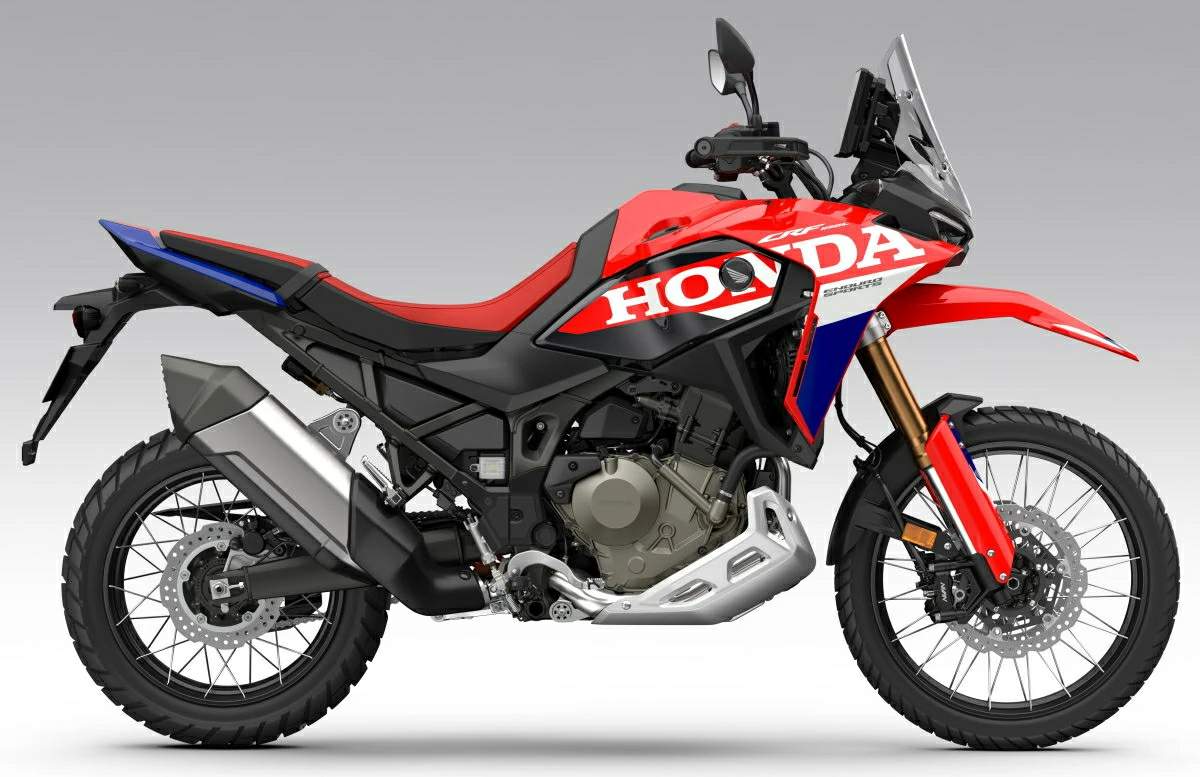
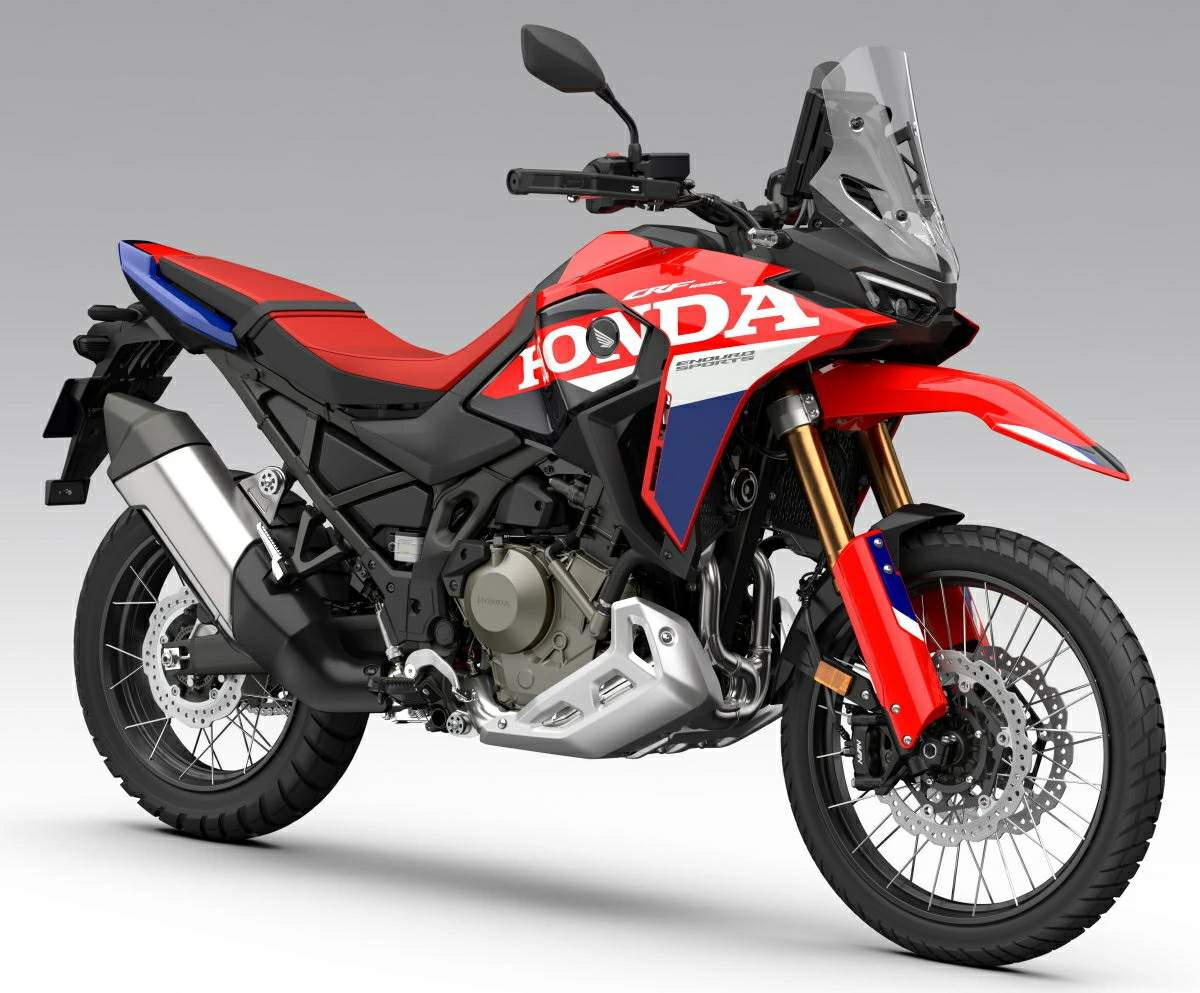
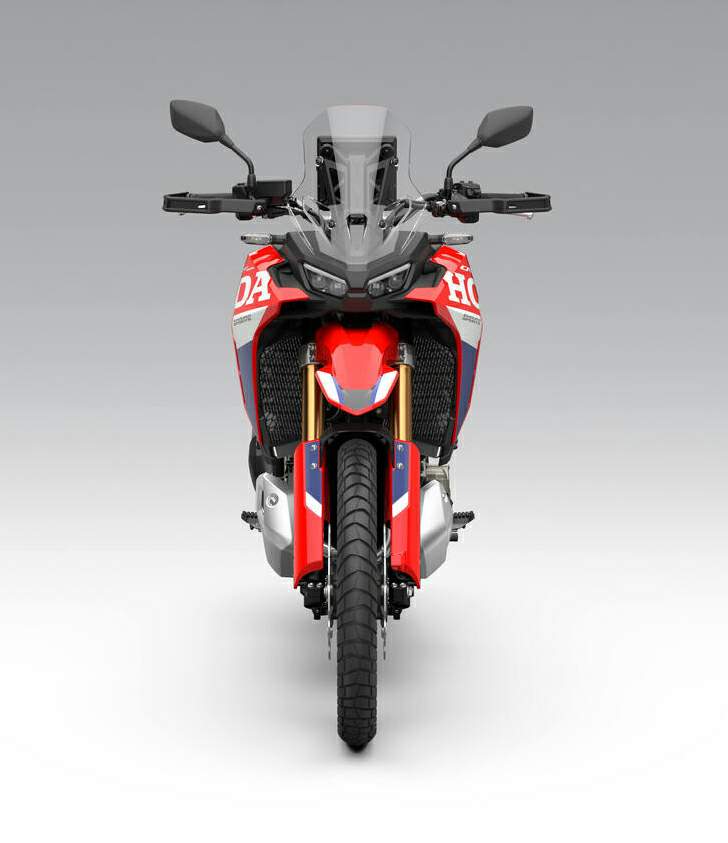
Honda CRF 1100L Africa Twin Enduro Sports
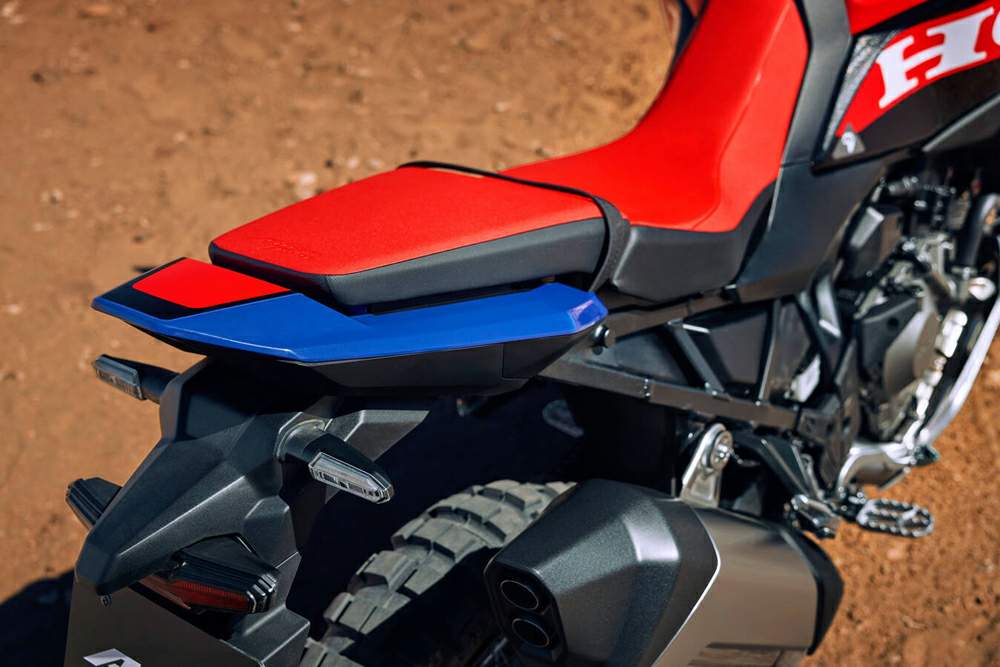
From a press release issued by Honda: The all-new 27YM CRF1150L Africa Twin Enduro Sports has been developed for riders seeking maximum off-road capability while retaining the fundamental versatility that defines the Africa Twin name. Sharing its core platform with the latest generation CRF1150L Africa Twin, it combines increased performance, reduced weight and purpose-built chassis specification to deliver exceptional ability across the most demanding terrain. At its heart is the same extensively revised 1,131cc parallel twin-cylinder engine found across the 27YM Africa Twin range. Peak power increases by over 12kW to 87.5kW, with torque rising 7Nm to 119Nm, thanks to increased capacity, a redesigned intake system, larger-diameter throttle bodies, revised valvetrain and cylinder head and a higher compression ratio. Riders can choose between a six-speed manual transmission or Honda's six-speed Dual Clutch Transmission (DCT). A revised suite of riding modes enhances adaptability across changing conditions. New default SPORT, TOURING, URBAN and RAIN settings are joined by OFFROAD and the new OFFROAD+ mode, developed specifically for more challenging terrain. All riding modes now feature in-mode customisation, allowing riders to tailor machine behaviour to their individual preferences. Like the 27YM Africa Twin itself, the Enduro Sports benefits from a lighter chassis package. Together, the steel frame and aluminium swingarm are 1.4kg lighter than the 26YM Africa Twin, while the centre of gravity has been lowered through the centralisation of key components and the introduction of a fuel sub-tank positioned beneath the rider's seat.
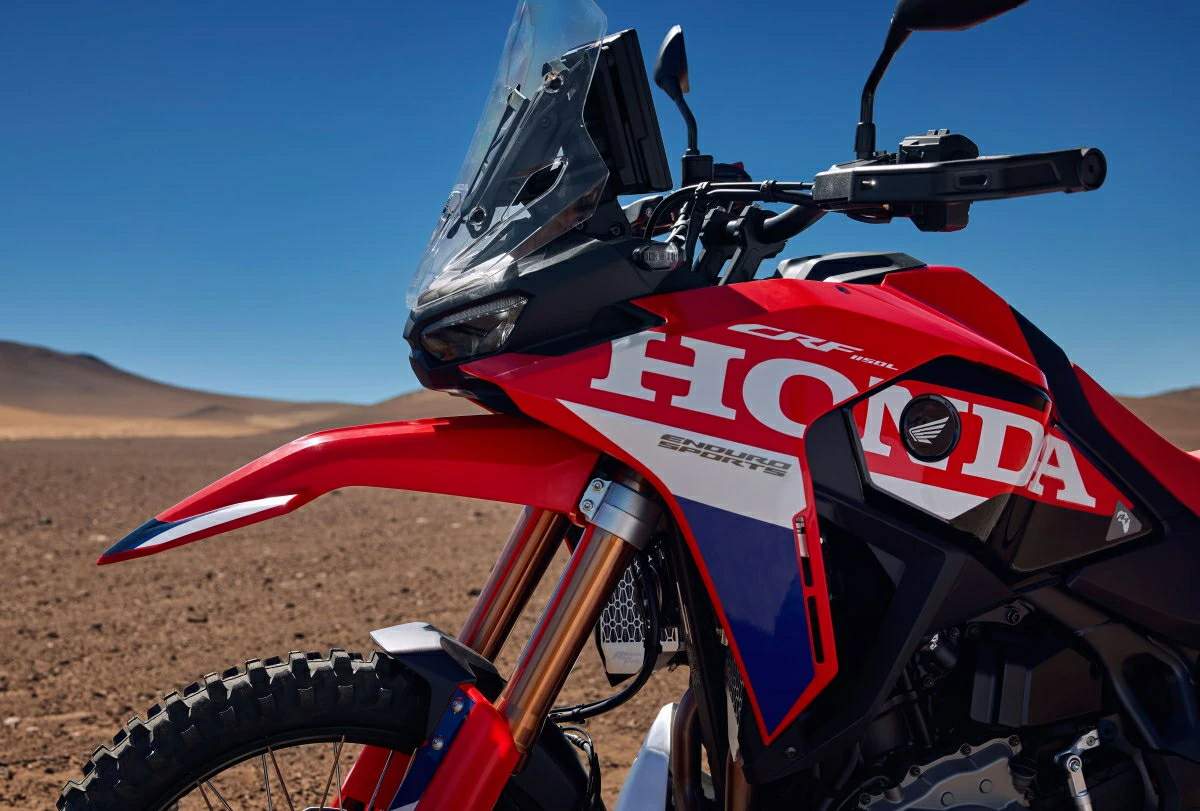
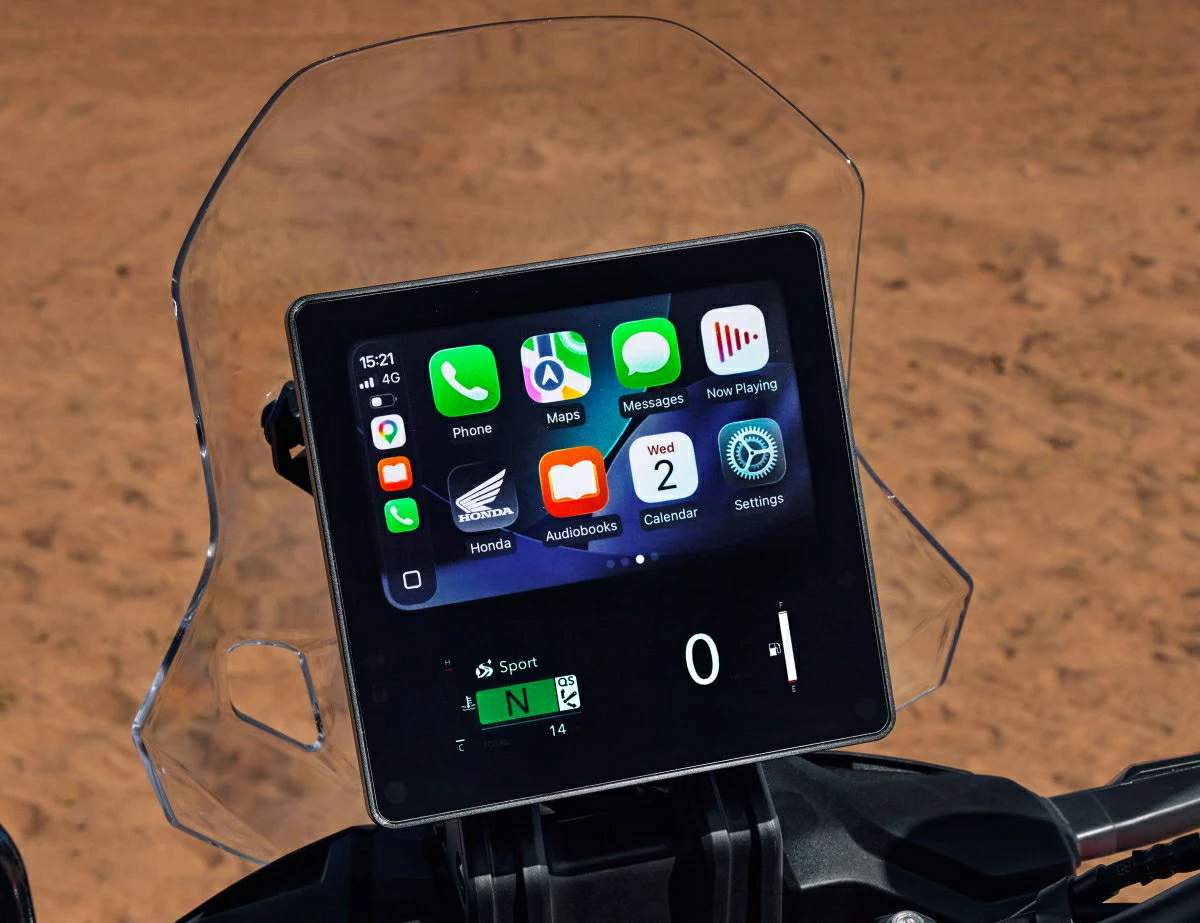
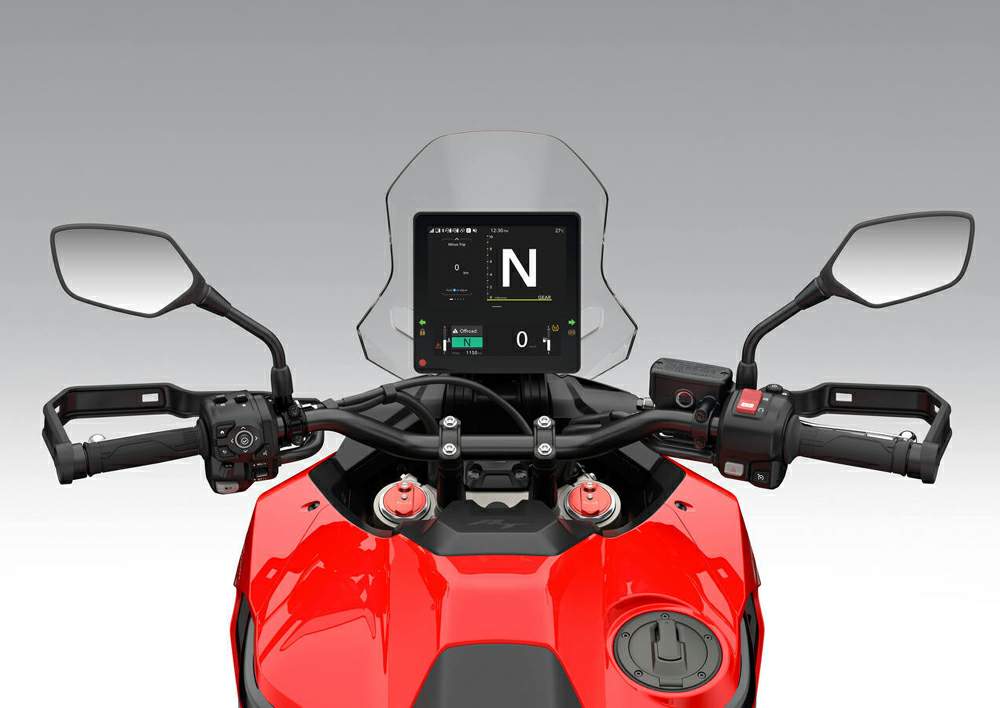
The riding position has also been refined, with narrower handlebars mounted higher and further forward, while the footpegs move inward and rearward. Revised seat foam thickness and contouring improve rider comfort, with seat height adjustable between 870mm and 890mm. Kerb weight is 228kg for the manual transmission model. Purpose-built suspension underlines the Enduro Sports' off-road focus. Fully adjustable 49mm Showa closed-cartridge USD forks provide 240mm of travel, while a fully adjustable Showa rear shock operates through Honda's Pro-Link system with 230mm rear axle travel. Ground clearance is set at 260mm, reinforcing the machine's ability to tackle challenging terrain with confidence. Braking performance is delivered by dual radial-mount four-piston front calipers operating 310mm floating discs, matched to a 256mm rear disc. A 21-inch front and 18-inch rear spoked wheel combination is fitted with 90/90-21 and 150/70-18 tubeless tyres, combining durability and ease of repair when travelling far from home. The styling takes direct inspiration from Honda's HRC rally competition machines. A purposeful mass-forward stance, minimal rear bodywork and high-mounted front mudguard clearly communicate the bike's off-road intent, while lightweight dual LED headlights and a compact screen complete the focused design. Technology and connectivity are equally advanced. A 5.7-inch
vehicle information display integrates with a 7-inch full-colour TFT touchscreen
featuring a dedicated off-road display and compass function. Operation is via
the touchscreen and new backlit switchgear designed for intuitive use in all
conditions. The 27YM Honda CRF1150L Africa Twin Enduro Sports will be available in a unique Extreme Red colour scheme.
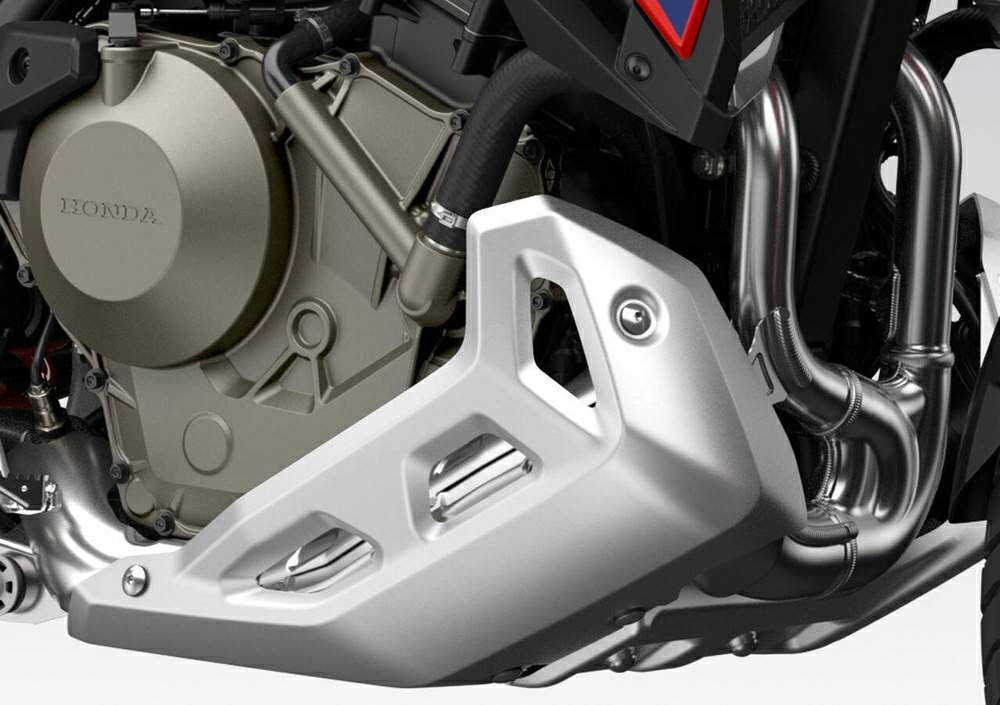
Engine The new 1,131cc parallel twin-cylinder engine sits at the heart of the 27YM CRF1150L Africa Twin's development programme. Delivering more power and torque throughout the rev range, it reinforces the machine's reputation for effortless versatility, whether covering long motorway distances, tackling demanding trails or simply enjoying everyday riding. The numbers tell the story. Peak power rises by 16.5% to 87.5kW at 7,500rpm, while peak torque increases to 119Nm at 5,750rpm, up from 75kW at 7,500rpm and 112Nm at 5,500rpm respectively. Capacity increases to 1,131cc through a 2mm increase in bore, to 94.0mm, while the 81.5mm stroke is retained. Compression ratio also rises significantly, from 10.5:1 to 12.1:1, helping deliver stronger performance across the entire operating range. The result is noticeably stronger acceleration, improved roll-on response and even greater long-distance touring ability. While top speed remains unchanged, the Africa Twin now boasts more immediate drive through gears one to five. Highway cruising is also more relaxed, with revised gearing reducing engine speed. Achieving these gains required comprehensive development throughout the engine package. The airflow path, from the larger-diameter intake duct through the airbox and into the inlet ports, has been redesigned to improve efficiency, increasing both power and throttle response. Larger 52mm throttle bodies, up from 46mm, feed the higher-compression combustion chambers, while air filter access has also been simplified to ease routine maintenance. Honda's proven SOHC Unicam valvetrain, derived from the competition-specification CRF450R motocrosser, remains central to the engine's compact design. The low-mounted cast camshaft allows a tightly packaged cylinder head, while revisions to port and combustion chamber design support the increased compression ratio and improved airflow requirements. Further refinements include revised cam timing, valve lift and valve spring specifications. Intake valve diameter increases by 1mm to 37.5mm, while exhaust valves adopt a revised profile. To ensure long-term durability, cam chain width has been increased and the cam chain tensioner, guide and plate have all been optimised. Internal component development extends throughout the engine.
All-new pistons feature revised crown profiles, skirts and pins, together with
redesigned compression, scraper and oil control rings, while the con-rods and
crankshaft have been rebalanced to accommodate increased combustion pressures. The engine architecture itself remains highly compact. Horizontally split crankcases house a water pump integrated within the clutch casing, while the thermostat is incorporated into the cylinder head. Manual transmission and Dual Clutch Transmission (DCT) versions share common crankcases, differing only in minor external details. Both the water and oil pumps are driven by the engine's balancer shafts, contributing to packaging efficiency. A semi-dry sump design stores oil within the lower section of the crankcase, allowing reduced sump depth and helping minimise overall engine height. For 27YM, internal oil passages have also been revised. The manual transmission version receives a revised clutch
designed to handle the increased power and torque output, while revised gear
ratios contribute to both stronger acceleration and more relaxed cruising.
Enhanced surface treatment of the shift forks further improves shift quality and
durability.
Engine Electronics Package Throttle By Wire (TBW) management, plus six-axis Inertial Measurement Unit (IMU) and Electronic Control Unit (ECU) remain at the heart of the electronic package and now, with just one mode change, the rider can match the engine output, character and feel to suit the conditions or riding situation. The system offers adjustable levels of Engine Power (EP) and Engine Braking (EB). New for 27YM, 2 levels of Dynamic or Comfort throttle response are built into the default riding modes, and it is now possible to make adjustments from the baseline settings within each mode as USER. There are 7 levels of Honda Selectable Torque Control (HSTC) with each level’s amount of intervention optimised to work with real-time input from the IMU. It’s also been fine-tuned to allow the rider an extra level of control over rear tyre traction for off-road riding. Wheelie Control (WC) is also built in. HSTC can still be turned off completely. The CRF1100 Africa Twin had four default riding modes: TOUR, URBAN, GRAVEL and OFFROAD. These have changed for both the ‘standard’ Africa Twin and the Enduro Sports version to the following: SPORT, TOURING, URBAN, RAIN, OFFROAD and OFFROAD+. All modes can be adjusted by the rider from their baseline combinations.
Dual Clutch Transmission (DCT)
Honda has sold over 330,000 DCT-equipped motorcycles across Europe since the system first appeared as an option on the VFR1200F in 2009. Testament to its acceptance in the marketplace, in 2025 DCT versions of CRF1100L Africa Twin accounted for 49% of the model’s sales in Europe, rising to 68% for the Africa Twin Adventure Sports. DCT delivers consistent, super-fast seamless gear changes, and very quickly becomes second nature in use. It uses two clutches: one for start-up and 1st, 3rd and 5th gears: the other for 2nd, 4th and 6th, with the mainshaft for each clutch located inside the other for compact packaging. Each clutch is independently controlled by its own electro-hydraulic circuit. When a gear change occurs, the system pre-selects the target gear using the clutch not currently in use. The first clutch is then electronically disengaged as, simultaneously, the second clutch engages. The result is a consistent, fast and seamless gear change. Furthermore, as the twin clutches transfer drive from one gear to the next with minimal interruption of the drive to the rear wheel, any gear change shock and pitching of the machine is minimised, making the change feel direct as well as smooth. The extra benefits of durability (as the gears cannot be damaged by missing a gear), impossibility of stalling, low stress urban riding, reduced rider fatigue and greater ability to focus on cornering lines and braking points add to DCT’s appeal. Three modes of operation are available. MT mode gives full
manual control, allowing the rider to shift with the handlebar trigger control
buttons. Automatic D mode is ideal for city and highway riding and achieves
optimum fuel efficiency. SPORT mode offers a sportier ride, with the ECU making
the engine rev a little higher before shifting up and shift down sooner when
decelerating for extra engine braking. DCT for the CRF1150L Africa Twin Enduro Sports is also fully equipped to operate in an adventure environment, with off-road functionality enhanced through two specific riding modes. Activating OFFROAD improves the feel for available traction and machine control by reducing the amount of clutch slip during gear changes. OFFROAD+ takes things further, allowing riders the option to choose shift programme. Further functionality for the DCT system comes in the form of incline detection, adapting the gear shift pattern depending on the grade of an incline to provide optimum control.
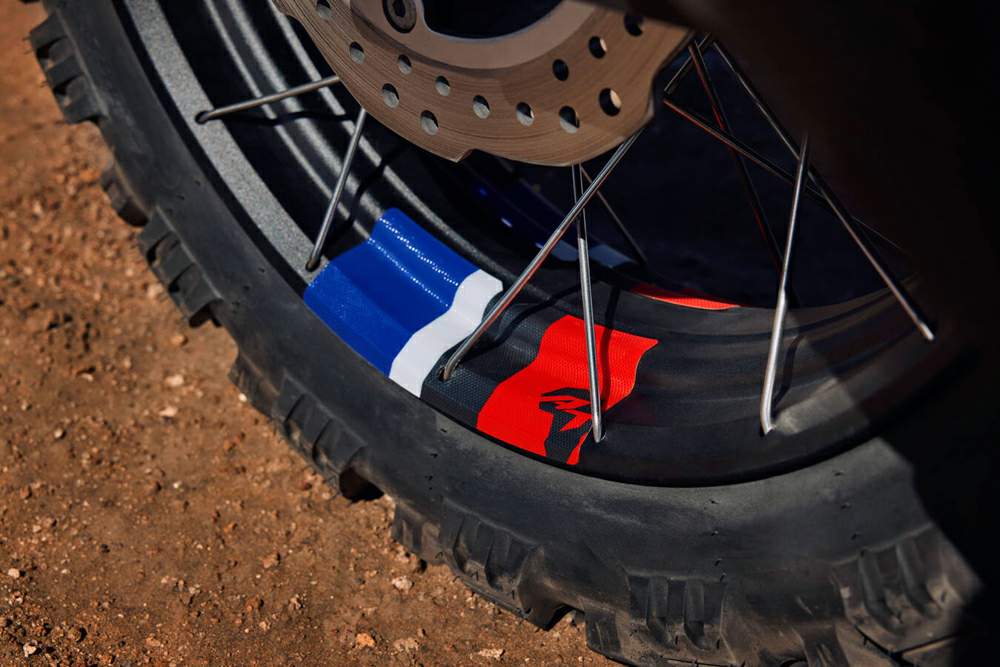
Chassis The CRF1150L Africa Twin's chassis has undergone extensive development focused on lowering the centre of gravity while preserving the machine's distinctive silhouette and all-round capability. Inspiration came from the legendary NXR750, which secured four consecutive Paris-Dakar victories between 1986 and 1989. Like that HRC-built racer, the new Africa Twin adopts a fuel sub-tank positioned beneath the seat, allowing a lower fuel level in the main tank and contributing significantly to mass centralisation. The new fuel arrangement forms part of a wider packaging strategy. Careful positioning of major components, including the battery, ECU, fuel filler cap and airbox, keeps the centre of gravity low. The benefit is a machine that feels both more agile and more stable, whether manoeuvring at low speeds or covering ground at pace. The steel semi-double cradle frame has also been thoroughly optimised. A revised engine head hanger improves rigidity efficiency, allowing changes to frame cross-sections and wall thickness that reduces frame weight by 0.8kg. Matching development extends to the aluminium swingarm, which is 0.6kg lighter and tuned to complement the frame's revised rigidity balance. An aluminium bolt-on subframe completes the lightweight chassis package. Despite these revisions, the Africa Twin retains its proven core geometry. Wheelbase is 1,585mm, with rake and trail figures of 27.5° and 117mm respectively. Kerb weight is 228kg for the manual transmission model and 239kg for the Dual Clutch Transmission (DCT) version. Fully adjustable CRF450RALLY-spec. Showa 49mm USD closed-cartridge forks replace the 45mm USD forks of the previous design; the fully adjustable rear shock operates through Pro-Link, as before. Fork stroke is 240mm, rear axle travel 230mm with 260mm ground clearance (Africa Twin: 220mm/210mm/240mm). Braking performance is provided by compact radial-mount four-piston front calipers operating dual 310mm floating wave discs through sintered brake pads. At the rear, a 256mm wave disc features a dedicated drilling pattern and profile designed to optimise rear-wheel feel and control. The Africa Twin Enduro Sports employs the same 21-inch front and 18-inch rear spoked wheel combination as used by the Africa twin itself, fitted with tubeless tyres that allow puncture repairs without wheel removal. Stainless-steel spokes contribute to durability, while tyre sizes remain 90/90-21 at the front and 150/70-18 at the rear. Metzeler Karoo Street tyres are approved as standard equipment, with sizes of 90/90-21M/C 54H front and 150/70-18M/C 70H rear. Riders seeking increased off-road performance can also specify Michelin Anakee Wild tyres, available in 90/90-21M/C 54R TL and 150/70-18M/C 70R TL specifications.
Styling & Equipment The CRF1150L Africa Twin Enduro Sports adopts the design concept of Premium OFF Adventure, drawing direct inspiration from Honda's HRC rally competition machines. Every aspect of its appearance has been shaped to emphasise off-road capability, delivering a focused and purposeful look that clearly communicates the motorcycle's intended environment. The Enduro Sports presents a distinctly more compact and
aggressive front profile than any previous version. Ultra-compact dual LED
headlights sit beneath a slim screen, creating a lightweight visual signature
while reinforcing the machine's rally-inspired character. At the rear, a
redesigned LED taillight features an S-Glitter-cut lens, improving clarity while
complementing the clean, minimalist styling. Compared to the CRF1100L Africa Twin, the handlebars are 10mm narrower and positioned 10mm higher and further forward, while the footpegs are mounted 20mm narrower and 10mm further rearward. Together, these changes create a riding position that supports both seated comfort and confident standing control when riding off-road. With fuel capacity of 18.8 litres, thanks to a the dual-tank arrangement, the Enduro Sports has a potential range of approximately 370km. Fuel consumption is 5.1L/100km (19.6km/l) in WMTC mode for manual transmission variants. Long-distance comfort has also been enhanced through revisions
to the seat construction. Foam thickness at the rider hip contact area has been
increased, while additional padding towards the rear improves support during
extended rides. Seat height remains adjustable between 870mm and 890mm. Connectivity has also been upgraded. Apple CarPlay® and Android Auto® are now available wirelessly, allowing navigation, communication and music functions to be accessed directly through the display. Turn-by-turn guidance and media information can be configured as widgets on the main screen, while intercom and three-way communication functionality further enhance rider convenience. Operation is via a new set of intuitive backlit switchgear, while a USB-C charging socket positioned behind the display provides convenient access to power for personal devices. A Honda SMART Key system now operates the ignition, electric steering lock and fuel filler cap. Cruise control and knuckle guards are fitted as standard equipment.
Safety technology includes Emergency Stop Signal (ESS) functionality integrated into the front and rear indicators. During sudden braking from speeds above 50km/h, the hazard lights automatically flash to alert following road users. The indicator system also incorporates intelligent auto-cancellation, using comparative front and rear wheel-speed data to calculate the appropriate moment to deactivate signalling according to the riding situation. The auto-cancel function can be disabled if preferred. Supporting Honda's long-term ambition to achieve zero environmental impact by 2050 through Carbon Neutrality, Resource Circulation and Clean Energy initiatives, the CRF1150L Africa Twin Enduro Sports incorporates a number of environmentally-conscious materials throughout its construction. Post-Industrial Recycled polypropylene (PIR PP) and polyamide (PIR PA) are used in the seat base and rear mudguard stay, while the screen is manufactured using DurabioTM material derived from inedible corn pellets. Post-Consumer Recycled polypropylene (PCR PP) is also utilised within the coloured resin bodywork components. Accessories
|
|
|
Any corrections or more information on these motorcycles will be kindly appreciated. |