|
|
|
|
Classic Bikes
Custom Bikes
Individual
Racing Bikes AJP
AJS
Aprilia
Ariel
Avinton / Wakan
Bajaj
Benelli
Beta
Bimota
BMW
Brough Superior
BRP Cam-Am
BSA
Buell / EBR
Bullit
Bultaco
Cagiva
Campagna
CCM
CF Moto
Combat Motors
Derbi
Deus
Ducati
Excelsior
Fantic
GASGAS
Ghezzi Brian
Gilera
GIMA
Harley Davidson
Hero
Highland
Honda
Horex
Husaberg
Husqvarna
Hyosung
Indian
Jawa
Kawasaki
KTM
KYMCO
Laverda
Lazareth
Magni
Maico
Mash
Matchless
Mondial
Moto Guzzi
Moto Morini
MV Agusta
MZ / MuZ
NCR
Norton
NSU
Paton
Peugeot
Piaggio
Revival Cycles
Roland Sands
Royal Enfield
Sachs
Sherco
Sunbeam
Suzuki
SWM
SYM
Triumph
TVS
Ural
Velocette
Vespa
Victory
Vincent
VOR
Voxan
Vyrus
Walt Siegl
Walz
Wrenchmonkees
Wunderlich
XTR / Radical
Yamaha
Zero
Video
Technical
Manufacturer List Contact
|
Honda CBR 600RR
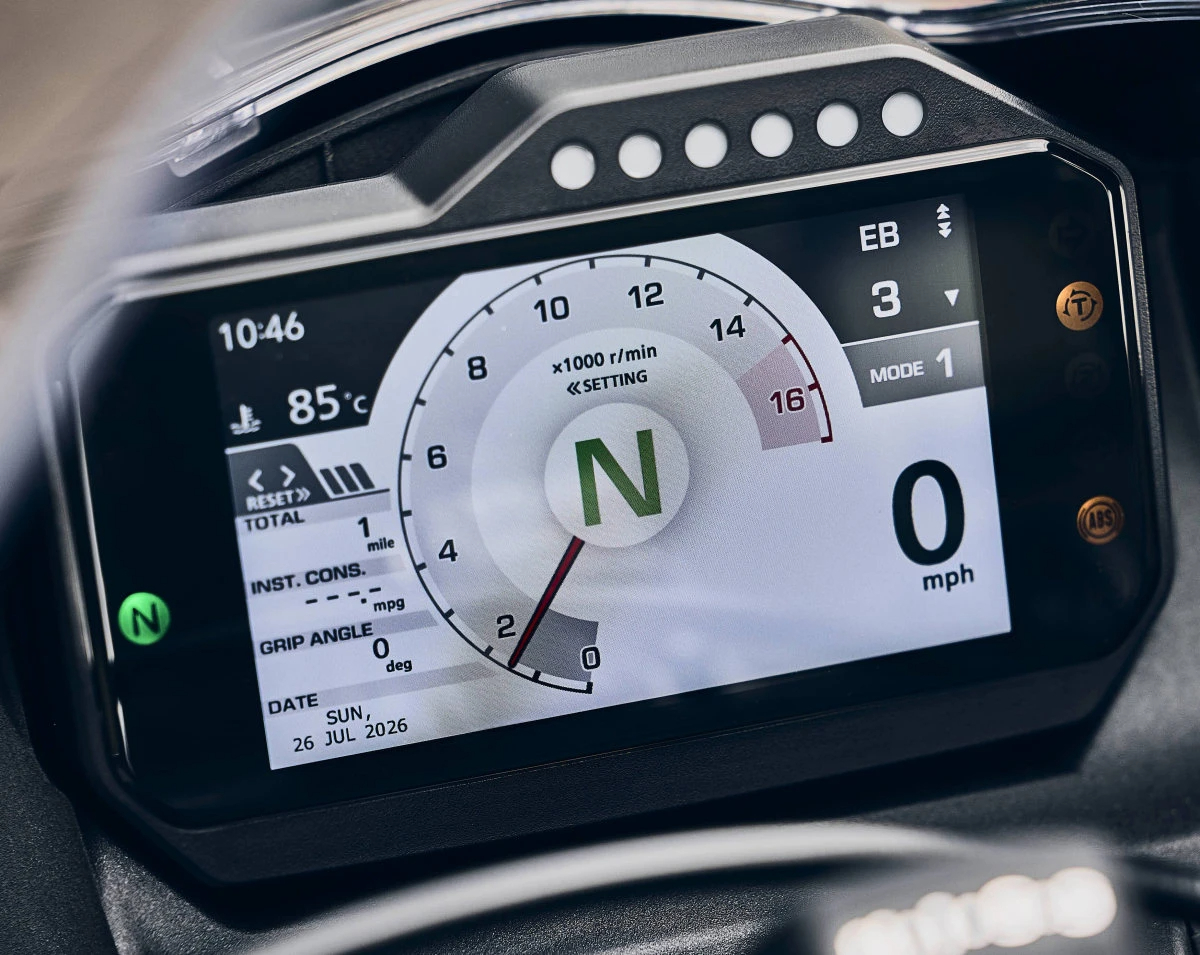
From a press release issued by Honda: Honda’s supersports icon returned to Europe for 24YM with a 599cc, inline four-cylinder engine producing 89kW @ 14,250rpm, and benefitting from an assist/slipper clutch and standard-fit quickshifter. Its electronics package was drawn from the RC213V-S and the CBR1000RR-R Fireblade and included Throttle-By-Wire control, 9-level Honda Selectable Torque Control (HSTC), Wheelie Control and Rear Lift Control. At the centre of the action and managing all of the systems, including Cornering ABS, is a 6-axis Inertial Measurement Unit (IMU) as found inside its sibling, the CBR1000RR-R Fireblade. There are 3 default riding modes, plus 2 User modes for adjustment of Engine Power, Engine Braking, HSTC and Wheelie Control.
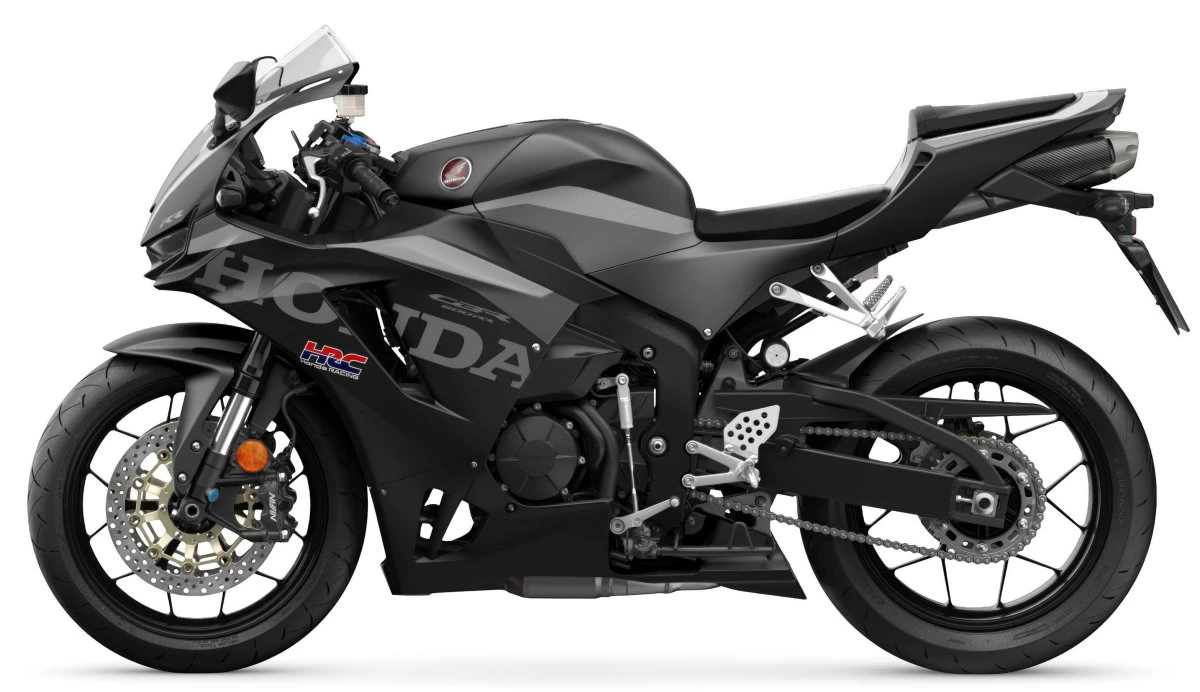
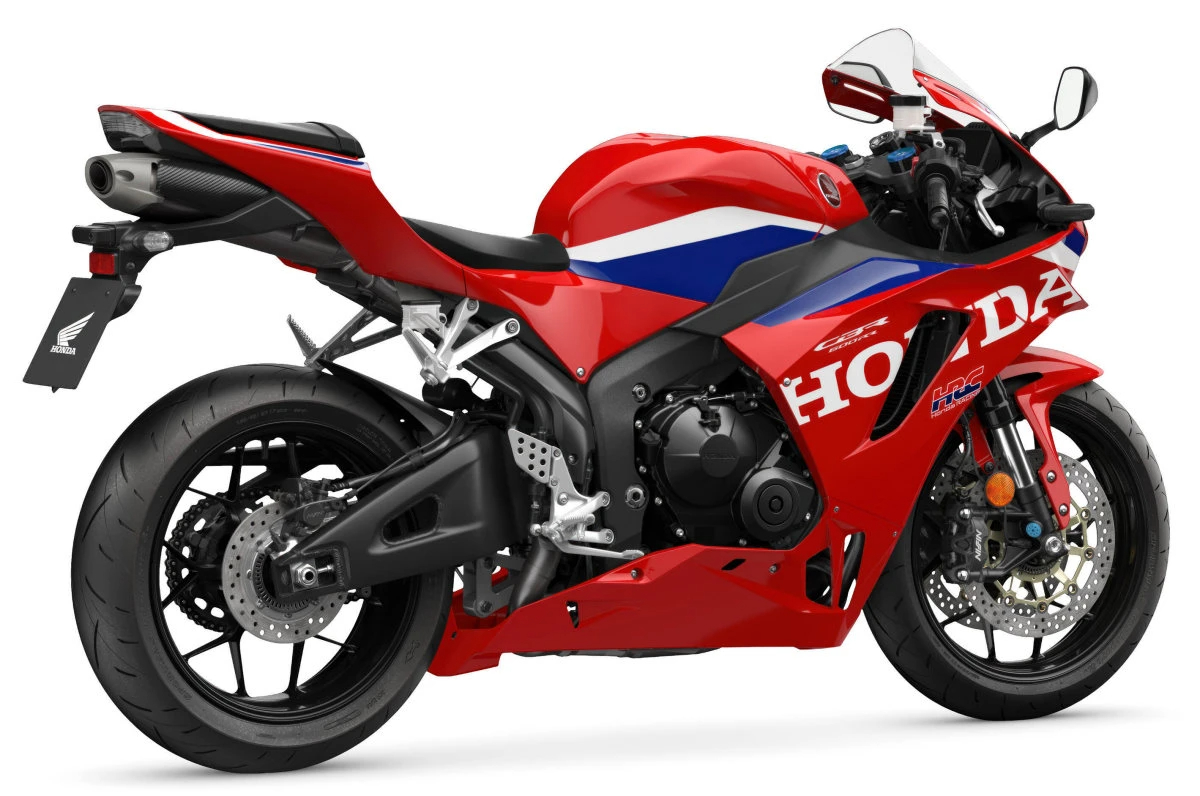
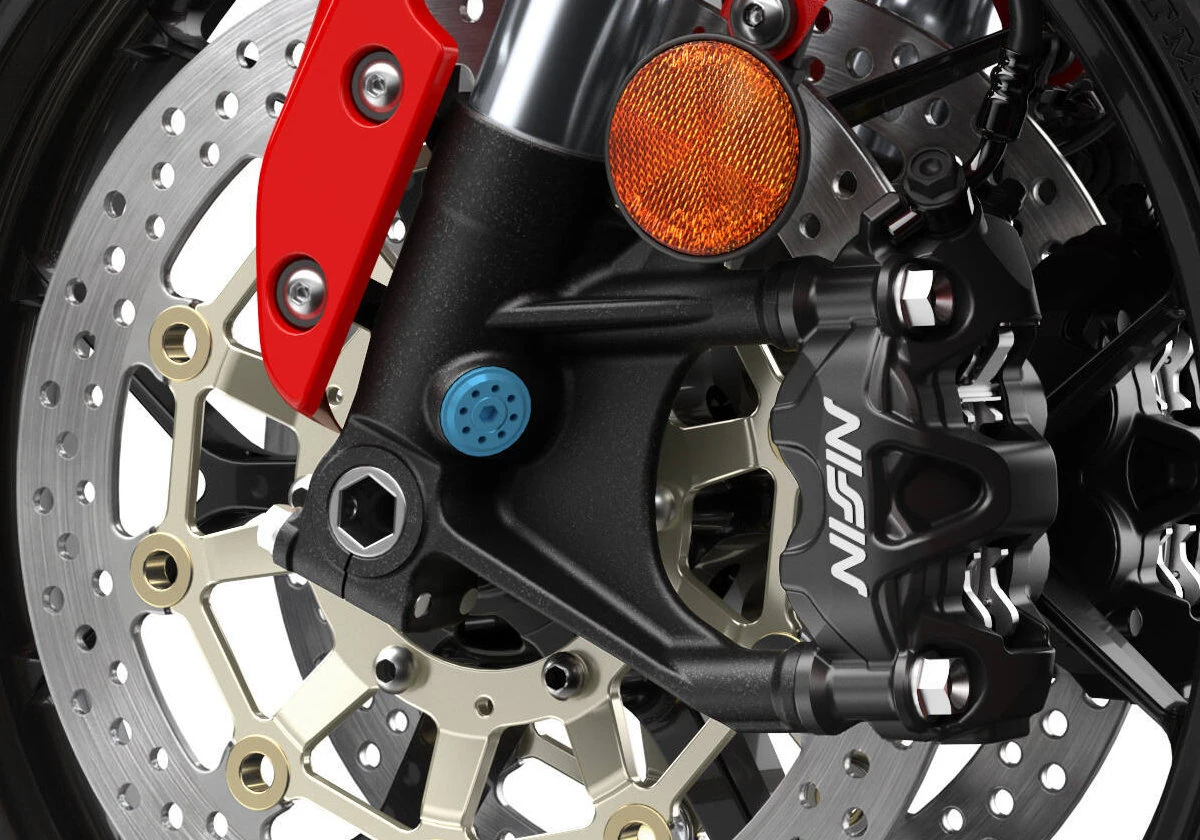
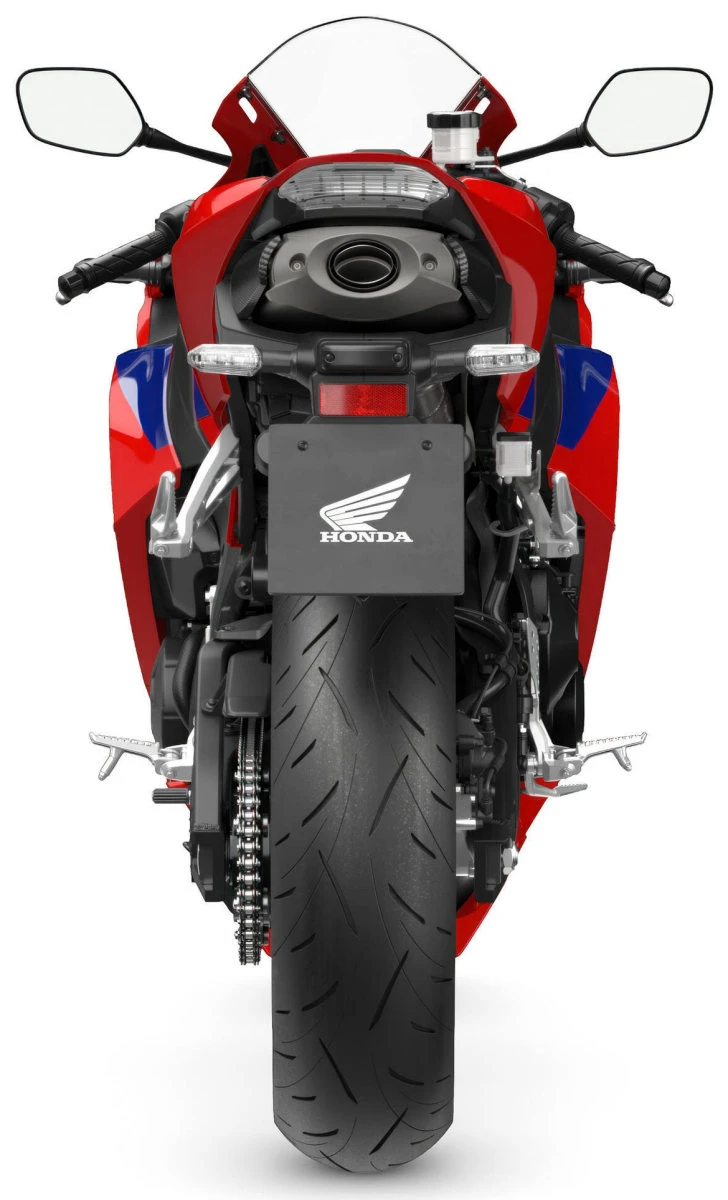
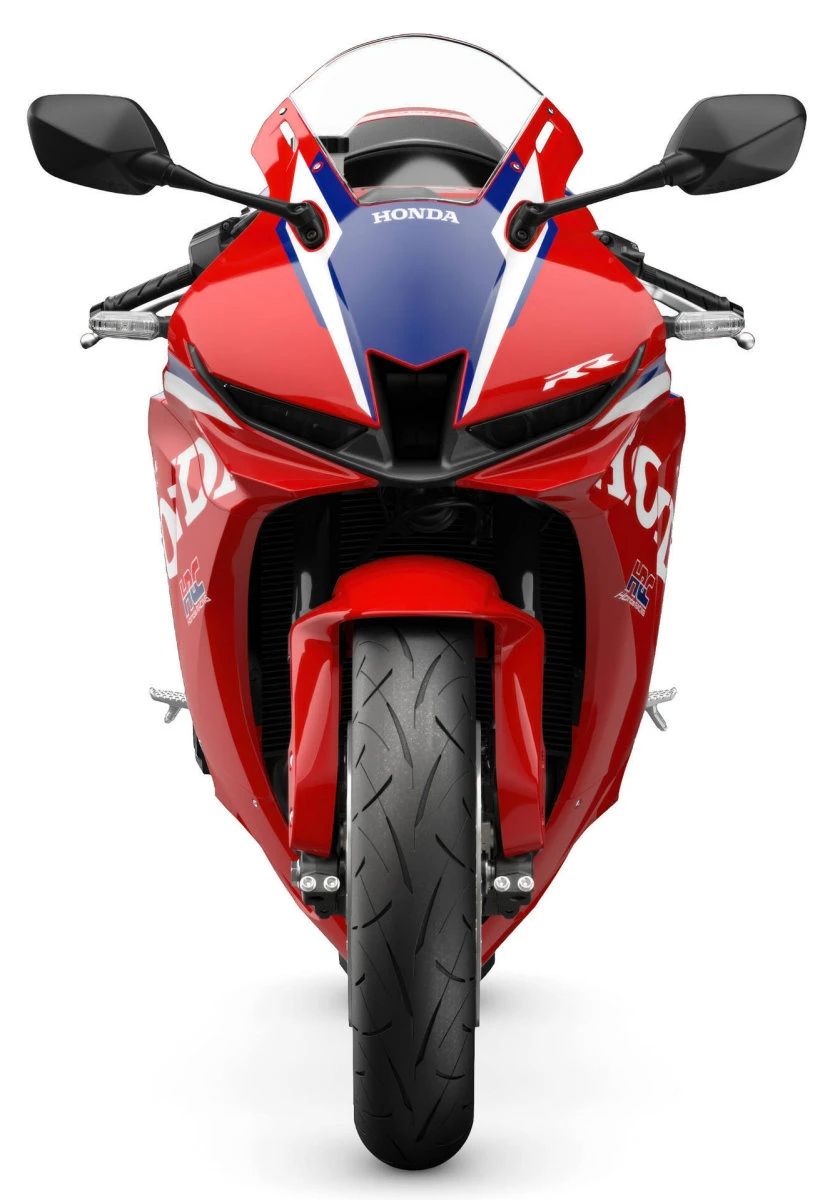
The chassis comprises a twin-spar aluminium frame, aluminium swingarm, 41mm Showa Big Piston USD front forks and Unit Pro-Link Showa rear shock. New for 27YM are the Nissin four-piston radial mount front brake calipers, taken from the CBR1000RR-R Fireblade. The units offer the braking force and stable controllability required on a racetrack. This is paired with the ABS module, also derived from the Fireblade, which opens up three selectable ABS modes (Race, Track and Standard) vastly increasing the rider’s ability to tailor the CBR600RR to their specific needs. The CBR600RR’s HMI has also been updated for 27YM, with the full colour TFT screen increasing to 5” in size for clearer relay of key riding data. Also changed for the new model year is the front facia of the bike. The lower winglets have been reprofiled as a frontal spoiler and integrated in to the area beneath the headlights for a sleeker look, without any loss of aerodynamic performance. Three new HRC Race Kits for 27YM increase the track useability of the bike for amateur riders to pro teams alike. Specifically tailored for World Super Sport, Superbike and track day use they vary in output, whilst all parts are available individually. The 27YM CBR600RR is available in two colour options: Matt Ballistic Black Metallic, in a rift on winter testing liveries from the race teams, or the evocative Ignition Red HRC TriColour, the signature colourway of Honda Racing Corporation (HRC).
Engine The CBR600RR’s 599cc, 16-valve inline four-cylinder engine
produces 89kW @ 14,250rpm, with 63Nm torque @ 11,500rpm. To achieve the power
output at this rpm ceiling the materials used for the camshafts, valve springs
and crankshaft have been upgraded for its return to manage both high-rpm inertia
force and durability. Bore and stroke is set at 67mm x 42.5mm, with compression
ratio of 12.2:1. The combination of this smooth intake passage and Throttle By Wire (TBW) delivers smooth throttle control, especially at partial openings from fully closed. The inlet ports have been re-shaped, increasing flow capacity by 2.2%. Valve timing has also been adjusted: closing of the inlet valves has been pulled back 5° with the exhaust valves opening 5° later, improving the intake efficiency of the fuel/air mixture and exhaust of combustion gas. Inlet valve diameter is 27.5mm matched to 22.5mm exhaust. For maximum cooling efficiency around the cylinder head, long reach spark plugs allow the water jacket to sit close to the plug hole and exhaust valve seat. The 4-2-1 exhaust uses large bore diameters to enhance high-rpm gas flow; wall thickness has been carefully managed to minimise weight gain. The catalyser is also physically larger, and an important part of the EURO5 homologation process. An assist/slipper clutch manages rear wheel ‘hop’ through rapid down changes and hard braking. It also reduces the physical force needed to operate it by 32% over a standard design and employs die-cast aluminium cams at both transmitting and receiving ends, with clearance between both optimised to improve lever feel.
Engine Electronics The Throttle By Wire (TBW) used by the CBR600RR is drawn from the CBR1000RR-R Fireblade and was developed on the RC213V-S. An Acceleration Position Sensor (APS), which interfaces with the throttle grip is built into the switchgear. It sends a signal to the ECU, which then sends a signal to the TBW motor that controls the butterfly. Crucially, the return spring and friction generated by the APS offers a completely natural throttle feel and control. It also offers the same controllability and feel across all of the power levels. The electronic package that goes with TBW is also drawn from
the Fireblade. 9-level (plus off) Honda Selectable Torque Control (HSTC) uses
slip rate control (which monitors the rate at which slip is changing based on
the ratio of front/rear wheel speeds) to smoothly moderate rapid wheel spin. It
gives smooth, intuitive grip management, with software developed from
wide-ranging, top-level feedback from around the world, including HRC’s riders.
Level 1 has the weakest intervention, level 9 the strongest. Power (P) operates through levels 1-5 with 1 giving ultimate
outright power. Engine Brake (EB) manages performance on a closed throttle
through levels 1-3, with 1 being the strongest engine braking; Wheelie (W)
manages through levels 1-3 (plus off) with 1 giving the weakest intervention. A standard-fit quick shifter delivers razor-fast changes, with short fuel cut time while shifting, and smoother torque pickup after shifting. It offers 3-level adjustment for feel.
Chassis At the heart of the chassis is a hollow, die-cast twin-spar aluminium frame. Wheelbase is set at 1370mm, with caster angle of 24o 04’ and 100mm trail. Length from swingarm pivot to rear wheel spindle is 569mm; whilst kerb weight is set at 194kg. Fully adjustable Showa 41mm Big Piston USD forks offer high-quality suspension reaction and control, as well as flexible geometry changes. The fully adjustable Showa rear shock operates through Unit Pro-Link. A Bosch 6-axis Inertial Measurement Unit controls the electronic package, and measures every dynamic aspect, in each plane, calculating 100 times a second using Honda’s own algorithm and in turn managing the HSTC, Cornering ABS and Rear Lift Control. For 27YM, the CBR600RR’s braking system has undergone several changes, pursuing even greater control on road and track alike. Up front, the calipers are now taken from the CBR1000RR-R Fireblade and offer increased heat resistance under braking, as well as the braking force and stable controllability required on a racetrack. The Nissin sourced units are dual radial-mount four-piston calipers, clamping 310mm floating discs; a radial-piston master cylinder is also standard fit. A rear, single-piston caliper works a 220mm disc. Controlling all of this is an updated ABS module. Again taken from the Fireblade, the new system unlocks ABS Modes, which precisely control the front and rear wheel under braking. Standard is a stability focused mode, suitable for a wider variety of conditions – particularly wet weather. Track provides a more concentrated ride, removing rear lift control for even stronger performance for circuit use. Race is an even more extreme setting, where the rear ABS function is also disabled to enable more aggressive braking with the system only control front wheel slip. A Honda Electronic Steering Damper (HESD) – designed
exclusively for the CBR600RR – operates relative to velocity and is
ECU-controlled; at lower speeds its main valve opens, reducing damping force. At
high speed the valve closes, increasing damping force for maximum stability.
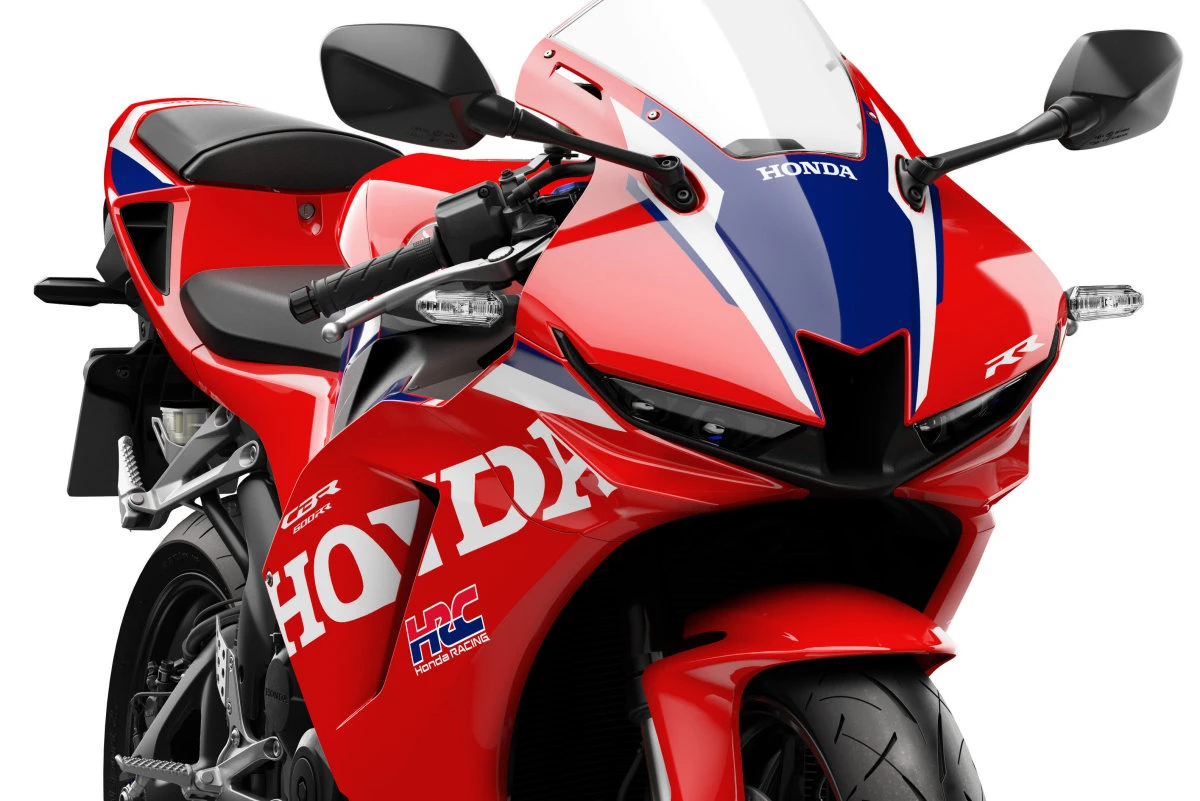
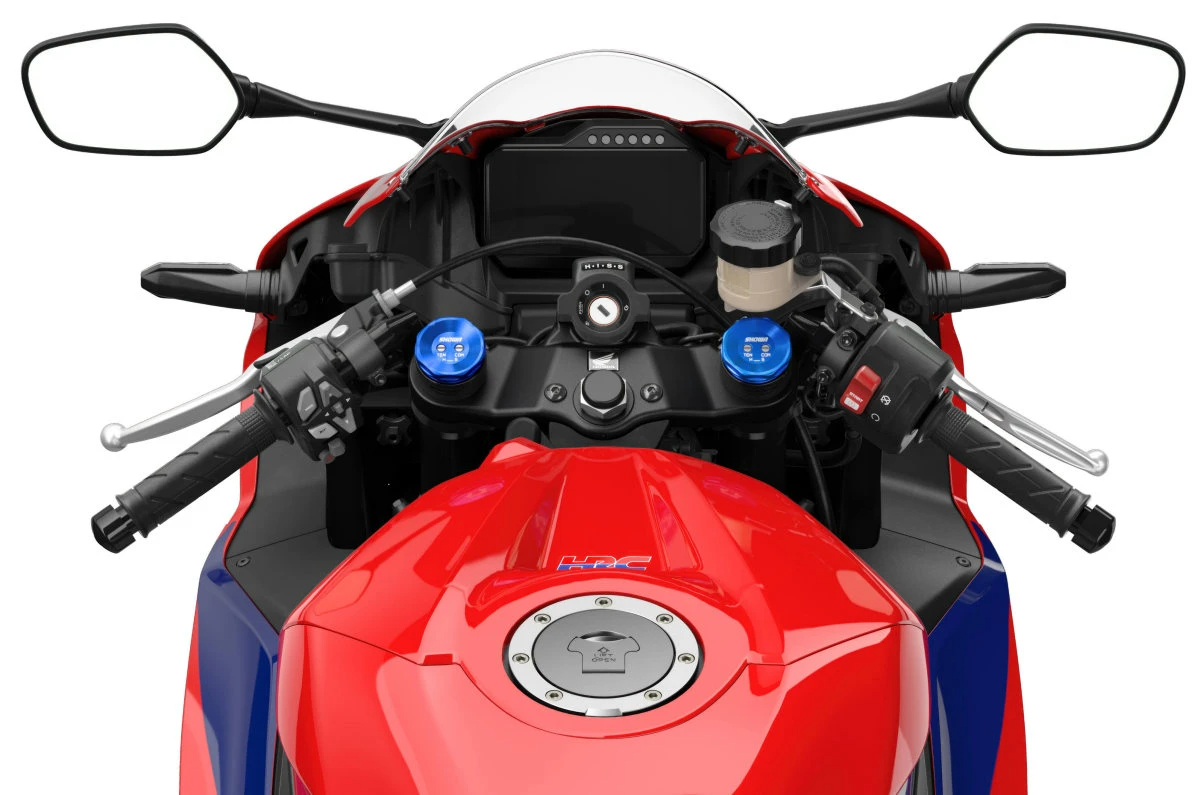
Styling & Equipment The 27YM CBR600RR gains a new look for the new year, thanks to an overhauled front fascia. The previous winglets, which helped provide stability and downforce have been integrated into the front fairing for a cleaner aesthetic and silhouette. In addition, they also help divert airflow away from the rider and their arms, reducing fatigue and buffeting. Despite their now subtle appearance, Honda engineers have achieved this with no loss of downforce or negative impact on drag. The riding position remains unchanged for 27YM, still offering the rider ultimate flexibility between road and track; the fuel tank’s design allows the rider to tuck in neatly at high speed. It’s also slim and designed to allow the rider’s arms to also have a natural place at speed. The screen sits at a 38°, to maximise aerodynamic efficiency relative to any position the rider might use on track. Seat height is set at 820mm. Radiator cooling efficiency is focus of the mid-section of the fairing, and airflow speed and pressure into the front wheel housing has been optimised for both flow in and out. The lower fairing extends close to the rear wheel and is shaped to move airflow downwards. This reduces the amount of direct air pressure exposure against the tyre, reducing overall resistance. An upgraded HMI comes courtesy of an upgrade to a five-inch
full colour TFT screen, which relays key data to the rider. A Shift-Up indicator
uses 5 white horizontal LEDs above the central display and turn on and flash at
the pre-set rpm for shifting. Information available also includes lap time,
number of laps and fastest lap.
HRC Race Kit Accessories Racing Pack Comfort Pack
|
|
|
Any corrections or more information on these motorcycles will be kindly appreciated. |