|
|
|
|
Classic Bikes
Custom Bikes
Individual
Racing Bikes AJP
AJS
Aprilia
Ariel
Avinton / Wakan
Bajaj
Benelli
Beta
Bimota
BMW
Brough Superior
BRP Cam-Am
BSA
Buell / EBR
Bullit
Bultaco
Cagiva
Campagna
CCM
CF Moto
Combat Motors
Derbi
Deus
Ducati
Excelsior
Fantic
GASGAS
Ghezzi Brian
Gilera
GIMA
Harley Davidson
Hero
Highland
Honda
Horex
Husaberg
Husqvarna
Hyosung
Indian
Jawa
Kawasaki
KTM
KYMCO
Laverda
Lazareth
Magni
Maico
Mash
Matchless
Mondial
Moto Guzzi
Moto Morini
MV Agusta
MZ / MuZ
NCR
Norton
NSU
Paton
Peugeot
Piaggio
Revival Cycles
Roland Sands
Royal Enfield
Sachs
Sherco
Sunbeam
Suzuki
SWM
SYM
Triumph
TVS
Ural
Velocette
Vespa
Victory
Vincent
VOR
Voxan
Vyrus
Walt Siegl
Walz
Wrenchmonkees
Wunderlich
XTR / Radical
Yamaha
Zero
Video
Technical
Manufacturer List Contact
|
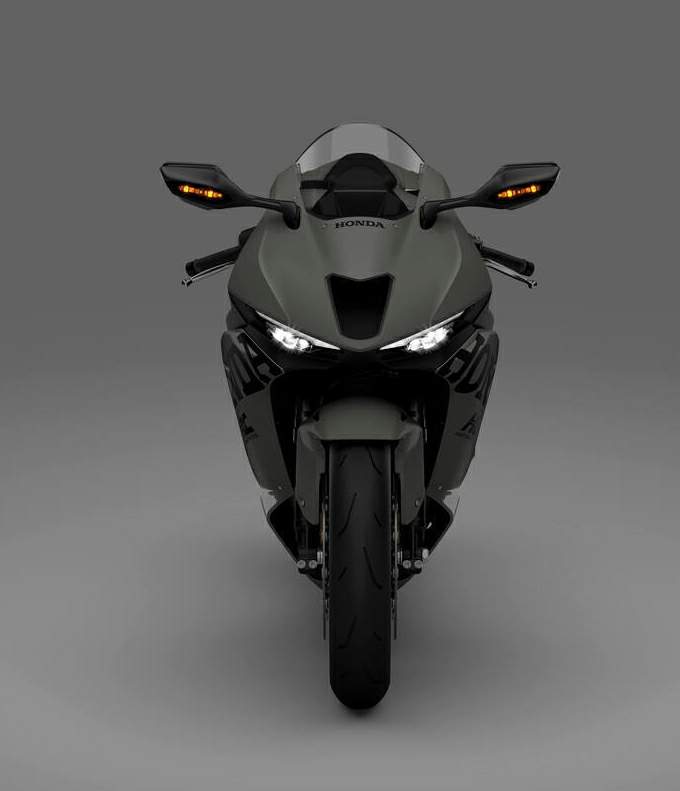
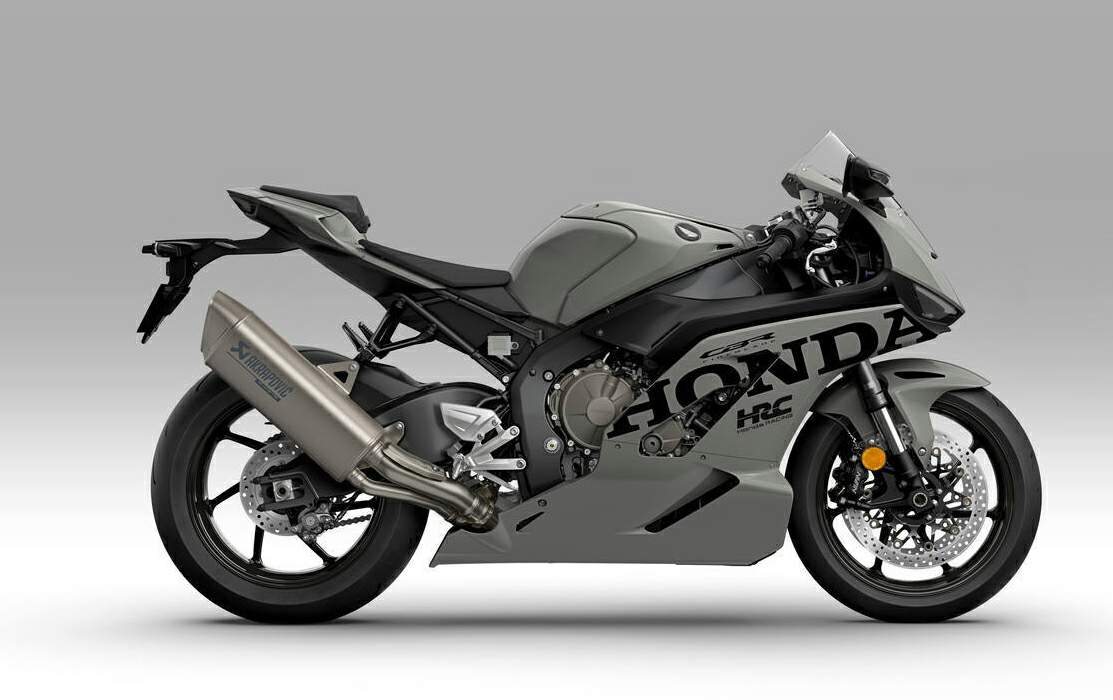
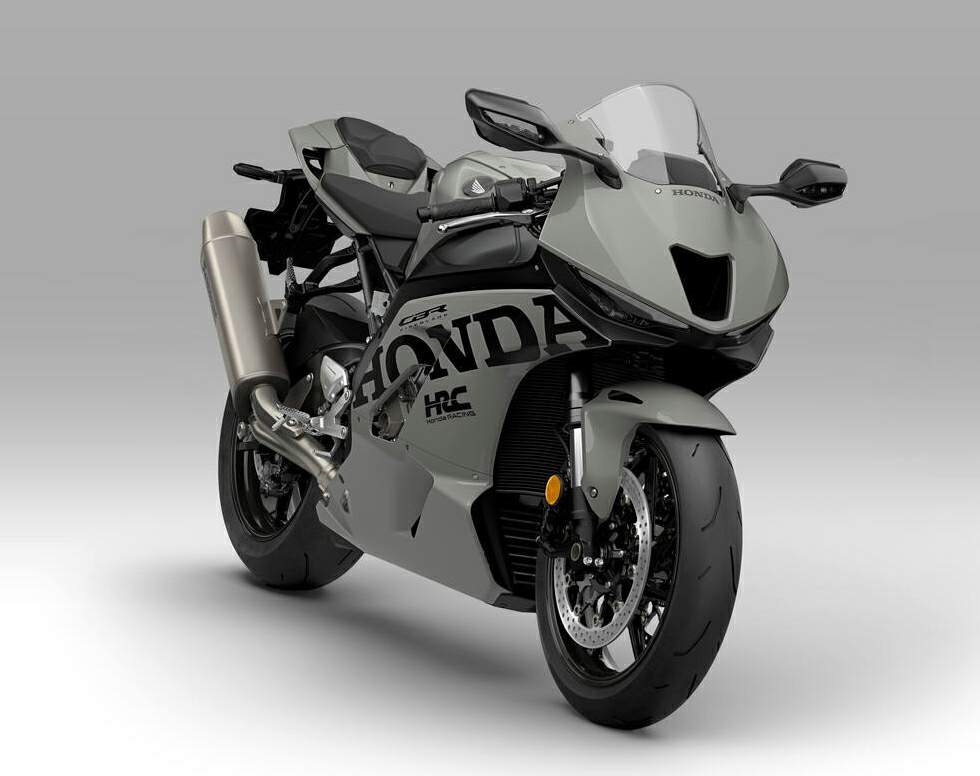
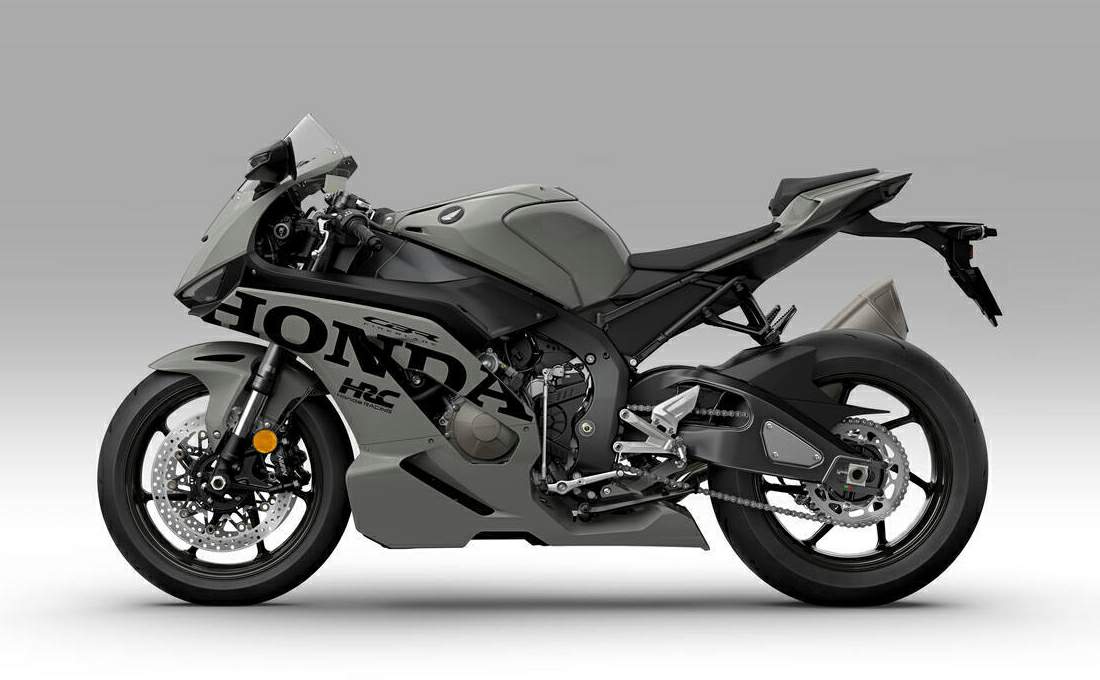
Honda CBR1000RR-R Fireblade
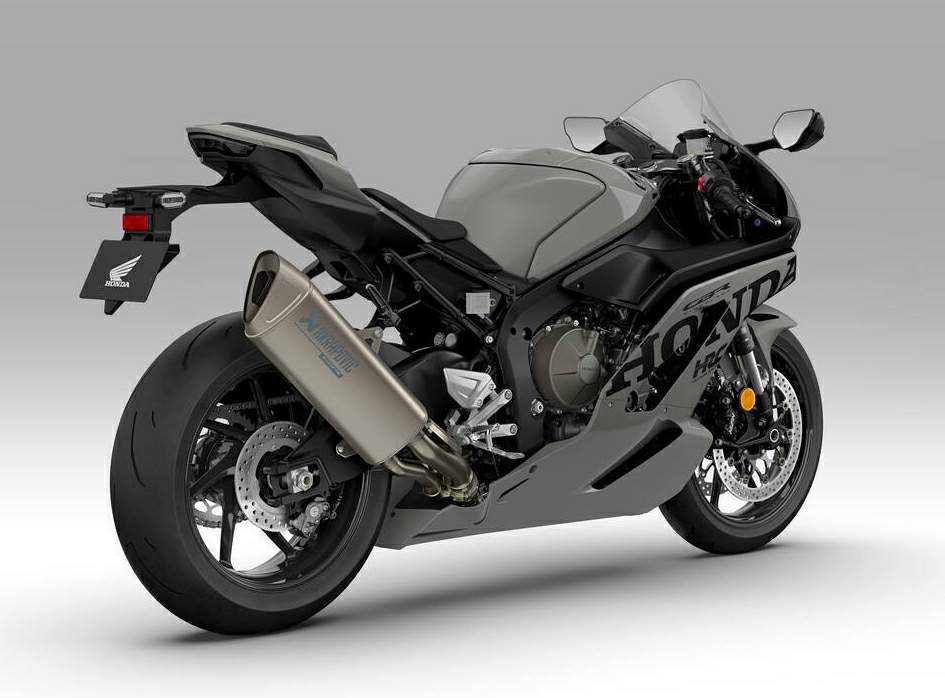
From a press release issued by Honda: The straightforward objective behind the new Fireblade’s development was to create the foundation for a more competitive race machine while retaining its capability as a road-going motorcycle. Improvements in corner entry, mid-corner speed and corner-exit acceleration were key targets, alongside overall weight reduction. To achieve them, an all-new frame features a revised rigidity balance and steering geometry, placing more load on the front wheel while raising the engine's crank centre. A lighter swingarm now uses the lower portion of the engine as the mounting point for the Showa BFRC-Lite rear shock. Revised top and bottom yokes clamp 43mm Showa Big Piston Fork (BPF) USD forks, while new lightweight wheels, 330mm front discs and Nissin calipers reduce unsprung mass. Adoption of a 520 chain contributes further weight savings. A six-axis Inertial Measurement Unit (IMU) provides precise monitoring of machine attitude and riding dynamics, supplying data for management of the electronic control systems. It also controls the rod-type, three-level Honda Electronic Steering Damper (HESD). Developed with HRC, the new aerodynamic package has been optimised for speed and efficiency. The redesigned fairing generates the same level of downforce as the previous front winglet design without the use of wing elements, while improving aerodynamic efficiency and rider wind protection. A new LED headlight incorporates Daytime Running Lights (DRL) and is paired with a compact new taillight, whilst the fuel tank is now made from titanium and no longer uses the plastic cover of previous models to save weight. Seat height has been increased to optimise the centre of gravity of the complete rider and bike package, improving on track performance.
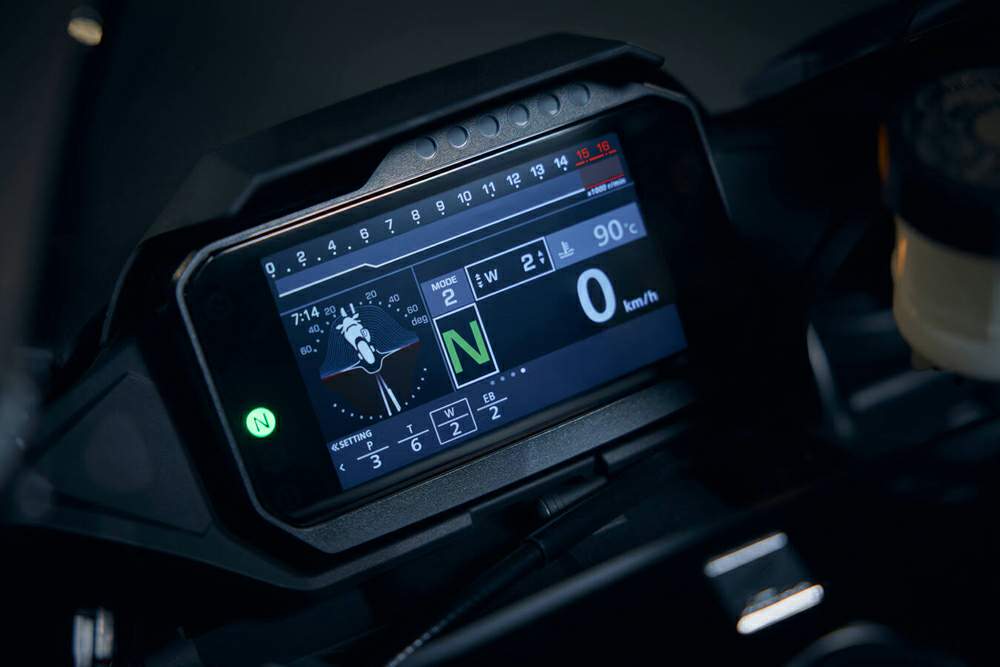
The short-stroke, inline four-cylinder engine with semi-cam gear train produces 160kW @ 14,000rpm and 114Nm of peak torque. New Two-Stage Variable Air Funnels maintain top-end performance while strengthening mid-range output, while the Two-Motor Throttle-By-Wire (TBW) system delivers precise control of both acceleration and engine braking. Internal revisions include new cam timing, cam sprocket adjustment options and updates to the valve train. Newly machined piston crowns and combustion chambers raise compression ratio, while magnesium engine covers, aluminium bolts and lighter crankcases contribute to reduced mass. The crank centre has also been raised, while revised mainshaft and countershaft spacing broadens transmission ratio possibilities*. First gear is now five per cent taller. As before, a lightweight, compact Akrapovič muffler is fitted as standard. Three default riding modes provide a broad range of performance characteristics, with full adjustment of Power, Engine Brake, Wheelie Control and Honda Selectable Torque Control (HSTC). All settings have been revised to suit the engine's updated performance character. The electronics package also includes adjustable Start Mode, while Honda's Smart Key system adds everyday convenience. Simple, intuitive control of the bike’s multiple systems is handled through a 5-inch TFT display operated via a four-way switch on the left hand grip. The 27YM Honda CBR1000RR-R Fireblade will be available in:
Chassis Showa 3-level Honda Electronic Steering Damper (HESD)
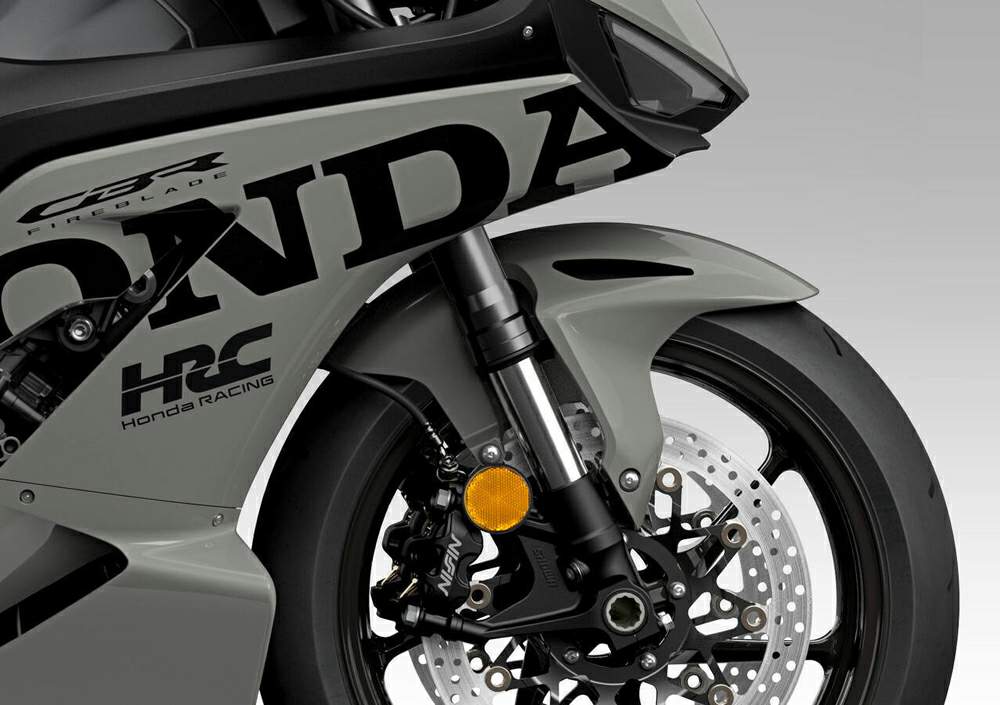
controlled by IMU for stability management The air intake duct through the headstock has been enlarged, while the engine hanger at the front of the cylinder block is now a bolt-on stay rather than a frame-integrated stiffening structure. As before, the upper mount of the Pro-Link rear shock attaches to the rear of the engine via a bracket. To further refine rigidity balance, the lower shock mounting point has moved from the frame to the rear of the engine. Compared to the previous design, lateral stiffness is reduced by 20% improving cornering performance, grip feel and stability on both road and track. Wheelbase is 1,455mm, with caster angle and trail set at 24.0°/ 101mm (previously 24.1°/ 101.9mm). Weight distribution has also shifted forward to 53.3% front and 46.7% rear (from 52.8%/ 47.2%), increasing front-end load. The crankshaft centreline has been raised by 5.2mm to 432.5mm, while wet weight is reduced by 1.3kg to 199kg. A redesigned subframe uses round-section thin-wall aluminium tubing, while seat height rises from 831.5mm to 843mm to improve rider mobility during direction changes. The pressed aluminium swingarm is completely redesigned and measures in at 620.6mm. Its pivot shaft diameter is reduced by 3mm to 17mm, with wall thickness and pivot width optimised to reduce lateral rigidity by 12% while maintaining torsional rigidity to match the frame's revised balance. The result is improved rear-tyre feedback and grip feel. A 200g weight reduction in the swingarm contributes to lower unsprung mass and improved tyre contact, while the move from a 525 to a 520-drive chain saves a further 270g, reducing both unsprung mass and rotational inertia. New top and bottom yokes clamp 43mm Showa Big Piston Fork (BPF) USD forks. The fork's large damping volume reduces hydraulic pressure generated during compression and rebound, resulting in smoother damping action and improved tyre contact. Spring preload, rebound damping and compression damping are fully adjustable. Fork length has also been increased slightly, providing greater scope for trackside geometry adjustment. Rear suspension is provided by a fully adjustable Showa Balance Free Rear Cushion Light (BFRC-Lite) shock absorber. Unlike a conventional single-tube design, the BFRC-Lite employs a double-tube structure comprising a damper case and internal cylinder. Damping force is generated as displaced oil flows through a separate damping circuit rather than valves within the piston itself. This design allows pressure changes within the shock to be controlled more smoothly, improving damping response and load absorption. It also delivers more consistent damping characteristics during transitions between rebound and compression. Braking performance has been enhanced with Nissin radial-mount four-piston front calipers, developed to deliver greater consistency under the high loads experienced in Superstock racing. Revised piston materials and surface treatments improve heat management and help maintain lever feel under sustained hard use. The calipers operate on lighter 330mm x 4.5mm front brake discs. A Bosch six-axis Inertial Measurement Unit (IMU) provides precise measurement of pitch and roll, enabling accurate management of the motorcycle's electronic control systems. The Fireblade is also equipped with a lightweight, through-rod Honda Electronic Steering Damper (HESD), mounted below the steering stem and connected to the lower yoke. HESD operation is governed by inputs from the wheel-speed sensors and IMU, with three levels of adjustment available. Rear Lift Control and Cornering ABS further support braking performance. STANDARD mode is optimised for road riding, providing strong braking performance with reduced pitching. TRACK mode is calibrated for braking from higher circuit speeds and does not suppress rear-wheel lift, while RACE mode disables rear-wheel ABS intervention and Cornering ABS functionality. The aluminium wheels adopt a new seven-spoke hollow design, manufactured using the same GDC process as the frame. Revised spoke profiles and thinner wall sections reduce weight by 190g at the front and 590g at the rear, lowering both unsprung mass and rotational inertia. Tyre sizes remain 120/70-ZR17 front and 200/55-ZR17 rear.
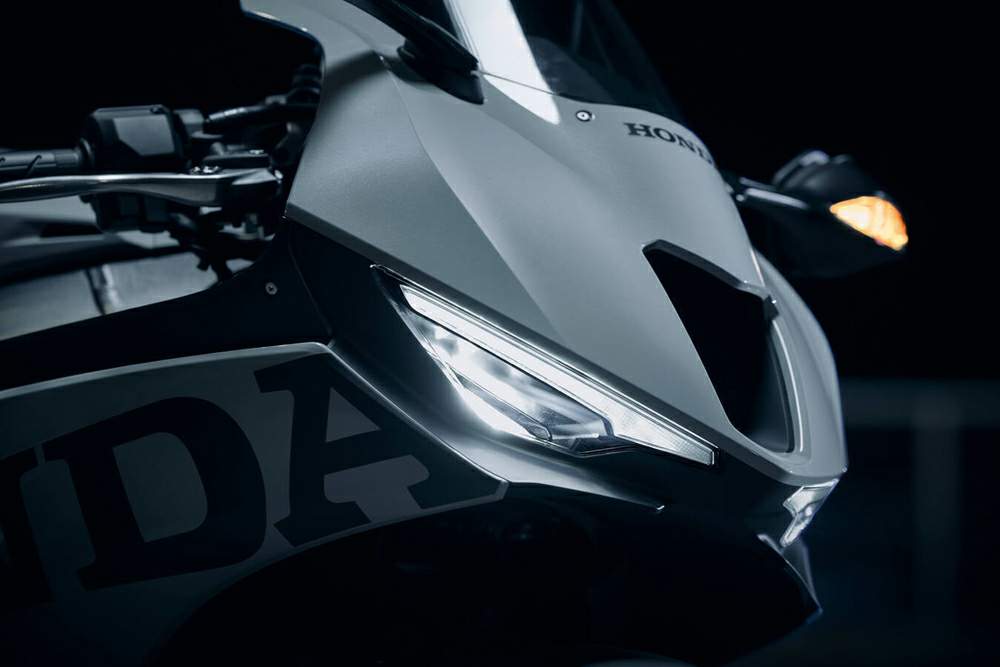
Aerodynamic Package & Equipment - Smart Key operation The CBR1000RR-R Fireblade adopts an all-new aerodynamic package jointly developed alongside HRC, with a clear objective: maximise performance while improving rider usability on both road and track. Completely redesigned for 27YM, the fairing generates the same level of downforce as the previous design without the use of wing elements. At the same time, aerodynamic efficiency has been improved, reducing drag while increasing rider wind protection at high speed. The layered mid-section of the fairing, shaped using feedback gained through MotoGP development, improves airflow management around the rider and contributes to more stable aerodynamic performance. A key element of the redesign is the integration of new lower cowl aerodynamic sidepods. Developed using aerodynamic concepts refined through MotoGP competition, the sidepods manage airflow along the lower section of the motorcycle to improve cornering performance, particularly during high-speed direction changes where aerodynamic load can influence chassis behaviour. Working in conjunction with the revised bodywork, the sidepods contribute to increased aerodynamic efficiency while maintaining the Fireblade's downforce characteristics. Their integration within the lower fairing also allows Honda to achieve the required aerodynamic effect without relying on external wing structures, maintaining a cleaner overall design. The increase in frontal area compared with the previous model was carefully managed to improve rider movement on the motorcycle while delivering the desired aerodynamic gains. Every surface of the new bodywork has been shaped with performance as the priority. The final design is the result of an extensive development process combining Computational Fluid Dynamics (CFD) analysis with track testing. Initial concepts were generated from aerodynamic performance targets before progressing through multiple rounds of digital simulation, clay modelling and real-world evaluation to refine both aerodynamic efficiency and rider ergonomics. A redesigned LED headlight incorporates Daytime Running Lights
(DRL) and is designed as a single removable unit for racing applications. It is
matched by a compact, lightweight LED taillight. Rider interaction is managed through a high-resolution, full-colour 5-inch TFT display. Fully customisable, it allows key information to be configured according to rider preference. A compact left-hand switch cluster incorporates a four-way controller, enabling intuitive adjustment of riding modes and display functions, while the CBR logo is displayed at start-up. To protect the engine during warm-up, maximum engine speed is
initially limited to 8,000rpm. As coolant temperature approaches its operating
range, the available rev limit increases to over 14,500rpm. In support of Honda's goal of achieving zero environmental impact by 2050 through Carbon Neutrality, Resource Circulation and Clean Energy initiatives, the CBR1000RR-R Fireblade incorporates a range of sustainable materials, including Post-Industrial Recycled polypropylene and polyamide (PIR PP and PIR PA), Post-Consumer Recycled polypropylene (PCR PP) and DurabioTM in selected components.
Engine The Fireblade's 1,000cc inline DOHC four-cylinder semi-cam gear engine remains one of the defining elements of the machine. For 27YM, peak output is maintained at 160kW at 14,000rpm, with maximum torque of 114Nm at 10,500rpm. Development has instead focused on strengthening mid-range performance, improving rideability and reducing overall engine mass to complement the capability of the new chassis. A comprehensive weight-reduction programme contributes to this objective. The crankcases have been lightened, while magnesium now replaces aluminium for the cylinder head cover, right crankcase cover, clutch cover and oil pan. Thirty-five aluminium fasteners replace previous steel items, saving a further 215g. Bore and stroke dimensions remain unchanged at 81mm × 48.5mm, preserving the engine's highly oversquare layout. Compression ratio increases from 13.6:1 to 13.8:1 through more precise manufacturing processes. Both piston crowns and combustion chambers are now machined to tighter tolerances, contributing to improved combustion efficiency and stronger mid-range output. The semi-cam gear train valve system remains a key element of
the Fireblade's high-rpm capability. For 27YM, cam timing has been revised and an all-new cam sprocket design increases the available range of valve timing adjustment** . The valve train, including the valve springs, has also been upgraded to enhance durability under sustained high-performance operation. Forged TI-64A titanium connecting rods and rod caps reduce weight by 50% compared to equivalent chromium-molybdenum steel components. They are secured by HB149 chromium-molybdenum-vanadium steel bolts without the use of fastening nuts. As with the RC213V-S, DLC coating is applied to the big-end bearing surfaces, while the small-end bushes are manufactured from shaved C1720-HT beryllium copper to ensure reliability at high engine speeds. To reduce cylinder bore distortion and minimise friction, the engine employs a built-in bottom-bypass cooling system. Coolant circulates through the primary water jacket while the lower cylinder areas remain uncooled, creating a more consistent temperature distribution throughout the bores and improving mechanical efficiency. Additional measures support durability at sustained high rpm. The piston skirts utilise an Ober coating containing Teflon and molybdenum, while the piston-pin clip grooves receive nickel-phosphorous plating. Multi-point piston oil jets direct cooling oil onto the pistons throughout the operating cycle. At lower engine speeds, integrated check balls restrict oil flow when cooling demand is reduced, lowering oil-pressure losses and reducing friction. For 27YM, the design of the internal oil strainer has also been revised to minimise oil aeration. Air is supplied via a ram-air intake positioned in the high-pressure area at the front of the fairing. Pressurised air passes directly through the headstock and around the steering stem before entering the airbox, helping maintain performance across a wide speed range. New for 27YM is a 2-stage Variable Air Funnel system, the first application of the technology on a Honda mass-production motorcycle. Below 11,750rpm the funnels operate in their longer position to optimise intake efficiency and strengthen mid-range performance. Above 11,750rpm they transition to a shorter configuration, promoting high-velocity airflow and maintaining peak power at high engine speeds. The 2-Motor Throttle By Wire (TBW) system continues to employ separate actuator motors for cylinders one and two, and cylinders three and four. At smaller throttle openings, the first pair of throttle valves opens independently to provide finer control of torque delivery and improve low- and mid-range manageability. As engine speed rises, all four throttles operate together to deliver maximum performance. Throttle body diameter remains 52mm. The system also delivers enhanced engine-braking control. During deceleration with the throttle fully closed, cylinders three and four are managed independently to increase pumping losses and strengthen engine braking, while cylinders one and two remain closed to allow a smoother transition back to acceleration. To minimise engine width, the starter motor acts through the clutch main shaft rather than directly through the crankshaft. This arrangement allows a more compact crankshaft design, while shared use of the primary driven gear helps reduce packaging requirements. As part of the chassis structure, the rear of the engine also serves as the upper mounting point for the rear suspension system. For 27YM, the distance between the mainshaft and countershaft increases by 3mm to 68mm. The additional spacing expands gear-selection flexibility, allowing transmission ratios to be optimised for a wider range of racing applications. First gear is also five per cent taller, improving launch characteristics and broadening gearing options for different circuit layouts. The four exhaust downpipes utilise an oval cross-section design and are matched to a lightweight titanium Akrapovič muffler. Its compact dimensions support mass centralisation while also maximising available right-hand lean angle.
Engine Electronics The Fireblade's electronic control package combines Honda Selectable Torque Control (HSTC), 2-Motor Throttle By Wire (TBW) and six-axis IMU technology to deliver precise management of engine performance and rear tyre grip. Developed using extensive global feedback, including input from HRC riders, the system has been recalibrated for 27YM to match the engine's revised output characteristics and the capability of the new chassis. Three default riding modes provide a range of performance settings, with the rider able to further tailor system intervention and engine response to suit conditions and preference. All parameters have been revised for 27YM. Power (P) offers five levels of adjustment, with Level 1 delivering maximum engine performance. Engine Brake (EB) provides three levels of adjustment, with Level 1 delivering the strongest engine-braking effect through the 2-Motor TBW system. Wheelie Control (W) offers three levels of intervention, plus Off, with Level 1 allowing the greatest degree of front-wheel lift before intervention. Honda Selectable Torque Control (HSTC) operates across nine levels and works in conjunction with the 2-Motor TBW system to provide smooth, intuitive management of rear-wheel traction. By constantly monitoring machine attitude and wheel-speed information, the system maintains drive while delivering predictable intervention when available grip changes. Wheelie Control uses data supplied by the IMU, together with front and rear wheel-speed sensors, to manage front-wheel lift while maintaining acceleration performance. The system is designed to preserve forward drive rather than simply suppress wheelies, ensuring efficient use of available grip. The Fireblade is also equipped with Start Mode for race starts. Four engine speed limits, 6,000, 7,000, 8,000 and 9,000rpm, can be selected, allowing the rider to hold the throttle fully open while concentrating solely on clutch release and launch execution.
New for 2027, a Smoke Windscreen and updated HRC graphics package provide an even sharper race inspired appearance, while wheel stripes and colour-matched Seat Cowls reinforce the Fireblade's sporting character. For the 27YM Fireblade, Honda will also offer the dedicated Sport Pack; bringing together a selection of the most popular styling and protection accessories, including the Smoke Windscreen, Centre Tank Pad, Wheel Stripes, Frame Guard, Sprocket Protector, Seat Cowl and Quick Shifter. In addition to the Sport Pack, riders can further personalise
their motorcycle with a range of individual accessories, including the USB
Type-C Charger, Indoor Body Cover, HRC Sticker Kit, Oil Filler Cap, Side Tank
Pads, Mirror Hole Covers and License Plate Hole Cover.
|
|
|
Any corrections or more information on these motorcycles will be kindly appreciated. |

 Accessories