|
|
|
|
Classic Bikes
Custom Bikes
Individual
Racing Bikes AJP
AJS
Aprilia
Ariel
Avinton / Wakan
Bajaj
Benelli
Beta
Bimota
BMW
Brough Superior
BRP Cam-Am
BSA
Buell / EBR
Bultaco
Cagiva
Campagna
CCM
CF Moto
Combat Motors
Derbi
Deus
Ducati
Excelsior
GASGAS
Ghezzi Brian
Gilera
GIMA
Harley Davidson
Hero
Highland
Honda
Horex
Husaberg
Husqvarna
Hyosung
Indian
Jawa
Kawasaki
KTM
KYMCO
Laverda
Lazareth
Magni
Maico
Mash
Matchless
Mondial
Moto Guzzi
Moto Morini
MV Agusta
MZ / MuZ
NCR
Norton
NSU
Paton
Peugeot
Piaggio
Revival Cycles
Roland Sands
Royal Enfield
Sachs
Sherco
Sunbeam
Suzuki
SWM
SYM
Triumph
TVS
Ural
Velocette
Vespa
Victory
Vincent
VOR
Voxan
Vyrus
Walt Siegl
Walz
Wrenchmonkees
Wunderlich
XTR / Radical
Yamaha
Zero
Video
Technical
Complete Manufacturer List
|
Honda CB 750 MC04 by Carriero Corse
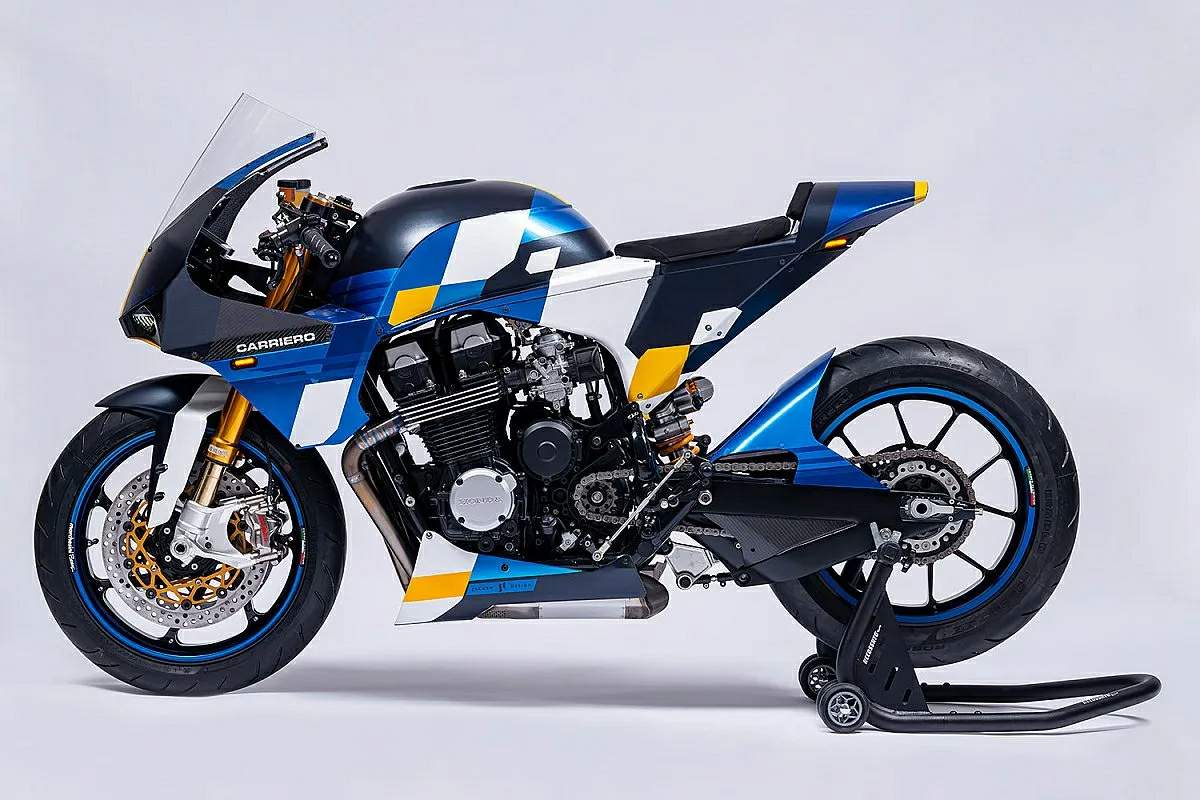
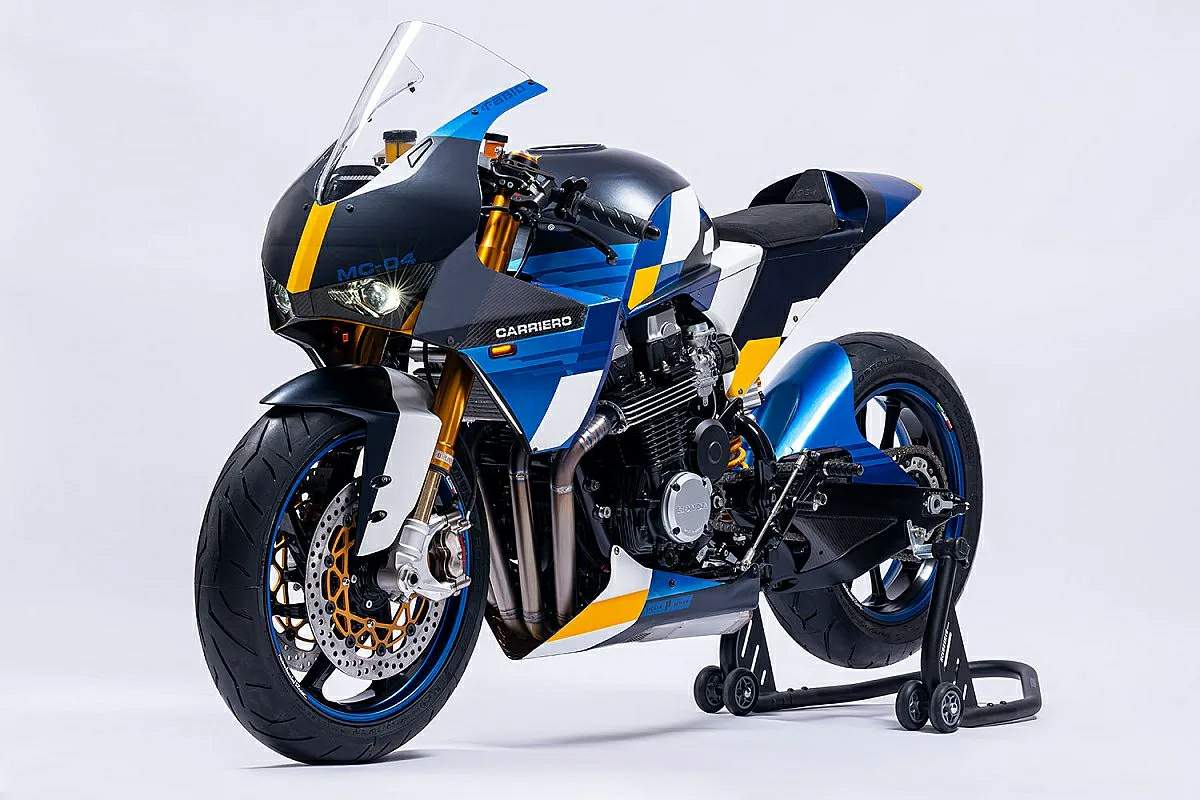
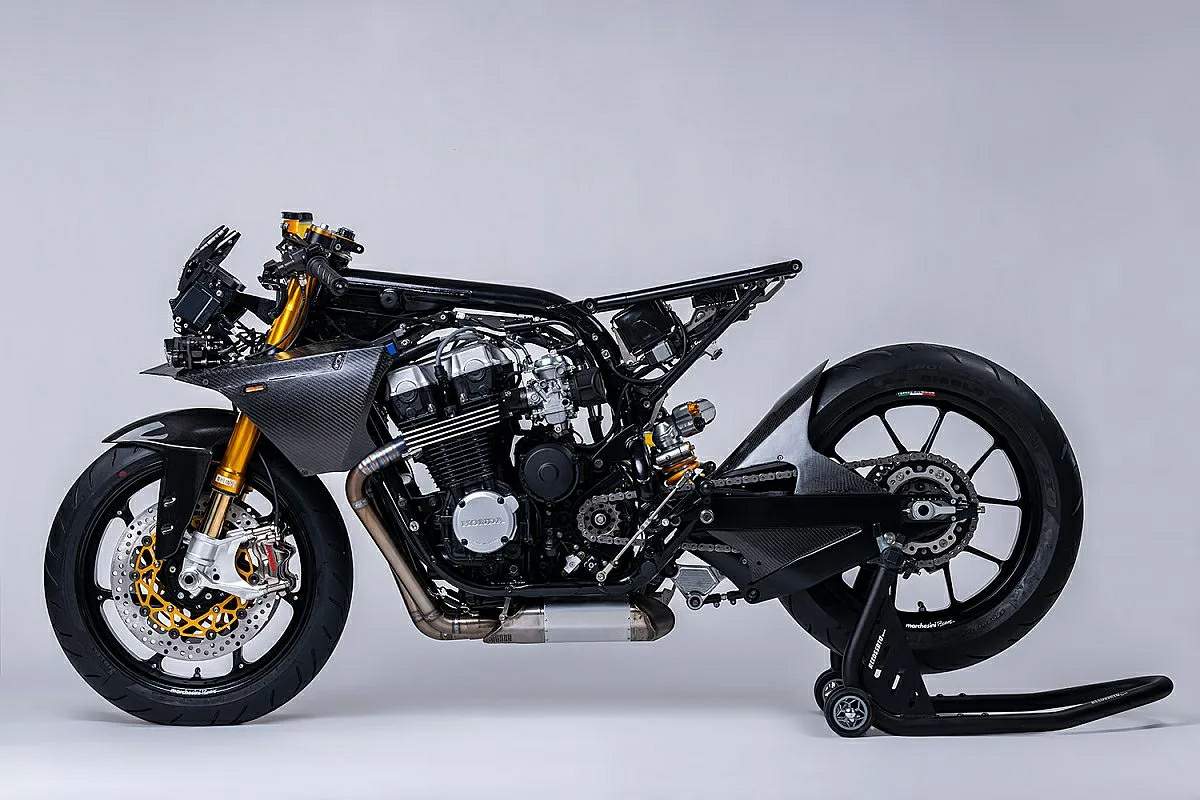
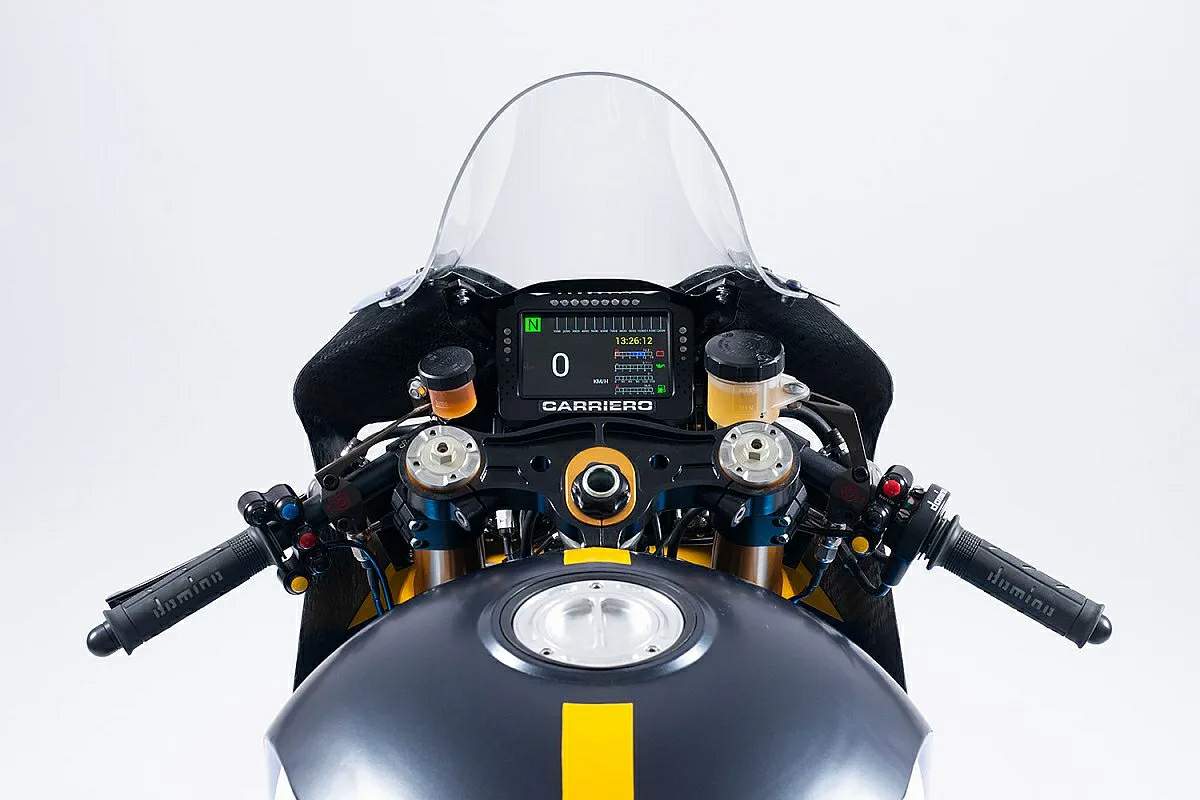
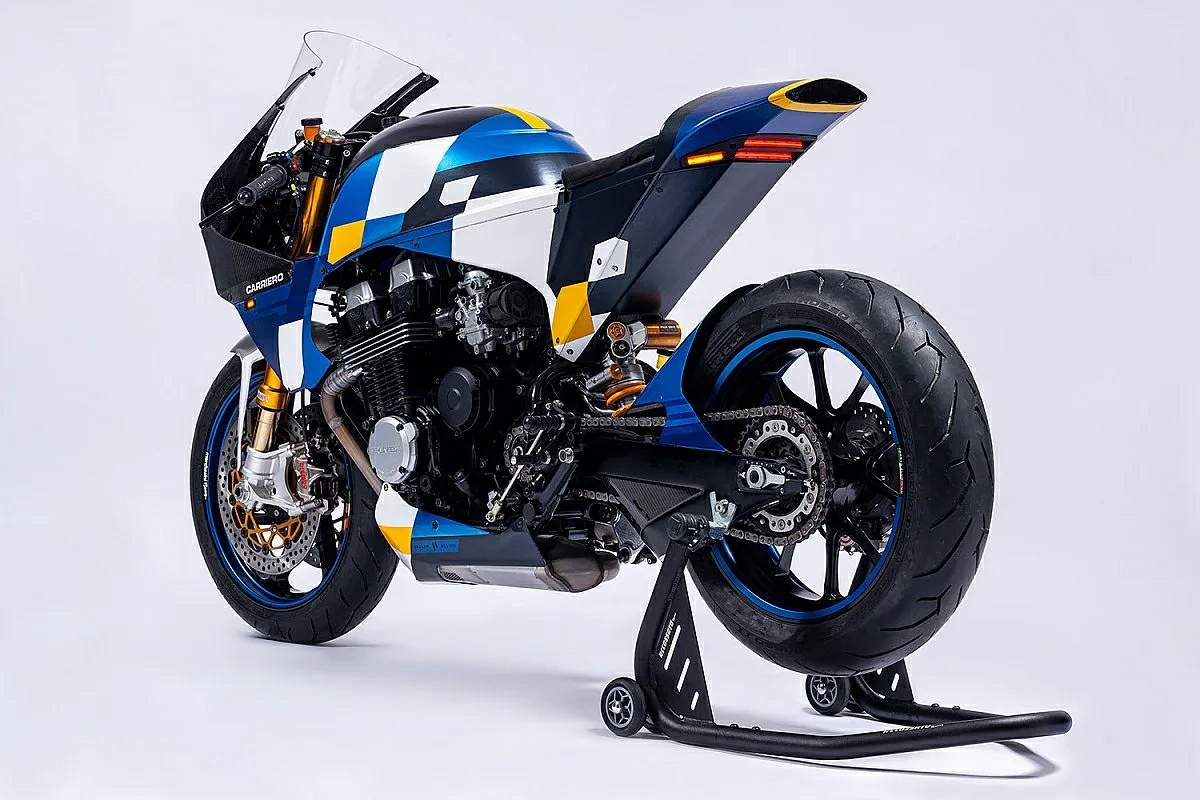
The MC04 project revisits the 1991 Honda CB750 Sevenfifty. The concept aims to apply and further develop the original principles of the cafe racer as they were historically intended. In the early 1970s, cafe racing emerged from informal challenges between riders, racing from cafe to cafe on their own motorcycles. As competition intensified, riding skills evolved alongside continuous mechanical improvements, following the same logic that has always driven motorsport development. MC04 applies these principles directly. Overall weight was significantly reduced, and the rider position was re-engineered to improve riding performance and control. Very little of the original motorcycle remains unchanged. The main frame hoop was retained, while the original seat frame was completely removed and replaced with a newly designed assembly. Multiple areas of the chassis were modified to accommodate revised layouts and component relocation. The motorcycle incorporates adjustable elements, allowing different kinematic configurations. Engine displacement was increased through the use of newly designed pistons, featuring reduced mass and a higher compression ratio. The bodywork was fully designed and manufactured in carbon fibre. The motorcycle is finished with dynamic graphics that follow and emphasize the rake defined by the seat line.
ARCHITECTURE Wheelbase reduction was achieved through the development of a bespoke rear swingarm with reduced length. The swingarm features adjustable geometry, with a minimum wheelbase of 1408 mm, representing a reduction of 136.0 mm compared to the donor motorcycle. This places MC04 within the dimensional range of modern hypersport motorcycles. Overall mass was drastically reduced, achieving a weight saving of 35.0 kg through the adoption of carbon fibre bodywork, magnesium wheels, and a bespoke titanium exhaust system. The electronic architecture and wiring loom were designed from scratch, resulting in a compact and lightweight loom assembly, complemented by a lithium battery.
CHASSIS & COMPONENTS The rear swingarm is a bespoke fabricated component, combining sheet metal construction with sections machined from solid material. Integrated carbon fibre covers form part of the assembly, contributing to a minimized overall swingarm weight. At the front, the suspension system features fully adjustable Öhlins FGRT forks with four-way adjustment. The installation includes bespoke top and bottom yokes, allowing adjustment of caster and trail. The nominal caster angle of 27.5° can be reduced to 24.7°, improving steering feedback and overall vehicle responsiveness. The lower yoke interfaces with an adjustable steering damper supplied by Öhlins. The original seat frame was removed and replaced with a newly designed structure housing the electronic module, including the battery, ECU, and power distribution unit. The main chassis hoop was retained, with additional brackets introduced to support the new instrumentation and to allow relocation of the footpegs. The motorcycle is equipped with Pirelli Diablo Rosso II tyres mounted on 17-inch Marchesini forged aluminium wheels. The front tyre size of 120/70 Rl 7 is paired with a 170/60 R17 at the rear. The rear wheel assembly incorporates bespoke hub bells, enabling the use of a lightweight rear sprocket and a splined rear brake bell. This configuration allows the implementation of a floating system, reducing unsprung mass and improving braking performance. Both front and rear braking systems are supplied by Brembo and feature billet aluminium P4/32 mm calipers at the front. The front brake system is equipped with 320 mm floating discs, while the rear uses a 220 mm disc. Brake levers are also Brembo components, machined from billet aluminium.
POWERTRAIN (ENGINE & GEARBOX) The block height was reduced, increasing the compression ratio to 10.4:1. The CB750 is originally equipped with a 5-speed transmission, derived as a simplified version of the CBX750 gearbox. In this project, the complete CBX750 geartrain was installed, enabling a 6-speed transmission. The original cable-operated clutch system was replaced with a bespoke hydraulic solution. A Brembo lever and a billet-machined master cylinder were fitted, while a CNC- machined slave cylinder was integrated into a bespoke engine side cover. This cover incorporates an oil sight glass, allowing direct monitoring of engine oil level.
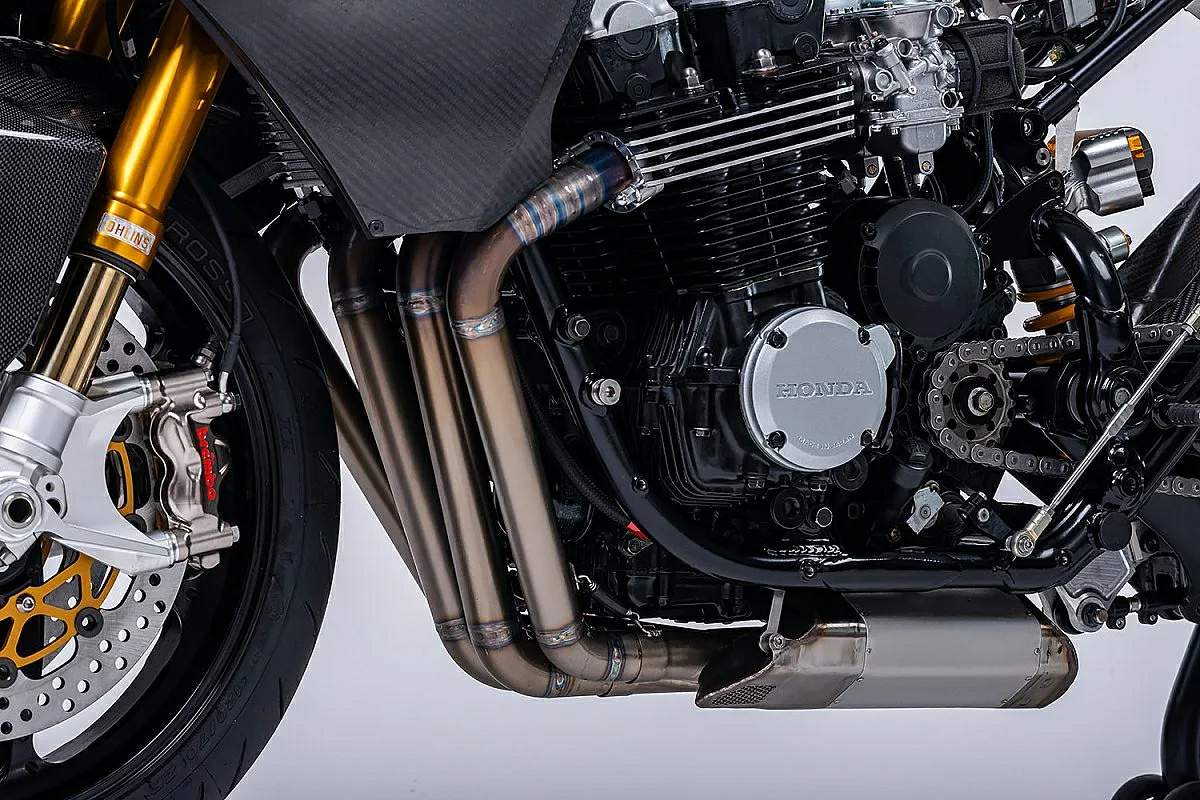
ENGINE SYSTEMS The air intake system was simplified by fitting direct filters onto the carburettor inlets. The filters are constructed using a double ring structure produced by rapid prototyping, filled with foam filter material to ensure adequate airflow and filtration. The exhaust system was redesigned using a4-2-1titanium header layout paired with a stainless-steel silencer. The revised routing allows for a more compact exhaust system without compromising ground clearance. The fuel tank was fully redesigned and manufactured in aluminium, with a final capacity of 17.0 litres. The tank breather system was integrated with the oil and cylinder head vapour circuits, routing all vapours to a catch tank positioned on the lower right side of the frame, beneath the engine assembly.
ELECTRICAL
Instrumentation was upgraded with an LCD display manufactured by
ECUMaster, enabling the logging and monitoring of additional
parameters such as oil pressure, oil temperature, and fuel
level. The front lighting system incorporates the main headlights from the 2018 Yamaha Rl. The front daytime running light (DRL) system was custom-designed using LED light strips embedded within rapid-prototyped housings. Rapid prototyping was also employed for the rear lighting system, which is integrated beneath the tail section and embedded directly into the bodywork.
BODYWORK DESIGN & GRAPHICS The air-cooled engine remains fully visible and serves as a central visual element, with the four main cooling fins finished in polished aluminium. The frame and powertrain components are painted in black with grey accents, creating a neutral base that transitions smoothly into the graphic scheme. Matte navy is combined with multiple tones of blue, complemented by white and yellow accents to introduce contrast and visual brightness. The graphics were developed in collaboration with Jackem Design through an iterative process leading to the final layout. Blue remains the dominant colour, articulated through varying tonal values to add depth and volume to the bodywork surfaces. Rectangular graphic elements were introduced to reinforce the dynamic concept, maintaining parallelism with the main bodywork lines and emphasizing their direction and movement. All bodywork components were manufactured in carbon fibre using a wet lay-up vacuum bagging process. With the exception of the front fender-sourced from the Ducati Panigale family-all parts were specifically designed for the MC04 project. Coloured surfaces are combined with exposed gloss carbon fibre elements, intentionally revealing the characteristic honeycomb weave pattern. Inspired by racing, the motorcycle is configured as a single-seater. Each bodywork component is designed with essential geometries only, resulting in a clean, lightweight, and technically driven aesthetic.
|
|
|
Any corrections or more information on these motorcycles will be kindly appreciated. |