|
|

|
|
|
|
Classic Bikes
Custom Bikes
Individual
Racing Bikes AJP
AJS
Aprilia
Ariel
Avinton / Wakan
Bajaj
Benelli
Beta
Bimota
BMW
Brough Superior
BRP Cam-Am
BSA
Buell / EBR
Bultaco
Cagiva
Campagna
CCM
CF Moto
Combat Motors
Derbi
Deus
Ducati
Excelsior
GASGAS
Ghezzi Brian
Gilera
GIMA
Harley Davidson
Hero
Highland
Honda
Horex
Husaberg
Husqvarna
Hyosung
Indian
Jawa
Kawasaki
KTM
KYMCO
Laverda
Lazareth
Magni
Maico
Mash
Matchless
Mondial
Moto Guzzi
Moto Morini
MV Agusta
MZ / MuZ
NCR
Norton
NSU
Paton
Peugeot
Piaggio
Revival Cycles
Roland Sands
Royal Enfield
Sachs
Sherco
Sunbeam
Suzuki
SWM
SYM
Triumph
TVS
Ural
Velocette
Vespa
Victory
Vincent
VOR
Voxan
Vyrus
Walt Siegl
Walz
Wrenchmonkees
Wunderlich
XTR / Radical
Yamaha
Zero
Video
Technical
Complete Manufacturer List
|
Yamaha YZF 750SP
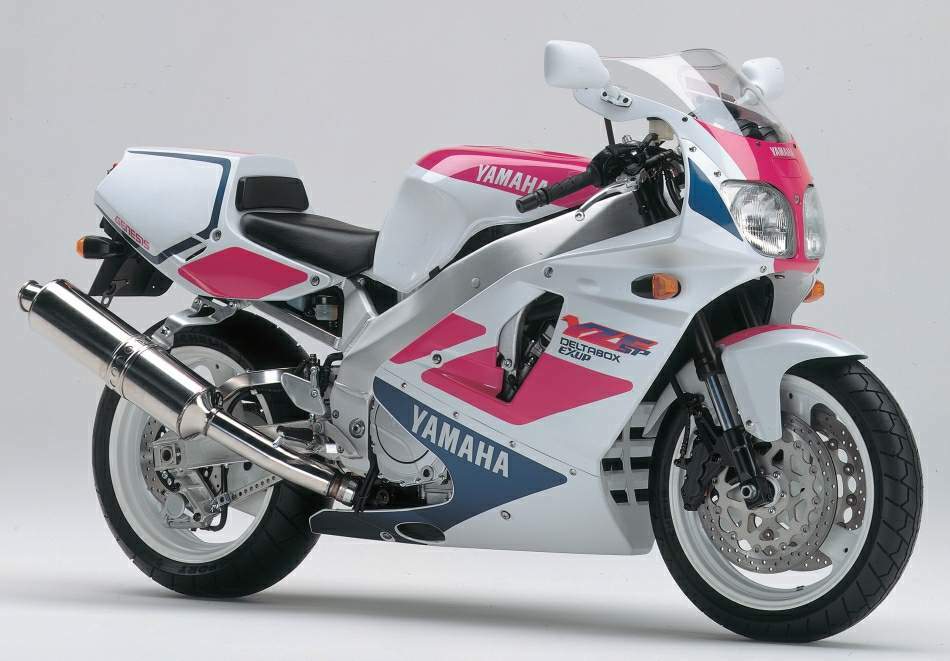
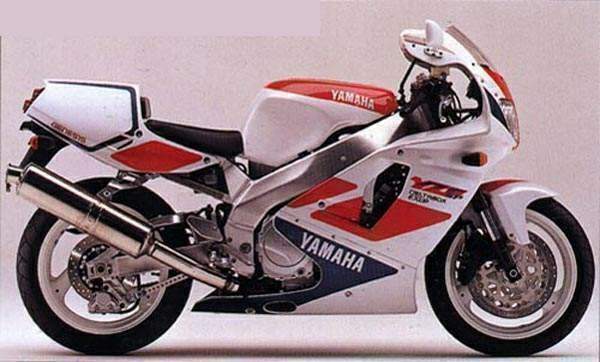
James Whitham has been stomping all over the opposition this year on his Fast Orange Yamaha. The limited edition YZF750SP is the nearest thing you'll get to his bike on the road. Or is it? Of course, it's nowhere near as close as Yamaha's marketing department would like you to believe — only the frame and engine cases find their way directly to the race hike. Well. I wish I had access to the skip outside their workshop, 'cos all the hits they've chucked out will do me line, thanks very much. At first glance the SP looks just like the standard R — the same understated paint and exactly the same profile. You have to look closer to See that the single seat is a genuine mono-person device and the suspension has sprouted adjusters where none grew before. Engine-wise, there are big slide carbs, slightly different cams and valve gear and a close ratio box. None of which explains why it feels like a completely different bike. Ride it blindfold and, well, you'd crash. But before you did, you might notice that the only bit recognisable from the standard bike is the riding position. The SP has a harder edge to it — it feels more like a ZXR-R, in fact than the R's softly-sprung, softly damped, CV-carbed practicality. That doesn't mean it's a complete pig in normal traffic — true, you have to concentrate and keep on top of it all the time or you'll get caught out by the high first gear or the enormous flat spot in the carburation, but it's not quite as extreme as the ZXR750M in that respect. Simon rode it and pronounced it 'pretty civilised really'. His one complaint was that it wouldn't pull wheelies off the throttle. Stupid boy — what does he expect from something with an 85mph bottom gear?
Most of the ZXR-type feel comes from the suspension, which is far firmer than the cooking model's. It's fully adjustable too, but, as usual, it's the extra quality of damping, rather than quantity of adjustment, which makes the difference — the SP transmits every snippet of road surface information to the rider without getting upset over bumps and ripples, and without the standard bike's compromise springing and damping which can get you into trouble if you push it hard. The stiffer rear spring also means it isn't as prone to squat its rear end and drag its pegs and exhaust on the deck when you make a quick direction change and put the power down early — the standard bike can easily dig its can in so hard it lifts the rear wheel off the ground, as Trev found out at Knockhill last February. As it happens, this one went to Knockhill too, for the Scottish Frenzy in August. Predictably, it was more or less perfect for thrashing round a track — total stability, excellent tyres (Hi-Sports, yummy) and strong brakes. The high first gear made sense for the first time at the hairpin, and the flat spot? Well, you don't spend much time out of the powerband on the track, so you don't notice it. The only complaint was a slight tendency to run wide on the exit of fairly tight bends, once the power was back on. We reduced the front compression damping by a click (to make it dive a touch more and turn a bit quicker) and upped the front rebound a click (to stop the forks extending so quickly and altering the steering geometry on the way out of the turn). I learnt all this stuff from MacKenzie, you know — if only he'd teach me how to ride, too... The SP was at its best on the way into Knockhill's hairpin approached via a very fast, slightly bumpy left hand sweep. The SP's six-pot brake's are astounding — retina-detachingly powerful, but sensitive enough to stay right on the limit of front tyre grip even whilst the rear end is waving about in the air. The standard bike has the same brakes but its forks bottom out earlier, letting the wheel skip and lock over small bumps that the SP doesn't even notice. The motor's not pumping out any more than a standard YZF, which is hardly surprising considering the few differences. In fact, the differences are for the worse in standard form. The trouble is, it's not designed to be left standard, it's designed to have the nuts tuned off it. Buy a race kit and it'll really start to make sense. The 39mm Keihins have electronically-controlled accelerator pumps to remove the usual slide carb glitch of a huge flat spot if you open the throttle too quickly. Well, that's what it says in the press bumpf anyway. All they really seem to do is pump vast amounts of fuel into the engine for no appreciable gain. Ridden sensibly, fuel consumption was about the same as a standard bike, but used hard, it dipped right down to the low twenties, where you have to try bloody hard to get the R down below 30mpg. On the road, it feels just like any other slide-carbed beasty — stay completely in control of the throttle, balancing throttle position and engine revs to perfection, and you're fine. But try to get on the gas too hard, too soon, and the motor dies. You'll notice this most at low speed — it has the same effect as stalling the engine just when you need a few more revs to stop you toppling over sideways. On the road, there's a flat spot in the handling as well. Peeling into smooth 40-50mph bends, the SP turns halfway, pauses, then turns the rest of the way to full lean. The first couple of times it happens you run wide and miss the apex by a few feet. Ride it more like a racer, though — brake, turn hard, point, squirt — and the SP is vice-free. You just have to work at it, that's all. But ease of use and practicality isn't what it's all about with the SP — it hasn't even got a tool kit. Most big, modern sports bikes are pretty much useless for 75% of the time on our choked and bumpy roads, but the other 25% more than makes up for it. The SP extends that level of user-unfriendliness up to the 90% mark, but generates enough excitement in the remaining 10% to saute your brain in adrenalin and leave you a dribbling wreck at the end of every ride. Whitham's bike it ain't — bloody good fun it is. Source Simon Hargrevious
|
|
|
Any corrections or more information on these motorcycles will be kindly appreciated. |