|
|

|
|
|
|
Classic Bikes
Custom Bikes
Individual
Racing Bikes AJP
AJS
Aprilia
Ariel
Avinton / Wakan
Bajaj
Benelli
Beta
Bimota
BMW
Brough Superior
BRP Cam-Am
BSA
Buell / EBR
Bultaco
Cagiva
Campagna
CCM
CF Moto
Combat Motors
Derbi
Deus
Ducati
Excelsior
GASGAS
Ghezzi Brian
Gilera
GIMA
Harley Davidson
Hero
Highland
Honda
Horex
Husaberg
Husqvarna
Hyosung
Indian
Jawa
Kawasaki
KTM
KYMCO
Laverda
Lazareth
Magni
Maico
Mash
Matchless
Mondial
Moto Guzzi
Moto Morini
MV Agusta
MZ / MuZ
NCR
Norton
NSU
Paton
Peugeot
Piaggio
Revival Cycles
Roland Sands
Royal Enfield
Sachs
Sherco
Sunbeam
Suzuki
SWM
SYM
Triumph
TVS
Ural
Velocette
Vespa
Victory
Vincent
VOR
Voxan
Vyrus
Walt Siegl
Walz
Wrenchmonkees
Wunderlich
XTR / Radical
Yamaha
Zero
Video
Technical
Complete Manufacturer List
|
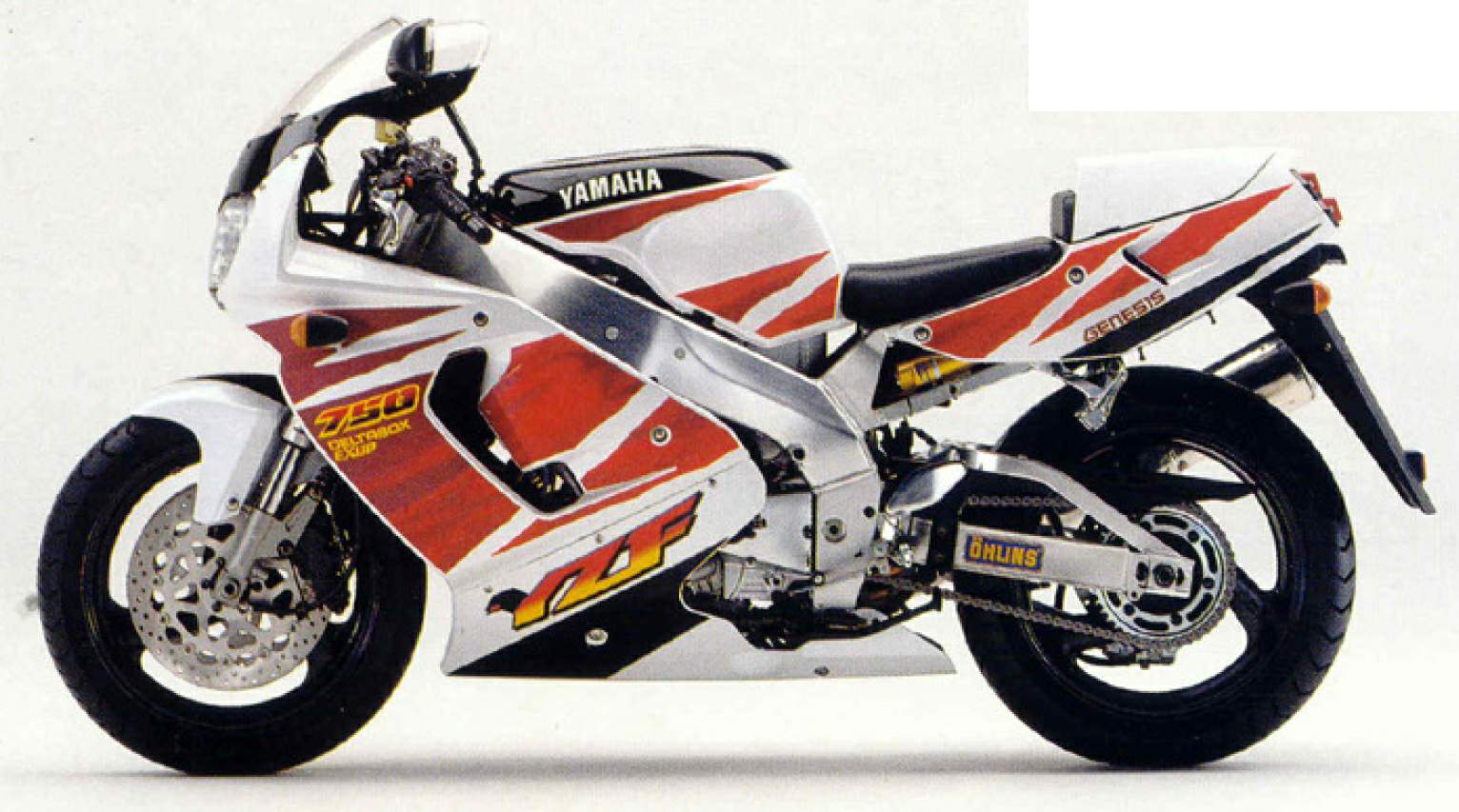
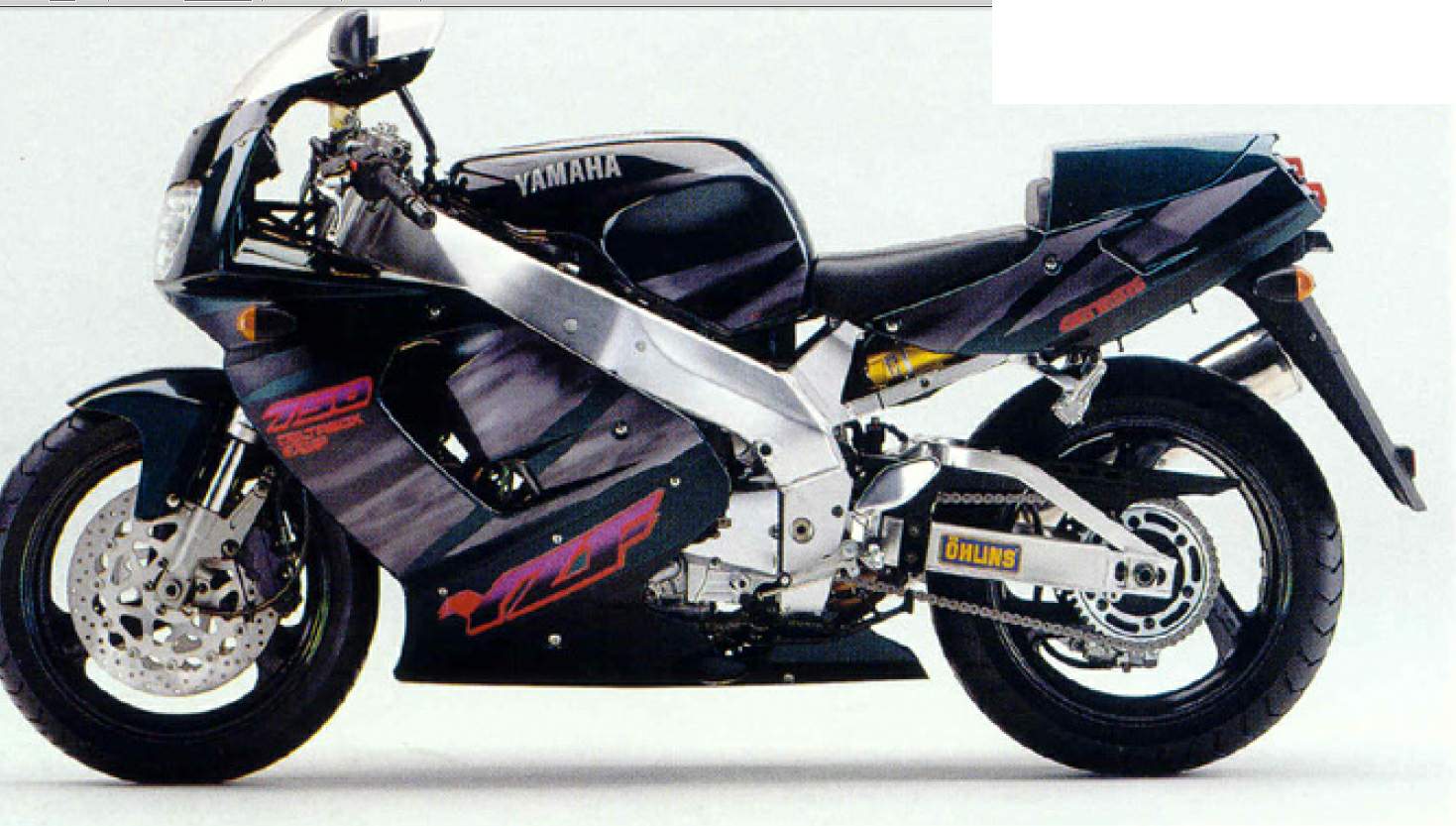
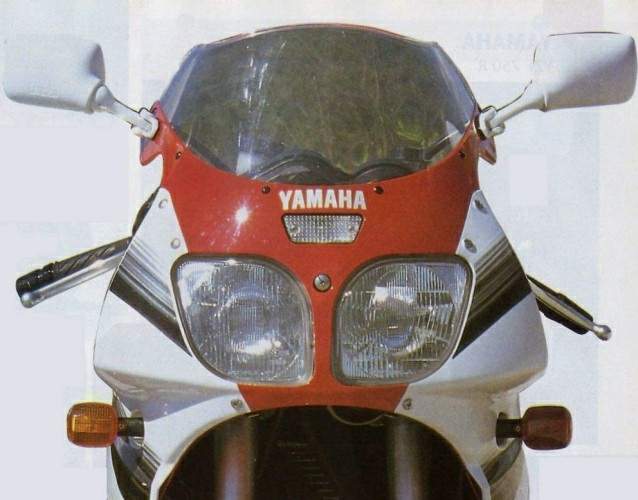
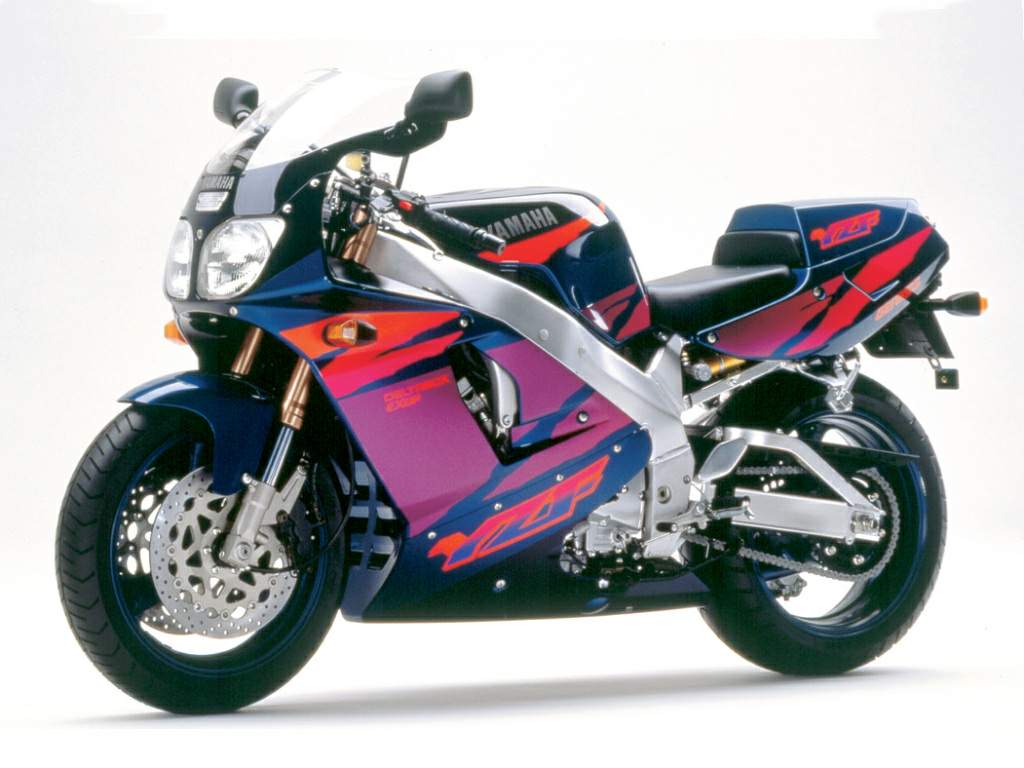
Yamaha YZF 750R
Yamaha's FZ750 had been one of the m company's best-sellers in the mid-'eighties, but by the early 'nineties it was dated outhandled and outpowered by a new generation of alloy-framed, fat-tyred race replicas. Rumours of a replacement had been rife since Kawasaki launched the ZXR750 in 1989. But at that time Yamaha's answer was to launch the OW01, (a limited edition - and extremely expensive - World Superbike contender), and let the FZ soldier on as a road bike. But by late 1992, the OW01 had also reached the end of its potential in world-class competition now it was time to build a bike for the racetrack as well as the road.
The YZF750 was launched at the beginning of 1993 and quickly got a name for itself as a nimble, quick-steering sportster that handled more like a 600 than a big 750. It was based on the well-proven OW01 design, but developed to the point where no parts are interchangeable between the two. Importantly for road riders, the YZF's road manners didn't need to be compromised by its track aspirations. A limited-edition SP version was built for racing, with a close-ratio gearbox, stiffer, multi-adjustable suspension, a single race seat and huge carburettors. That left the standard YZF with more useable gear ratios, proper pillion accommodation and far better engine behaviour than the SP. In fact, only the SP's adjustable suspension made YZF owners jealous. Yamaha listened to them and the standard YZF soon sprouted fully-adjustable Öhlins suspension front and rear.
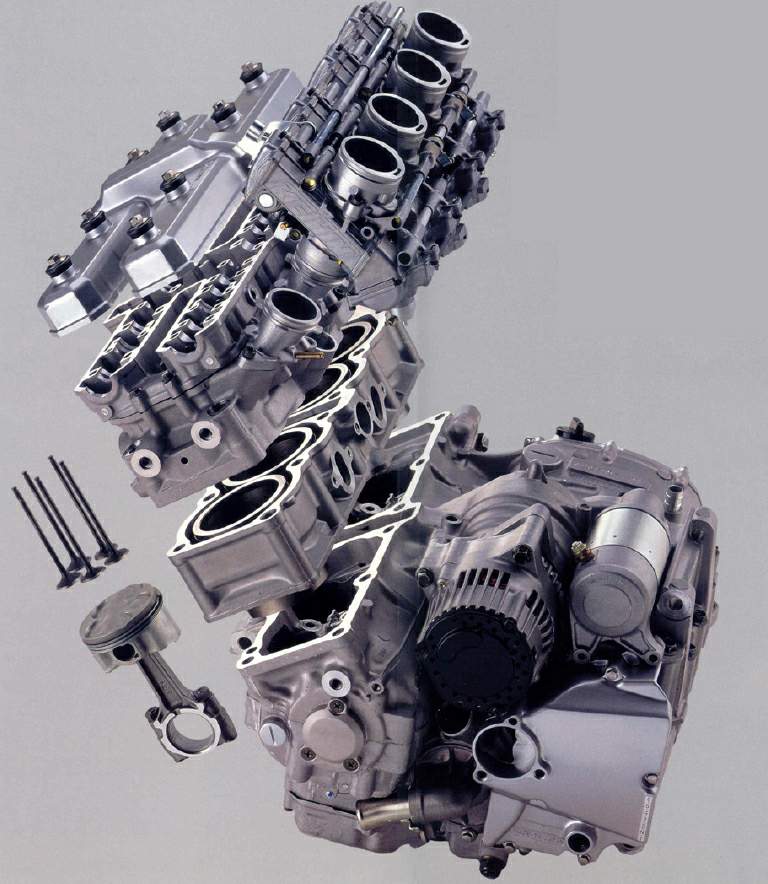
The new suspension helped to make an already quick-steering and sweet-handling bike into a real road weapon. Surprisingly for a 750, it's easy to handle on twisty backroads, and civilised enough to cover long distances in reasonable comfort. That's partly down to the quality of the suspension, which allows relatively soft springs without compromising control - bumpy bends don't throw the YZF off line, or throw the rider out of his seat. But if you really want to experience the YZF's mind-expanding limits safely you need smooth, open roads or the freedom of a race track. Because the YZF is fast. Not just in terms of outright speed - Kawasaki's ZXR is a little faster in still conditions. What makes the YZF's engine special is its smooth, linear midrange power delivery. For this, we have to thank Yamaha's unique EXUP system. The EXUP (it stands for Exhaust Ultimate Powervalve) is a valve in the exhaust collector pipe that opens and closes at preset revs, and fools the engine into thinking it has an exhaust pipe specifically tuned for those revs. The result is apparent as soon as you ride the YZF -where its competitors have little low-down pull, followed by peak power coming in with a bang, the YZF just pulls, and pulls, and pulls, from 3,000rpm all the way to the 13,000rpm redline.
Slowing the YZF down from its 160mph+ top speed are some of the most powerful front brakes fitted to any road bike. Twin discs are gripped so hard by six-piston calipers it's not unknown for the discs to warp under the strain. Other bikes now wear six-piston brakes (including some Triumphs and Suzukis), but the YZF was the first production bike to boast them as standard. But its instant success as a road bike wasn't to be mirrored on the track. It was to be late 1994 before the YZF proved its worth and achieved its first serious international success - victory at the Bol d'Or 24-hour race in the hands of brothers and ex-GP racers Christian and Dominique Sarron. The race bike had finally caught up with the road bike.
GSX-R 750 vs YZF 750 It's difficult to imagine the GSX-R750 as anything other than a bare-knuckle prizefighter, punch drunk and reeling around the ring from the blows that have landed since it was crowned undisputed sportsbike champion. Since that time in 1985, every title defence has been harder than the last, every young usurper leaner and fitter and keen to knock the old warrior from his perch. And now nearly ten years later the old warhorse is once again sat in his corner sweating profusely at the thought of going the distance against younger and leaner opposition. The Suzuki has been on something of a crash diet recently. The weight which had been steadily piling on since the younger days has been jettisoned in a last-ditch attempt to retain the superweight belt. But has it all come too late? Is the GSX-R just too old to punch its way out of trouble? In the red corner sits the Yamaha YZF750, its sleek contours hide a 20 valve engine with EXUP assistance. Its chassis is race honed, its brakes up there with the very best, and new for this year its suspension is developed from the race track. Broad shouldered and slim waisted, every inch of the YZF's bodywork screams physical fitness, every component designed to do its job and nothing else. No waste, no fat, no compromise. The Suzuki is a different story. The broad shoulders are still there but the waist is hidden, it may have lost some of its all-up weight - this year's bike uses magnesium crankcases and cylinder head to bring the dry weight to just below the magic 200kg - but there's still plenty of flab left on those muscular flanks. Remove the tank and seat unit and the excess begins to show. The rear subframe is beefy, the chassis, swingarm and headstock all fashionably chunky but somehow lacking the finesse of the Yamaha. It's easy to see how the Suzuki has put on weight over the intervening years. For a start it's physically much larger than those early GSX-Rs. It's taller, wider and longer. In part some of this can be accounted for by chassis stiffening in response to increased power outputs, the trend for wider (and heavier) wheels and tyres, and to the necessity for butcher suspension to keep the whole plot sorted.
But this is the decade of the '90s, butchness as a fashion accessory is definitely out along with Escort XR3is, designer-stubble and a host of other ,80s icons that have been consigned to the history books. In a sense the GSX-R should have gone with them at the turn of the decade. The advent of the beam frame should have buried the old Suzook's perimeter frame once and for all, but for one reason and one reason alone it didn't. That reason was simple economics; for despite newer chassis technologies emanating from Italy and Japan, despite the associated revolution in bike handling that went with it, the GSX-R still sold well in the showrooms. It was precisely because it didn't look petite, effete or limp-wristed that the GSX-R sold. Because it looked bigger, bolder, braver and more dangerous to know than any of the other 'pretty-boy' sportsbikes it attracted a shall we say, certain reputation. New men don't ride GSX-Rs it's as simple as that. Of course it's not just the cauliflower-eared look of the GSX-R that has kept it a sales success, it's also the rawness of its powerplant. The water-cooled lump that powers the GSX-R can trace its roots right back to the old air and oil cooled unit in the first GSX-R incarnation. The heavily finned engine spurns up-to-the-minute technology in favour of raw aggression in a don't mess with me sort of way. It delivers its power brutally in a way that some would argue sportsbikes should. Up to 5000rpm there's nothing, at least nothing worth mentioning, then all of a sudden the engine gathers pace and screams right the way up to its 13,500rpm redline. It may not have a 20-valve head nor an EXUP exhaust valve but it has got one of the strongest, most distinctive motors ever to sit in a motorcycle frame. Not only that but the engine is highly tunable too. If it doesn't make outrageous amounts of horsepower straight out of the crate -ours made a disappointing 98bhp at the back wheel on the dyno - you know that with a little tuning it will. In contrast, I suspect very few YZFs will get the full tuning treatment, sure their owners may fit a Dynojet kit and a carbon can but that's about it. A well tuned Suzuki can still deliver a knockout punch capable of flooring the YZF with a single blow.
Of course it's all very well being a big hitter but if you're not nimble on your feet it's a wasted effort. The YZF has the agility to duck and dive, bob and weave around the thrashing blundering Suzuki, waiting its moment and timing its counterpunches to perfection. On a rain-soaked Lydden racetrack nestling down in the fog-bound Kent countryside, the YZF could show the GSX-R a clean pair of heels. Given a dry track the difference would be even more marked. With short straights and tight twisting corners it was a job to muscle the GSX-R around. It felt weighty, slow through the corners and too top heavy and remote. The YZF in contrast had an easy feel about it that allowed it to be kept on the power longer, braked deeper into a (slippery) bend and generally felt the more agile. Moreover it is the easier bike to get on and ride fast straightaway. It feels less intimidating than the GSX-R and more forgiving if you get it horribly wrong. Much of this is to do with the YZF's excellent chassis. Yamaha sportsbikes are renowned for their racetrack handling and the YZF is the best of the bunch. Two massive alloy beams connect the headstock to the swin-garm pivot. Unlike the GSX-R there's no need for extra bracing as the designers got it right first time. Attached to this are a pair of 43mm inverted forks (from last year's SP model), adjustable for compression, preload and rebound damping. In their factory settings the forks are a little on the firm side for road use but easing the compression and rebound a little results in one of the best front ends on any 750. At the rear it's the same story - a firm but easily adjustable setup keeps the rider informed of what's going on and gives a good level of feedback, especially when cornering hard. Both bikes are similarly equipped when it comes to brakes. Massive six piston Tokico calipers bite on 300mm discs on the Suzuki's front end while the Yamaha's Nissin items clamp onto even larger 320mm discs. Both provide massive stopping power, and exemplary feedback. There's really very little to choose between the braking abilities of both machine but in the end the Suzuki wins by a whisker, thanks in part to its new sintered-metal pads. Although they take an age to bed in they are simply awesome in use and when combined with the new front end give the Suzuki rider enormous confidence when pulling up hard. But if you thought the suspension and brakes were uncompromising on these bikes, it's as nothing compared to the riding position. Sitting on either of these two is a lot like playing a game of Twister. The GSX-R is the worst; imagine squatting down on your haunches like you're about to do some squat thrusts, then reaching your arms out in front of you as far as you can, topple forwards and support the full weight of your body on your hands. You are now - for all intents and purposes - riding the GSX-R; now stay there for a couple of hours while subjecting your body to some enormous G-forces. If after all that you are still enjoying yourself then you are either certifiably insane or a prospective Tory MP. The YZF is better but not by much. There's differences too in the way the bikes feel at the controls. Despite the GSX-R engine's girth the bike feels tall and narrow in comparison to the newer YZF. The bars feel closer together and more 'traditionally' race-styled than the 'elbowey' Yamaha. As ever there's a long stretch to the Suzuki bars while the YZF puts you further towards the front of the machine, giving more forward (weight) bias than the GSX-R, tucking you tighter in to the more upright tank and allowing more leverage at the controls. In front of you sits a row of minimalist instruments whichever bike you are on. The Suzuki's are smaller and better designed than the Yamaha's which are so old-fashioned with their large digits they remind me of something off a pre-war Bentley. Both bikes have span-adjustable brake levers but only the YZF has a span adjustable clutch with hydraulic action. Starting from cold, both engines sound lean and crisp, both requiring choke but quickly warming even on frosty days - although one word of warning; don't start either of these bikes on choke and then disappear to fetch your helmet as you may well find them doing 6000rpm on a cold engine when you return. Out on the road its the YZF that is the most rewarding, its engine responds better, pulls cleaner and generally felt the more powerful, no-doubt aided by a quicker throttle action than the GSX-R. But one area where the GSX-R continues to score points over the YZF is in its gearbox action which is lightning quick and switch like in its operation. Up and down changes were accompanied by nothing more than a change in velocity and a rise or fall in engine noise. Here the Yamaha falls down badly. The 'box is nowhere near as good, up changes felt okay but downshifting on a wet track had the rear wheel locking up and the back end of the bike hopping around. Not only that but it's almost impossible to find neutral when you come to a halt at traffic lights, and you waste time clicking up and down waiting for the indicator light to appear. But waiting at traffic lights is not really what either of these machines were designed for. These bikes are for blasting along your favourite stretch of country lane, Hammering down the Auto-route du Soleil or for playing at weekend racer. Find an empty stretch of road, wind on the power, and let 'em rip. I defy anyone with an ounce of fun in their body to not enjoy themselves barrelling down an open highway, gunning along the straights and reeling in the corners. If fast road riding is your pleasure either of these two will make your day. The Yamaha is the more lively of the two, shaking its head occasionally if you wind the power on too early exiting a bend but it makes up for it with pin-point accuracy of steering. The GSX-R on the other hand definitely feels more planted mid corner, the built-in steering damper stops the shakes but makes the Suzuki less inclined to change direction as quickly as the YZF, and its stability encourages you to explore every single degree of its massive Ground Clearance. On the road there's little to separate the two although the YZF will begin to pull away thanks to its stronger mid-range and quicker steering. But however far you go the GSX-R will always be in the YZF's mirrors snapping at its heels. Despite the comparative age difference between the two its obvious that changes made to this year's Suzuki have made it hungry again and eager to do continued battle in the supersports ring. Undoubtedly the purse for which they are fighting is a big one although the spoils for this particular bout are not split evenly. The Yamaha takes home the majority of the earnings with an on the road price tag of £8339 while the Suzuki cannot command such a high appearance fee. £7849 is all it costs to slip the satin dressing gown off the Suzuki and put in its gum-shield. It's remarkable given the completely different approach by the manufacturers how good both of these bikes really are. All too often we would decide one was definitely better, only to change our minds after another go on the other machine. At the end of the day if there must be a winner then it is the YZF, its combination of impeccable handling, usable midrange power and overall poise make it the sharpest 750 but not by much, and set against that is the notchy gearbox and higher overall price tag. The difference in real-world performance is barely noticeable and the Suzuki performed far better than we ever expected it to. In the end the Yamaha just takes the title but its a points decision rather than the expected knock-out. Source Motorcycle International 1994
|
|
|
Any corrections or more information on these motorcycles will be kindly appreciated. |