|
|
|
|
Classic Bikes
Custom Bikes
Individual
Racing Bikes AJP
AJS
Aprilia
Ariel
Avinton / Wakan
Bajaj
Benelli
Beta
Bimota
BMW
Brough Superior
BRP Cam-Am
BSA
Buell / EBR
Bultaco
Cagiva
Campagna
CCM
CF Moto
Combat Motors
Derbi
Deus
Ducati
Excelsior
GASGAS
Ghezzi Brian
Gilera
GIMA
Harley Davidson
Hero
Highland
Honda
Horex
Husaberg
Husqvarna
Hyosung
Indian
Jawa
Kawasaki
KTM
KYMCO
Laverda
Lazareth
Magni
Maico
Mash
Matchless
Mondial
Moto Guzzi
Moto Morini
MV Agusta
MZ / MuZ
NCR
Norton
NSU
Paton
Peugeot
Piaggio
Revival Cycles
Roland Sands
Royal Enfield
Sachs
Sherco
Sunbeam
Suzuki
SWM
SYM
Triumph
TVS
Ural
Velocette
Vespa
Victory
Vincent
VOR
Voxan
Vyrus
Walt Siegl
Walz
Wrenchmonkees
Wunderlich
XTR / Radical
Yamaha
Zero
Video
Technical
Complete Manufacturer List
|
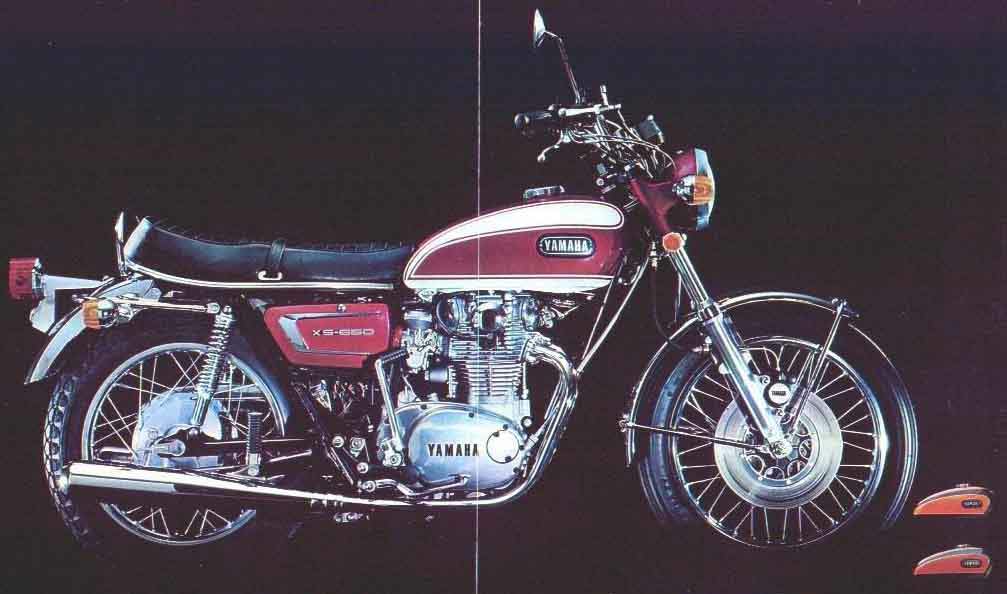
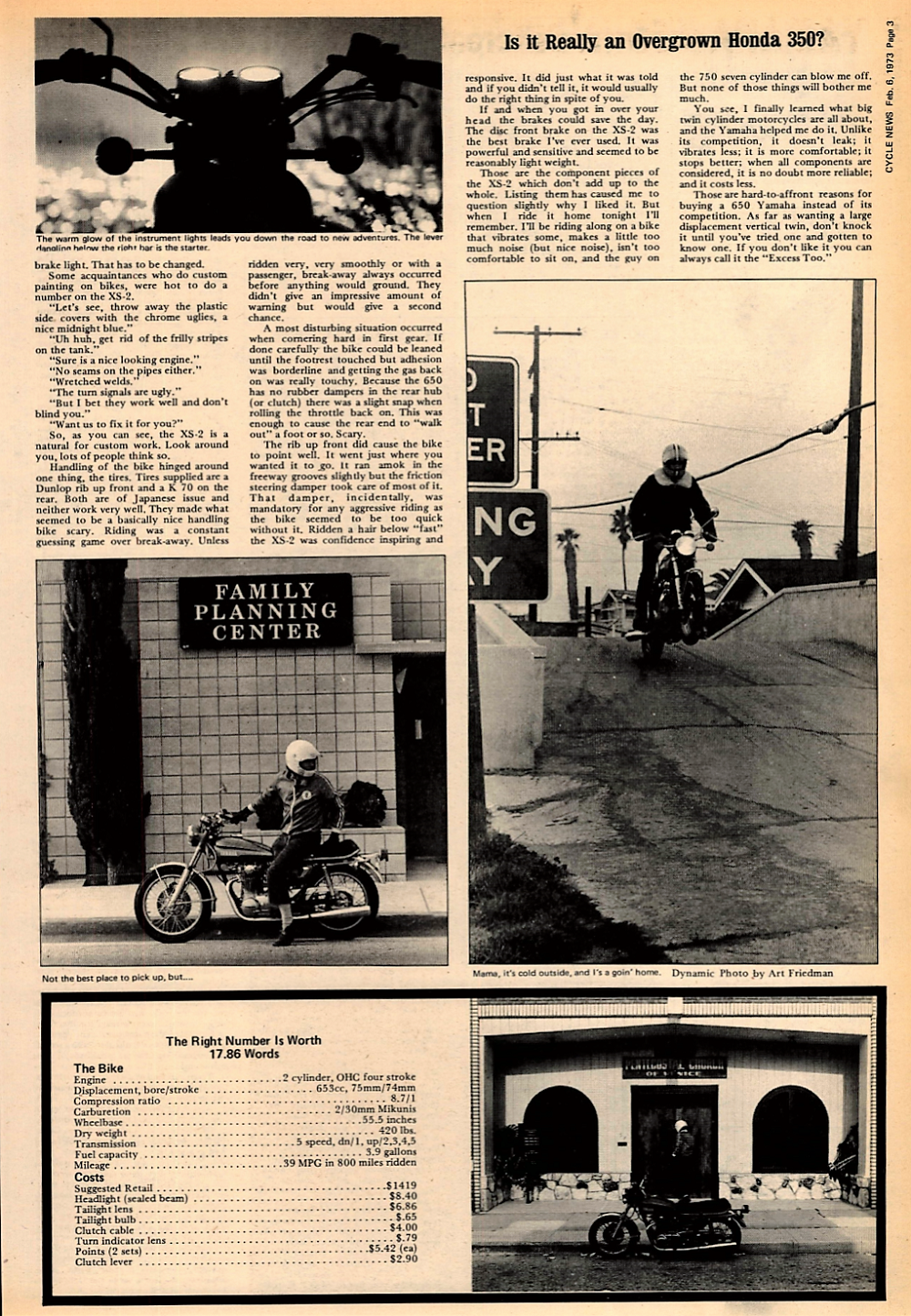
Yamaha XS-2 650
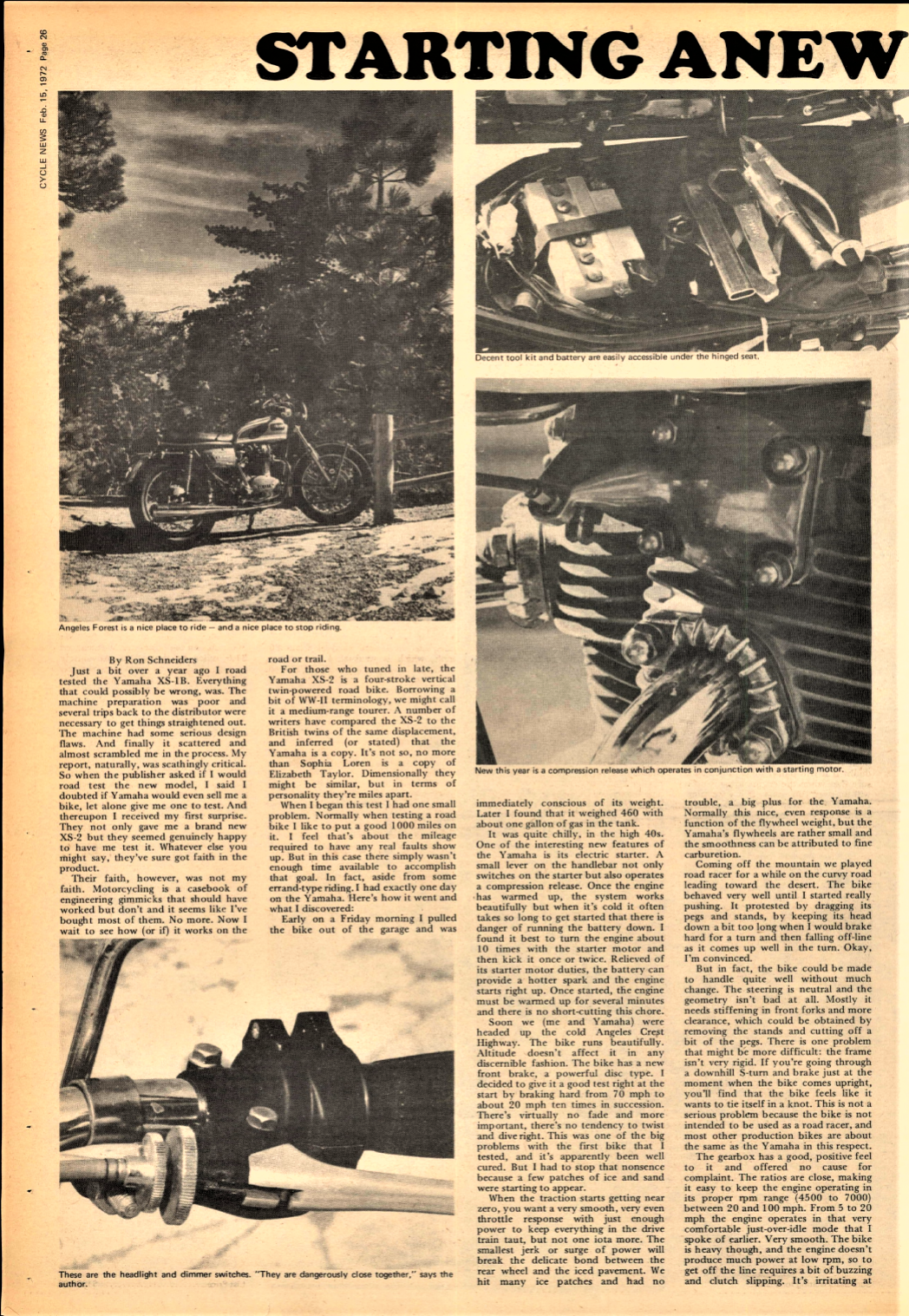
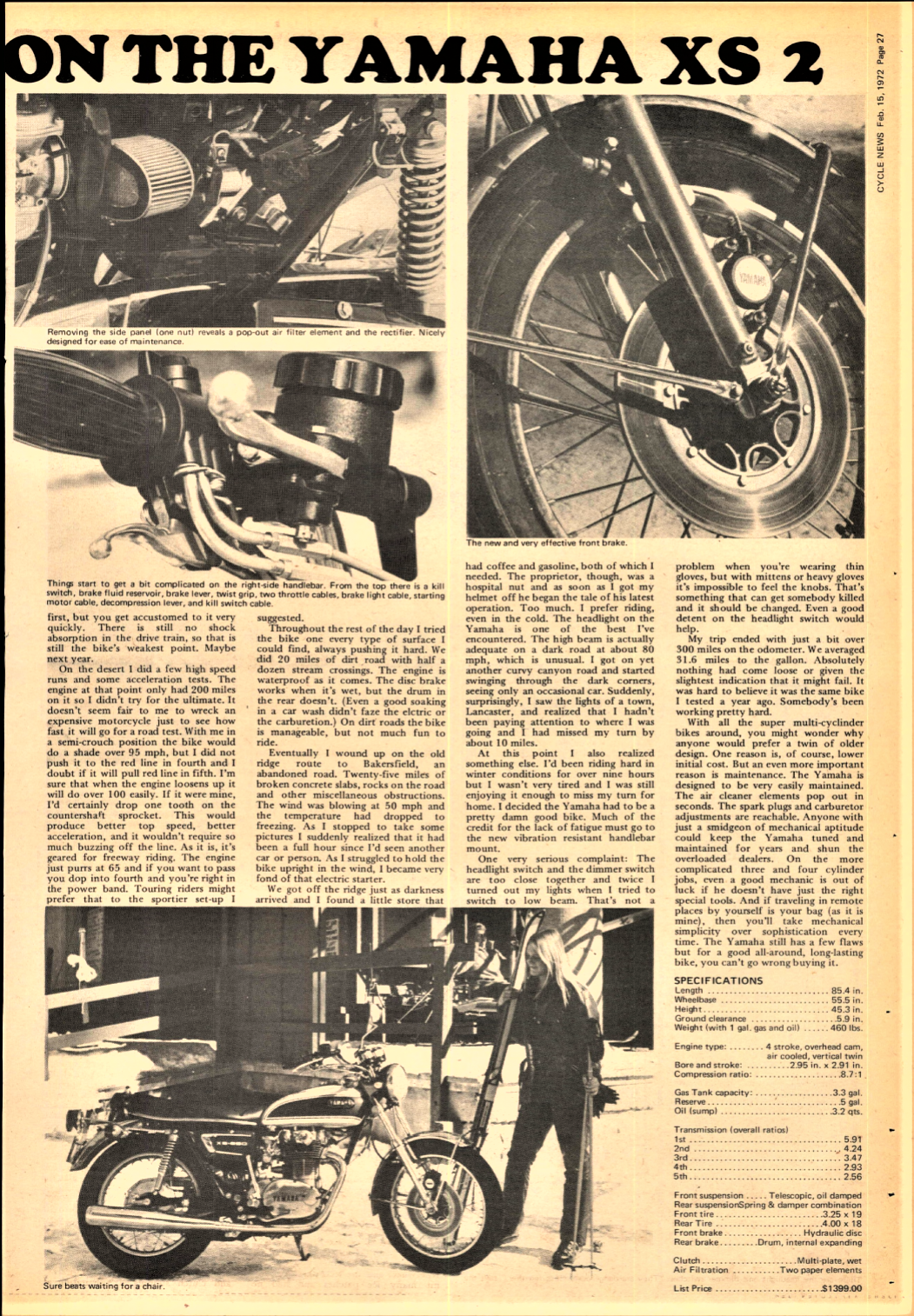
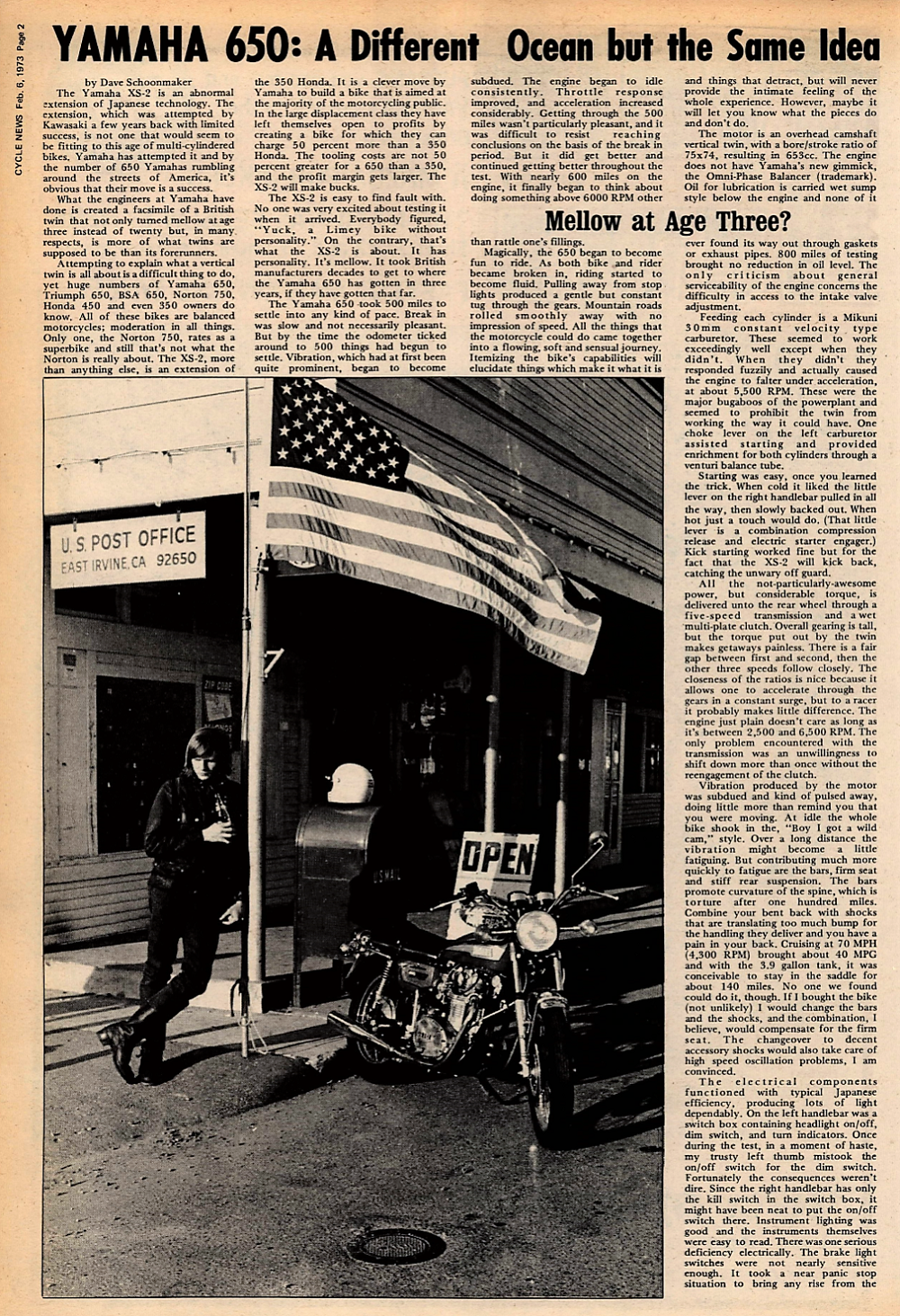
Following a decade when Japanese motor cycles for export were styled to appeal almost exclusively to American tastes, with European riders having no option but to tolerate the high, wide handlebars and other hallmarks, external and internal, of the US-orientated motor cycle, Yamaha made a significant change in their marketing policy. From the mid-1970s they began to take some account of the market in Europe, beginning with modifications to the established XS650 twin on the advice of tester-turned-racer Percy Tait. The XS650 was first exported in 1973. It cashed in on its similarity to the British-tinguished from the original by its all black leading-axle front fork. It was first sold in made vertical twins that had gained a loyal postwar following not only in the UK but also in North America, where Triumph enjoyed world-record status from their speed dashes over the Salt Lake Flats of Utah. As the British factories disappeared until finally only Triumph, in diminished form, was left, the XS650 took over as a readily available twin exhibiting the old British virtues of power and straight-forward design, plus one or two of its own — notably, more rugged construction, greater reliability and, ultimately, enhanced power. Its popularity in the arduous sport of sidecar moto-cross is testimony to its robust design. As a road bike it showed parallels, welcome or otherwise, with the British twins, not least in vibration carried to the rider and to other less durable impedimenta such as bulbs, nuts and bolts, which shattered or loosened with clockwork regularity. Uprated over the years with front disc brakes in place of drum, and in some applications having cast-aluminium wheels, the XS650 began the 1980s in Europe in SE form, which entailed a throwback to US styling and a depressed price tag that made it something of a bargain buy in comparison with contemporary Triumphs.
|
|
|
Any corrections or more information on these motorcycles will be kindly appreciated. |