HOME   CONTACT  |  TECHNICAL  |  CONVERTER  |  VIDEO  |  LINKS  


Classic Bikes
Custom Bikes
Racing Bikes


AC Schnitzer
AJS
Alfer
Aprilia
Ariel
Arlen Ness
ATK
Bajaj
Bakker
Barigo
Benelli
Beta
Big Bear
BigDog
Bimota
BMS Choppers
BMW
Borile
Boss Hoss
Boxer
Brammo
Britten
BRP Can-am
BSA
Buell
Bultaco
Cagiva
CCM
Confederate
CR&S
Daelim
Deus
Derbi
DP Customs
Drysdale
Ducati
Dunstall
Exile Cycles
Factory Bike
Fischer
Foggy Petronas
GASGAS
Ghezzi Brain
Gilera
Harris
Harley Davidson
HDT
Hesketh
Highland
Honda
HPN
Horex
Husqvarna
Husaberg
Hyosung
Indian
Italjet
Jawa
Kawasaki
KTM
Kymco
Laverda
Lazareth
Lehman Trikes
LIFAN
Magni
Maico
Matchless
Matt Hotch
Megelli
Midual
Mondial
Moto Guzzi
Moto Morini
MotoCzysz
Mr Martini
MTT
Münch
MV Agusta
MZ
NCR
Norton
Oberdan Bezzi
OCC
Paul Jr. Designs
Piaggio
Radical Ducati
Richman
Ridley
Roehr
Roland Sands
Royal Enfield
Rucker
Sachs
Saxon
Sherco
Suzuki
Terra Modena
Titan
TM Racing
Triumph
Victory
Vincent
Viper
VOR
Voxen
Vyrus
Waken
Wrenchmonkees
Wunderlich
Yamaha

Yamaha XJ 550R Seca


Make Model

Yamaha XJ 550R Seca

Year

1982

Engine

Air cooled, four stroke, transverse four cylinder. DOHC, 2 per cylinder.

Capacity

528
Bore x Stroke 57 X 51.8 mm
Compression Ratio 9.5:1

Induction

4x 28mm Mikuni carbs,

Ignition  /  Starting

Battery powered inductive  /  electric

Max Power

Max Torque

Transmission  /  Drive

6 Speed  /  chain

Front Suspension

Telescopic coil spring forks, 137mm wheel travel,

Rear Suspension

Swing arm with 2 dampers adjustable for preload 80mm travel

Front Brakes

Single 298mm disc,

Rear Brakes

Drum

Front Tyre

3.25-19

Rear Tyre

110/ 90-18

Wet-Weight

 205 kg

Fuel Capacity 

15 Litres  (3.6 L)

Consumption  average

56 mp/g

Standing ¼ Mile  

13.0 sec  /  97.8 mp/h

Top Speed

111 mp/h

Labels arerelative.Though the Seca hasn't changed mechanically, it's drifted from sport to mainstream— in comparison, of course, to the competition.
Superbikes with their claim to 11-second quarter-miles and outrageous top speeds—dominated the Seventies. In a similar way, middleweights are laying claim to the Eighties. Capable of mid-twelves in the quarter, with agility unrivaled by full-liter bikes and, maybe best of all, carrying price tags well below three grand, the best of the 550s are attracting sport enthusiasts like never before.
Kawasaki opened up the '80s with the introduction of the KZ550—faster than any of the other middleweights except Yamaha's 650 Maxim.

The KZ's only class rivals (the Honda 550-turned-650 and the Suzuki 550) were mildewing with age, designed in the early- to mid-'70s with only minor subsequent updates.
So along came 1981, and Yamaha sprang the Seca on us, which was competitive with Kawasaki's refined KZ and new GPz. But technology (thankfully) keeps blossoming: the GPz got better in 1982 while the Seca dropped back a notch. Still, the Yamaha ranked above the musty
Honda and Suzuki middleweights.
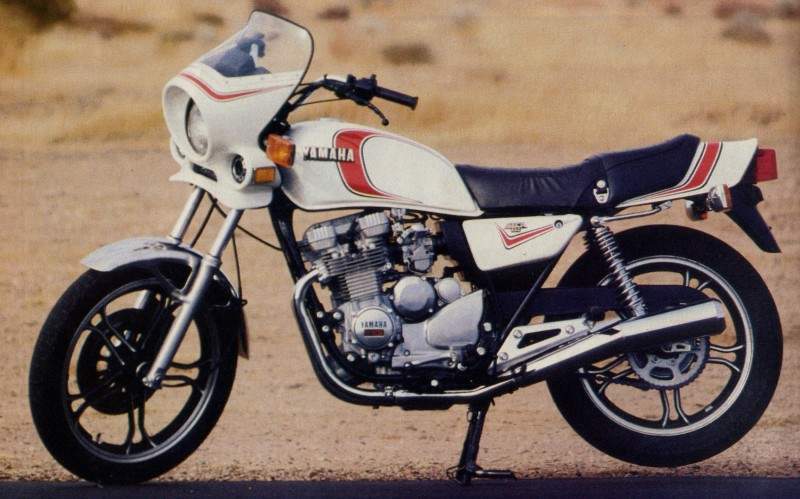
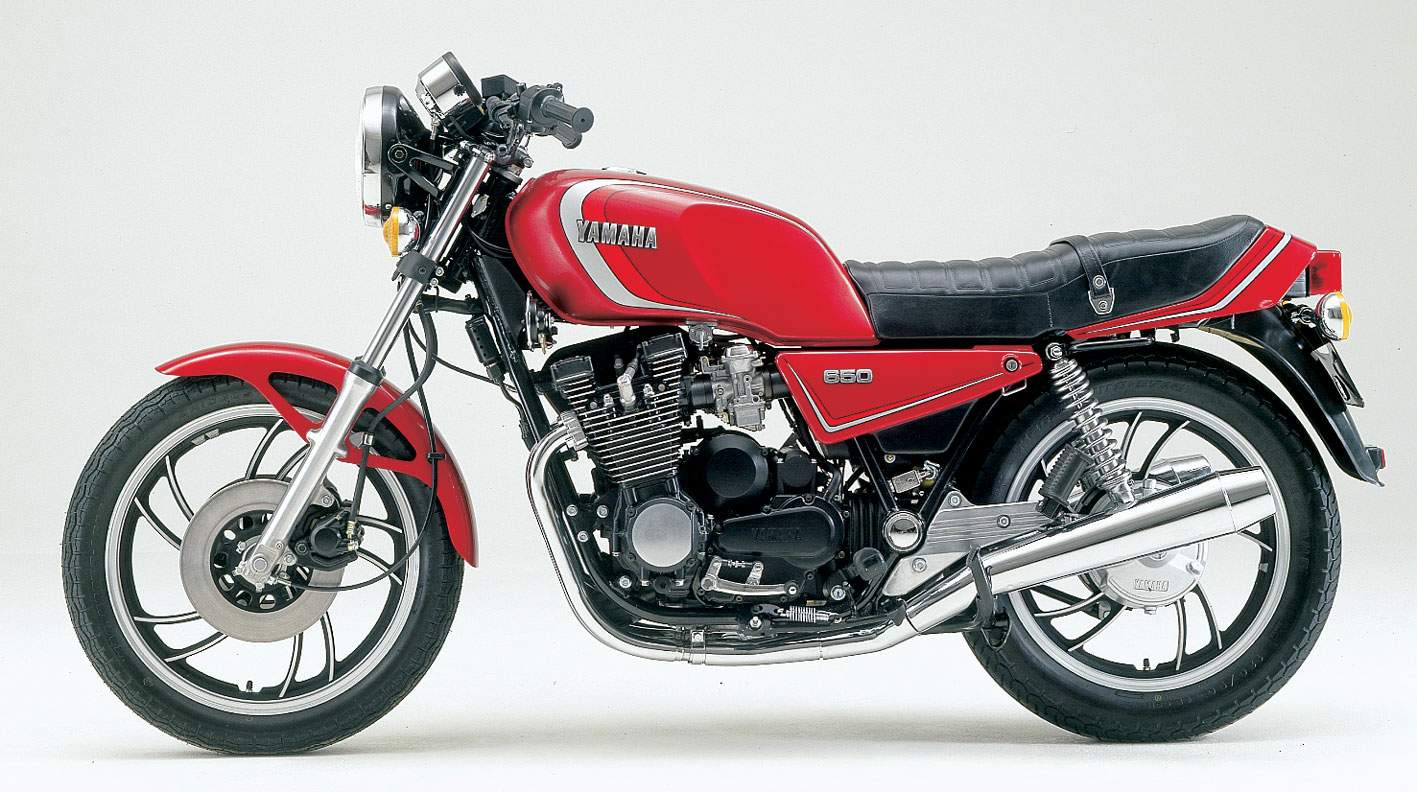
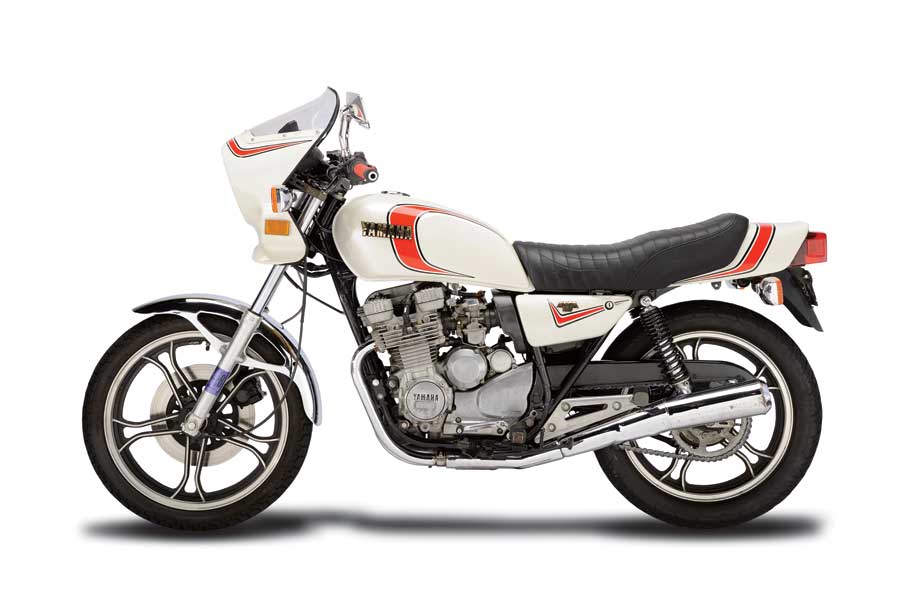
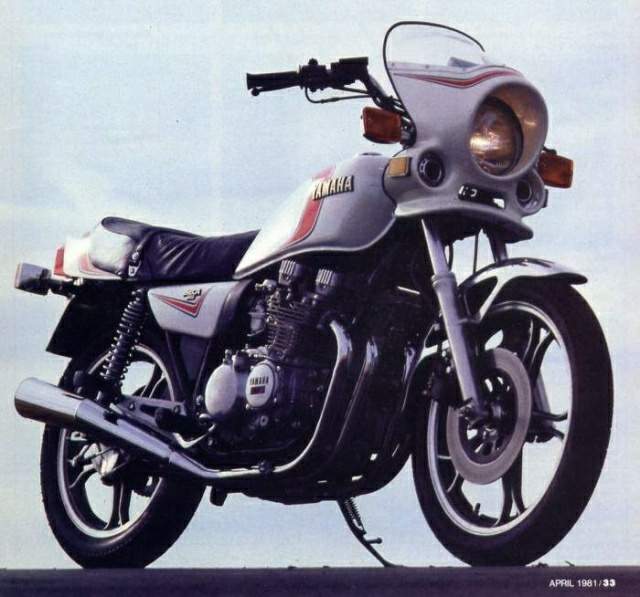
Nineteen-eighty-three — and, oh what a difference a year makes! The Kawasaki GPz has been refined, Suzuki's 550 is all new (with racetrack-inspired styling and technology), and Honda's new Nighthawk 550 and 650 are fast, fast, fast. And the Yamaha Seca? It is, basically, an '81 bike with more sedate styling. Less its handlebar-mounted sport fairing and flashy red-on-white paint scheme, the new Seca comes only in black with red and purple stripes. Following an '82 change, the front fender and fork sliders are color-matched to the bodywork.

This latest Seca has more mainstream appeal, though its sporting potential is still commendable. Moreover, it remains the lightest and narrowest four-cylinder bike in its class.
Mechanically, the Seca is unchanged from the original model. The narrow engine design, made possible by mounting the alternator on top of the transmission case, was an important step in creating a more compact, lighter motorcycle. Honda is just now using that design on the new Night-hawks. Narrow engine cases do more than just improve ground clearance; ergonomics improve as well. With a narrower engine, the footrests can move in closer to the fore-aft center line of the motorcycle.This enables the pegs to be mounted low, allowing a fairly expansive seating position while still maintaining good cornering clearance.

Though modern in design, the Seca's twin-valve double-overhead-cam engine lacks the development of other manufacturers' mid-sized fours. Quarter-mile performance strongly reflects an engine's output, and here the Seca falls behind. Its quarter-mile figures—13.05 @ 98.46—pale against those of the current 550 King, the GPz.
Kawasaki's rocket will blast through the quarter in 12.7 seconds at 103 miles per hour, while offering the same versatile power as the Yamaha.

The Seca uses a straightforward chassis design. With 27 degrees of rake, 4.29 inches of trail and a 55.5-inch wheelbase, the 550 promises a cross between agile and stable handling, and it makes good on that promise. The Seca staggers very little in crosswinds, and the bike does nothing to surprise the rider; it just plain works well. Though its suspension components lack air assists and adjustable damping, the Seca accommodates most riding styles and handles most conditions well—exactly as a mainstream motorcycle should.

The Seca's seating position falls between traditional and sport. The handlebar's pullback invites an upright riding position, and, fortunately, the instrument nacelle is high enough to act as a decent windbreak; the traditional-style handlebar won't cause wind-related discomfort unless you regularly cruise at supra-legal speeds. The footpegs, mounted halfway between sport and traditional, complement the seat-bar position well. A comfortable seat allows easy cruising for an hour or all day; the short step leading to the passenger area is small enough to let tall solo riders scoot back easily.
History seems to be repeating itself, with just a change in characters. A few years ago the Yamaha Seca was the fresh face in the crowd of middle-weights while the Honda and Suzuki were the tried-and-true standbys. For 1983 the roles are reversed: the Seca has established itself as a solid performer by providing good power and handling all around (but not the best in class), while the new bikes are waiting in the wings to prove themselves.

Source Cycle


NOTE: Some of the photos on Motorcycle Specs are owned by somebody. If you see any of your photos, you can let me know so that I can acknowledge it, or if you object to it, I can remove it altogether. If any copyright holder objects  to their articles being placed on Motorcycle Specs, it will be removed upon request.  Any correction or more info on these bikes will kindly beappreciated                                          Contact Me      Privacy Policy     Website Stats