|
|
|
|
Classic Bikes
Custom Bikes
Individual
Racing Bikes AJP
AJS
Aprilia
Ariel
Avinton / Wakan
Bajaj
Benelli
Beta
Bimota
BMW
Brough Superior
BRP Cam-Am
BSA
Buell / EBR
Bultaco
Cagiva
Campagna
CCM
CF Moto
Combat Motors
Derbi
Deus
Ducati
Excelsior
GASGAS
Ghezzi Brian
Gilera
GIMA
Harley Davidson
Hero
Highland
Honda
Horex
Husaberg
Husqvarna
Hyosung
Indian
Jawa
Kawasaki
KTM
KYMCO
Laverda
Lazareth
Magni
Maico
Mash
Matchless
Mondial
Moto Guzzi
Moto Morini
MV Agusta
MZ / MuZ
NCR
Norton
NSU
Paton
Peugeot
Piaggio
Revival Cycles
Roland Sands
Royal Enfield
Sachs
Sherco
Sunbeam
Suzuki
SWM
SYM
Triumph
TVS
Ural
Velocette
Vespa
Victory
Vincent
VOR
Voxan
Vyrus
Walt Siegl
Walz
Wrenchmonkees
Wunderlich
XTR / Radical
Yamaha
Zero
Video
Technical
Complete Manufacturer List
|
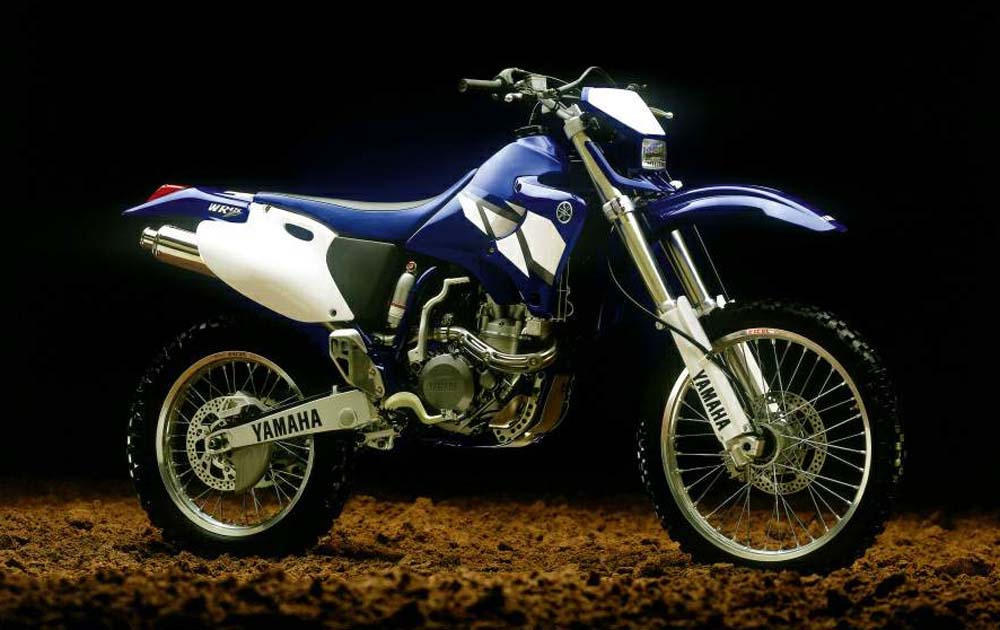
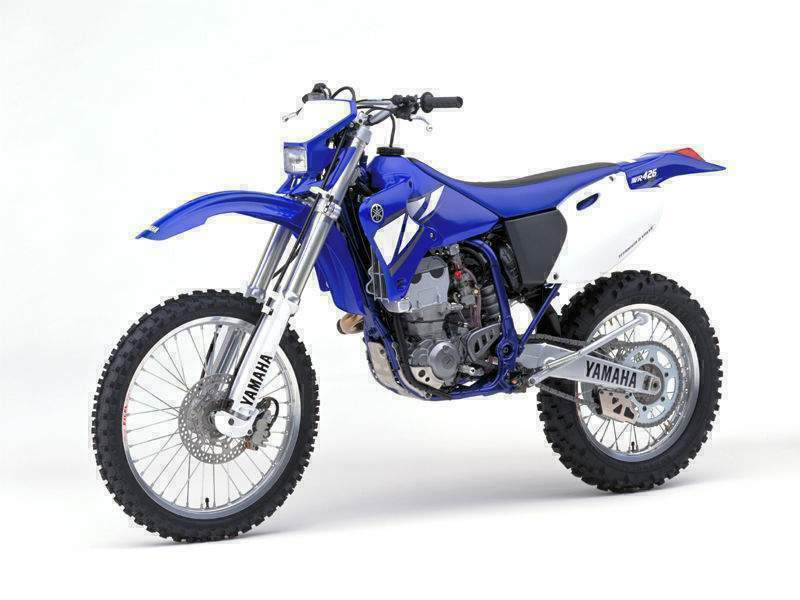
Yamaha WR 426F
Torrance, California, January 18, 2001 -- We may live in a mad world, but
it's also one where the inhabitants are incredibly lazy. Motorcyclists are no
different, really. It's not that we can't do a top-end rebuild in under an hour
using only a Leatherman, but we'd realy rather spend that time bench racing with
a few friends and even more cold ones. For the 2001 model year, however, Yamaha has decided to yield to the horde of
off-roadies and give 'em what they've been asking for: A trick thumper with all
the technological updates of a moto bike replete with the minimal accouterments
necessary for an effective off-road weapon. The Year 2001 WR426F retains all the suspension tweaks, titanium valves, floationg front brake and other assorted goodies that found their way onto the Year 2001 YZ426F. Look closely and you'll also find the same high and low-speed compression adjusters on the rear shock, as well as the new needle bearing - plus a few additions to tailor performance for the bark-buster set. In addition to all the YZ's goodies, the WR gets an 18-inch rear wheel, a
larger 3.2 gallon fuel tank, a wide-ratio transmission and a stainless muffler
that incorporates a spark arrestor. Oh, there's also the requisite headlamp and
tail light assemblies. But there is still a decided lack of hand guards,
presumably since each rider has their own personal preference and it's no use
fitting things to a bike that will just as quickly be gathering dust in some
dark corner of a storage shed. The airbox lid? This isn't the container where you'll be keeping your morning coffee, so you might as well put that lid in the parts bin. Same goes for the muffler insert, unless you want to be super stealthy and polite, of course. Then comes the little matter of the throttle stop. The stock length is 30mm from end to end. Cut this down to 23mm (leaving you to find some creative use for seven millimeters of threaded metal) and get on with your business, like we did. After stepping off the YZ426F the week prior, the WR felt pretty mellow. Gone was the snap that is just dandy on a motocross course but would make you a poster boy for pain-relief pills in the off-road world. But, thankfully, it was not completely neutered of all its personality. The motor is mellow by moto standards, but that's a given. By off-road standards, this motor is just about perfect. It pulls with authority off the bottom into the sort of mid-range that will allow you to conquer just about anything nature has decided to place in front of you. Over-rev is, naturally, decent. But the power up high is pretty flat compared to the heaping helping of oomph you find in the mid-range. So, why bother with all those revs, then? Upshift the excellent tranny and keep the throttle open and the motor singing where it'll do the most good. Initially, the suspension on our test bike was quite stiff. The motors had been broken in, but the forks and shock had not. This caused the first few miles to be rather harsh, especially on the hardpacked trails that were so abundant on this particular day. This no-doubt made for a few interesting momets while we got up to speed and familiarized ouself with the bike. After a few whoop sections and drop-offs to loosen things up, the suspension
started to work as it should, and proceeded to get better throughout the day.
Subsequent rides have found us rather pleased with the boingers on this latest
Yamaha. We left the front end pretty much stock, though we did increase compression
damping by one click and played around with the rebound a bit, trying to keep
the front end a bit more settled in rough, flat, fast corners. We left the rear
end alone except for setting the sag at 100mm and, again, making a slight
increase in compression damping. The front brakes worked superbly, offering enough stopping power and feel for
just about every situation. Rear brakes, meanwhile, took a while to bed in and
required a heavy boot to get things locked up. The clutch offered good feel and
modulation of power with minimal fade only on the toughest and nastiest of
sections. Source Motorcycle.com
|
|
|
Any corrections or more information on these motorcycles will be kindly appreciated. |