|
|
|
|
Classic Bikes
Custom Bikes
Individual
Racing Bikes AJP
AJS
Aprilia
Ariel
Avinton / Wakan
Bajaj
Benelli
Beta
Bimota
BMW
Brough Superior
BRP Cam-Am
BSA
Buell / EBR
Bultaco
Cagiva
Campagna
CCM
CF Moto
Combat Motors
Derbi
Deus
Ducati
Excelsior
GASGAS
Ghezzi Brian
Gilera
GIMA
Harley Davidson
Hero
Highland
Honda
Horex
Husaberg
Husqvarna
Hyosung
Indian
Jawa
Kawasaki
KTM
KYMCO
Laverda
Lazareth
Magni
Maico
Mash
Matchless
Mondial
Moto Guzzi
Moto Morini
MV Agusta
MZ / MuZ
NCR
Norton
NSU
Paton
Peugeot
Piaggio
Revival Cycles
Roland Sands
Royal Enfield
Sachs
Sherco
Sunbeam
Suzuki
SWM
SYM
Triumph
TVS
Ural
Velocette
Vespa
Victory
Vincent
VOR
Voxan
Vyrus
Walt Siegl
Walz
Wrenchmonkees
Wunderlich
XTR / Radical
Yamaha
Zero
Video
Technical
Complete Manufacturer List
|
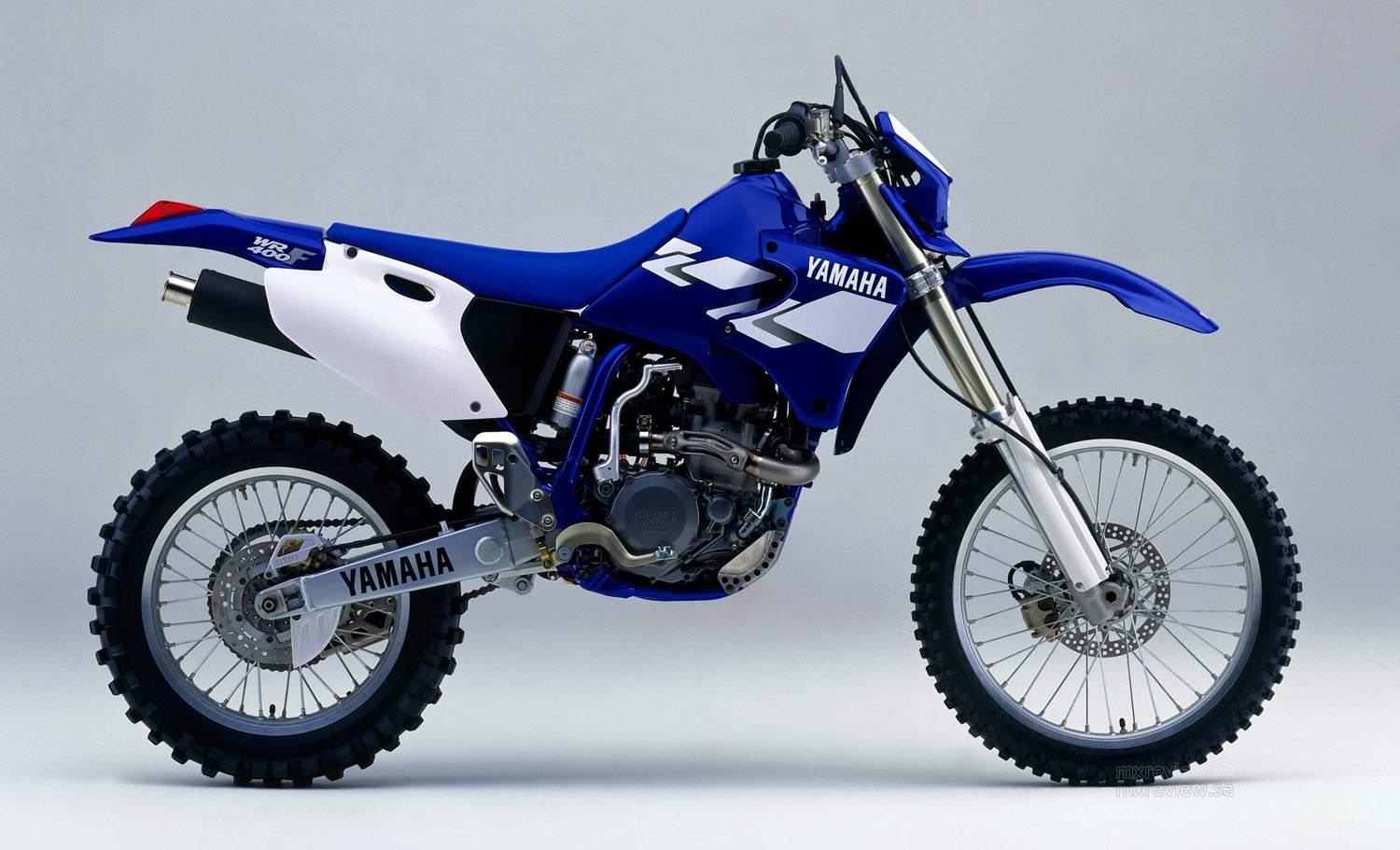
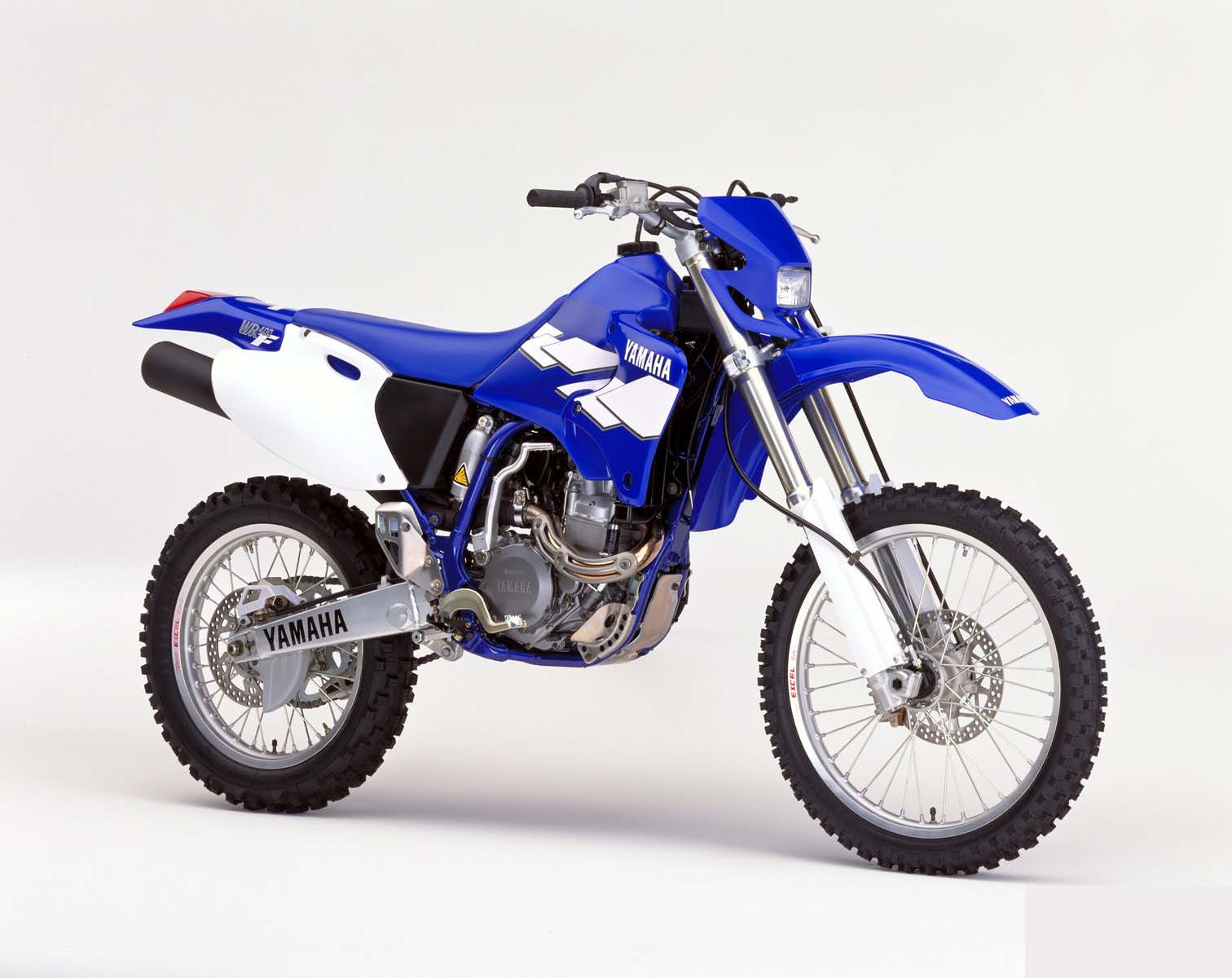
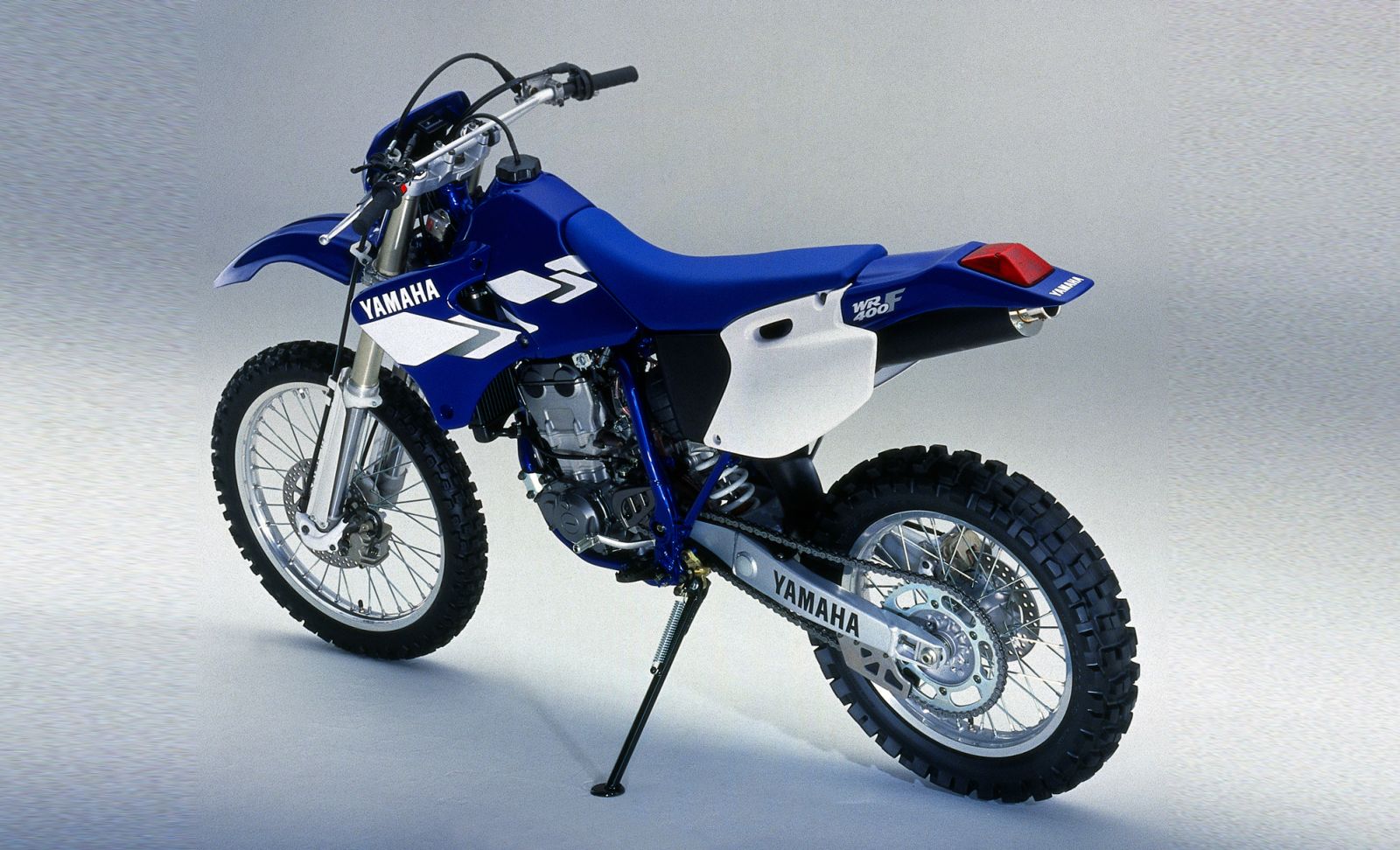
Yamaha WR 400F
This is the bike that re-defined our views on four-strokes when it was released in 1998. It's a very clever piece of engineering which is designed to make us feel and look very good indeed. The WR400F is a direct descendant from the YZ400F four-stroke motocrosser, which already has a World Open Motocross Championship to its credit with Italian Andrea Bartolini, in addition to Daryl Hurley's triumph in last year's Thumper Nationals title. Yamaha has made some sensible modifications to its 2000 model WR. The most significant would be the slimmer seat and tank, which are sourced directly from the YZ426F. It does, however, reduce the fuel capacity to 8lt, cutting things a bit fine for trail riders. Saying that, the previous WRs have been pretty good with their fuel consumption. The WR does retain its explosive power, which is more akin to a two-stroke. The mid-range power hit is awesome and the motor keeps revving and pumping out power as the revs climb. It keeps producing the ponies past the point where you think the engine will fly to bits - that's why expert riders love this bike so much. It does seem difficult to get the power down to the ground on the WR at first. It's just too easy (and enjoyable) to wind the throttle on and get the rear wheel spinning. The rear wheel lights up easily and steering is totally predictable. You can the split the personality of the WR with a bit of juggling between the throttle and the gearbox. It's hard to pick up on a first ride, but it's quite obvious after you've accidentally bogged the engine down at low revs a few times. A bit like going up a hill in a gear too high - the engine is losing revs and you're opening the throttle more while your finger is poised over the clutch. This exposes the WR's true talent for finding grip while short-shifting the gearbox and loading up the motor. In this mode, the WR becomes a much easier bike to ride through some of the more horrible things you would expect to find on enduro stages. The WR's suspension sees little in the way of changes in 2000, although the damping is a little faster. I thought the opposite at first; it felt like the compression damping on the forks was a bit sharper. This is probably due to a few other changes, like the lower triple-clamp, which is thicker and stiffer. The steering-head position has been moved back 5mm to shorten the wheelbase too. The bike is also 2.5kg lighter, most of the weight loss due to the smaller fuel tank.
The shock felt like a pretty good match for the front-end and it suited my 75kg on the standard settings. The rear shock has the high/low speed compression damping which I didn't really get a chance to experiment with that much. Overall, the suspension - which I'd put on a par with a YZ250 - is still firm and well suited to competition riding. The experts love this feature while the rest of us have to ride a bit harder to appreciate how good it can be. One of the nicest things about the $9616 WR is that it goes about the business of being quick in a very quiet way. The muffler turns the bark of the exhaust to more of a choof, and it's the quietest bike of the bunch. It mightn't sound as good as a barking exhaust, but it's unlikely to upset the neighbours and that's a very important issue these days. As good as the WR is, it's not the easiest bike to start. There's no electric start option and the kickstart lever is short. It's a difficult bike to clutch start, so you need to master the art of using the kickstarter. Thankfully, it's not as difficult as it feels, provided you get in a habit of winding the kick starter until it stops dead against a 12.5:1 compression ratio. Curiously, it doesn't have a trip meter and this might not be such a good idea with the smaller fuel tank. Maybe it's just me being picky - I'm in a habit of using the trip meter a fair bit. On a more positive note, this bike comes with stuff that all enduro bikes should have: brush guards, a crossbar pad for the handlebars and a bash plate to protect the bottom of the engine case. One thing's for sure, it's a spectacular trail bike and a competitive enduro mount that's sure to remain a favourite. Source BikePoint
|
|
|
Any corrections or more information on these motorcycles will be kindly appreciated. |