|
|

|
|
|
|
Classic Bikes
Custom Bikes
Individual
Racing Bikes AJP
AJS
Aprilia
Ariel
Avinton / Wakan
Bajaj
Benelli
Beta
Bimota
BMW
Brough Superior
BRP Cam-Am
BSA
Buell / EBR
Bultaco
Cagiva
Campagna
CCM
CF Moto
Combat Motors
Derbi
Deus
Ducati
Excelsior
GASGAS
Ghezzi Brian
Gilera
GIMA
Harley Davidson
Hero
Highland
Honda
Horex
Husaberg
Husqvarna
Hyosung
Indian
Jawa
Kawasaki
KTM
KYMCO
Laverda
Lazareth
Magni
Maico
Mash
Matchless
Mondial
Moto Guzzi
Moto Morini
MV Agusta
MZ / MuZ
NCR
Norton
NSU
Paton
Peugeot
Piaggio
Revival Cycles
Roland Sands
Royal Enfield
Sachs
Sherco
Sunbeam
Suzuki
SWM
SYM
Triumph
TVS
Ural
Velocette
Vespa
Victory
Vincent
VOR
Voxan
Vyrus
Walt Siegl
Walz
Wrenchmonkees
Wunderlich
XTR / Radical
Yamaha
Zero
Video
Technical
Complete Manufacturer List
|
Yamaha YZF 1000 R1
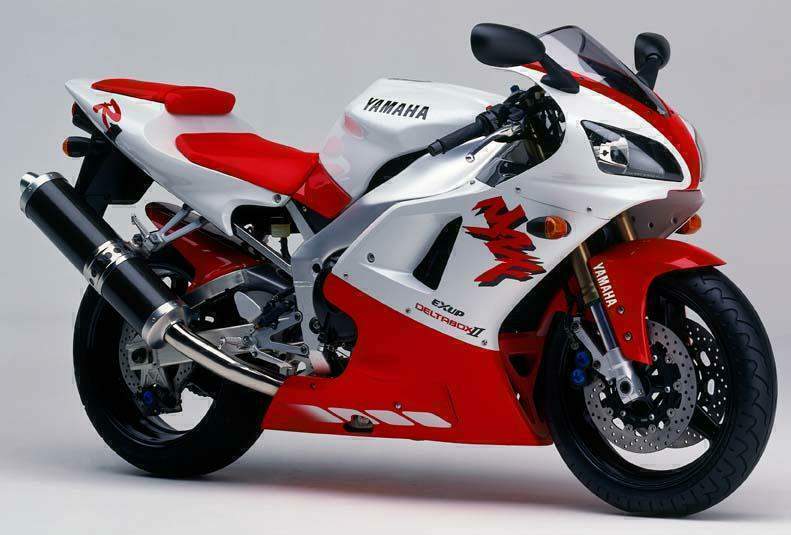
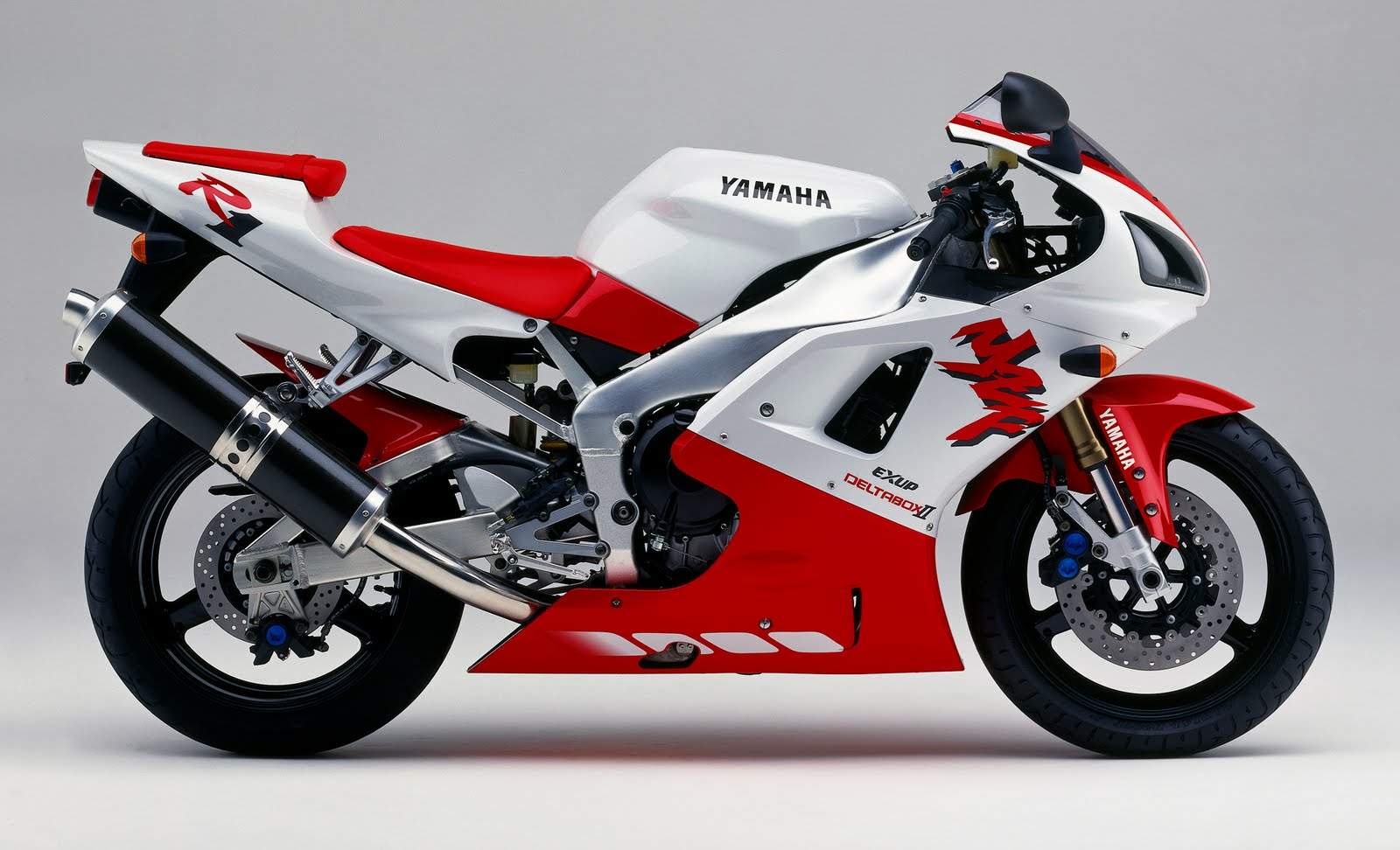
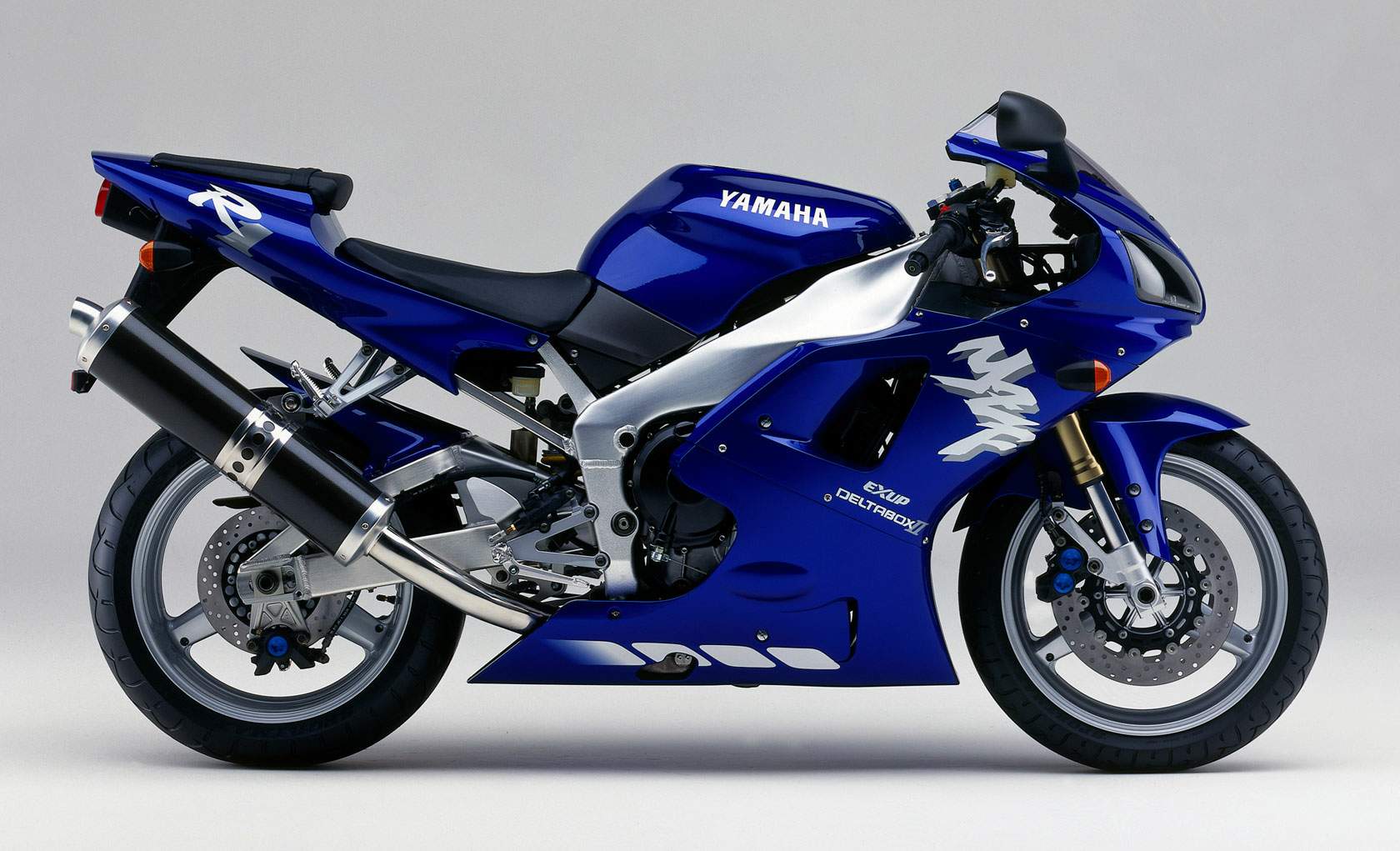
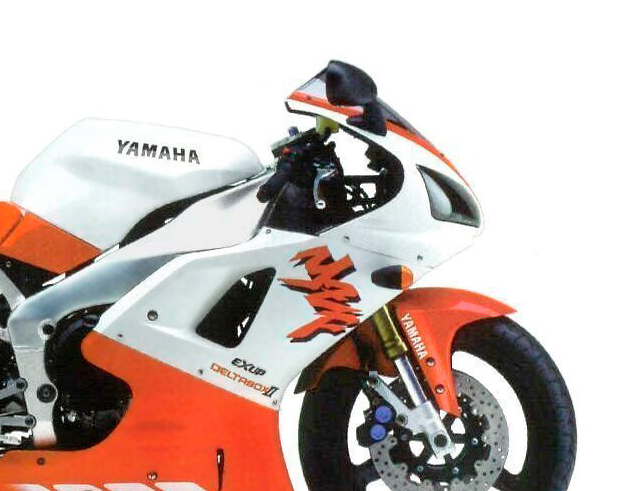
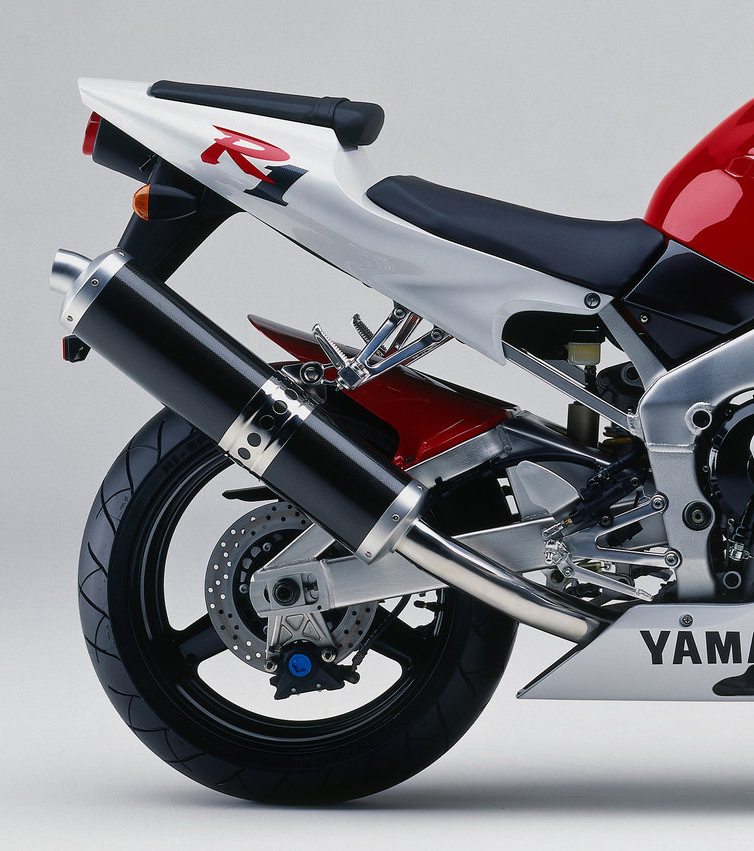
Yamaha launched the YZF-R1 after redesigning the Genesis engine to create a more compact engine by raising the gearbox input shaft and allowing the gearbox output shaft to be placed beneath it. This 'stacked gearbox' was followed by other manufacturers. Compacting the engine made the engine much shorter, allowing the wheelbase to be shortened. This allowed the frame design to place the weight of the engine in the frame to aid handling because of an optimized center of gravity. The swingarm could be made longer without compromising the overall wheelbase, which was a short 1,385 mm (54.5 in). Four 40 mm Keihin CV carburetors fed fuel to the engine. It had KYB upside down 41 mm front forks and 300 mm semi-floating disk brakes. The instrument panel was electrical with a self diagnosis system and digital speed readout. The exhaust system used Yamaha's Exhaust Ultimate Power Valve (EXUP), which controlled the exhaust gas flow to maximize engine power production at all revs. This created a high powered and high torque engine.
1998-1999 Yamaha launched the YZF-R1 after
redesigning the Genesis engine to offset the crankshaft, gearbox input, and
output shafts. This "compacting" of the engine made the total engine length much
shorter. This allowed the wheelbase to be shortened significantly, resulting in
much quicker handling and an optimized center of gravity. The bike had a
compression ratio of 11.8:1 with a six-speed transmission and multi-plate
clutch. The 1999 R1 saw only minor changes, apart from paint and graphics. Notable improvements were a redesigned gear change linkage and the gear change shaft length being increased. Fuel tank reserve capacity was reduced from 5.5 l (1.2 imp gal; 1.5 US gal) to 4.0 l (0.88 imp gal; 1.1 US gal), while the total fuel tank capacity was unchanged at 18 l (4.0 imp gal; 4.8 US gal). A second worldwide recall was issued for 1998 and early 1999 models, to change a coolant hose clamp under the fuel tank which could come loose under hard use. Motorcycle Consumer News tests of the 1998 model year YZF-R1 yielded a 0 to 60 mph (0 to 97 km/h) time of 2.96 seconds and 0 to 100 mph (0 to 160 km/h) of 5.93 seconds, a ¼ mile time of 10.19 seconds at 131.40 mph (211.47 km/h), and a top speed of 168 mph (270 km/h), with deceleration from 60 to 0 mph (97 to 0 km/h) of 113.9 ft (34.7 m).[1] For the 1999 model year, Cycle World tests found a 0 to 60 mph (0 to 97 km/h) time of 3.0 seconds, ¼ mile time of 10.31 seconds at 139.55 mph (224.58 km/h), and a top speed of 170 mph (270 km/h).
Three numbers said it all about the YZF-R1 with which Yamaha stunned the superbike world in 1998. The four-cylinder charger produced 150bhp, weighed just 3891b (176kg) and had an ultra-short wheelbase of 55in (1395mm). That made it the most powerful, lightest and most compact large-capacity sports bike ever built. And with its aggressive styling, the R1 had the looks to match. Beneath the sharp twin-headlamp fairing, the R1 incorporated some clever engineering. Its basic layout was Yamaha's familiar blend of 20-valve, four-cylinder engine and aluminium twin-beam frame. But the R1 design team, led by Kunihiko Miwa, put the six-speed gearbox higher than normal behind the liquid-cooled cylinders, making the 998cc engine very compact. This in turn allowed the bike to be very short while having a long rear swingarm, as used by grand prix bikes for added stability.
Innovative crankcase design
The R1's new engine also contributed with its innovative one-piece cylinder and crankcase assembly, which was stiffer than the conventional design and allowed the powerplant to be used as a stressed member of the chassis. This meant that the R1's Deltabox II frame needed to be less strong, which helped explain how the bike could weigh less than most 600cc sportsters. The R1 engine was a spectacular performer in its own right, never mind its contribution to the handling.
The bike felt light, racy and purposeful, with low, narrow handlebars, high footpegs, a firm seat and the smallest of windscreens. And such was the motor's gloriously broad spread of power that the moment its throttle was wound open, the R1 hurtled forward as though fired from a canon. It was not so much the fearsome acceleration when revved towards its 11,750rpm limit that made the Yamaha so special, nor even its 170mph (274km/h) top speed. Where the R1 engine really scored was in its flexibility, which ensured that smooth, addictively strong acceleration was always available, making it a supremely easy bike to ride very rapidly indeed.
And the R1's handling was equally impressive. The bike's combination of light weight, rigidity, racy dimensions and excellent suspension gave it the feel of a much smaller machine. This was an open-class bike that handled better than any 600cc sportster.
The Rl was not infallible, and like many short, light, powerful bikes it shook its head under hard acceleration over a series of bumps. But most of the time the Rl just felt so responsive and controllable that its rider could seemingly do no wrong, despite the bike's sheer speed. Its front brake was a match for that of any rival, combining fierce power with plenty of feel. Detailing was generally good, notably the instrument console, which combined a digital speedometer and traditional analogue rev-counter with the welcome addition of a clock. Despite that useful touch the R1 was not a bike for everyday use. It was uncomfortable for its rider at slow speed, and hopeless for a pillion at any speed. It was so fast and furious that even some experienced riders found their needs better met by a slightly less focused alternative.
But for those who valued pure performance above all else, the YZF-R1 was simply sensational. Even before it had turned a wheel in anger, those figures for power, weight and wheelbase had made Yamaha's new star the world's best superbike on paper. On road and racetrack alike, it fully lived up to that promise.
|
|
|
Any corrections or more information on these motorcycles will be kindly appreciated. |