|
|
|
|
Classic Bikes
Custom Bikes
Individual
Racing Bikes AJP
AJS
Aprilia
Ariel
Avinton / Wakan
Bajaj
Benelli
Beta
Bimota
BMW
Brough Superior
BRP Cam-Am
BSA
Buell / EBR
Bultaco
Cagiva
Campagna
CCM
CF Moto
Combat Motors
Derbi
Deus
Ducati
Excelsior
GASGAS
Ghezzi Brian
Gilera
GIMA
Harley Davidson
Hero
Highland
Honda
Horex
Husaberg
Husqvarna
Hyosung
Indian
Jawa
Kawasaki
KTM
KYMCO
Laverda
Lazareth
Magni
Maico
Mash
Matchless
Mondial
Moto Guzzi
Moto Morini
MV Agusta
MZ / MuZ
NCR
Norton
NSU
Paton
Peugeot
Piaggio
Revival Cycles
Roland Sands
Royal Enfield
Sachs
Sherco
Sunbeam
Suzuki
SWM
SYM
Triumph
TVS
Ural
Velocette
Vespa
Victory
Vincent
VOR
Voxan
Vyrus
Walt Siegl
Walz
Wrenchmonkees
Wunderlich
XTR / Radical
Yamaha
Zero
Video
Technical
Complete Manufacturer List
|
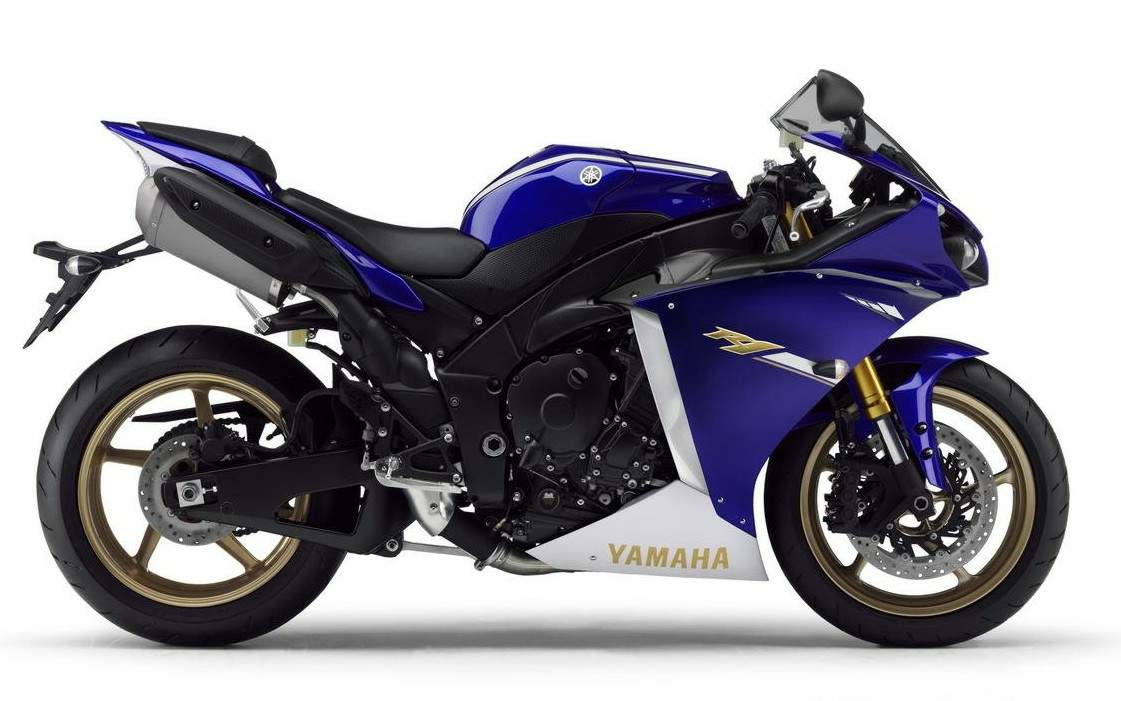
Yamaha YZF-R1
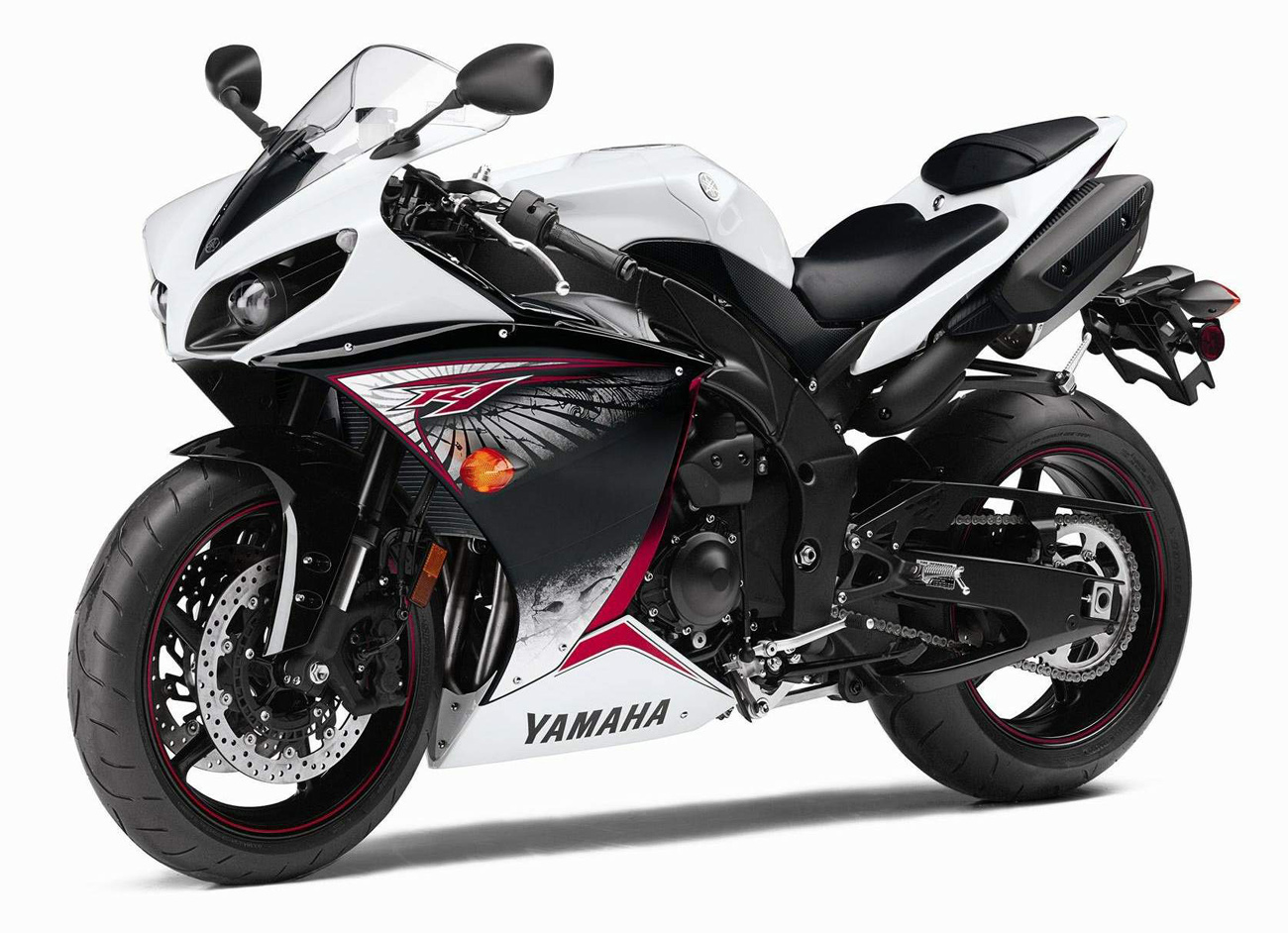
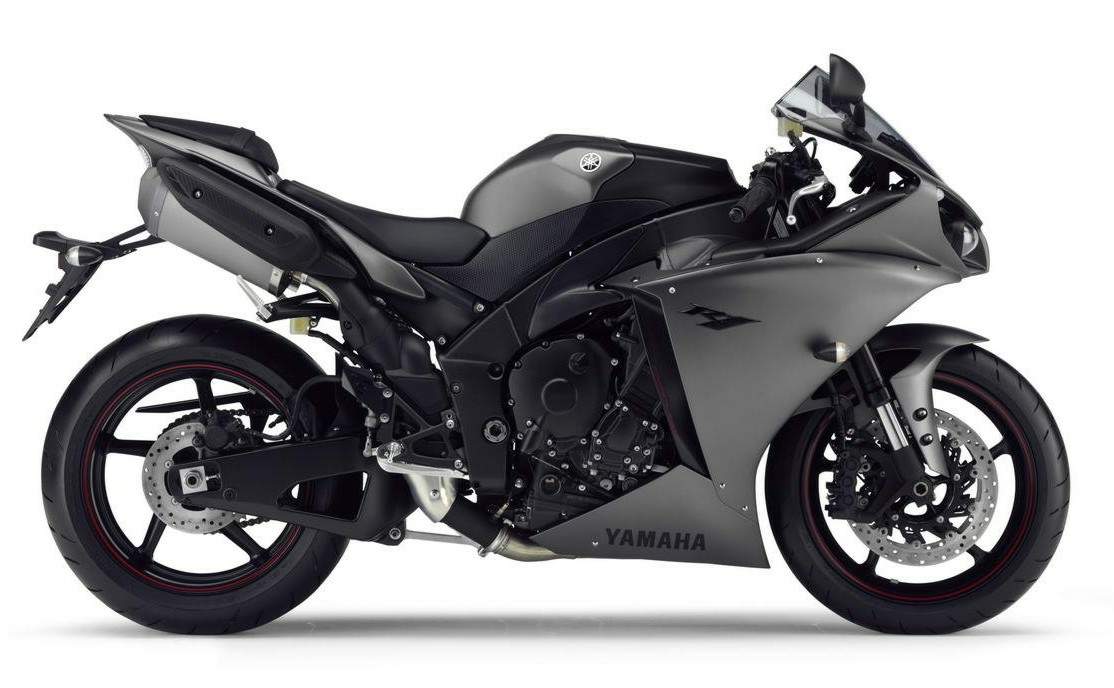
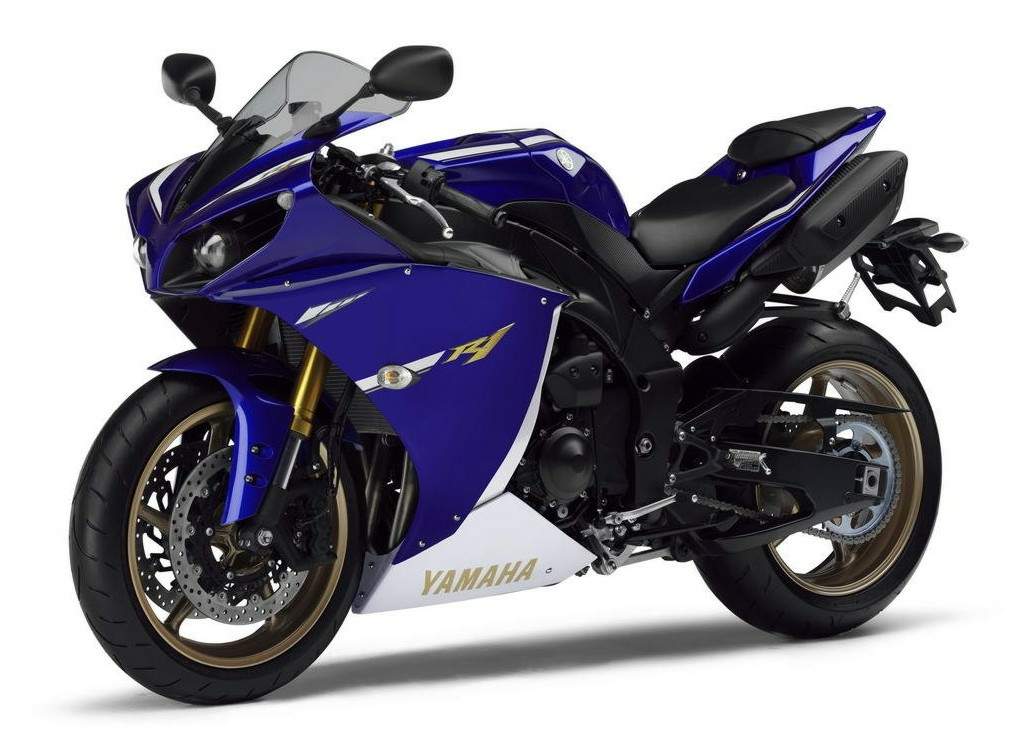
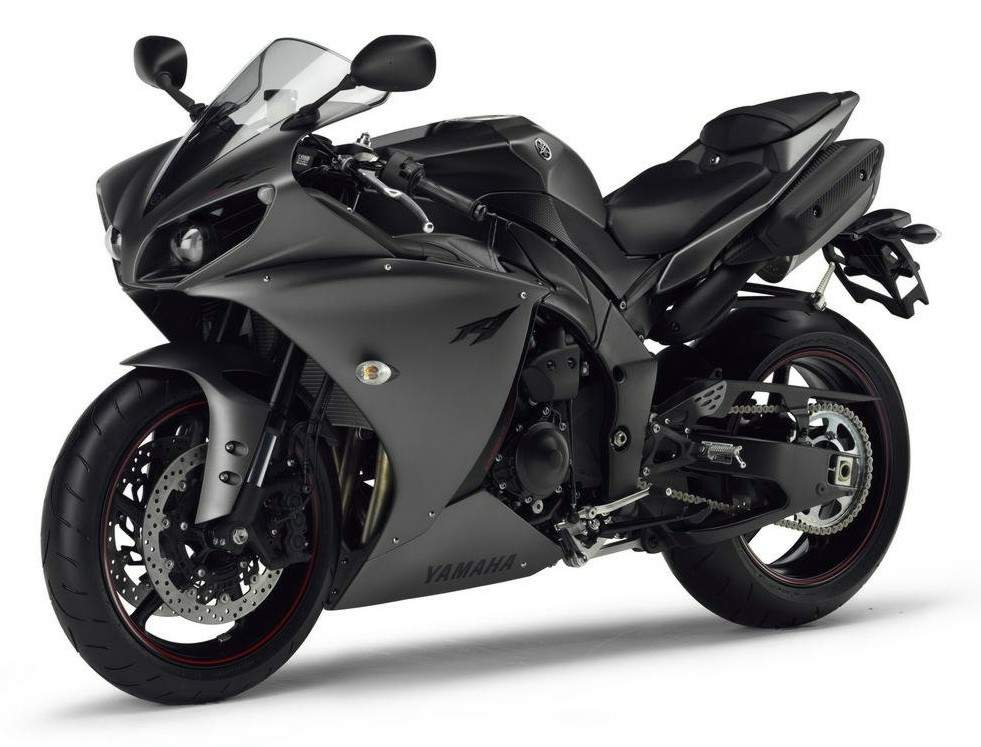
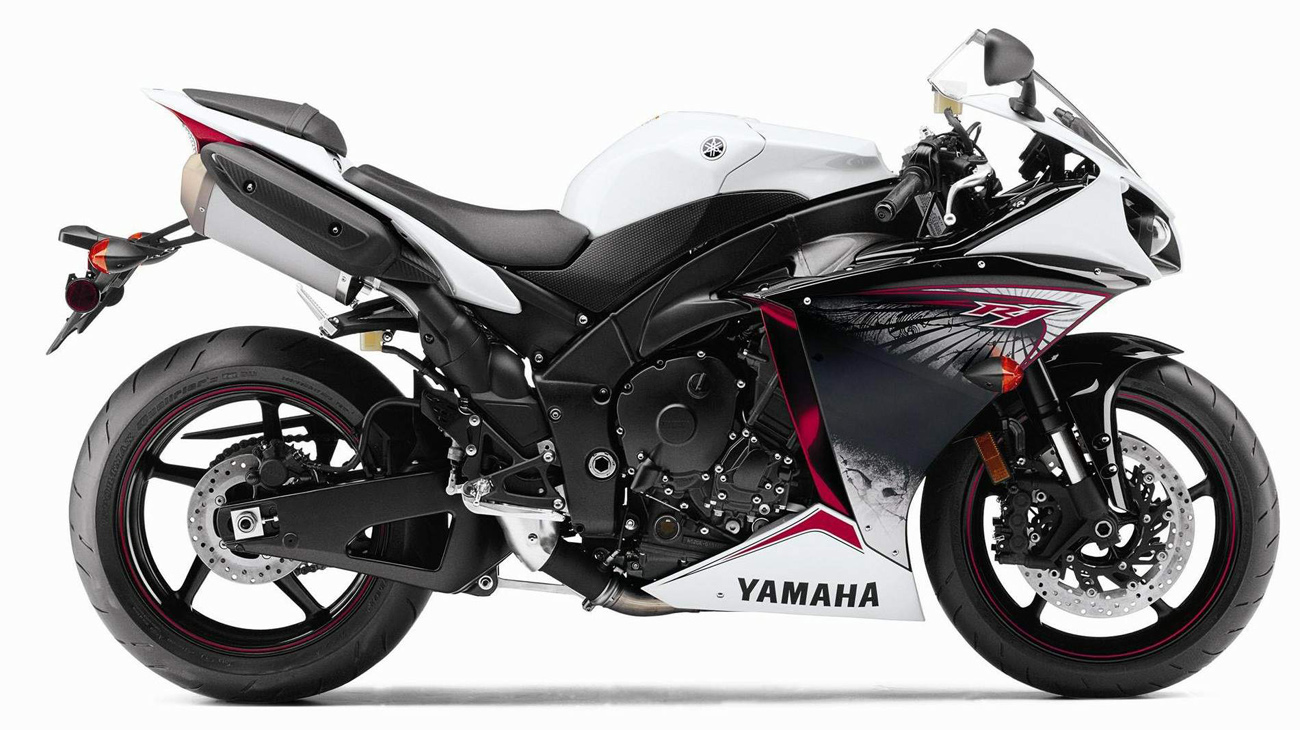
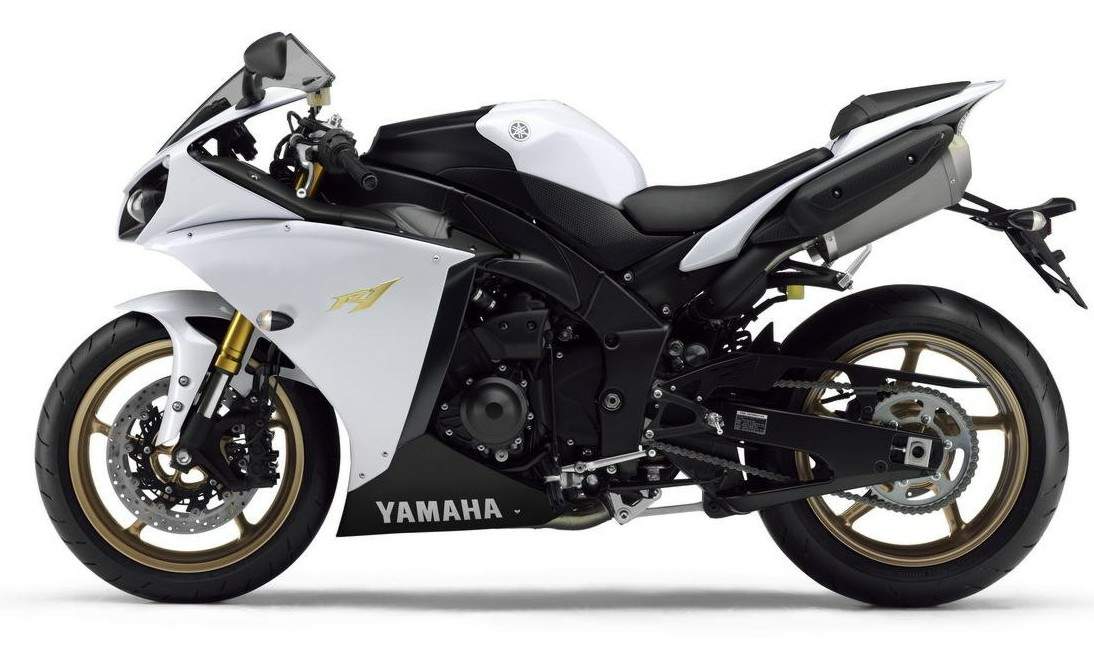
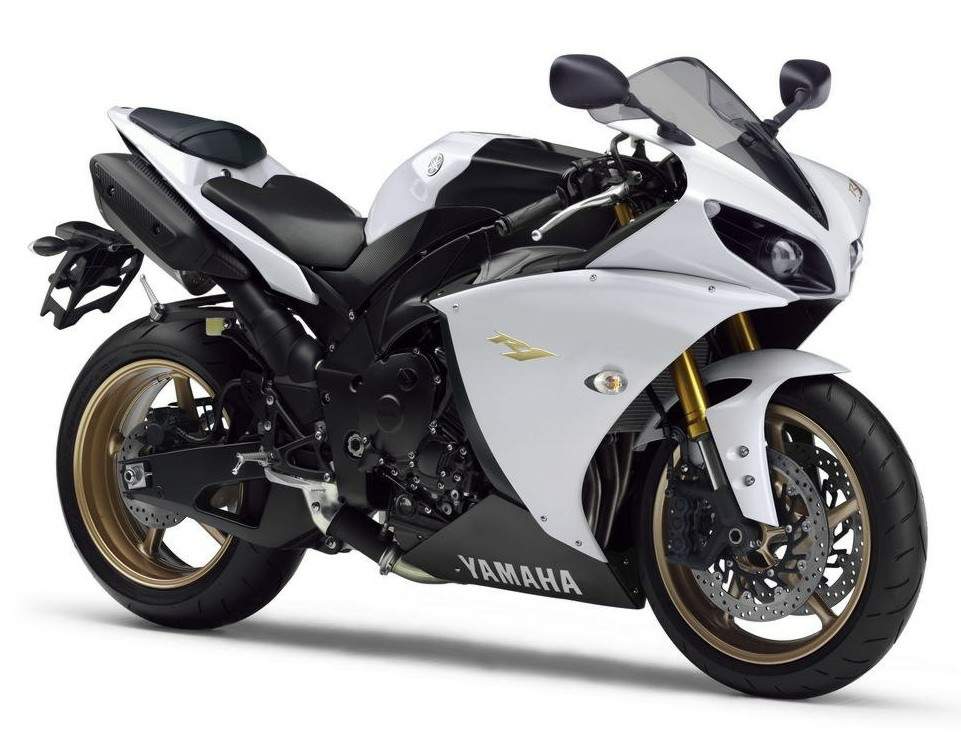
Experienced supersport riders and track day enthusiasts will have a blast riding the new 2012 R1. In addition to the ECU changes and new traction control system, which combine to achieve a new level of drivability, the R1 features a more aggressive fairing "face" with new eye catching LED illumination lights. Other new styling highlights include the muffler covers and muffler end tips plus a MotoGP inspired lightweight top triple clamp. The 2011 AMA Superbike Championship winning R1 with its cross plane crank and uneven firing order has taken another evolutionary step forward for 2012 with the addition of traction control and revised ECU settings. These changes make it easier for the experienced rider to bring out the full performance of the new 2012 Yamaha YZF-R1 while enjoying the unique character and sound of the revolutionary cross plane engine. With back-to-back American Superbike Championships, and more MotoGP-inspired than ever, the R1 is the world’s most advanced Open-class production motorcycle. The 2012 Yamaha YZF-R1 is unlinke anything before. Benefitting from even more MotoGP technology for 2012 with new sevel-level traction control and the World GP 50th Anniversary livery option. The World GP livery includes a 50th Anniversary emblem on top of the fuel tank and a special numbered plate showing the production number of only 2000 units that will be produced worldwide. From the track to the street, it truly is "the 1." Yamaha YZF-R1 Highlights and Key Features: Fuel Consumption ± 14kpl/40mpg(Imp) New, more aggressive front fairing 7 - position traction control Key Features: •For 2012, the YZF-R1 receives another benefit from MotoGP® technology – a seven-level Traction Control System. The system has been developed so the rider does not feel any unnatural or harsh intervention from the system. In addition, traction control can aid in reducing tire wear due to less wheel spin. Coupled with the three level D-Mode electronics throttle response control, riders have 21 different choices available to tailor the YZF-R1 to their riding preference. •World GP 50th Anniversary Edition celebrates Yamaha’s racing heritage with Pearl White/Rapid Red livery. Includes a 50th Anniversary emblem on top of the fuel tank and a special numbered plate showing the production number of only 2000 units that will be produced worldwide in these commemorative colors. Gold Yamaha badges are used on the fuel tank, front, and rear of the motorcycle, and an additional small sticker kit will be provided. •The 2012 YZF-R1 has a new headlight cowl designed to be sharper, more modern, and more aggressive. LED position lights are used for a high quality and distinctive look. Out back, the muffler end caps and heat shields are restyled for a more mechanical look. And a new top triple clamp is styled after the YZR-M1. •This R1 keeps all the technological superiorities developed for its predecessor: YCC-T™ (Yamaha Chip Controlled Throttle) is MotoGP® inspired fly-by-wire technology used to deliver instant throttle response. YCC-I® is Yamaha Chip Controlled Intake which is a variable intake system that broadens the spread of power. The fuel injection system provides optimum air/fuel mixtures for maximum power and smooth throttle response.
•In keeping with this machine’s exceptional cornering ability and crisp handling, the aluminum frame has been designed to offer exceptional rigidity balance. The rear frame is lightweight Controlled-Fill die-cast magnesium, contributing the optimum mass centralization. Suspension includes SOQI front forks which use one of the tricks developed for our winning MotoGP® bikes: independent damping. The left fork handles compression damping and the right side handles the rebound damping. And the rear shock adopts bottom linkage for optimum suspension characteristics. •The sound on the YZF-R1 is unlike any other inline four cylinder production supersport. The precise and throaty pulse of the exhaust note will have riders enthused every time the throttle is opened. •Seven-level Traction Control System allows the rider to get more traction and drive while exiting corners. •New ECU settings provide excellent drivability during low and mid rpm acceleration. •New top triple clamps add to the appearance of the YZF-R1, reminiscent of the MotoGP® powerhouse YZR-M1. •The footrests have been redesigned for great boot sole contact and advanced rider/motorcycle interface. •New headlight cowl styling and LED position lights enhance the YZF-R1’s unique styling. •New silencer heat guards and end caps are re-styled to give the rear end of the bike a more compact look ,while at the same time making the individual parts look more mechanical.
Yamaha YZF-R1 Features and Benefits ENGINE Ultra-lightweight, compact, 998cc, DOHC, 16-valve, liquid-cooled, 40 degree inclined, in-line four-cylinder engine with "crossplane" style crankshaft. The key components of this cutting edge engine design are the "crossplane" crankshaft and an uneven firing order. Both of these features are used on Yamaha's championship winning M1 MotoGP racer. Please note … this is not a "big bang" engine. The R1 departs from the norm for in-line 4 cylinder engines and the 180 degree alignment of the crank pins (where the connecting rods attach to the crankshaft), and locates the center two rods at a 90 degree plane from the outer cylinders. This means instead of the crank pins aligned on the same plane (a straight line drawn through the center of the crankshaft), they align on 2 planes in the form of a cross ... or "crossplane". Working in conjunction with the crossplane crank is an uneven firing order. A traditional in-line 4 cylinder's firing order is normally 1,2,4,3 with a 180 degree interval. This R1 engine fires 1,3,2,4 cylinders and the firing intervals are uneven at 270 / 180/ 90 /180 degrees. What all this means to the rider is the most linear torque possible and amazing throttle control. This engine design allows a whole new level of rider - machine communication. One of the most important benefits is the outstanding cornering performance that increased engine control allows. The engineering goal for the R1 is controllability … not just an increase in horsepower. If that was the case, we could have simply increased the power output of the existing engine design resulting in a peaky, hard to use power band. The 4-valve cylinder head design features a compact combustion chamber that utilizes lightweight, trick, titanium valves on the intake side. The 4-valve design maximizes breathing efficiency and overall engine performance.
The titanium intake valves are 31mm in diameter while the steel exhaust valves are 25mm in diameter. Lightweight yet super strong VX alloy valve springs control valve movement. Steep valve angles, 11.5 degrees on the intake side and 12.5 degrees on the exhaust produce a compact combustion chamber. The lightweight titanium intake valves reduce the reciprocating weight of the intake valves allowing for higher rpms without the concern of valve float. The use of lightweight "Ti" valves has allowed the engineers at Yamaha to use a 4-valve format. In the past, the use of 5 smaller valves allowed a higher rpm limit since each of the "smaller" valves was relatively light. The use of light weight titanium now means the engineers no longer have to use the 5-valve design to achieve the same high rpms. Combustion chambers have been optimized for maximum engine performance. The compression ratio is 12.7:1. Compact automatic cam chain tensioner reduces both maintenance and mechanical engine noise. Short skirt, forged aluminium pistons offer light weight, fast throttle response and great reliability. Crossplane crankshaft features 36mm journals for increased strength, while the inertial moment of the crank has been increased by 20% versus the last generation R1. Connecting rods are carburized and use a nut less design. The lower end "cap" of the rod is made from the same piece of material as the upper portion and is cracked away in a process known as "fracture splitting". This process aids true big end roundness and greater precision in con rod dimensions.
Ceramic composite cylinder "bores" are a "liner less" design with the ceramic coating applied directly to the aluminium block to ensure uniform heat dissipation for consistent power delivery, reduced oil consumption, reduced friction and reduced weight. Closed deck cylinder design allows the cylinders to be spaced more closely together, allowing a narrower engine. The cylinder block is a stand-alone piece (not integrated into the upper crank case). The benefit is reduced weight and a less tall engine which lowers the centre of gravity. A "coupling force balancer" is used to quell engine vibration for excellent rider comfort. Compact ACM (alternator) is mounted directly to the crankshaft. The compact ACM uses rare earth magnets which produce more power for a given size than conventional magnets, therefore reducing size and weight. Revised Mikuni fuel injection system features twin injectors (one set of primary & one set of secondary injectors). This type of twin injector system is also used on our M1 MotoGP race bike and the R6. One set of injectors (primary) are located in the 45mm throttle bodies while the secondary injectors are located in the air box very near the computer controlled intake funnels. The revised primary injectors utilize 4 spray holes to maximize the fuel atomization process. The secondary injectors, located inside the air box, begin to function at mid rpms onwards to supply more fuel as required. The F.I. system features separate dual track TPS (throttle position sensor) and APS (accelerator position sensor) sensors An oxygen sensor is fitted into the exhaust collector making this a "closed loop" type FI system, which feeds back info to the ECU so adjustments can be constantly made to the fuel-air mixture for improved performance and reduced emissions. The benefits of fuel injection include excellent throttle response, great fuel economy, reduced emissions, stable idling and no choke to fuss with during start up. The fuel injection's lightweight Electronic Control Unit (ECU) utilizes a powerful 32-bit processor for fast control of the injection process. The compact design also reduces weight.
YCC-I or Yamaha's Chip Controlled Intake means the intake funnels / stacks vary in length (2 positions) depending on engine rpm. An electronic servo motor varies the funnel length from the tall position at low to mid rpms to the shorter setting for improved high rpm power. The transition rpm between the 2 lengths is approx. 9,400 rpms. The revolutionary YCC-I provides the best of both worlds …solid low rpm torque and power combined with an amazing high rpm rush. It takes only 0.3 of a second for the funnels to move from the tall to the short position. Yamaha's exclusive YCC-I electric-control servo motor-driven variable intake funnel system is a world's 1st on a production motorcycle and works in conjunction with Yamaha's fly-by-wire technology and FI Systems. Yamaha Chip Control Throttle (YCC-T) electronically controls the throttle valves for outstanding response and improved controllability at all rpms. The YCC-T is used to provide even more control of the intake air volume for smoother torque character. Similar to the R6 design, the YCC-T features 3 - ECU's inside the main ECU to control ignition, fuel injection and the YCC-T. This special ECU is capable of responding to changes at a speed of 1000th of a second. The rider can "mechanically close" the throttles by simply closing the throttle twist grip. All new 6 mode traction control system features an off mode as well. This MotoGP derived system limits or eliminates rear wheel slippage or slide based on the chosen mode. This system uses front and rear wheel sensors to detect slip and then adjusts / regulates via the ECU the throttle opening (YCC-T), fuel injection and ignition timing to control slip. The system is activated using a switch on the LHS switch gear. Each mode offers a different level of slip control. Long life Iridium twin electrode spark plugs are used. Compact close-ratio 6-speed transmission features optimized gear ratios for maximum performance. The "stacked" 3-axis gearbox / clutch design stacks input/output shafts to create a low center of gravity and keeps overall engine size shorter front to back. As a result, the stacked design gives the engineers the freedom to place the engine in the "sweet spot" of the frame for optimum weight balance for awesome handling. The slipper or back limiter clutch assembly reduces rear wheel hop when making hard down shifts when under hard braking. Key benefit is reduced lap times and smoother control when riding aggressively during a race or track day. A multi plate clutch is used, utilizing coil springs and paper based fibre plates. "Ram Air" system "force feeds" outside air via dual ducts located beside the projector headlights into the intake system. As speed increases the air velocity in the system increases and pressurizes the air box. This "force fed" air helps the engine develop maximum power. Computer optimized large capacity air box maximizes performance. A viscous type, high flow air filter is utilized. Revised 4 into 2 into 1 into 2 titanium exhaust system maximizes power output, reduces weight and improves aerodynamics. The dual under seat mufflers provide an aggressive sound. This system contains a 3-way honeycomb catalyzer and an oxygen sensor. The catalytic converter reduces harmful CO and HC exhaust emissions while the oxygen sensor provides feedback to the ECU to maintain optimum fuel/air mixture at all times. Dual shorty, large diameter triangle shaped mufflers are a "single expansion" type that create a throaty exhaust note and help emphasize engine character. New muffler end caps improve styling. The exhaust note is much different than on previous R1 models due to the crossplane crank and uneven firing order … it sounds very similar to Yamaha's M1 MotoGP race bike.
Compact, high-efficiency curved radiator features dual ring-type fans for maximum cooling efficiency. This curved rad and twin fan design produces more airflow than conventional flat designs to maintain optimum engine temperatures for consistent power output. Large liquid-cooled oil cooler maintains stable lubricant temperatures for extended engine life. Convenient cartridge style spin-on oil filter. Convenient clutch cover sight glass ensures easy oil level inspection. High performance direct ignition coils (ignition coil is built into the spark plug cap) reduce weight while iridium spark plugs and high-output magneto deliver increased spark energy. Yamaha D-Mode variable throttle control enables the rider to adjust the performance characteristics of the engine based on riding preferences or conditions. Standard mode emphasises the very linear throttle and torque feel of the engine. The A mode allows the rider to enjoy sportier engine performance in the low to mid rpms. While the B Mode reduces the power response for riding situations that require softer power characteristics. The switch mechanism is located on the RHS handle bar switch gear. New ECU settings for improved drivability / controllability. CHASSIS / SUSPENSION Aluminium Deltabox frame has been designed to offer an optimized rigidity balance to maximize handling performance. This frame is very rigid or stiff at the head pipe, engine mounts and swingarm pivot point. In other areas, material has been carefully removed to allow "tuned flex". Finished in black, this frame boasts a compact 1415mm (55.7") wheelbase. The swingarm pivot location has been optimized to minimize the chain tension effect under hard acceleration, providing more stable handling. The engine is a fully stressed chassis member to maximize handling. Stability, a key to great handling, is unsurpassed while the ability to hold a line under hard acceleration is excellent. This frame features a mix of gravity cast (head stock & front engine mounts & swingarm pivot area), CF (controlled filling) die cast (outer tank rails) and aluminium panels (inner tank rails). Each of these aluminium parts has different flex characteristics in order to provide the rigidity balance the engineers desired. Detachable magnesium CF die cast rear subframe reduces weight. The detachable design allows rear shock access and is less costly to repair if accidentally damaged. Extra-long, lightweight aluminium "truss-type" swingarm provides great torsional rigidity for class leading handling, agility and manoeuvrability. This lightweight swingarm is made up of cast aluminium and CF die cast parts. The distance between the swingarm pivot and the rear axle has been optimized (597 mm) for excellent "turn-in" abilities and rear wheel traction. This Deltabox chassis offers an incredible 56 degree lean angle.
Fully adjustable 43mm inverted fork features independent left and right damping system. The compression damping is adjusted via the left fork leg, while rebound damping is adjusted on the right fork leg. This system simplifies the flow of oil through the fork and minimizes oil cavitation (aeration of the oil) for more stable suspension performance. Adjustments include 5-way spring preload, 25-way rebound and 25-way compression damping. Front wheel travel is 120mm (4.7"). The thickness of the inner fork tubes and the shape of the outer tubes have been optimized. The adjustable design allows the rider to tailor suspension settings to match rider weight and road /track conditions to maximize handling and suspension performance.
ew MotoGP M1 inspired, gravity cast aluminum upper triple clamp reduces weight and improves styling. Revised bottom link Monocross rear suspension utilizes a fully adjustable piggyback-style rear shock. Spring rate has been revised for improved traction feeling while the spring preload adjuster is now an easier to use screw type. Adjustments include 16-way spring preload, 18-way rebound and 20-way slow speed compression damping and 4-way fast speed compression damping. The bottom link design lowers the centre of gravity for excellent handling. This is a rising rate or progressive system. The adjustable design allows the rider to tailor suspension settings to match rider weight and road /track conditions to maximize handling and suspension performance. Rear wheel travel is 120mm (4.7"). Radial mount 6-piston calipers squeeze fully floating 310mm dual front rotors. The result is incredible braking performance with excellent control and lever feedback. Brembo radial pump master cylinder with 16mm piston is a direct GP race innovation. The lever is adjustable for various hand sizes. Single piston slide-type Nissin rear caliper squeezes a lightweight 220mm rotor. Rugged yet lightweight 5-spoke mag wheels front and rear. The wheels utilize hollow "spokes" to reduce unsprung weight for superior handling. Front rim size is a MT3.50 x 17 while the rear is MT6.00 x17.
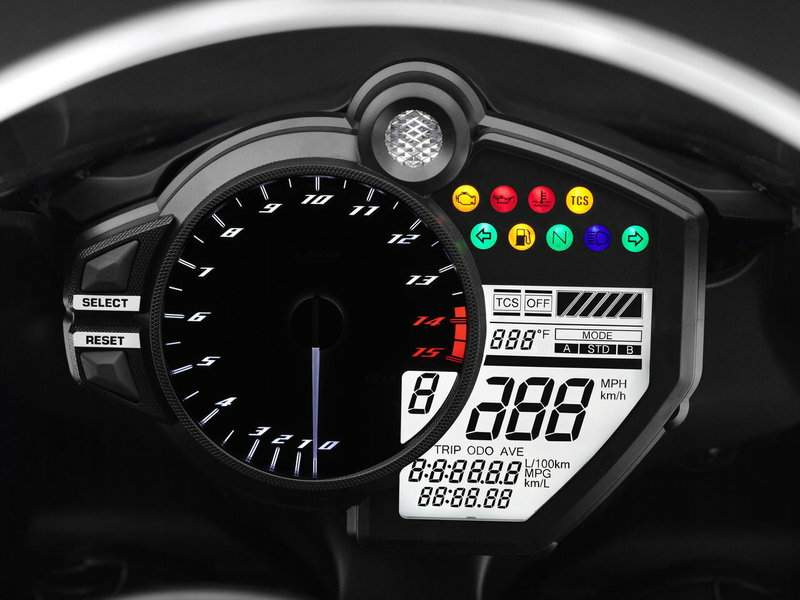
Premium sport spec radial tires front and rear. 18 litre fuel tank provides excellent knee grip for hard braking and great rider manoeuvrability. The elongated shape helps to centralize mass and reduces the variance in riding feel as the fuel load (weight) changes. New more aggressive front fairing offers excellent aerodynamics New LED marker and illumination lighting provides excellent visibility / conspicuousness. Revised race inspired lightweight instrumentation includes an analog tach plus digital speedo, dual tripmeters, clock, coolant temperature and fuel trip meter. This console also features adjustable back lighting, adjustable shift light and a low fuel warning light. Other key features include a gear position indicator, new traction control indicator, engine mode indicator integrated stop watch, lap timer with split time mode and an air intake temperature display. The lap timer is controlled by the starter switch button for added convenience and ease of use. LED taillight reduces weight and power consumption while providing a brilliant eye catching light. The lens is white while the LEDs are red.
ADDITIONAL DETAILS / FEATURES Adjustable footrests can be raised 15mm upward and 3mm backWard if desired. New design lightweight aluminum rider footrest Immobilizer ignition system is designed to reduce the possibility of "ride away" theft. This system must recognize the "coded ignition key" in order for the unit to start. If the immobilizer ignition does not recognize the key (or a thief's screwdriver or other type of "jimmy tool") the bike will not start even if the ignition is turned or forced into the on position. If the system does not recognize the coded chip in the ignition key, it will not allow the ignition system, fuel pump or starter motor to function. Windshield features a "screw less" design for a cleaner, more trick appearance. Slim design rear tail section. The seating position offers a very sporty yet comfortable riding position. Extensive use of hollow bolts and lightweight fasteners help trim overall weight. Heavy-duty 50 series "O" ring drive chain. New design 17 tooth drive sprocket reduces chain noise. Low maintenance, lightweight, sealed battery. Convenient fold out under seat bungee cord fastening straps. The YZF-R1 offers a significant level of power and performance. It is not intended for novice or inexperienced riders
Review
Following the example set by the BMW S1000RR,
Aprilia RSV4 Factory APRC and Kawasaki ZX-10R Ninja, Yamaha have fitted traction
control to the 2012 YZF-R1. It is a proper six-mode system with a full range of
settings – mode six will let you twist the throttle to the max, regardless of
road surface and lean angle and the computers will sort everything out for you.
The system gets progressively more lenient through modes five, four, three, two
and one, with the rider being pretty much on his/her own in mode one.
“We were more interested in producing a bike that was easier to control, than
chasing outright horsepower figures like everyone else. By applying the traction
control system and altering the bike’s geometry as we have, we have taken
another step towards producing a bike that blows the competition away in the
handling department,” says Oliver Grill, from Yamaha’s motorcycle product
planning department, speaking to MS&L. “The R1’s [traction control] system is
track biased. While modes six and five are definitely more focused towards road
riding, the other four are designed with performance in mind. And it’s likely
you’d need a racetrack to experience their true potential,” adds Yoshitomi
Nakagawa, who designed the R1’s traction control system. Source Faster and Faster
Roland Brown Review
Its riding position is roomy, with relatively
high, flat clip-ons and plenty of legroom. Its fairing is wide and protective,
its mirrors superbly clear, its suspension compliant and comfortable. Added to
that was the unique growl and feel of the crossplane crankshaft – more like a V4
than an inline-four and enhanced in this bike’s case by a pair of gorgeous
sounding Akrapovic exhaust cans.
|
|
|
Any corrections or more information on these motorcycles will be kindly appreciated. |