|
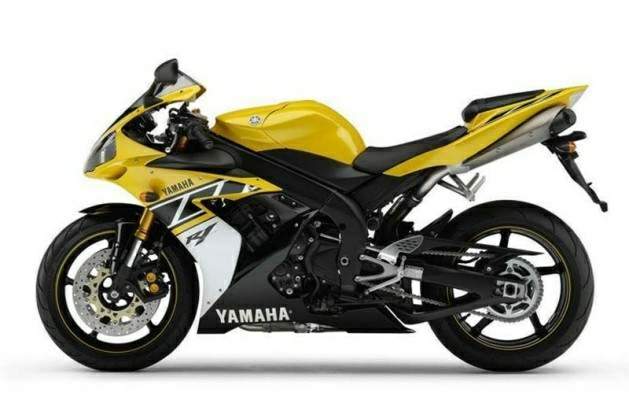
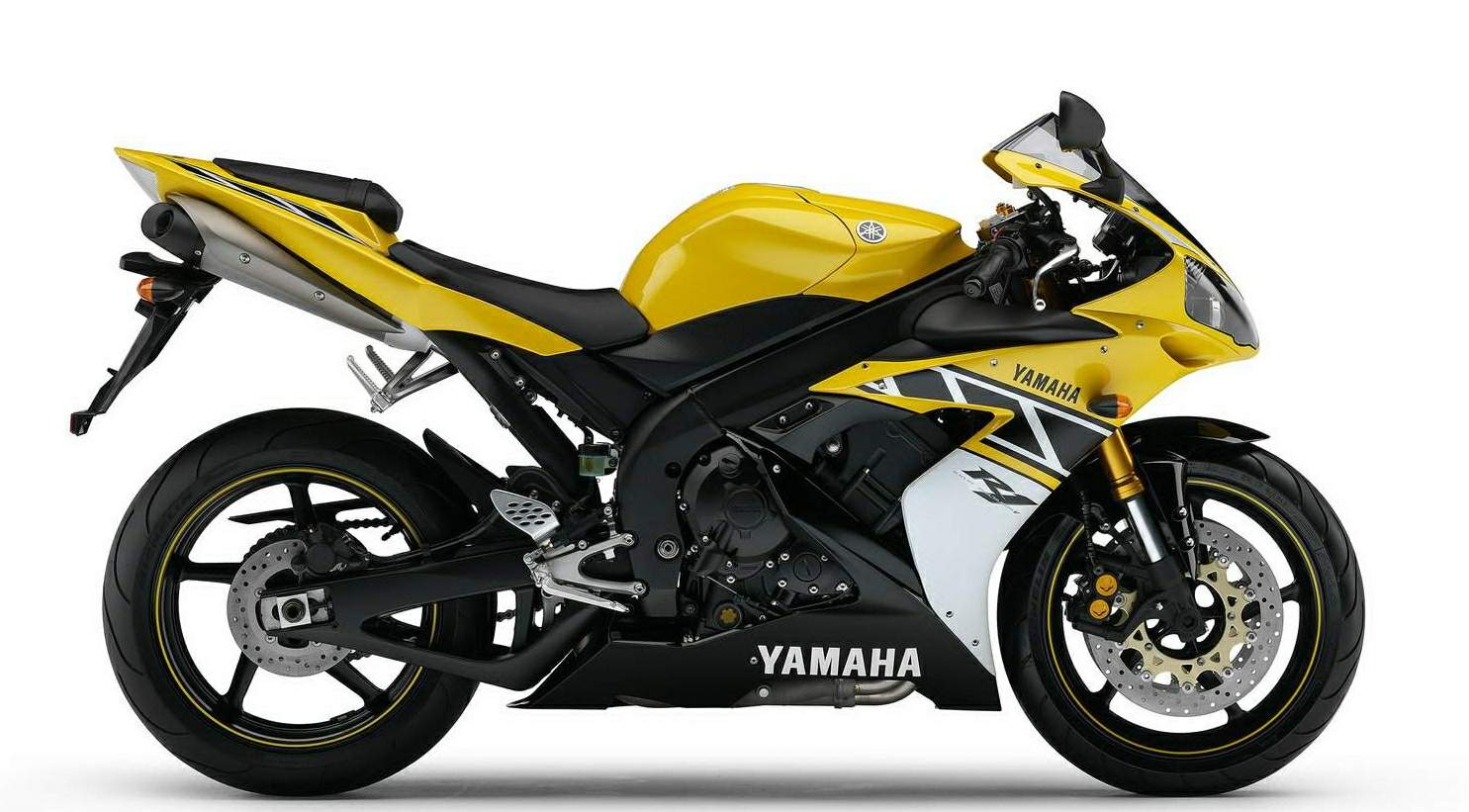
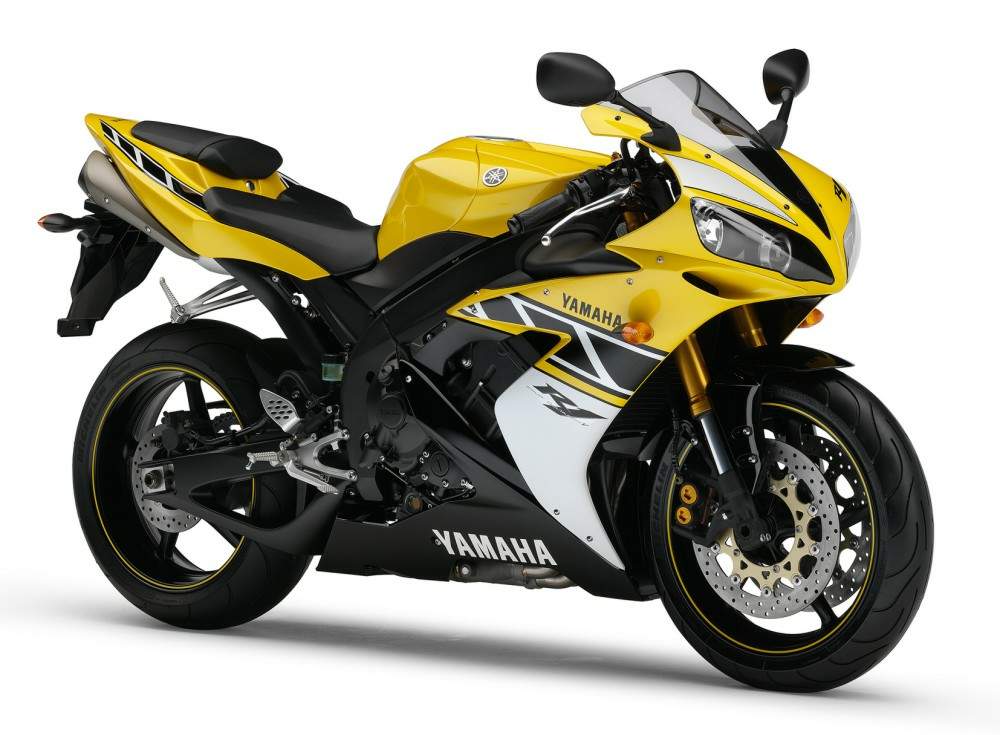
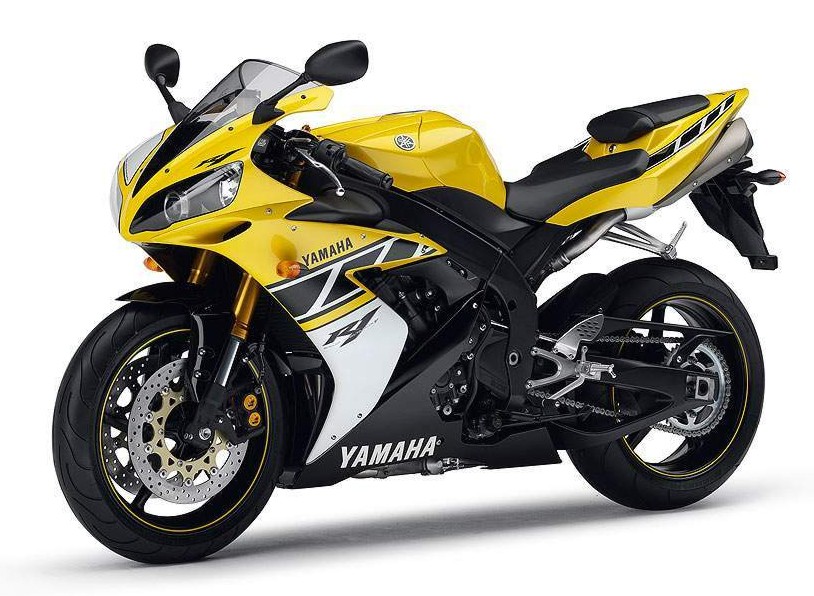
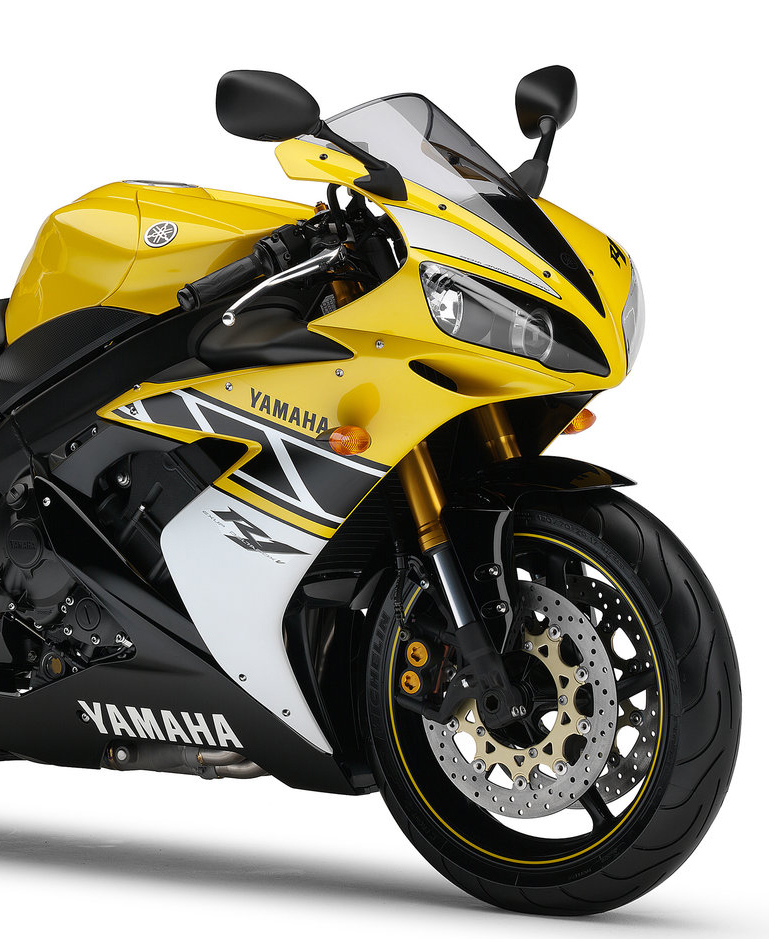
Yamaha YZF 1000 R1 50th
Anniversery

|
Make Model |
Yamaha YZF 1000 R1 50th
Anniversery |
|
Year |
2006 |
|
Engine |
Liquid cooled, four stroke, transverse four cylinder,
DOHC, 5 valves per cylinder. |
|
Capacity |
998 |
|
Bore x Stroke |
77 X 53.6 mm
|
|
Compression Ratio |
12.1:1
|
|
Induction |
Electronic fuel injection, dual throttle
butterflies |
|
Ignition /
Starting |
|
|
Max Power |
128.7kw 175hp @ 12500 rpm |
|
Max Torque |
106,6 Nm 11 KG-M @ 10500 rpm |
|
Transmission /
Drive |
6 Speed / chain |
|
Frame |
Deltabox V aluminium |
|
Front Suspension |
43mm Special Öhlins inverted telescopic fork
w/adjustable preload, compression damping, rebound damping, 119.5mm wheel
travel |
|
Rear Suspension |
Single Öhlins shock w/adjustable preload,
separate high & low-speed compression damping, rebound damping, 129.5mm
wheel travel |
|
Front Brakes |
2x 320mm discs 4 piston calipers |
|
Rear Brakes |
Single 220mm disc 1 piston caliper |
|
Front Tyre |
120/70 ZR17
|
|
Rear Tyre |
190/50 ZR17
|
|
Dry-Weight |
173 kg |
|
Fuel Capacity |
18 Litres |
|
Consumption average |
17.0 km/lit |
|
Standing
¼ Mile |
10.5 sec |
|
Top Speed |
288.0 km/h |
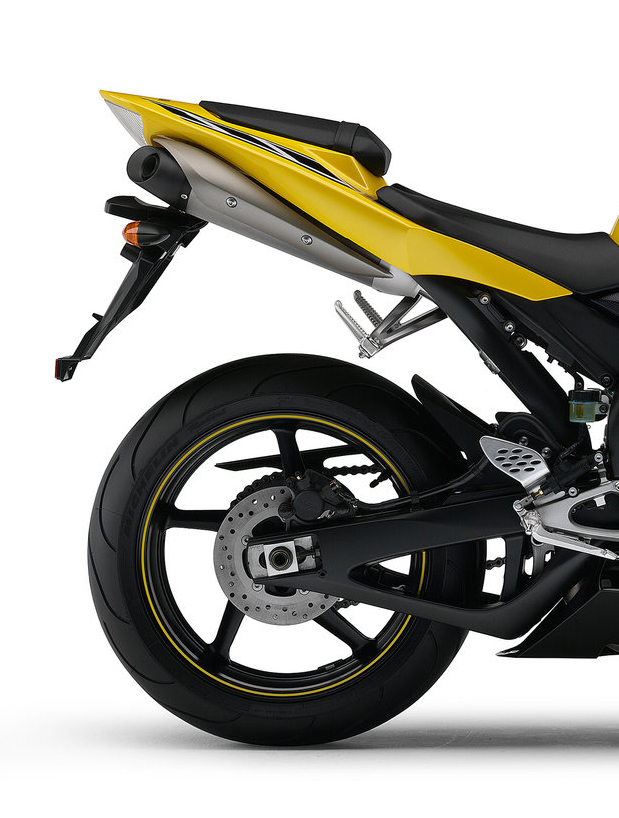
For 2006, the swingarm was extended by 20
millimetres (0.79 in) to reduce acceleration instability. In this year,
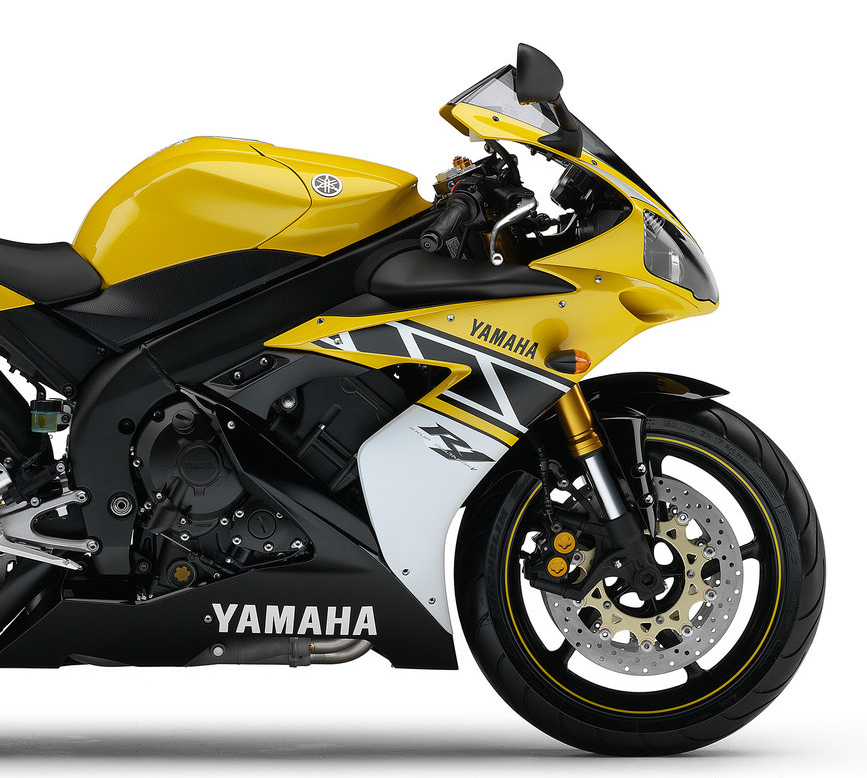
Yamaha also released a limited edition version in original Yamaha racing
colors to celebrates its 50th anniversary.
The model (LE/SP) featured a Kenny Roberts replica
paint pattern with yellow and black paint, and front and rear custom Öhlins
suspension units developed by the same team as the YZR-M1 MotoGP bike.
Custom forged aluminum Marchesini wheels specifically designed for the LE
shaved nearly a pound off the unsprung weight. A back torque-limiting
slipper clutch, and an integrated lap timer rounded out the package, making
the LE virtually a production racer. Only 500 units were made for the United
States.

YZF-R1 50th Anniversary Edition - Open Class Ultra High
Performance
Building on the most sought after sportbike in history, the 2006 R1 50th anniversary's modified frame, longer swingarm and
revised front forks sharpen handling, traction and responsiveness - while a
revised cylinder head unleashes an additional 3 horsepower. No other
motorcycle combines performance, style and ridability like the R1. The R1 is
not intended for novice or inexperienced riders.
Features:
998cc, fuel injected , liquid-cooled, 20-valve, DOHC inline four cylinder
43mm fully adjustable inverted fork
Fully adjustable linkage-mounted rear shock
Dual 320mm fronts discs with radial mounted 4-piston calipers
50th Anniversary Yellow & Black paint schemes for 2006 (limited
availability)

Review
Yamaha YZF-R1 LE Limited Edition
Taking a page from the Euros, Yamaha creates Japan's most exotic, exclusive
superbike to date.
From the February, 2009 issue of Motorcyclist
By Roland Brown
Like all the best ideas, it seems obvious after the event: Take your top
supersport motorcycle, tweak it for next season's Superbike battle as you do
every couple of years--then go a step further to create a hotter-still model
built in small numbers and sold at a premium price. The Italian manufacturers
have been doing it for so long (Ducati has practically made an art form of it
with its SP versions and the current S and R variants), the only surprise is
that the Japanese haven't jumped in before now.
And with its 2006 YZF-R1 LE Limited Edition model, Yamaha has joined in at last.
This ultra-trick R1 is adorned with such delicacies as hlins suspension, rear
ride-height adjustment, lightweight Marchesini wheels and a slipper clutch, plus
the extra power and revised frame of the '06 standard-model R1. The 500 LEs
coming stateside promise serious performance, from the most exotic, exclusive
open-class weapon ever to come out of Japan.
Yamaha had a great starting point with the R1, which has been so popular
following its revamp two years ago that it's become the best-selling liter-size
sportbike, with 50,000 units sold worldwide. Even so, the standard R1 has itself
been revised for 2006, though the only tuning mods to the 998cc 20-valve engine
are 5mm-shorter intake valve guides that reduce friction and boost airflow
through better-breathing reshaped intake ports, plus recalibrated fuel and
ignition maps in the 32-bit Mitsubishi ECU. Yamaha says those relatively subtle
changes generate an extra 3 bhp, raising claimed peak power to 175 bhp at an
unchanged 12,500 rpm (redline is similarly unaltered at 13,750 rpm). Peak torque
bumps up from 77 to 80 pound-feet, the maker says. The tuning-fork firm also
gave the engine a new camchain tensioner, a 5mm-longer mainshaft, and minor
changes to the clutch and primary cover that improve oil circulation to the
six-speed transmission. Of course, the LE model shares all of these changes.
In the press kit, Yamaha clearly identifies the latest R1's chassis changes as
stemming from "WSB input to improve handling at corner entry and corner exit."
It seems that although the R1 was capable enough to capture titles in both the
'04 AMA and European Superstock classes, it has since found tougher going in
World Superbike with another 40 bhp to put to the pavement. Consequently, the
main updates to the standard R1's chassis involved fine-tuning rigidity--which
doesn't mean simply increasing it. In fact, the cast-aluminum frame is slightly
thinner between the steering head and front engine mounts; the resultant
reduction in rigidity is claimed to give quicker turn-in and better front-end
feedback.
There is a bit of beefing-up, though. The R1 gets a thicker bottom triple-clamp,
stronger front engine-mounts, and the standard bike's 43mm Kayaba inverted fork
has slightly stiffer inner tubes and marginally thinner outer tubes. At the
blunt end, the swingarm--whose traction-increasing length has been an R1 feature
ever since the first model eight years ago--is now a further 0.8 inch longer,
stretching wheelbase to a longest yet figure of 55.7 inches, as well as putting
more weight on the front wheel to improve grip during corner entry. Development
team leader Makoto Shimamoto said the longer swingarm also permits use of taller
and/or wider-section tires for racing use.
Still, it's in creating the LE model that Shimamoto and his team really went to
town. Not with its engine, which gains little more than a slipper clutch and
gold-colored silencers. Instead it's the chassis that gets the lion's share of
improvements, starting with suspension from hlins. The 43mm fork, same size as
the stocker's, is matched by a Swedish-built shock that has a hydraulic preload
adjuster knob. The LE also gets a ride-height adjuster built into its linkage;
adjustment span is 10mm. Unlike some of its competition, the R1 LE doesn't get
an adjustable swingarm pivot.
Those neat gold forged-aluminum Marchesini wheels (in the same pattern as the
ones on Rossi's M1 racebike) come shod with super-sticky Pirelli Diablo Corsas
instead of the standard R1's Michelin Pilots. Each wheel saves roughly a pound
in unsprung weight, benefiting both suspension compliance and steering
quickness. Even so, the standard R1 weighs a claimed 381.4 pounds--2.2 pounds
more than last year's model--and the LE is 2.2 pounds heavier again due to the
hlins fork and the slipper clutch.
Not that I was worrying about an extra bit of weight (I'd had a light breakfast)
as I climbed aboard the LE. The 500 units coming to the States will all be
finished in Yamaha's brilliant yellow/white/black paint scheme, which will also
be available on the standard R1. Yamaha insists on calling it Inter-Color, but
it will probably be better known as the Kenny Roberts Replica. The LE's top
triple-clamp also features a numbered plate, which read 000 in the case of this
pre-production machine.
That added to the feeling of riding something extra tasty as I headed down the
pit lane at Spain's Catalunya circuitThe Yamaha's immediately light and
responsive feel thankfully helped to diminish nerves generated by the prospect
of caning this ultra-exclusive, 175-bhp missile around a still partly wet
racetrack, thanks to a series of thunderstorms and a trio of tornados. A few
laps howling down the start/finish straight with the digital speedo indicating
165 mph and rising certainly got the adrenaline flowing. Especially as I knew
the two remaining damp bends were the upcoming chicane and the following long
right-hander, which had a couple of slippery-looking patches right on the normal
racing line at its exit.
But the R1 LE took it all in its supremely sorted, well-balanced way, slowing
fiercely with the aid of the unchanged and hugely powerful radial-mount four-pot
front brake calipers, then flicking effortlessly right-left through the chicane,
its outstandingly well-balanced feel helping me avoid a mistake. Some bikes are
hard work to get turned for the second section, but the Yamaha always felt
beautifully balanced and responsive as it cranked from side to side with minimal
effort.
That light steering was welcome again moments later as I nudged the bike
slightly to the right to avoid the damp patches before screaming it up the hill
toward the next right-hander. Everywhere else the track was dry, enough so to
get the R1's footrests dragging occasionally given the impressive grip of the
Diablo Corsas. Cornering clearance wasn't a problem, though, and being tall I
was glad of the reasonably roomy riding position that's even more welcome on the
road.
Such is the handling prowess of any top modern supersport bike--including the
old R1--that any chassis improvement is going to be difficult to appreciate
until you fit slicks and start cutting competitive lap times. (Yamaha's World
Superbike teams will perhaps appreciate the new model most of all.) How much the
new, less-rigid frame helps the R1's handling poise is open to debate; same for
the longer swingarm's contribution to the way it hammers out of turns with a
welcome willingness to find grip and charge forward rather than wheelie and
shake its head. Still, out on real roads, the trick suspension is bound to be a
superb addition, as high-quality dampers such as these are able to deliver that
often-difficult combination of plushness and control.
Likewise, the Limited Edition's handling edge over the standard R1 that I'd
ridden earlier in the day was perhaps as much down to setup as the Swedish-made
units' extra sophistication. But it's certainly true the LE flicked into turns
and floated over track ripples and bumps with that fantastically sweet,
ultra-controllable feel that only comes with seriously high-quality suspension.
Likewise, coming into Catalunya's stadium section, the LE sliced through the
final four right-handers as sharply as a Barcelona butcher's knife, with the
throttle wide open as the bike accelerated over the finish line at a
breathtaking rate.
Even so, a slight twitch entering some bends suggested the fork needed a couple
of clicks of damping fine-tuning. The spots of rain on my visor toward the end
of my first session, heralding another downpour, meant there was no chance of
that, as I didn't get another dry spin on the LE. The damp track on my second
session at least made me more appreciative of the slipper clutch, which possibly
prevented the rear wheel locking a couple of times when I changed down a bit too
soon going into a bend.

The R1's superb fueling certainly
helped in the somewhat treacherous conditions. Apart from minor tweaking to suit
the new intakes, the fuel injection is unchanged, so I wasn't surprised that
throttle response was as sweet as the previous model's. There's a huge amount of
midrange power on tap, which made riding relatively easy even with the track
streaming wet. The power came in slightly abruptly as I wound it on in one
nastily slippery, slow, downhill left-hander, but generally the R1 was
impressively docile for such a powerful bike.
After the LE's aristocratic air the standard R1 could have been forgiven for
feeling slightly ordinary. Not a chance. Although I got only a handful of laps
before the rain started coming down again, the mildly tweaked inline-four did
enough to show why its predecessor has been so popular over the last two years.
Like the LE it screamed down the Catalunya straight at staggering speed, revving
so quickly I could barely shift gears fast enough to keep up with the
rev-warning light flickering on the neat digital dashboard.
Ultimately, this revamped R1's extra few horses and probable improvement in
agility could give it a slight edge over the previous model. Shame the standard
model doesn't get the ride-height adjuster, though at least it does share the
LE's lap timer. And that King Kenny Replica paint job has got to be worth a
second a lap, at least in the bar.
Whatever the color, it still remains to be seen if this latest iteration of
Yamaha's standard YZF-R1 has what it takes to best not only Suzuki's
incandescent GSX-R1000, but also the most recent revamp of Kawasaki's explosive
ZX-10R. The Limited Edition R1 LE's importance, though, stems from more than
just performance alone. No, it's a world-class standout because of its status as
the most exclusive, most exotic open-classer ever to come out of Japan. And if
the LE's performance does make it top dog in the literbike class, expect to see
other manufacturers follow suit with their own limited-production models.
It looks like the biggest battle the sporting open class has ever seen is just
getting started. MC
Source
Motorcyclist |