|
|
|
|
Classic Bikes
Custom Bikes
Individual
Racing Bikes AJP
AJS
Aprilia
Ariel
Avinton / Wakan
Bajaj
Benelli
Beta
Bimota
BMW
Brough Superior
BRP Cam-Am
BSA
Buell / EBR
Bultaco
Cagiva
Campagna
CCM
CF Moto
Combat Motors
Derbi
Deus
Ducati
Excelsior
GASGAS
Ghezzi Brian
Gilera
GIMA
Harley Davidson
Hero
Highland
Honda
Horex
Husaberg
Husqvarna
Hyosung
Indian
Jawa
Kawasaki
KTM
KYMCO
Laverda
Lazareth
Magni
Maico
Mash
Matchless
Mondial
Moto Guzzi
Moto Morini
MV Agusta
MZ / MuZ
NCR
Norton
NSU
Paton
Peugeot
Piaggio
Revival Cycles
Roland Sands
Royal Enfield
Sachs
Sherco
Sunbeam
Suzuki
SWM
SYM
Triumph
TVS
Ural
Velocette
Vespa
Victory
Vincent
VOR
Voxan
Vyrus
Walt Siegl
Walz
Wrenchmonkees
Wunderlich
XTR / Radical
Yamaha
Zero
Video
Technical
Complete Manufacturer List
|
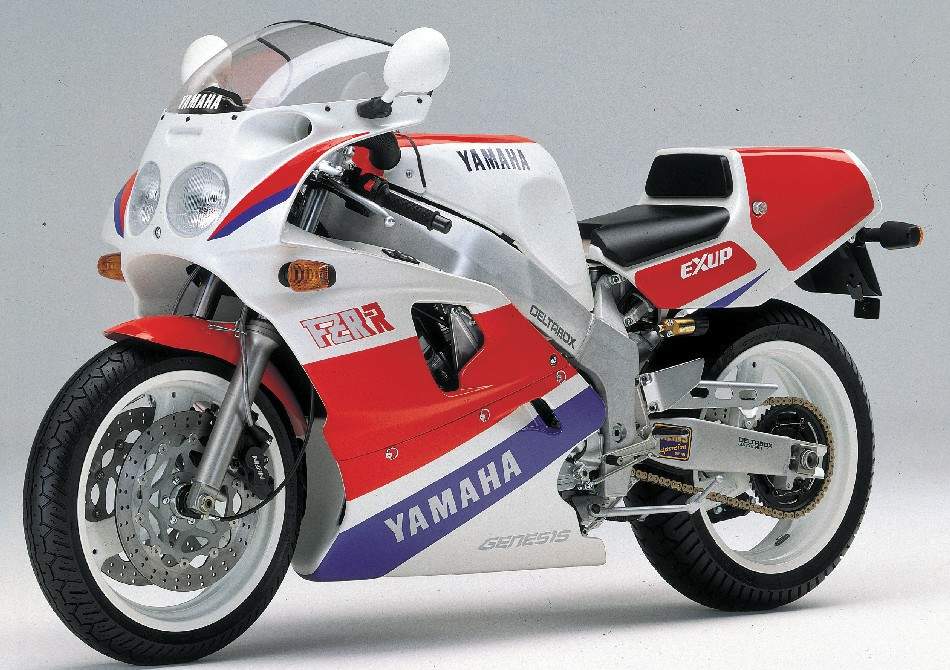
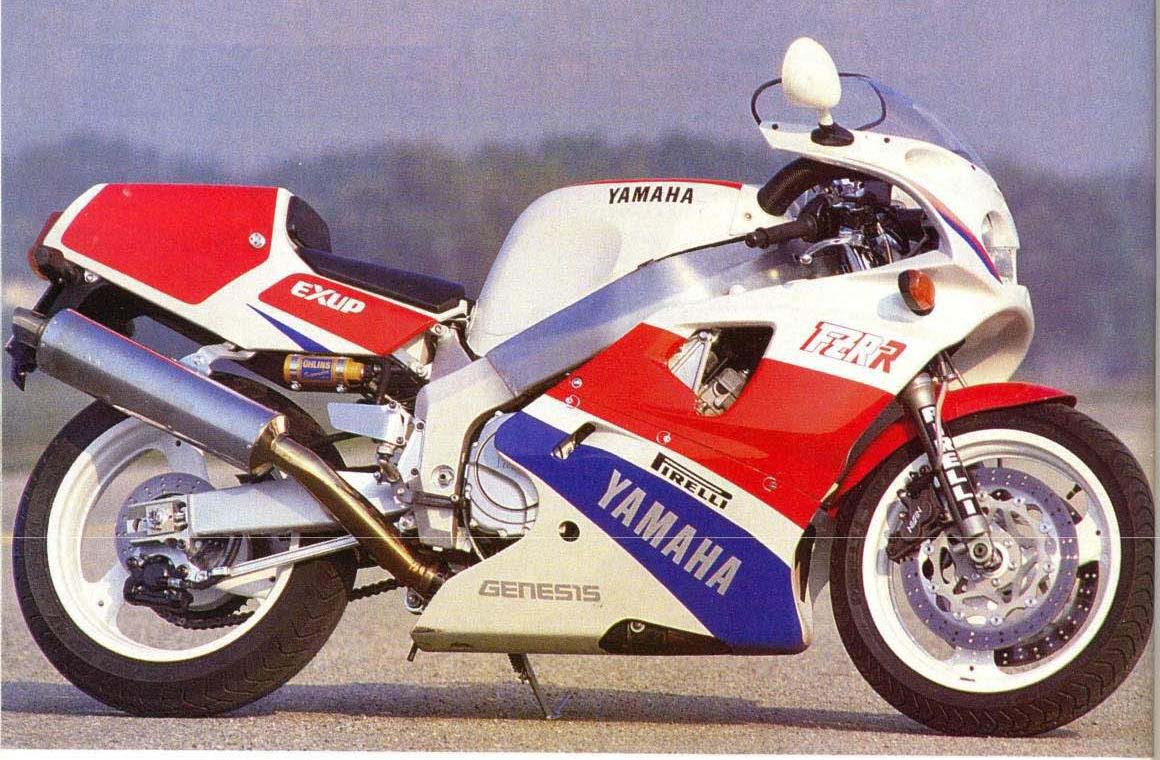
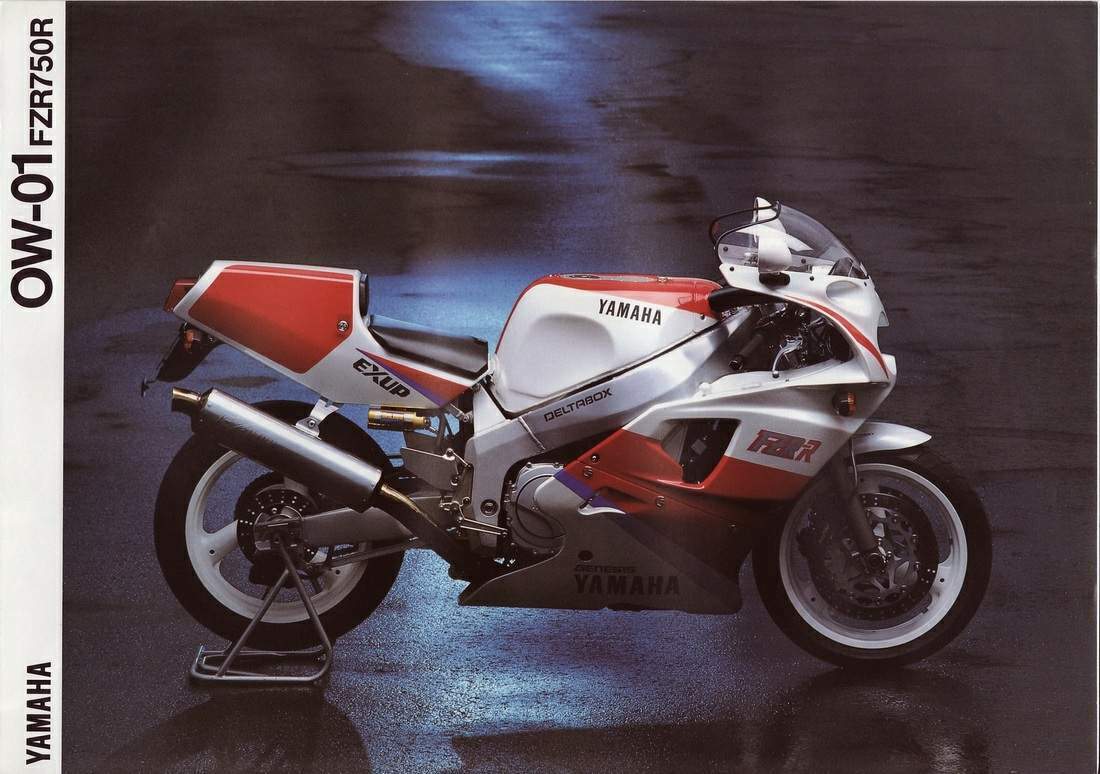
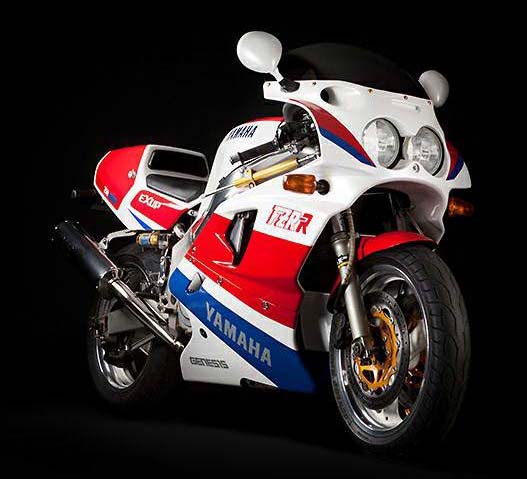
Yamaha FZR 750RR OW01
If this machine looks like a racer, it's because it is! Thinly disguised to make it street legal, removal of the tax disc, number plate, mirrors, indicators and side stand and fitting some slicks prepares it for the racetrack. Why, then, is it available to the road rider? The reason is relatively simple. The OW01 was built to compete against Honda's RC30 and Bimota's YB4 in World Super- bike racing. In order to campaign a machine in this class certain homologation rules have to be met; these depend on the annual output of motorcycles. If a manufacturer produces more than 100,000 units a year, a minimum of 1,000 of its Superbike contender must be built.
Between 50,000 and 100,000, 500
Superbikes are necessary. Small scale manufacturers (like Bimota) only have
to build 200 Super-bikes to be eligible. In Yamaha's case they have to build
1,000, which means that some go on sale, albeit at huge expense, for road
use. They come sparsely equipped for the task. The engine is incredibly oversquare and short-stroked. Every part of its assembly is dedicated to getting the biggest and most efficient bangs for your money. It sucks through forward-facing fresh air ducts in the fairing, mixing and feeding the gas through large flat-slide 38mm Mikunis. It has big' valves and big, hand-finished ports. Lightweight, short-skirt, stepped-top pistons with large valve cutaways ride on titanium con rods and compress the gas to 11.2:1 (with the racekit this is upped to 13.5 or more). At the same time as it controls ignition timing. Providing a fat spark, an eight-bit microprocessor decides when to activate a servo motor operating a butterfly valve in the collector of the stainless steel four-into-one exhaust system. As on the FZR1000, this exhaust valve (EXUP) compensates for losses in the mid-range that are inevitable in any engine developed for maximum power and torque. The EXUP rotary valve has to close off up to 70 per cent of the exhaust and operate in temperatures of up to 700-degrees C. but it certainly works.
What should be an essentially peaky, sky-high, rev-happy motor is actually endowed with a useful, long flat spread of torque. It can be ridden from 0-5000rpm with fast response and the delivery is crisp, flexible and smooth. It reserves its best power for between 8000 and 13,500rpm, quite a wide range of meaty acceleration. In its stride, it peaks at about 12,000rpm. Translate that through six close-ratio gears into road speed and in top the bike clocks 162mph. A race-kitted version, lighter and more powerful will be tall-geared for over 170mph.
With the cylinders angled forward at40-degrees (instead of the 45-degrees of the FZ750 road bike), Yamaha's chassis designers took full advantage of the layout and assembled a short, stiff frame, a short wheelbase, fast steering geometry and lots of Ground Clearance. The deep section aluminium Deltabox frame is obviously rigid and the swing-arm is beautifully crafted. Suspension front and back is by top notch Öhlins units which are multi-adjustable for individual ride preferences.
The huge brakes sport Nissan four-piston racing calipers and 320mm discs.
Generally, the bike is very stable on the power, though the steering isn't as quick and nervy as racers typically like. Although the bike is clearly competitive weight-wise, in standard trim it has to be wrestled with, needing a firm grip and a lot of rider input. Naturally, it wouldn't be a racer unless just about every part of its handling performance could be changed to suit the rider. The OW01 has more power, performance and commitment than the road rider could ever need.
|
|
|
Any corrections or more information on these motorcycles will be kindly appreciated. |