|
|
|
|
Classic Bikes
Custom Bikes
Individual
Racing Bikes AJP
AJS
Aprilia
Ariel
Avinton / Wakan
Bajaj
Benelli
Beta
Bimota
BMW
Brough Superior
BRP Cam-Am
BSA
Buell / EBR
Bullit
Bultaco
Cagiva
Campagna
CCM
CF Moto
Combat Motors
Derbi
Deus
Ducati
Excelsior
Fantic
GASGAS
Ghezzi Brian
Gilera
GIMA
Harley Davidson
Hero
Highland
Honda
Horex
Husaberg
Husqvarna
Hyosung
Indian
Jawa
Kawasaki
KTM
KYMCO
Laverda
Lazareth
Magni
Maico
Mash
Matchless
Mondial
Moto Guzzi
Moto Morini
MV Agusta
MZ / MuZ
NCR
Norton
NSU
Paton
Peugeot
Piaggio
Revival Cycles
Roland Sands
Royal Enfield
Sachs
Sherco
Sunbeam
Suzuki
SWM
SYM
Triumph
TVS
Ural
Velocette
Vespa
Victory
Vincent
VOR
Voxan
Vyrus
Walt Siegl
Walz
Wrenchmonkees
Wunderlich
XTR / Radical
Yamaha
Zero
Video
Technical
Manufacturer List Contact
|
Yamaha FZR 600R
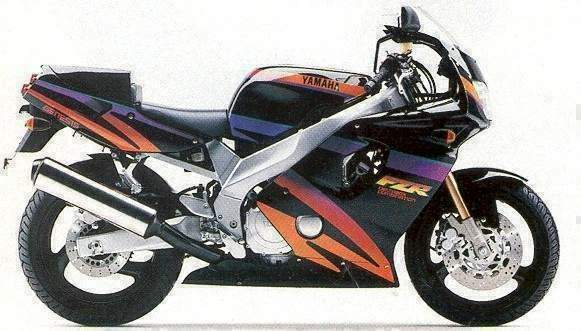
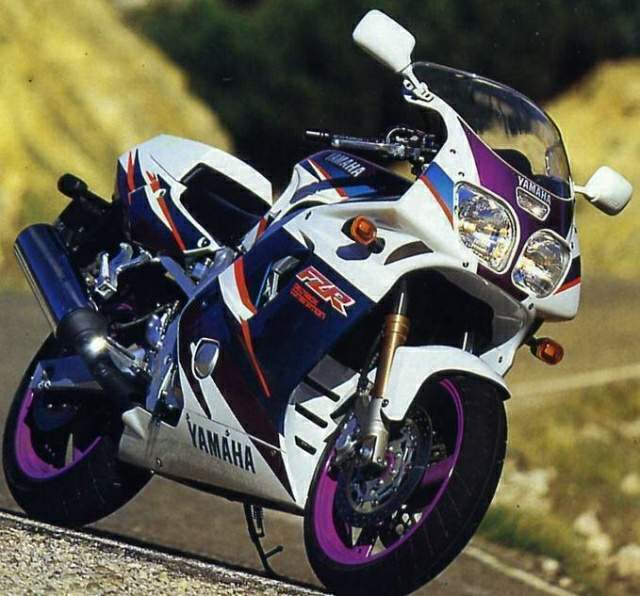
CBR 600 vs FZR 600 The day started wet and miserable. Thick, dank fog seeped through the lining of my jacket while the inside of my visor misted with each exhaled breath. Rubbing a gloved finger over the outside of the visor cleared the view only for a second before the grime of the A2 closed in. Away from the Gatsos that now seem an ever present fixture on the highways of the metropolis, Honda's CBR600, an all time fave rave here at Acton Towers, was ready to be let off the leash. Cogging down into third to elicit maximum go from the 599cc lump and maximum tap from the 16 valves, it was a touch disconcerting to feel the rear spinning as it struggled to grip the tarmac. The last time I rode the CBR was on a baking hot day (hmmm, summer, remember?) in the middle of June. Leaving a photo session that had seen the bike's Michelin's run ragged for the benefit of the camera, I cogged down into third and whopped the throttle open. The result was the front wheel popping up controllably while the rider grinned and flicked up a gear at around the 9500rpm mark. In either circumstance there's little for you to worry about. One of the great many satisfying reasons for riding the CBR is that you rarely feel that the bike is out of its depth. Despite having been around since 1987, when the all-enclosed Honda caused something of a stir because of its jelly mould style bodywork, there is something that is now so right about the Honda that makes it a yardstick by which other bikes with sporting pretensions -and not just those in its own class - are judged. In 1993 the 600 class saw over 3000 bikes sold in the UK and there are no prizes for guessing who sold the most. In fact Honda sold somewhere in the region of 1200 CBRs and undoubtedly see the category as a banker for the 1994 season. But wait, what's this charging towards us from the horizon. A challenger wearing Yamaha livery, headlights blazing and looking not dissimilar from its bigger YZF750 and FZR1000 brothers. Something that's certain to please the 600 punter. Although Yamaha have been ever present in this sector with the FZR600, it really came to the end of its model life in 1992. Not 1993, when it found itself cheapest in category at £5119 and struggling to stay on the white hot pace set by the CBR, ZZ-R and RF. A worthy budget performer, sure, but there was little doubt that if Yamaha were not to fall way behind in this crucial class then it had to act fast for '94. There was never any doubt that a new FZR would appear this year. The question was, however, just how far would they go. Would we see a YZF600 with eyeball popping performance and a price tag to match or would it be a return to budget biking as Suzuki have done successfully with the RF? In fact Yamaha have done neither and, rather predictably, plumped for the middle ground. Although this still means the new FZR600R will be the most expensive in its class at £6299, as the new kid on the block it perhaps has more reason than the others to top the price list. But what are you getting for your extra ackers? A CBR 600 beater, hmm, maybe. To find out we took both the CBR and FZR to the recently resurfaced Lydden racetrack in Kent to explore both bikes' potential. Track tests do not, necessarily, mean much to those of you who ride only on the road. But with the performance available from each model and the lack of decent weather in the middle of February, an offer of a day at the track was too good to miss. While putting in a fair few hundred road miles on both of the bikes gave us the best possible conditions to enable us to crown a new 600 Supersports king. In Supersports racing the CBR is a well known and feared opponent. Although at first glance the CBR might look something of a softy, there's little reason to doubt the bike's potential. Indeed shortly after our day at the track, local racer Dave Stewart, who matched the track's Junior lap record, told me that a tuned CBR putting out somewhere in the region of 110 horsepower at the back wheel equalled the best time ever recorded at Lydden. So what makes the road bike such a potent force? At its heart the CBR has a liquid-cooled, 16-valve, in-line four engine that is reasonably tractable low down but really shines at the top of its rev range. Below 6000rpm the Honda feels a little flat. But once over the six grand mark the torque curve flattens and the power is linear and progressive until around 11800rpm when the power starts to tail off. The manufacturer claims 98.6 hp at 12000rpm and a torque output of 46.2ft lb at 10,500. The model we ran was slightly disappointing. When run on the Rally and Race dyno it was putting out 87.6hp at 11060rpm at the gearbox and produced a best torque figure of 44.7ft lb at 9570rpm. What this translated to was swift use of the clutch and gear pedal in nearly all circumstances. In town the bike seemed reluctant to chug along as of old while on the open road things improved as long as the revs were held on to. Despite a somewhat disappointing engine the CBR was still a sought after perch. One of the joys of riding the CBR for me has been that the bike is so confidence inspiring. The rider soon finds himself forgetting what the bike is doing and concentrates on getting from A - B as fast as is possible instead. Some people might attribute this to the blandness of the overall design, which this year isn't helped much by a truly uninspiring graphics package, but they'd be wrong. The CBR is a much, much better bike than some would give it credit for. Sling a leg over one and you'll see what I mean. Although you are perched up quite high on the bike, the whole package seems to fit like a pair of marigolds. The ergonomics are nigh on perfect and my only gripe would be that the stubby screen is just a little short to really make for comfortable long- distance mile munching. But, and it's a big one, the 600's suspension is a revelation, even to someone who has sampled some of the best from such as Öhlins and White Power. At the front 41 mm teles adjustable for preload and rebound are as responsive as you please. They were so competent on standard settings that there was no need to change to anything else. Although a little soft for hard track use, in the rain at Lydden they allowed the rider to really feel what the front wheel was doing (which was sliding across the tarmac and into a ditch). Despite a rather enthusiastic display by Sarah, there was little doubt that everyone who rode on the day found the CBR easy to get on with and the perfect bike on which to learn a strange track. If the front was good (if a little soft) then the rear suspension was superb. It really does float along on its adjustable monoshock. But again, despite the suspension package being a tweaker's nirvana, there were few complaints from all who rode it on standard settings. It really is a superb package and one that is complemented by the steering geometry of 25 degrees rake and 870mm trail. That's sports bike geometry and this is where the CBR really shines. It's slightly slower steering than something like a Fire-Blade or YZF, but for most the CBR will prove a gem of a bike to point and squirt. In fact it is almost because of the Honda's unappealing appearance that riding it becomes such a pleasure. After all you can't look at the bike when you ride it, all you can do is enjoy yourself. And on the fairly mundane Michelin rubber it came equipped with there just didn't seem to be a problem. You could put stickier rubber on (Pirelli Dragons spring to mind as a summertime alternative) but I found that the oe rubber does the job just fine and is probably as good a compromise between longevity and grip as you'll find. But where does this leave the FZR600R? The CBR is surely too good a machine to beat. It's cheaper, has a blue blood lineage and is a tried and tested match winner. To answer the accusation that Yamaha have compromised their design to take on the CBR and tempt the wedge from your wallet let's take a look at the new bike's credentials. Wow! Fox-eye headlamps, Deltabox frame, slant-block engine, 34mm carbs, seat hump and three-spoke wheels. A recipe for instant sales success? Let's see. The old FZR was raw and ready for the track. It was, however, let down by inadequate suspension and on the road at least was something of an all or nothing proposition. A blast to ride on those occasional sunny days but a bit of a pain round town - ouch, those bars - none too comfortable on long journeys - arrgh, that seat - and a bit dull to look at when compared with the other factory's offerings. Taking all this into consideration Yamaha obviously had a few tough decisions to make. Should they blitz the class and produce a YZF600 that couldn't be touched on performance but possibly couldn't be touched by parlous punters either. Should they go for a cheap utilitarian machine and go for the sympathy vote or should they merely up the ante and give Honda something to aim at in 1995. And what about the company's sporting heritage? Surely the new FZR would be competitive on the track too? Sitting on-board the FZR's surprisingly comfortable seat gives away a clue as to which direction Yamaha have headed. Comfort was a word no one could really associate with the old FZR and it is no accident that the new model features a more rider-friendly ergonomic package. If you look at or rather sit on the competition, each offers at least some semblance of comfort. In this respect the Yamaha is just as good, and in some cases better, than the CBR. Pegs are lower than you expect - Ground Clearance is still excellent though -the seat is good for all-day comfort - although there's little evidence of any thought given to the pillion - while a capacious full fairing and deeper, taller screen than of old, match the flatter, less radical positioning of the bars. If you think this attention to the riding position has dulled the edge of what was, without doubt, a sporting man's choice then think again. Yamaha are confident of road and race track success (Mitsui claim to have sold over half its FZR600Rs already) and here's why. Although there has evidently been some compromise in the bike's finished design there's much the Yamaha chassis and power-plant engineers have done to keep it ahead of the game. By continuing the theme of integrated chassis and engine design present in the FZR and YZF, the FZR600R's steel Deltabox chassis uses the engine as a stressed member. The result being a stiff but lightweight package which, combined with an engine more upright in the chassis, will have the stubby FZR winning plaudits in the paddock. It's certainly ahead of the CBR thus far. Having ensured the FZR had a chassis to match the best, its suspension package, which was the old bike's weakest spot, has also improved. But, importantly, fails to impress in the same style as the Honda. Up front 41 mm teles (3mm up on the old bike) adjustable for preload only are certainly better than before. Although a little over-damped for everyday use, but certainly bereft of the patter'n'pogo that was a feature on the old model, the front end lends the FZR600R the poise and precision it previously lacked. The rear end could hardly fail to be an improvement, but even though it features a rising-rate monoshock adjustable for preload and rebound damping, the lack of compression adjustment means that the rider still reads the road a little too closely through the seat of his pants. It's the Yamaha's engine, though, which allows the FZR to pop its nose ahead of the CBR. Whereas the CBR whistles rather tunelessly as it gathers pace the Yamaha engineers have ensured that the FZR sounds as good as it goes. If there's one thing that has really begun to get on my tits it's the feeble noise bikes now make. I like to at least hear what my £6000 purchase is doing and certainly don't want to have to get my stethoscope out and hold it to the engine cases to elicit whether the bike's running or not. And this is where the Yam scores. As you crack open the throttle the four 34mm carbs suck and the roar from the airbox below the tank is a noise that had me addicted straight off. In keeping with its sporting heritage the FZR's engine gives the nod to tuners to do their damndest. When run on the dyno the 598cc lump aced the Honda by almost eight horsepower at the gearbox while at the rear wheel the FZR was churning out a healthy 86.6hp at 11350rpm in comparison to the CBR's 79.5hp at 11060rpm. That's some difference and if you check the dyno curve comparison you'll notice the Yamaha is up on the Honda as soon as the throttle is twisted. What Yamaha have done is to shorten the stroke of the engine, allowing the lump to rev more freely than before. While this can lead to a reluctance to pick up smoothly lower down the rev range there was no such problem. The FZR isn't exactly a tower of strength below 8000rpm, but a useful bulge in the curve at 6500 - 7000rpm means that the mid-range is usable. Much below that, however, and you'll find that the six-speed 'box which, although notchy, is one of the best I've sampled on a Yam, needs a fair amount of stirring if you're to really fly. Vibes are at a minimum and it is testament to the development team that a bike that was once only good for short hop thrashes is now good for a day on the road. But which to buy? The CBR is a seminal machine. It broke the rules when it first appeared and has broken lap records ever since. As a middleweight all-round package it has had no peers since its inception. This year, however, Yamaha have come as close as is possible to dethroning the King without causing revolution. The FZR600R is good, it might even prove brilliant on the race track, but as an everyday package I can see people still opting for the CBR. If it were my wallet, however, the new Yam wins the wedge. It's not a much better bike than the CBR. But by upping the specification by just enough and paying attention to the allweather rider's needs, this season will see the FZR600R shine. What I can't wait to see is how Honda will react in 1995. It's only then that we'll know whether Yamaha have done enough to capture the Supersports class crown. Source Motorcycle International 1994
|
|
|
Any corrections or more information on these motorcycles will be kindly appreciated. |