|
|
|
|
Classic Bikes
Custom Bikes
Individual
Racing Bikes AJP
AJS
Aprilia
Ariel
Avinton / Wakan
Bajaj
Benelli
Beta
Bimota
BMW
Brough Superior
BRP Cam-Am
BSA
Buell / EBR
Bultaco
Cagiva
Campagna
CCM
CF Moto
Combat Motors
Derbi
Deus
Ducati
Excelsior
GASGAS
Ghezzi Brian
Gilera
GIMA
Harley Davidson
Hero
Highland
Honda
Horex
Husaberg
Husqvarna
Hyosung
Indian
Jawa
Kawasaki
KTM
KYMCO
Laverda
Lazareth
Magni
Maico
Mash
Matchless
Mondial
Moto Guzzi
Moto Morini
MV Agusta
MZ / MuZ
NCR
Norton
NSU
Paton
Peugeot
Piaggio
Revival Cycles
Roland Sands
Royal Enfield
Sachs
Sherco
Sunbeam
Suzuki
SWM
SYM
Triumph
TVS
Ural
Velocette
Vespa
Victory
Vincent
VOR
Voxan
Vyrus
Walt Siegl
Walz
Wrenchmonkees
Wunderlich
XTR / Radical
Yamaha
Zero
Video
Technical
Complete Manufacturer List
|
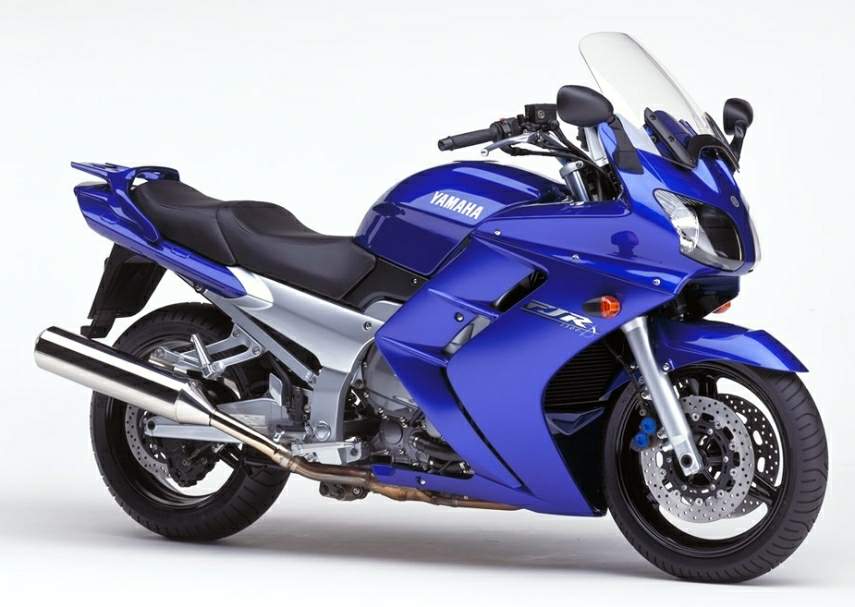
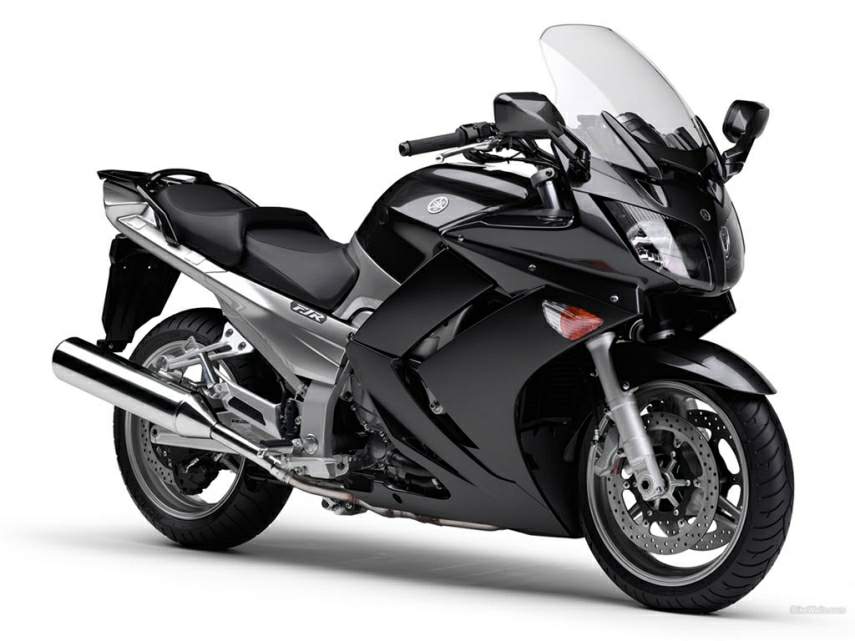
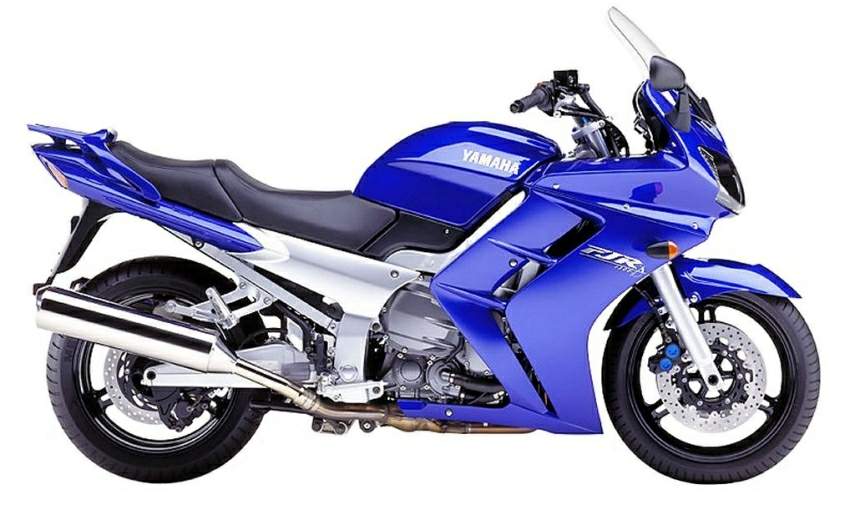
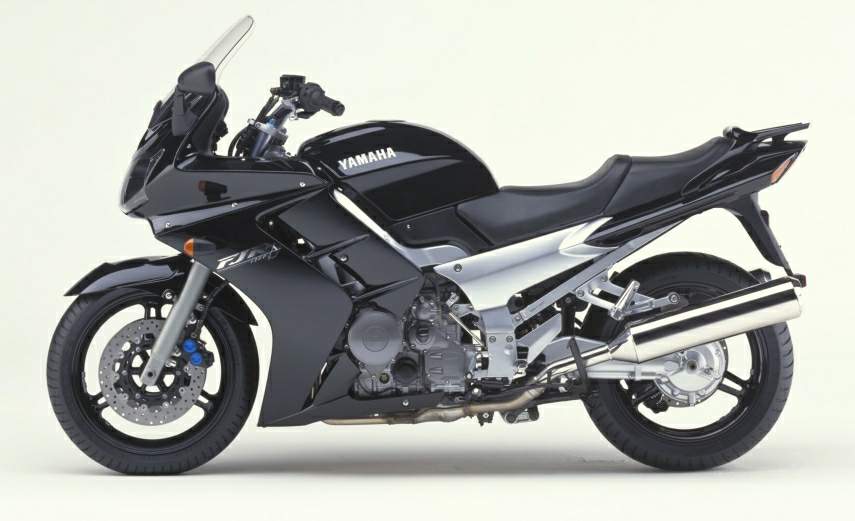
Yamaha FJR 1300
Yamaha's touring range was rather thin throughout the 1990s. Only the XJ900 Diversion offered any touring ability, but it couldn't match modern tourers like Honda's Pan European. So for 2001, Yamaha introduced the FJR1300, one of the most powerful and advanced tourers on the market. Much of the spec sheet reads like a sportsbike: a twin-spar aluminium frame, 107kW (145bhp) fuel-injected engine, one-piece four-piston Rl brake calipers and adjustable suspension. But all this technology was contained inside a large touring fairing, with comfortable, upright riding position, shaft drive and integrated hard luggage design. The FJR thus combines sporting performance with touring convenience. Yamaha claim their new FJR 1300 has the chassis performance of a sportsbike along with the ergonomic amenities of a long-distance touring machine. We recently covered some 2,000 kilometres on Yamaha's new touring flagship and put those claims to the test. The 1,298cc four-cylinder engine has M-A-J-O-R grunt. Yamaha say that this is an all-new design. 4-valves per cylinder are utilised rather than Yamaha's trademark 5-valve per cylinder design. The engine is a stressed member with an R1 style one-piece block and crankcase assembly. Electronic fuel injection takes care of the fuel delivery duties and is fed from a large 25-litre fuel tank. This provides a touring range of around 400 kilometres. Surprisingly, for such a large motorcycle, the FJR picks up its front wheel on acceleration, without any extra provocation from the rider. You can even keep it up there for a few gears if you are game. The drivetrain is silky smooth, right through to the 9,000rpm red-line. A broad range of torque is on tap throughout the rev range. Enough torque to make any remotely sporting V-Twin green with envy. In fact, I reckon this thing would embarrass most sportsbikes at the stop-light drags. The engine is a gem, enough said on that score.
These ample reserves of power are transferred to the ground via a smooth 5-speed gearbox. Final drive is by way of a shaft system. All shaft-drive motorcycles I have ridden 'climb' under hard acceleration. By this I mean the rear of the machine actually rises, and pushes the rider higher, as the torque is transferred to the shaft. The FJR is the first shaft drive bike I have ridden that didn't exhibit this distinct trait, so Yamaha have obviously done their homework in this area. I asked Yamaha for an explanation of how this was achieved, "In simple terms the engineers, after extensive development and testing, achieved a reduction in the torque reaction of the shaft drive due to the unique low positioning of the swingarm pivot." Chassis performance of a sportsbike? Now that is stretching things a little too far. However, the FJR does handle better than what you would expect from a touring biased motorcycle. Huge 48mm adjustable front forks cope admirably with anything thrown at them. Fork travel and spring rates seem spot on, even under the most trying of conditions I failed to make the forks bottom or misbehave. The rear suspension does well, but is not quite up to the same level. That said though, the rear suspension does perform as good as any other big tourer I have ridden. A handy feature is the fact that the rear shock has a hard/soft preload adjustment lever to quickly switch between solo and pillion settings. Ground Clearance is good for this class of bike, you have to be really getting excited before things start to touch down. Braking performance is very good also, with the 298mm front brakes offering great strength combined with good feel. This allows the brakes to be held at the absolute point of lock, with safety in emergency situations. Of even more note is the very large, 282mm, powerful rear brake. On lighter machines rear brake strength is not all that important, but on bigger and softer touring biased machines, a strong rear brake is a definite asset.
Ergonomics are very important to the long distance tourer, Yamaha's FJR offers some of the best. Seat padding and shape is excellent, allowing the rider to use that full 400+ kilometre range between stops. Good wind protection is provided by way of an electrically adjustable screen. The angle of which can be flat or basically vertical, all this can be adjusted whilst on the move at the press of a button. Another big plus is the fact that the FJR 1300 comes standard with 30-litre panniers. These panniers are colour coded to the bike and are conveniently locked with the ignition key. They are also easily removable should the mood take you to do so. Under the seat there is a space for the supplied toolkit but no room for anything else. Lighting is provided by a 60/55 watt multi-reflector headlight which throws the widest beam I have ever seen. More than welcome during night rides in the Australian country, where spotting a kangaroo coming at you from the side of the road early enough can mean the difference between staying upright, or sliding down the road. The FJR is the only motorcycle I have ridden where the beam width actually rivals that of a modern car, this sets a new standard in motorcycle lighting. Instrumentation is comprehensive and attractive. Surprisingly though speed is displayed by way of a conventional dial rather than the LCD displays common these days. An LCD is provided though and shows a digital odometer, dual tripmeters, fuel gauge, temp display and a clock. Lights are provided for neutral, high beam, turn signals, low oil and engine warnings.
.Review
I ride year-round and have spent the past 50,000 miles of my biking career
astride tourers and sports tourers which work very well as primary
transportation. Of course, as with most riders I also have more than a
passing interest in continually honing my riding skills, for which reason I
had been considering making the move from sports-tourer to out-and-out
sports machine, so as to be able to explore the "envelope" on a machine
designed for the purpose. Source Motorbikes Today
|
|
|
Any corrections or more information on these motorcycles will be kindly appreciated. |