|
|
|
|
Classic Bikes
Custom Bikes
Individual
Racing Bikes AJP
AJS
Aprilia
Ariel
Avinton / Wakan
Bajaj
Benelli
Beta
Bimota
BMW
Brough Superior
BRP Cam-Am
BSA
Buell / EBR
Bullit
Bultaco
Cagiva
Campagna
CCM
CF Moto
Combat Motors
Derbi
Deus
Ducati
Excelsior
Fantic
GASGAS
Ghezzi Brian
Gilera
GIMA
Harley Davidson
Hero
Highland
Honda
Horex
Husaberg
Husqvarna
Hyosung
Indian
Jawa
Kawasaki
KTM
KYMCO
Laverda
Lazareth
Magni
Maico
Mash
Matchless
Mondial
Moto Guzzi
Moto Morini
MV Agusta
MZ / MuZ
NCR
Norton
NSU
Paton
Peugeot
Piaggio
Revival Cycles
Roland Sands
Royal Enfield
Sachs
Sherco
Sunbeam
Suzuki
SWM
SYM
Triumph
TVS
Ural
Velocette
Vespa
Victory
Vincent
VOR
Voxan
Vyrus
Walt Siegl
Walz
Wrenchmonkees
Wunderlich
XTR / Radical
Yamaha
Zero
Video
Technical
Manufacturer List Contact
|
Vincent Black Prince
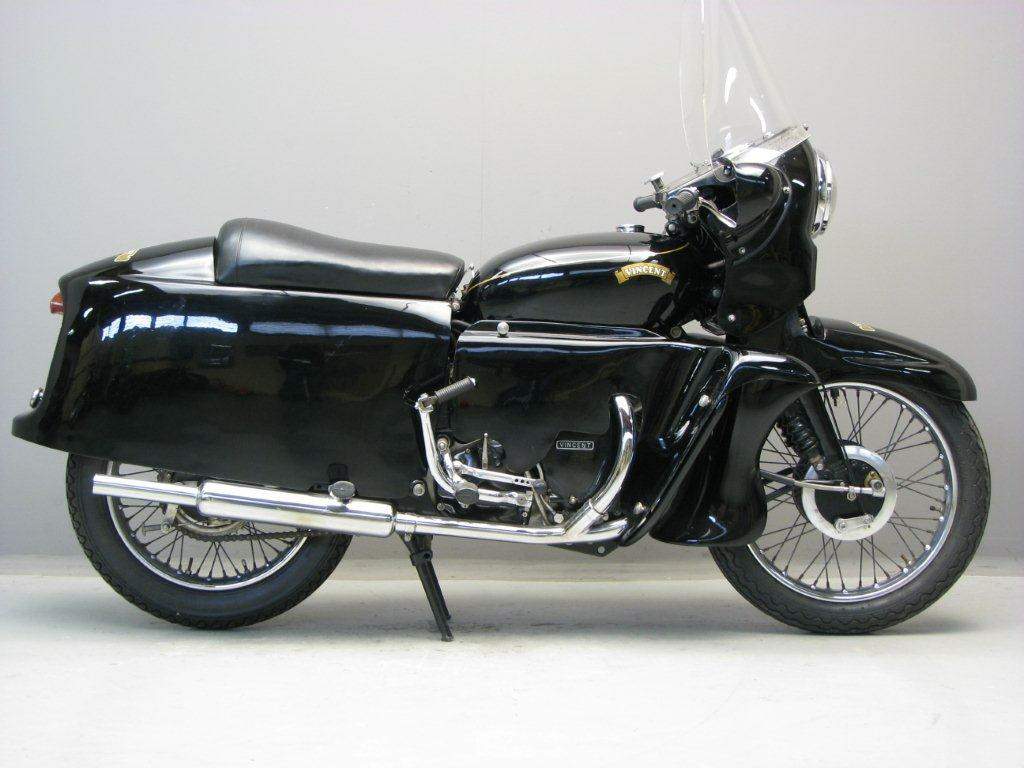
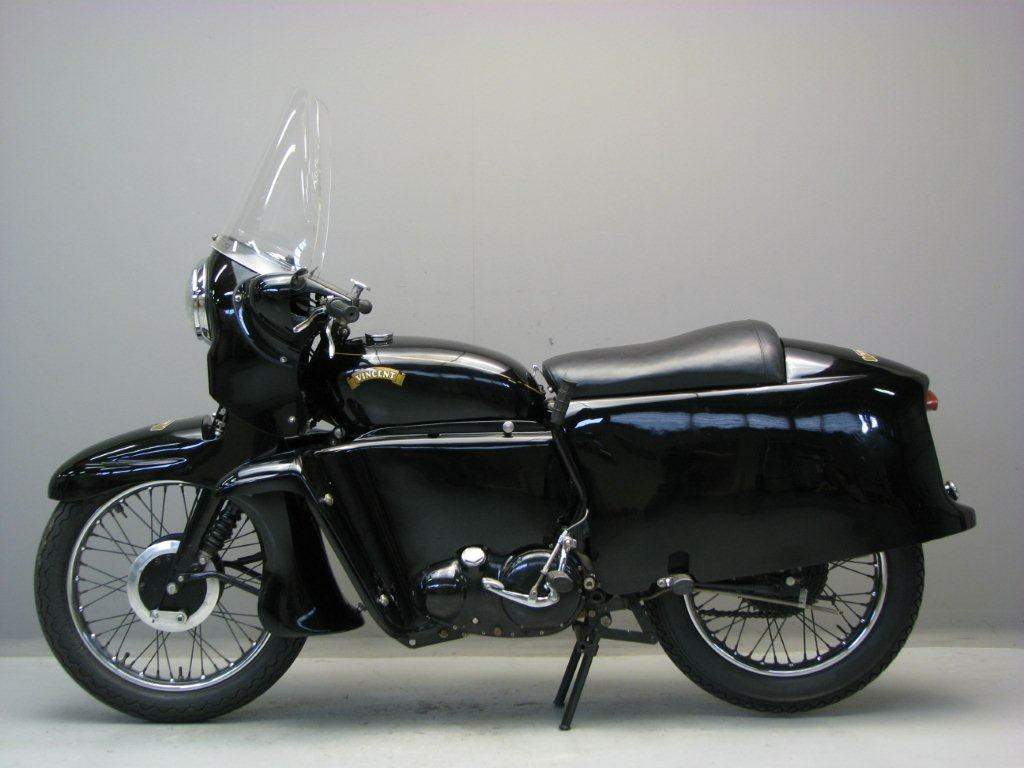
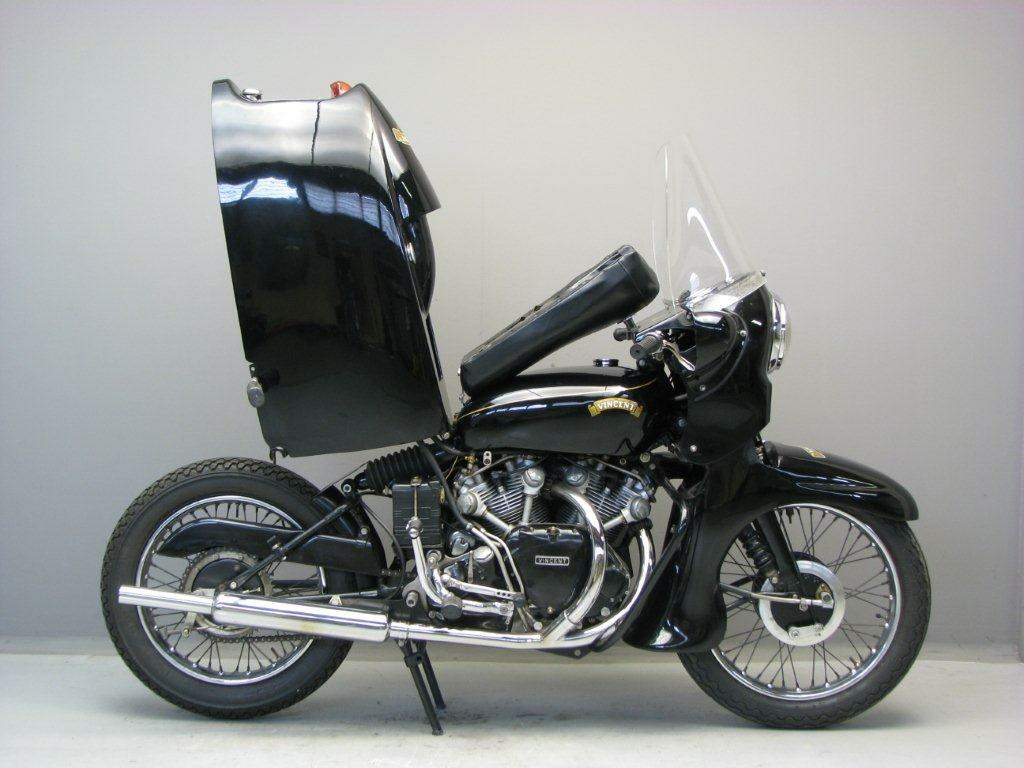
Phil Vincent was a great innovator. Having pioneered his own suspension design and created the fastest road vehicle of its time, in 1954 riders expected his latest Series D to be something special. Indeed it was, for Vincent offered a pioneering, fully enclosed aerodynamic motorcycle. As events would prove, this was a serious miscalculation on his part, for the customers who had loved the brutal exposed engines of his earlier machines were left cold by the Series D styling. Technically it was superb, and offered a glimpse of the fully faired sports machines of the future. Press tests extolled its weather protection, economy and speed, but all-important sales were slow to follow. Meanwhile, the competition was becoming faster, better suspended and, above all, cheap. Yet Vincent's logic was impeccable. All motorcycles were facing competition from lower-priced cars, at a time when both still represented alternative modes of transport rather than leisure accessories. The Series D modifications were applied to the whole range: the Rapide, Black Shadow, Black Knight and range-leading Black Prince. Technical changes included coil ignition and engineering alterations. The chassis underwent major modification, the fabricated steel backbone that formed an oil tank was replaced by a simple tube, which proved weaker, and separate tank There was a new rear subframe/seat support and a hand lever to remove the chore of putting the bike on its stand. Problems with supply of glass-fibre meant that some Series D machines were supplied in naked form. Even so, many thought the appearance ugly. The last Vincent was built barely a week before Christmas 1955. It is a strange twist of fate that the enclosed models, through rarity, are now among the most sought-after of the survivors. Vincent Black Prince (1955)
|
|
|
Any corrections or more information on these motorcycles will be kindly appreciated. |