HOME   CONTACT  |  TECHNICAL  |  CONVERTER  |  VIDEO  |  LINKS  


Classic Bikes
Custom Bikes
Racing Bikes


AC Schnitzer
AJS
Alfer
Aprilia
Ariel
Arlen Ness
ATK
Bajaj
Bakker
Barigo
Benelli
Beta
Big Bear
BigDog
Bimota
BMS Choppers
BMW
Borile
Boss Hoss
Boxer
Brammo
Britten
BRP Can-am
BSA
Buell
Bultaco
Cagiva
CCM
Confederate
CR&S
Daelim
Deus
Derbi
DP Customs
Drysdale
Ducati
Dunstall
Exile Cycles
Factory Bike
Fischer
Foggy Petronas
GASGAS
Ghezzi Brain
Gilera
Harris
Harley Davidson
HDT
Hesketh
Highland
Honda
HPN
Horex
Husqvarna
Husaberg
Hyosung
Indian
Italjet
Jawa
Kawasaki
KTM
Kymco
Laverda
Lazareth
Lehman Trikes
LIFAN
Magni
Maico
Matchless
Matt Hotch
Megelli
Midual
Mondial
Moto Guzzi
Moto Morini
MotoCzysz
Mr Martini
MTT
Münch
MV Agusta
MZ
NCR
Norton
Oberdan Bezzi
OCC
Paul Jr. Designs
Piaggio
Radical Ducati
Richman
Ridley
Roehr
Roland Sands
Royal Enfield
Rucker
Sachs
Saxon
Sherco
Suzuki
Terra Modena
Titan
TM Racing
Triumph
Victory
Vincent
Viper
VOR
Voxen
Vyrus
Waken
Wrenchmonkees
Wunderlich
Yamaha

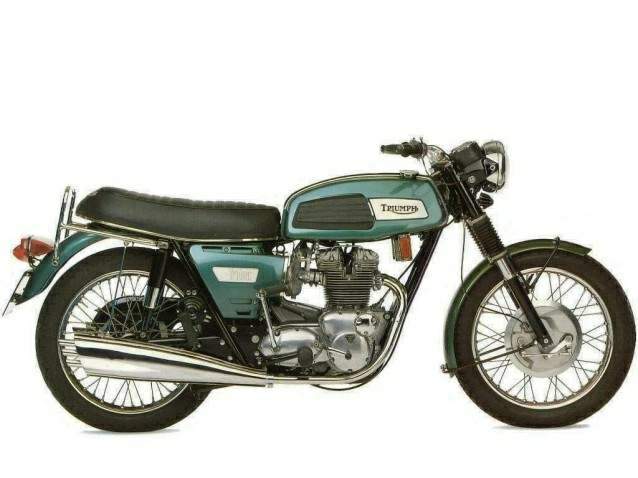
Triumph Trident T150 750


Make Model

Triumph Trident T150 750

Year

1969

Engine

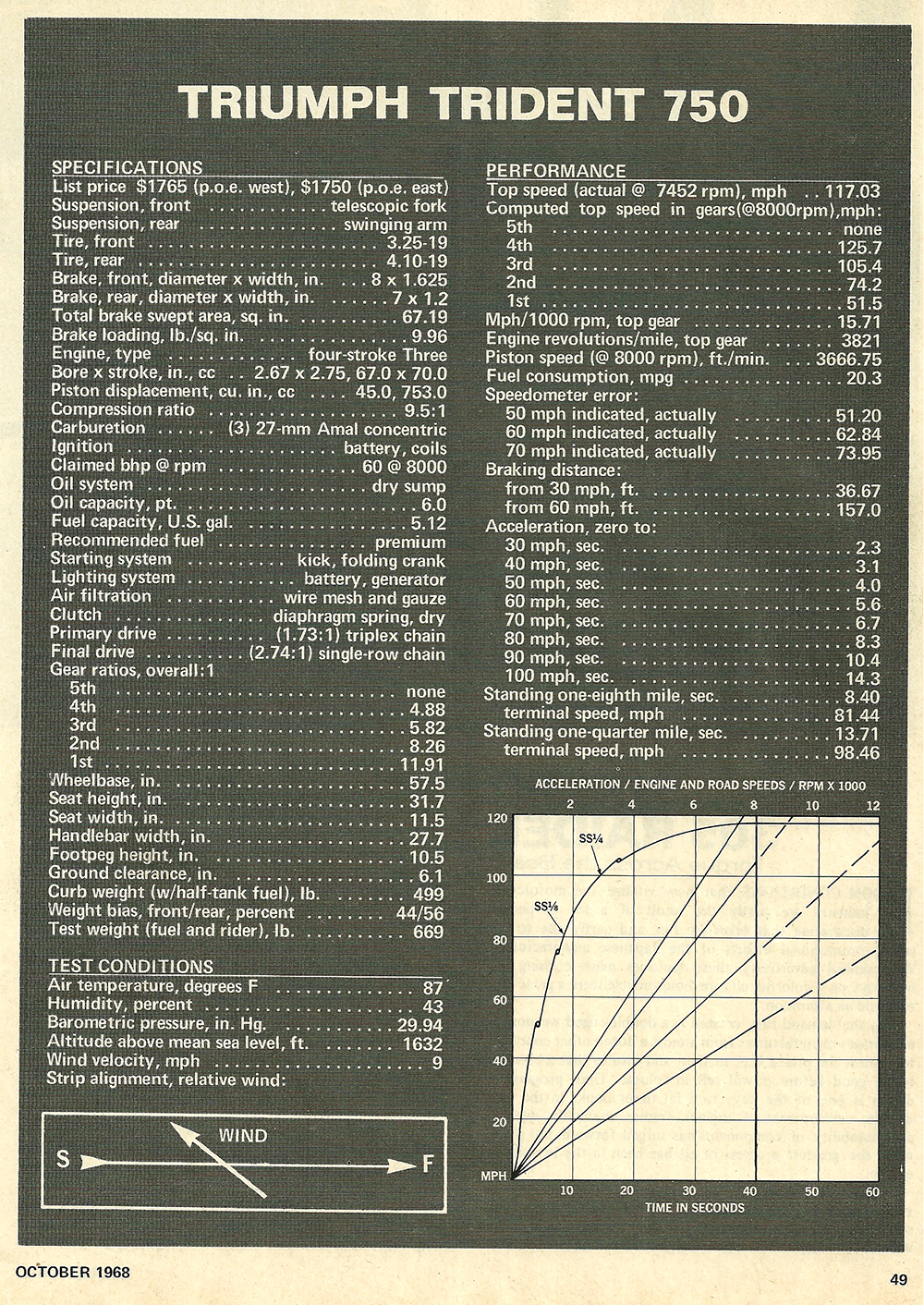
Air cooled, transverse three cylinder, pushrod OHV, 2 valves per cylinder.

Capacity

741
Bore x Stroke 67 x 70.5 mm
Compression Ratio 9.5:1

Induction

3x 26mm Amal MK1 carbs

Ignition  /  Starting

Individual points

Max Power

58 hp @ 7250 rpm

Max Torque

Transmission  /  Drive

4 Speed  / chain

Front Suspension

Telescopic forks

Rear Suspension

Dual shocks

Front Brakes

Drum

Rear Brakes

Drum

Front Tyre

4.10-19

Rear Tyre

4.10-19

Dry-Weight

208 kg

Fuel Capacity 

Top Speed

105 mph

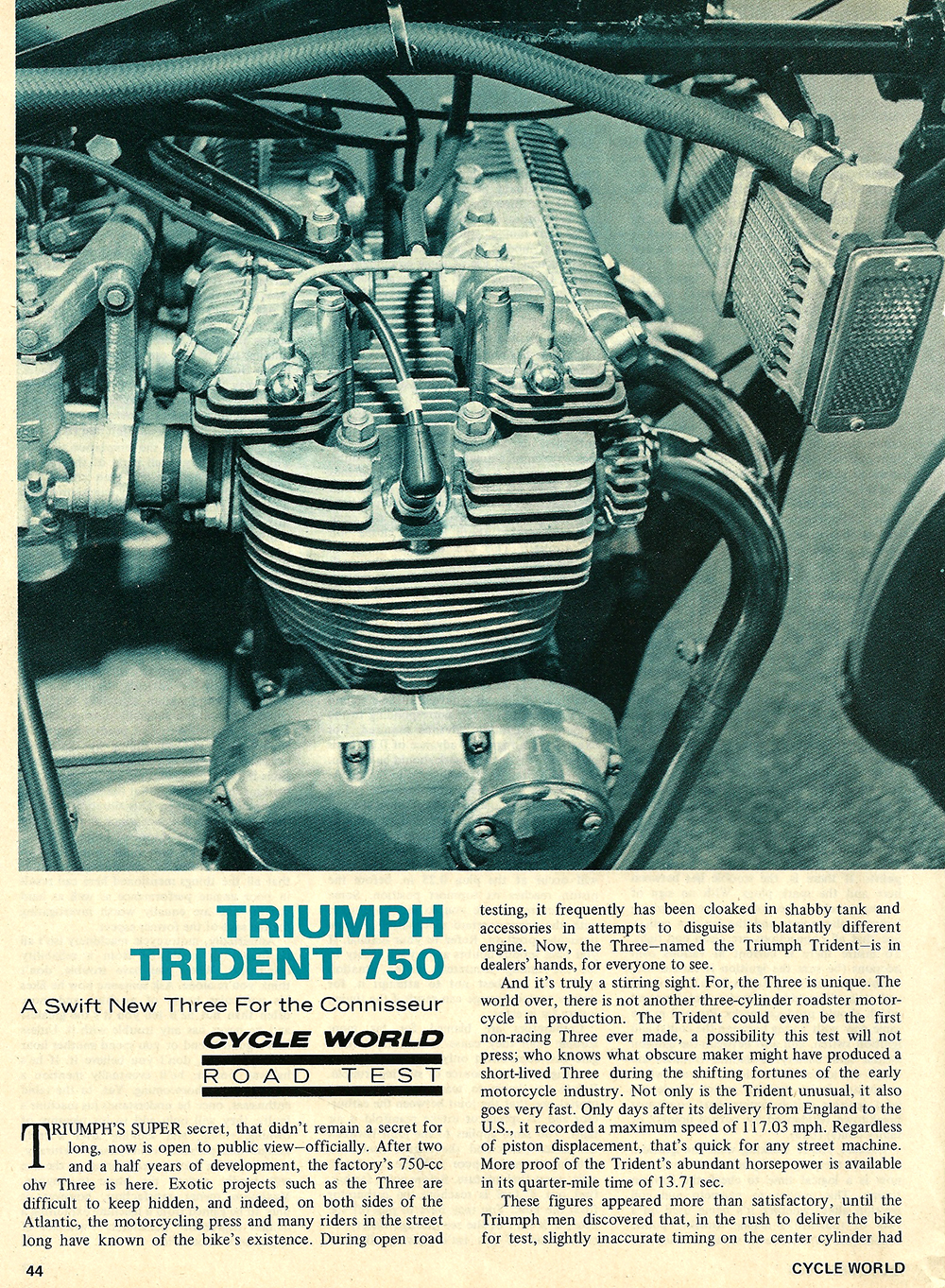
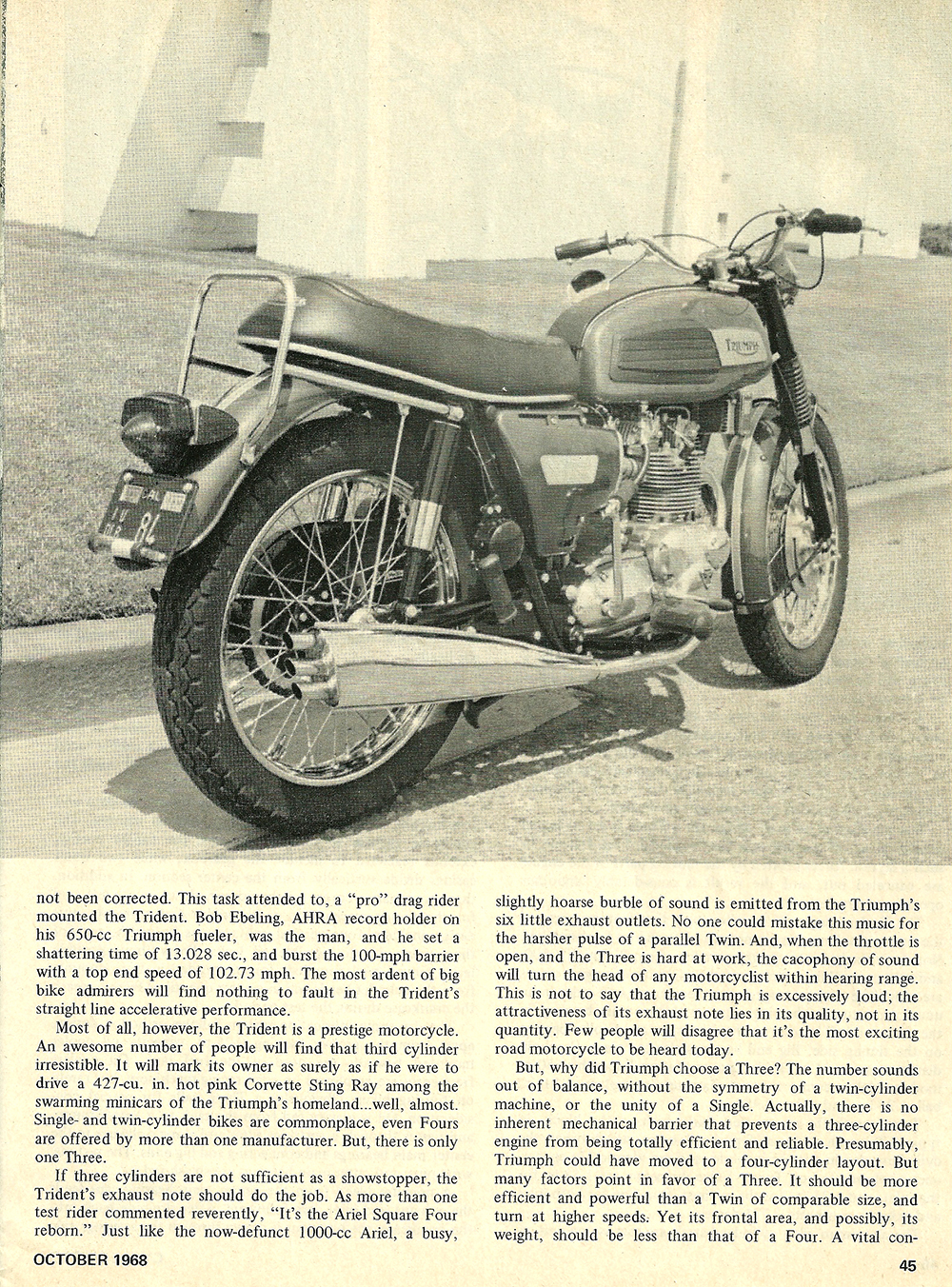
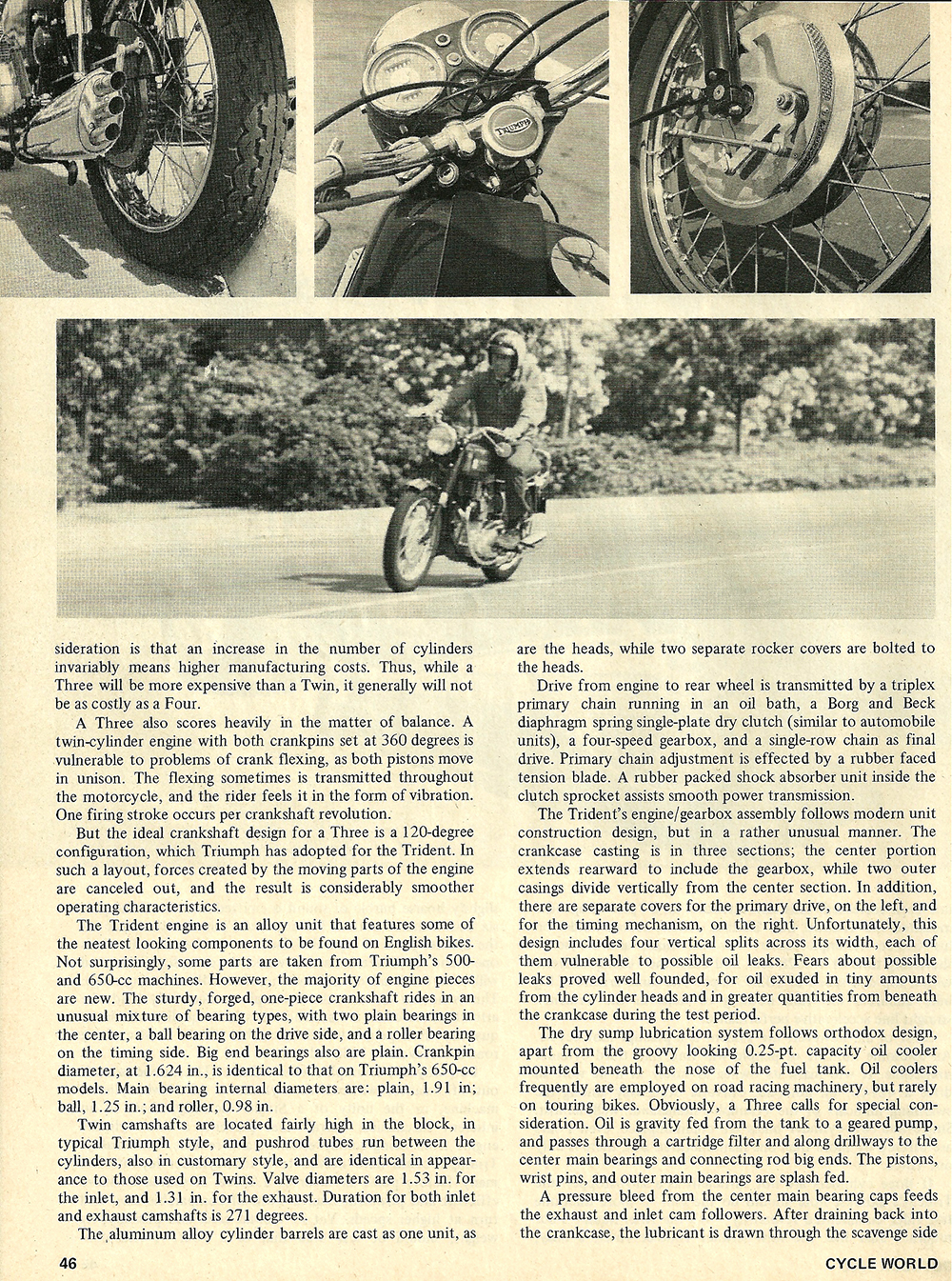
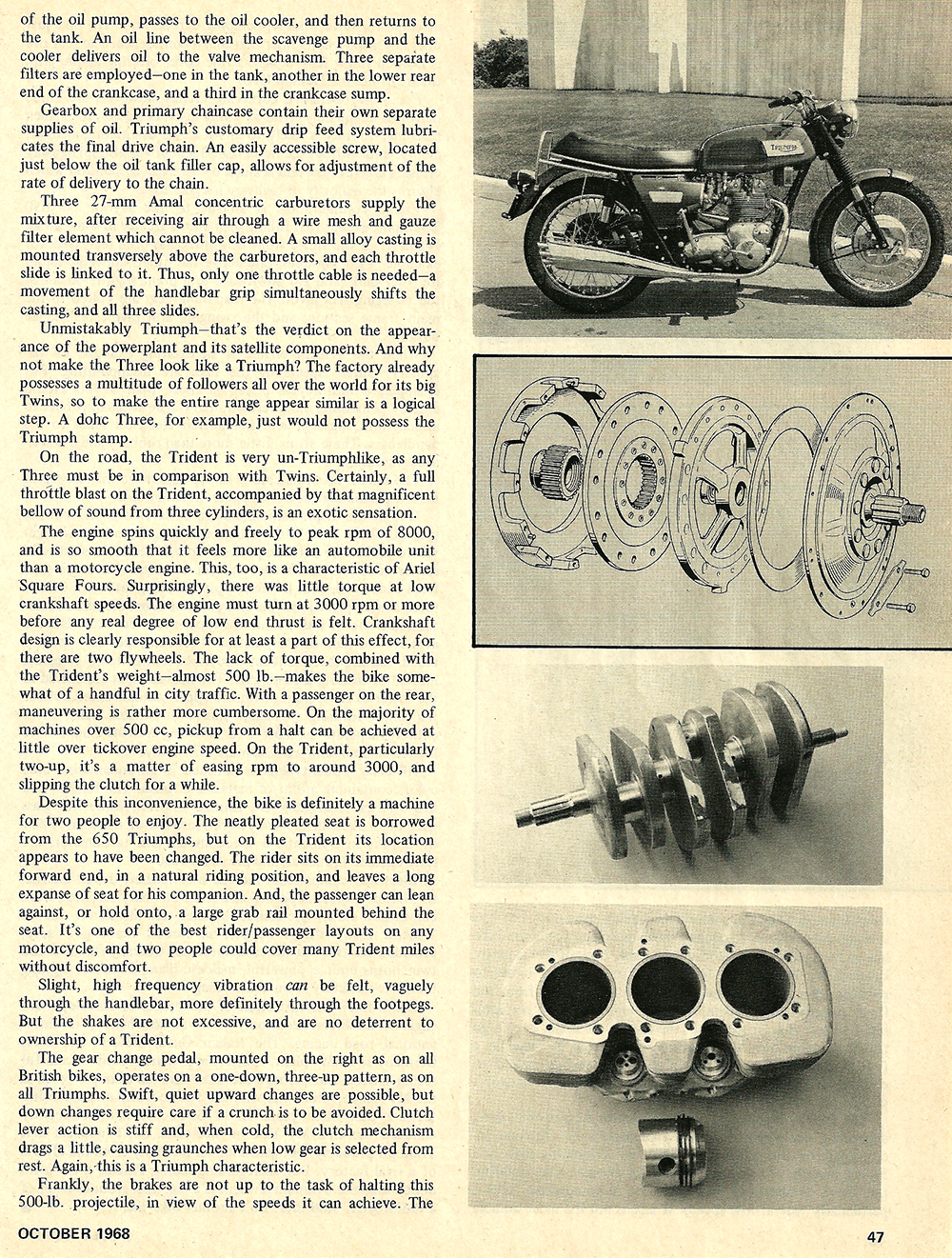
The three-cylinder Trident epitomized motorcycling's shift of power in the late Sixties away from old-style British parallel twins toward the new world of Japanese fours. Launched in 1968, the Trident was fast, fine-handling and arguably the first ever superbike. But it lacked the refinement, the reliability and the sheer glamour of Honda's CB750, which arrived a year later to take the wind out of the British bike's sails and its sales.   Typically, BSA Triumph (formed by a merger between the two companies) did not capitalize quickly enough on the three-cylinder format, which had been mooted by engineers Bert Hopwood and Doug Hele several years earlier.

By the time the bike was put into production, its pushrod valve operation, drum brakes and lack of electric start were on the verge of becoming old fashioned. The 60bhp triple, however, was certainly no slouch. The factor)' initially produced two separate models, the Triumph Trident T150 and the BSA Rocket-3, which were near-identical apart from the Rockct-3's angled-forward engine. Both were capable of close to 120mph, with acceleration to match and a thrillingly high-pitched exhaust wail.  Triples dominated the racetracks in the early Seventies. The Meriden factory's bikes finished first, second and third at Daytona in 1971 (Dick Mann winning, as he had the year before on a Honda), and in the following seasons notched up dozens of victories at the hands of riders such as John Cooper, Ray Pickrell and Percy Tait. The most famous triple was the production racer nicknamed 'Slippery Sam,' which won consecutive Isle of Man

TTs from 1971 to 1975.  Roadster development did not always benefit from the factory's racing commitments, and was further hampered by the firm's growing financial problems. One variation, the X-75 Hurricane, was a custom bike with high bars, a sleek one-piece seat-tank unit and three mufflers aligned up its right side. Stylish, yes - but expensive, impractical and years ahead of its time in 1973.  The Trident's first serious revision did not come until 1975 with the T160, which combined handsome new looks of fte own with overdue refinements such as an electric start and disc brakes. The 125mph T160 was the definitive British superbike, but it still lacked the speed and sophistication of the best of the current Japanese opposition. And, to make matters worse, it could do nothing to reverse Triumph's headlong slide toward financial disaster.

Source  Roland Brown


NOTE: Some of the photos on Motorcycle Specs are owned by somebody. If you see any of your photos, you can let me know so that I can acknowledge it, or if you object to it, I can remove it altogether. If any copyright holder objects  to their articles being placed on Motorcycle Specs, it will be removed upon request.  Any correction or more info on these bikes will kindly beappreciated                                          Contact Me      Privacy Policy     Website Stats