|
|
|
|
Classic Bikes
Custom Bikes
Individual
Racing Bikes AJP
AJS
Aprilia
Ariel
Avinton / Wakan
Bajaj
Benelli
Beta
Bimota
BMW
Brough Superior
BRP Cam-Am
BSA
Buell / EBR
Bultaco
Cagiva
Campagna
CCM
CF Moto
Combat Motors
Derbi
Deus
Ducati
Excelsior
GASGAS
Ghezzi Brian
Gilera
GIMA
Harley Davidson
Hero
Highland
Honda
Horex
Husaberg
Husqvarna
Hyosung
Indian
Jawa
Kawasaki
KTM
KYMCO
Laverda
Lazareth
Magni
Maico
Mash
Matchless
Mondial
Moto Guzzi
Moto Morini
MV Agusta
MZ / MuZ
NCR
Norton
NSU
Paton
Peugeot
Piaggio
Revival Cycles
Roland Sands
Royal Enfield
Sachs
Sherco
Sunbeam
Suzuki
SWM
SYM
Triumph
TVS
Ural
Velocette
Vespa
Victory
Vincent
VOR
Voxan
Vyrus
Walt Siegl
Walz
Wrenchmonkees
Wunderlich
XTR / Radical
Yamaha
Zero
Video
Technical
Complete Manufacturer List
|
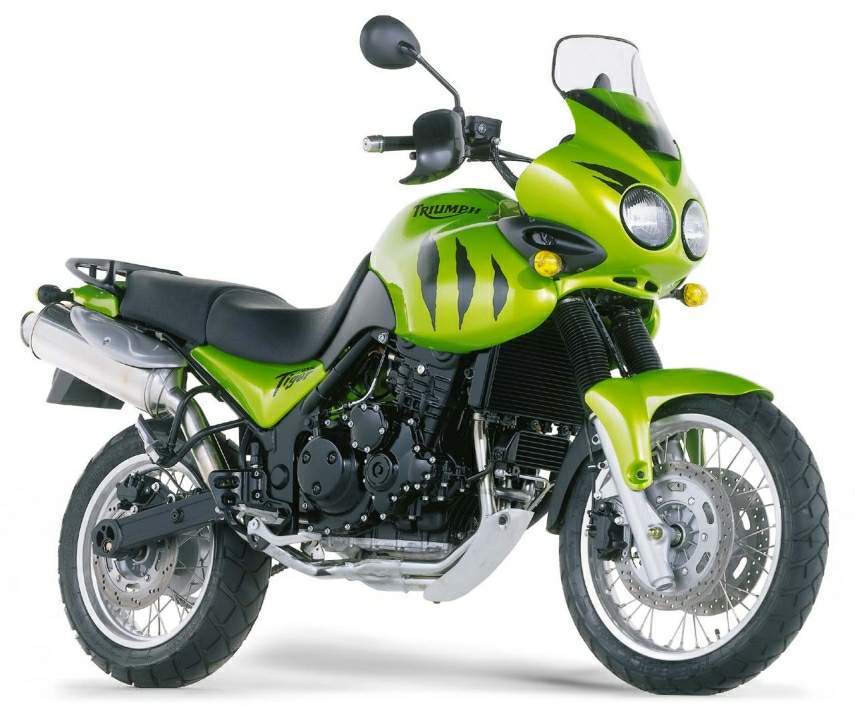
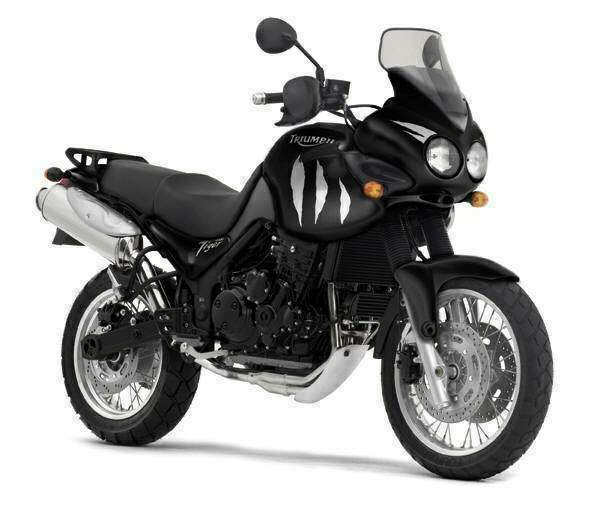
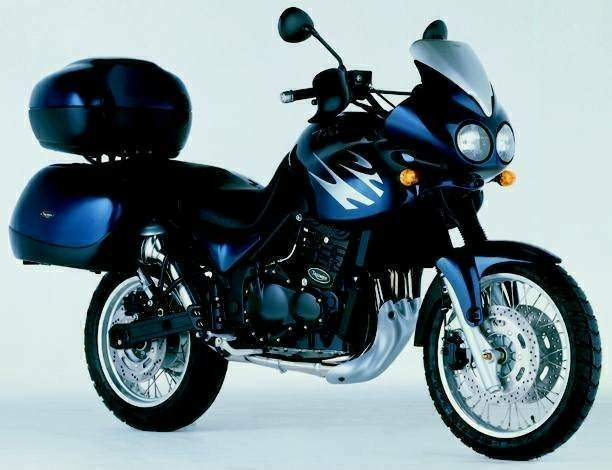
Triumph Tiger 955i
Triumph's trail-styled Tiger has long been one of the firm's most successful and popular models, especially in continental European countries like Germany. Originally introduced in 1992, as one of the first new-generation Hinckley Triumphs, the first Tiger used the carburetted 885cc triple engine shared with the Daytona, Trophy and Trident models. The high-output 12-valve engine was mated to a tough steel-tube cradle frame, fitted with long-travel dirtbike-type suspension at both ends. Wire-spoked wheels, knobbly off-road tyres and a small twin headlamp half-fairing completed the Tiger's styling. But, like most large-capacity trail-styled bikes, the big, heavy Tiger was completely unsuitable for off-road use. However, the massive weight, strong power and fragile bodywork which ruled out off-road work made the Tiger an excellent road bike, which was especially at home carrying out two-up touring duties on the autobahns and motorways of Europe. In 1999, a revised Tiger was introduced, with an updated, fuel-injected engine, improved running gear and sleek, modern bodywork. Despite more compact styling, the new Tiger was slightly heavier, although the engine's increased power outweighed any performance deficit. A new steel perimeter frame and more refined suspension front and rear gave stif fer handling, and improved equipment levels made the Tiger even more suited to long-distance touring rides. The latest 2001 update makes the Tiger one of the most powerful trail-styled bikes available. Triumph fitted the revamped 955cc triple engine from the Daytona 955i, and its torque figure of 67ft lb means strong, smooth acceleration from low down in the rev range. The Sagem fuel-injection is glitch-free and gives superb carburation all the way through the rev range, as well as impressive economy. A large 24-litre (5.3 gal) fuel tank permits a fuel range easily in excess of 320km (200 miles), and official Triumph accessories like hard luggage, electrically heated grips and taller screens further enhance the Tiger's touring credentials.
|
|
|
Any corrections or more information on these motorcycles will be kindly appreciated. |