|
|
|
|
Classic Bikes
Custom Bikes
Individual
Racing Bikes AJP
AJS
Aprilia
Ariel
Avinton / Wakan
Bajaj
Benelli
Beta
Bimota
BMW
Brough Superior
BRP Cam-Am
BSA
Buell / EBR
Bullit
Bultaco
Cagiva
Campagna
CCM
CF Moto
Combat Motors
Derbi
Deus
Ducati
Excelsior
Fantic
GASGAS
Ghezzi Brian
Gilera
GIMA
Harley Davidson
Hero
Highland
Honda
Horex
Husaberg
Husqvarna
Hyosung
Indian
Jawa
Kawasaki
KTM
KYMCO
Laverda
Lazareth
Magni
Maico
Mash
Matchless
Mondial
Moto Guzzi
Moto Morini
MV Agusta
MZ / MuZ
NCR
Norton
NSU
Paton
Peugeot
Piaggio
Revival Cycles
Roland Sands
Royal Enfield
Sachs
Sherco
Sunbeam
Suzuki
SWM
SYM
Triumph
TVS
Ural
Velocette
Vespa
Victory
Vincent
VOR
Voxan
Vyrus
Walt Siegl
Walz
Wrenchmonkees
Wunderlich
XTR / Radical
Yamaha
Zero
Video
Technical
Manufacturer List Contact
|
Triumph Thunderbird 900
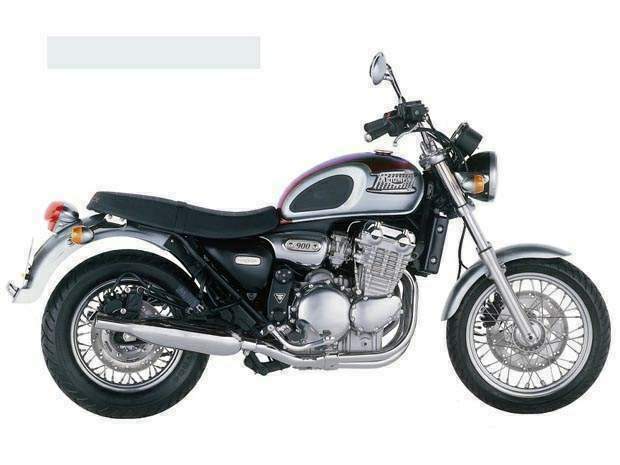
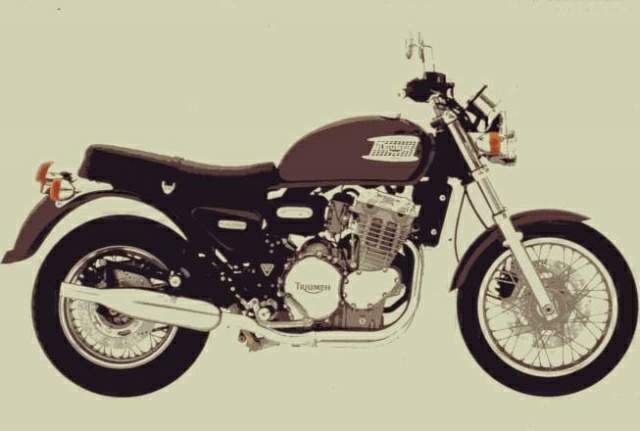
One glance at the Thunderbird said everything about the bike that Triumph created to spearhead its return to the American market in 1995. The three-cylinder cruiser was built for nostalgia, echoing the British firm's 1950s and '60s look from its high bars and chrome headlamp all the way to its wire wheels and old-style 'peashooter' silencers. The name added to the period feel, too, for the original 650cc Thunderbird parallel twin had been a big US hit for Triumph in the '50s, and was the bike famously ridden by Marlon Brando's character, Johnny, in The Wild One.
The Thunderbird represented a big step for the fast-expanding Hinckley firm, as it was the first model to move significantly away from the modular concept on which Triumph's range had been based. Although the basic layout of this bike's watercooled, twin-cam, 12-valve powerplant was shared with the eight other triples in the range, numerous engine and chassis components were unique, making the Thunderbird more complicated and expensive to produce.
Triumph retained the big triple's familiar 885cc capacity, but the T-bird's cylinder head, crankcasei and covers were restyled to mimic those of ok aircooled models. Internal changes, including different cams and a lower compression ratio reduced peak power to 69bhp from the normal 97bhp. Like the Speed Triple, the new triple had five, rather than Triumph's more common six ratios in its gearbox.
The frame's main spine was similar to the other models', but joined a modified rear section that allowed a slightly lower dual-seat. Bodywork was al new, and did a great job of recapturing the look o the old twins. The classical 'mouth-organ' tank badge was almost identical to the '50s original. The fuel tank's shape, the chrome carb-covers and wire spoked wheels (in 18-inch front, 16-inch rear sizes all added to the period effect.
Triumph's previous triples had been superbly tractable, yet the detuned engine was even stronger at low revs (peak torque arrives at just 4800rpm Given a handful of throttle, the Triumph surge forwards almost regardless of how far the tacho needle was from its 8500rpm redline. The mote was wonderfully smooth, too, and the gearbox typically slick. Top-end performance was les impressive, as the T-bird began running out c breath well before its modest top speed of 122mph.
The Thunderbird's chassis was well up to containing its engine performance. The frame was stiff, and suspension at both ends firm by cruiser standards. Hard riding, particularly over a series of bumps, sometimes revealed the handling's limitations with a slight twitch. Unlike other Triumphs, this bike made do with a single front disc brake, but it was effective providing the lever was given a solid squeeze.
For short trips and gentle cruising the Thunderbird was comfortable, maneuverable and very pleasant indeed. Inevitably, some practicality had been sacrificed to style. This bike's fuel tank held only 3.3 gallons, compared to the 5.5 gallons of most other Triumphs, limiting range to about 100 miles. By then, the wind-blown riding position had normally made the rider glad of a stop, despite the broad and comfortable dual seat.
Triumph offered extra practicality - and style -with a range of accessories including a screen and panniers. But many riders preferred the added retro image of cosmetic options such as traditional two-tone paintwork and rubber knee-pads for the fuel-tank.
That carefully cultivated air of nostalgia, combined with good performance and excellent build quality, rapidly made the new Thunderbird a big hit - not just in America but all over the world.
|
|
|
Any corrections or more information on these motorcycles will be kindly appreciated. |