|
|
|
|
Classic Bikes
Custom Bikes
Individual
Racing Bikes AJP
AJS
Aprilia
Ariel
Avinton / Wakan
Bajaj
Benelli
Beta
Bimota
BMW
Brough Superior
BRP Cam-Am
BSA
Buell / EBR
Bullit
Bultaco
Cagiva
Campagna
CCM
CF Moto
Combat Motors
Derbi
Deus
Ducati
Excelsior
Fantic
GASGAS
Ghezzi Brian
Gilera
GIMA
Harley Davidson
Hero
Highland
Honda
Horex
Husaberg
Husqvarna
Hyosung
Indian
Jawa
Kawasaki
KTM
KYMCO
Laverda
Lazareth
Magni
Maico
Mash
Matchless
Mondial
Moto Guzzi
Moto Morini
MV Agusta
MZ / MuZ
NCR
Norton
NSU
Paton
Peugeot
Piaggio
Revival Cycles
Roland Sands
Royal Enfield
Sachs
Sherco
Sunbeam
Suzuki
SWM
SYM
Triumph
TVS
Ural
Velocette
Vespa
Victory
Vincent
VOR
Voxan
Vyrus
Walt Siegl
Walz
Wrenchmonkees
Wunderlich
XTR / Radical
Yamaha
Zero
Video
Technical
Manufacturer List Contact
|
Triumph Daytona 955i
KEY FEATURES Chassis: Lightweight (12kg, 26lb) tubular aluminium frame using engine as structural
member.
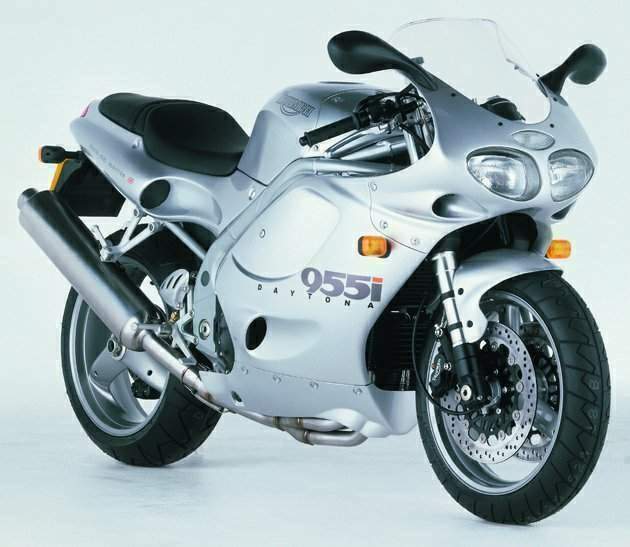
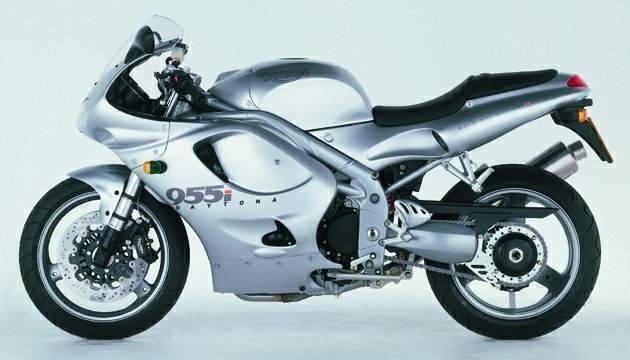
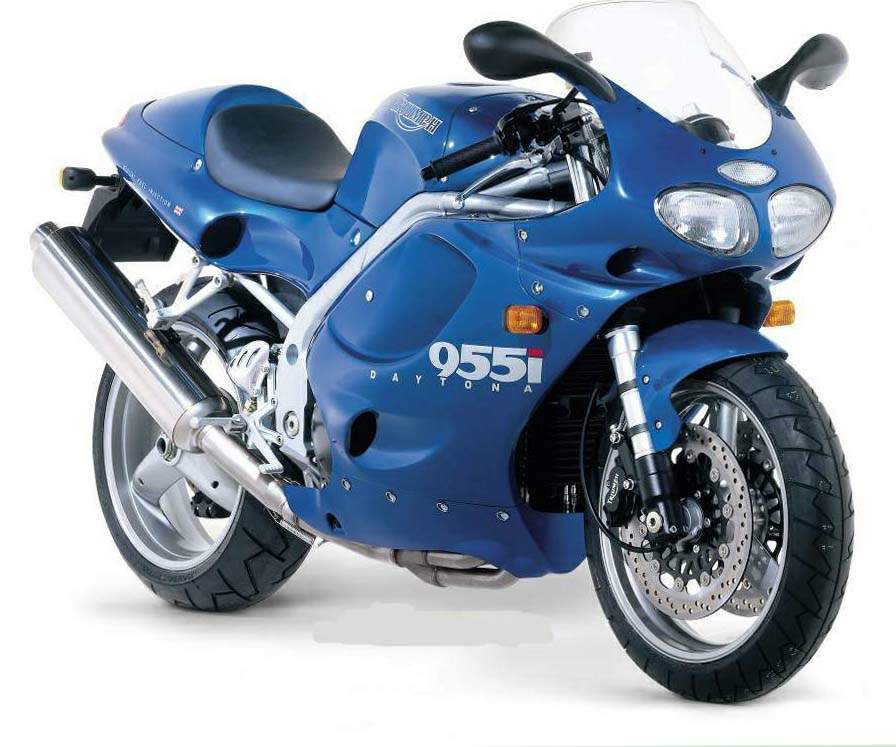
The Daytona has always been Triumph's flagship sportsbike, so when the firm launched a new-generation sportsbike in 1997 it simply had to take that name. First unveiled as the T595 Daytona, the new bike had a very impressive spec, and was aimed at taking on the might of the Japanese top-class sportsbikes, such as Honda's FireBlade and Kawasaki's ZX-9R.
The heart of the original T595 was an uprated 955cc triple engine, based on the earlier three-cylinder designs. Fitted with an advanced fuel-injection system designed by the French firm Sagem, the engine produced a remarkable peak power figure of 97kW (130bhp), together with the trademark torquey mid-range and soulful sound of the inline three-cylinder design.
The chassis was also rather remarkable. An aluminium tubed perimeter frame design was chosen to combine stiffness and low weight, while looking different from the usual Japanese twin-spar aluminium frames. Mated to an elegant single-sided rear swingarm and stiff, 45mm (1.8in) fully adjustable front forks, the T595 chassis was every bit as accomplished as its engine. Although the T595 couldn't get the better of the Japanese - Yamaha's Rl appeared nine months later, redefining sporting motorcycles - it was still a successful model, combining Triumph character and heritage with genuinely sporting performance.
The 1998 model year saw a renaming of the T595 as the Daytona 955i. Cosmetic changes were made, as well as a redesigned exhaust to improve Ground Clearance.
But it wasn't until the 2001 update that significant changes were made to the Daytona. This latest version reverted to a double-sided swingarm to reduce weight and improve stiffness, and new bodywork sharpened the styling of the Daytona. Extensive engine upgrades produced another power increase, this time to a very impressive 110kW (147bhp). And while the opposition has moved on in terms of track performance, the latest Daytona makes an impressive sporting machine for road use. Triumph's fast and sophisticated Daytona 955i flagship provides a unique blend of searing performance, real-world practicality and three-cylinder character. Launched in 1996 it was the first Hinckley-built machine to move away from the modular design concept that had been used to re-establish the Triumph name. Since then styling and detail revisions, including a shortened wheelbase and revised fuel-injection system, have further enhanced the refinement and all-round appeal of a superbike that continues to excite riders and turn heads wherever it goes. The Daytona 955i's performance and character stem from its liquid-cooled, fuel-injected three-cylinder engine, which was designed at Triumph in collaboration with Lotus to optimize the port and combustion chamber shapes and cam profiles. The 12-valve unit's impressive 130PS (128bhp) peak output, generous midrange torque and soulful exhaust note combine to give high performance with a distinctive edge. Handling and road holding are first rate, thanks to a chassis based around a rigid and eye-catching tubular aluminum perimeter frame, multi-adjustable suspension and wide-section 17-inch wheels. With an impressive blend of control and comfort, the 955i is a bike that is as happy being ridden hard on a racetrack as it is on the open road. Triumph's excellent build quality and enviable reliability add further to the Daytona's all-round appeal.
|
|
|
Any corrections or more information on these motorcycles will be kindly appreciated. |