When the re-born Triumph factory
emerged on the world stage in 1991, it established its credentials with a
pair of touring bikes - the Trophy 1200 and 900 - and a pair of basic,
unfaired triples - the Trident 750 and 900.
But it soon became clear that
there was a section of the market ready to be offered an alternative to big
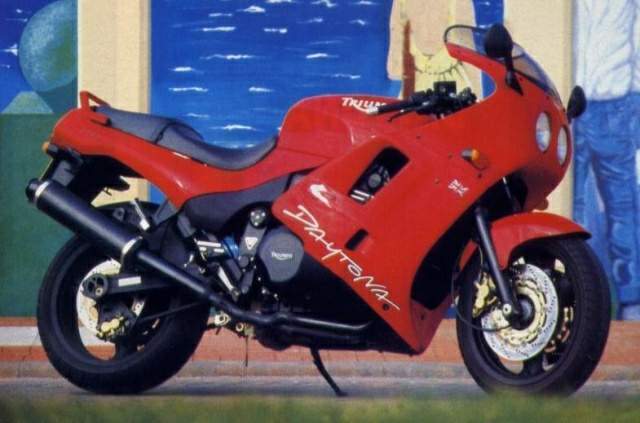
Japanese superbikes. Triumph's answer was the Daytona 1200, introduced in
1993.
Under the skin, it's much the
same as the rest of the Triumph range - same frame, same geometry, same
engine. The main difference is die firmer suspension and sports compound
tyres, giving a completely different, tauter feel than the Daytona's Trophy
stablemate. Swoopy, aerodynamic body-work in eyecatching colours reinforces
the image of a bike built for speed.
The 1180cc engine is based on the
Trophy 1200's proven unit. But while the Trophy makes do with 106bhp,
sportier cams and some revised cylinder head dimensions help take the
Daytona to a claimed 147bhp at the crankshaft, making it one of the most
powerful standard motorcycle engines in Creation.
But while Kawasaki's ZZ-R1100,
Yamaha's FZR1000 and Suzuki's GSX-R1100 fight it out for the title of
Fastest Production Bike, the Daytona takes a different approach. Despite its
enormous power output, it is geared for a top speed of 'only' 160mph, making
for better acceleration at normal road speeds - the Daytona easily outdrags
a ZZ-R1100 from 40-100mph.
The engine has a solid, unburstable feel, with
none of the buzzy, revvy nature of its Japanese competitors - you really
feel as if the engine is happy to sit flat out all day long. And so is the rider. The
Daytona's riding position feels almost old-fashioned - upright, with quite
high handlebars and low footrests. The fairing, too, keeps most of the wind
blast off the rider, making high speed work less of a chore. And that makes
the Daytona far more comfortable than just about any other sports bike - and
most tourers, too! Long, fast motorway trips on the Daytona
come and go without the aches and
pains associated with many big sportsbikes.

But motorways are only half the
story. The Daytona is most at home on fast, sweeping A-roads, where its
combination of unflappable stability and awesome roll-on power make for fast
journey times without the need for constant gear-changing.
On twistier roads, the Daytona's
stiffer suspension copes with fast direction changes so easily it's hard to
believe it's even related to the touring Trophy, let alone almost
identical.
The tyres help too, offering effortless steering and huge amounts
of grip - enough to use up even the Daytona's improved ground clearance and
strike sparks from the footrests and exhausts in fast turns. Hauling 5021bs
of speeding motorcycle to a halt should be hard work, but the Daytona's huge
discs and powerful calipers do the job with no fuss at all. It's no race
bike - there are plenty of smaller bikes that turn faster and brake harder -
what makes the Daytona special is how easy it makes it for the rider to use
all it's got to offer. Although theoretically the Triumph is at a weight and
handling disadvantage compared to its competitors, it would take a skilled
(and brave) ZZ-R or FZR rider to exploit that disadvantage on the road.
It's powerful without being
intimidating, and heavy without being cumbersome. It manages to combine the
roles of easy-to-ride tourer and blindingly fast sports bike - a neat trick
if you can do it. Neat enough to call 'superbike'.