|
|

|
|
|
|
Classic Bikes
Custom Bikes
Individual
Racing Bikes AJP
AJS
Aprilia
Ariel
Avinton / Wakan
Bajaj
Benelli
Beta
Bimota
BMW
Brough Superior
BRP Cam-Am
BSA
Buell / EBR
Bultaco
Cagiva
Campagna
CCM
CF Moto
Combat Motors
Derbi
Deus
Ducati
Excelsior
GASGAS
Ghezzi Brian
Gilera
GIMA
Harley Davidson
Hero
Highland
Honda
Horex
Husaberg
Husqvarna
Hyosung
Indian
Jawa
Kawasaki
KTM
KYMCO
Laverda
Lazareth
Magni
Maico
Mash
Matchless
Mondial
Moto Guzzi
Moto Morini
MV Agusta
MZ / MuZ
NCR
Norton
NSU
Paton
Peugeot
Piaggio
Revival Cycles
Roland Sands
Royal Enfield
Sachs
Sherco
Sunbeam
Suzuki
SWM
SYM
Triumph
TVS
Ural
Velocette
Vespa
Victory
Vincent
VOR
Voxan
Vyrus
Walt Siegl
Walz
Wrenchmonkees
Wunderlich
XTR / Radical
Yamaha
Zero
Video
Technical
Complete Manufacturer List
|
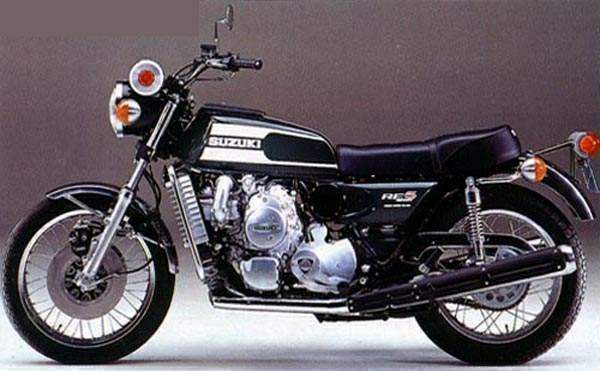
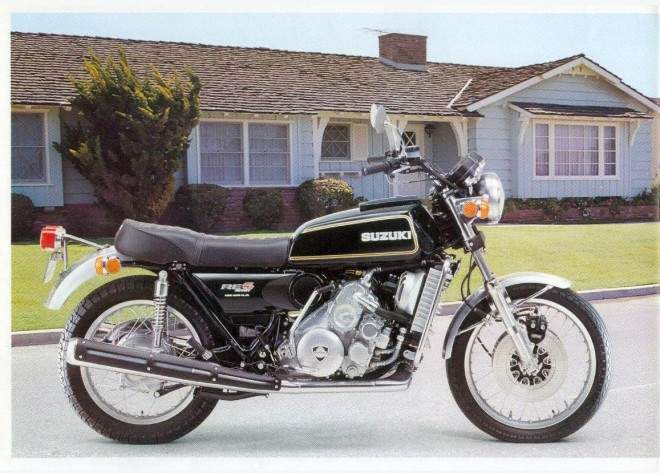
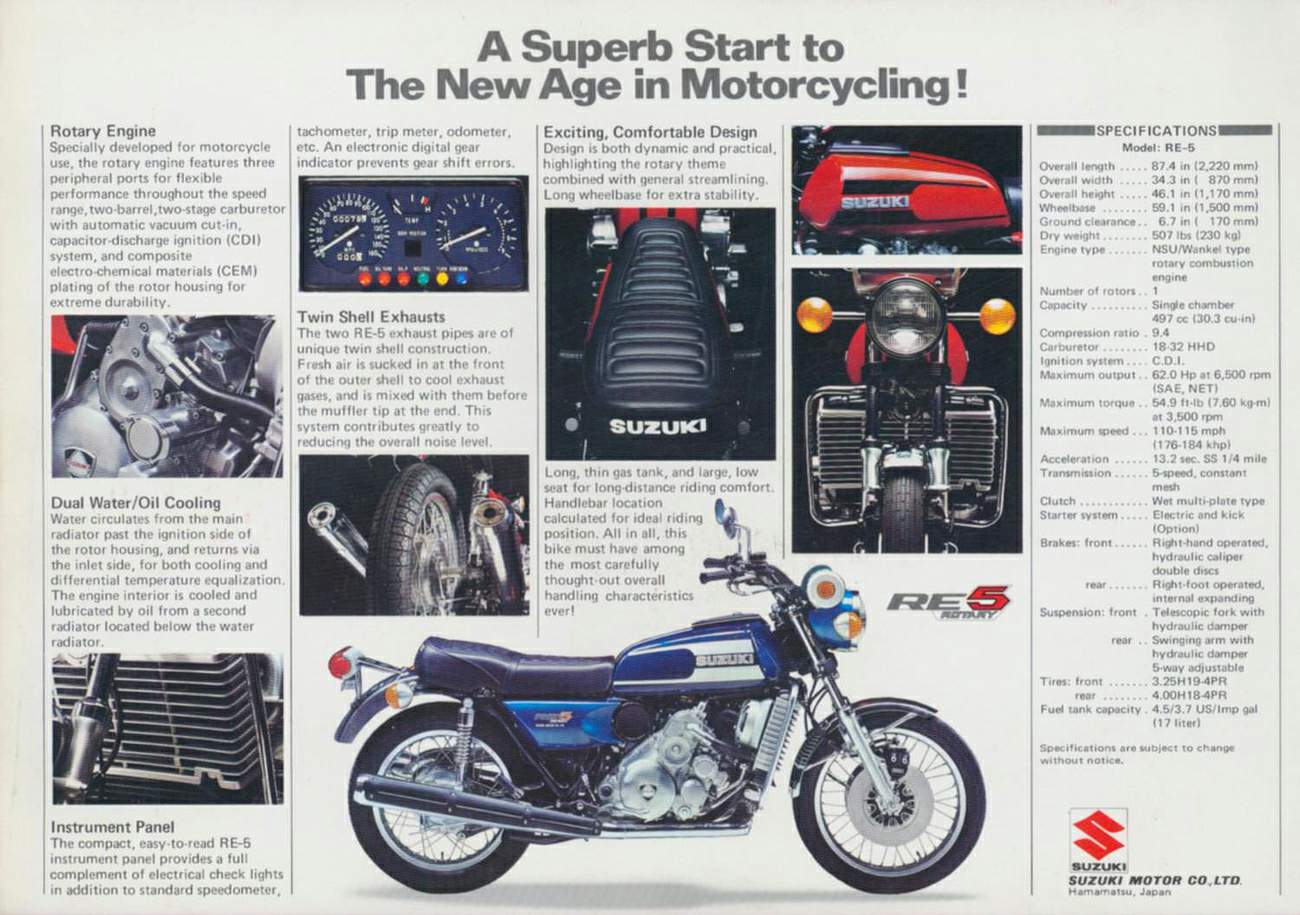
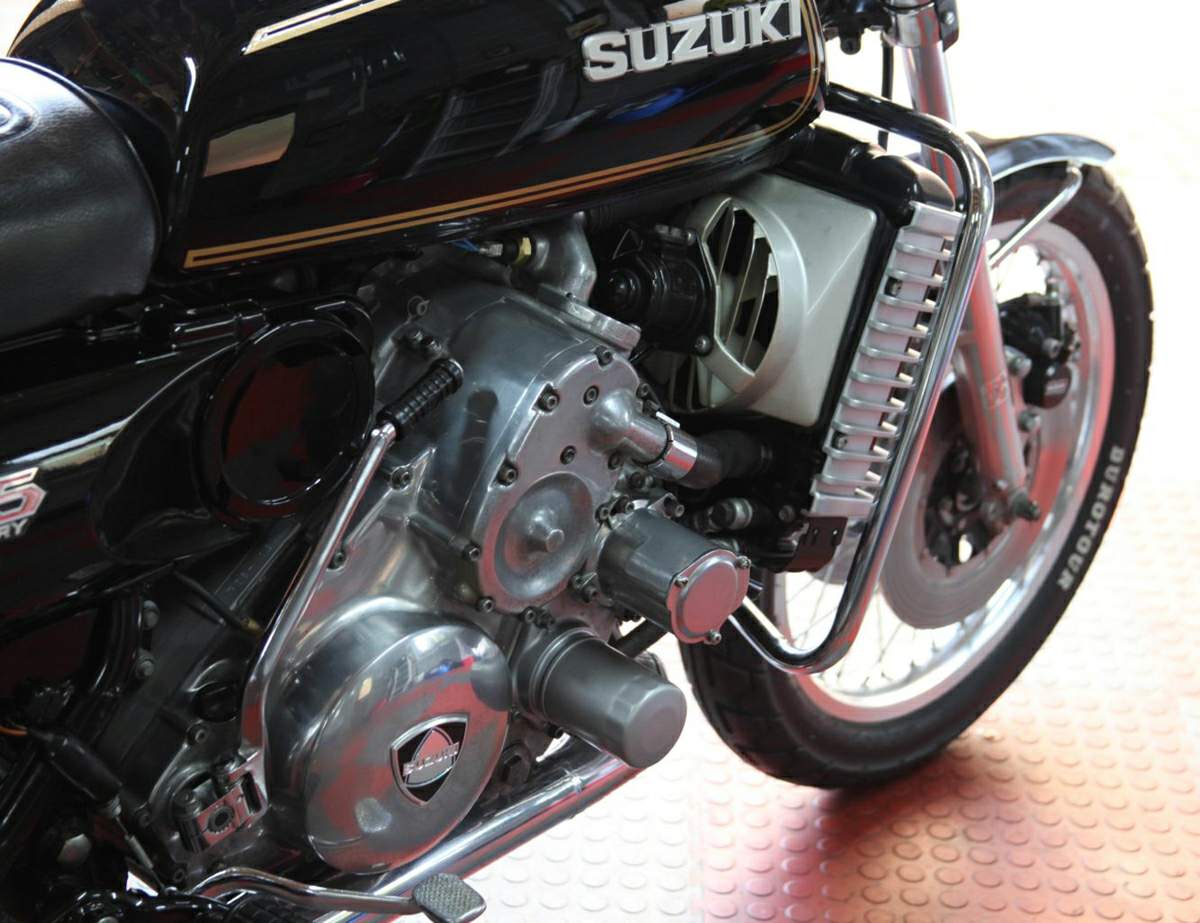
Suzuki RE5 Rotary
Suzuki presented its first, and only, rotary engine powered motorcycle at the Tokyo Show in late 1973. The RE5, as the model was called, was Suzuki's technical flagship at the time and a fine motorcycle. The engine, originated from NSU in Germany, was smooth, quiet, powerful and had hardly any vibrations, thanks to its construction with no parts moving back-and-forth like the usual Otto engine. The rotary, or Wankel, engine has a number of benefits over standard engines including a lack of camshafts, intake and exhaust valves, and a reduced number of moving parts. Many manufacturers experimented with the engine type and some prototypes were presented in the early 70's but Suzuki was the only motorcycle manufacturer that used the rotary engine on a mass produced bike. Suzuki presented the engine sometimes as 1000cc, because some regulatory bodies de-rate the engine by doubling the chamber capacity. The actual cylinder capacity was 497 cc. The design of the RE5 was not as revolutionary as its engine. The instrument panel and tail light were contained in cylindrical shapes to play on the rotary theme, otherwise the bike looked a lot like the company's two-stroke flagship GT750. Also included was a special heat shield since the rotary engine design tended to make exhaust pipes hot enough to burn riders' legs. What happened? The customers did find the RE5 interesting, but not many but not many of them actually bought the model. Perhaps it was the new technology that scared off the customs, perhaps it was the heavy fuel consumption that made it. However, Suzuki had invested enormous sums of money to the project and had built an entire new assembly line for the rotary engines but the machines wouldn't sell. Source suzukicycles.org
|
|
|
Any corrections or more information on these motorcycles will be kindly appreciated. |