|
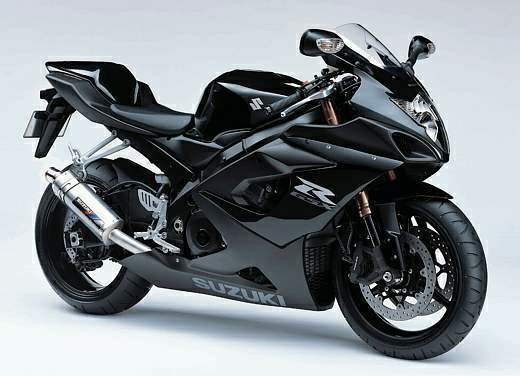
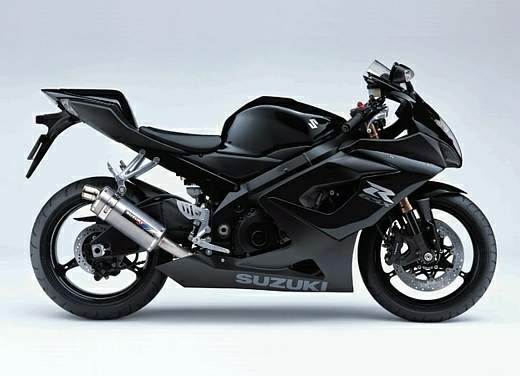
Suzuki GSX-R 1000 Mat Black

|
Make Model |
Suzuki GSX-R 1000 Mat Black |
|
Year |
2005 |
|
Engine |
Liquid cooled, four stroke, transverse four
cylinder, DOHC, 4 valve per cylinder, TSCC |
|
Capacity |
998.6 |
|
Bore x Stroke |
73.4 x 59 mm |
|
Compression Ratio |
12.5:1 |
|
Induction |
Fuel injection 44
mm |
|
Ignition / starting |
Digital/transistorized / electric |
|
Max Power |
131 kW 178 KW @ 11000 rpm |
|
Max Torque |
118 Nm @ 9000 rpm |
|
Transmission / drive |
6 Speed / chain |
|
Front Suspension |
Inverted telescopic, coil
spring, fully adjustable spring preload,
compression and rebound damping |
|
Rear Suspension |
Link-type, gas/oil-damped,
fully adjustable spring preload, compression
and rebound damping |
|
Front Brakes |
2X 320mm discs 4 piston calipers |
|
Rear Brakes |
Single 220mm disc 2 piston caliper |
|
Front Tyre |
120/70-ZR-17 |
|
Rear Tyre |
190/50-ZR-17 |
|
Dry-Weight |
166 kg |
|
Fuel Capacity |
18 Litres |
|
Standing 1/4 Mile |
10.1 sec. / 143 mp/h |
|
Standing 0-60 mph / 0-100 mph |
2.9 sec /5.5 sec |
|
Top Speed |
289.7 km/h /
180 mp/h |
For 2005, Suzuki set out to make its sports flagship smaller, lighter and
more powerful than the previous K4 version. By shaving a millimetre here and
a gram there overall weight has been reduced two kilograms to a svelte
166kg.
The footpegs are lower and further forwards but lean angle isn't compromised
because they've been moved inwards 17mm
The handlebars are slightly narrower, higher
and further back, the back of the fuel tank is narrower (although it still
holds 18 litres) and the seat height has been lowered by a significant 20mm
to 810mm.
The effect is to reduce seat-to-handlebar reach by 40mm without cramping the
rider's legs, making the bike feel considerably more compact than its
predecessor.
The liquid-cooled, four-cylinder engine has gained 11cc (to 999cc) and turns
over an extra 1000 times a minute thanks to titanium valves - to deliver a
claimed 133kW at 11000rpm with 118Nm available at 9000 revs.
It drives through a back torque-limiting "slipper" clutch and a six-speed
gearbox. I can't tell you much about the clutch because I used it exactly
once pulling out of the pits lane but the gearbox is well up to Suzuki's
usual slick standards
It seemed very positive if a little vocal
changing up at low revs as I felt my way round for the first few laps but as
the revs built up its action became lighter and quicker. Full-throttle upshifts on the back straight were lightning-fast and almost imperceptible.First gear is high possibly too high for comfortable road riding but
perfect for getting off the start line in a hurry - and the top five ratios
are very close together; you can actually use everything from second to
sixth on a hot lap.
Simply closing the throttle and banging the lever down at the end of the
straight was an act of faith the first time but the action is light and the
bike never even twitched. All sports bikes should be like this especially
big singles and twins with lots of engine braking.
As I settled into the bike I began using more revs; the power comes on
strongly from about 7000rpm and there is serious Warp Factor available above
9000. From there, through the power peak and on to well past 12000rpm, it
pulls hard enough to unfocus your vision and push you back in the saddle
with very little perceptible vibration.
Acceleration through the gears is literally breathtaking; depending on how
you apply the throttle you can light up the rear tyre or loft the front
wheel at will that's how controllable the engine's power delivery is.
Building a hard-revving big bike with big horsepower numbers is easy
making that power both accessible and usable is more difficult but Suzuki
has certainly got it right on this one.

Not all straight lines
At the end of a straight you have to brake. The new Suzuki has (almost) all
the right credentials: radial mount four-pot callipers and GP-style master
cylinder but still connected by cheap rubber hose rather than braided
stainless-steel stuff.
Japanese bean-counters never cease to amaze me.
Nevertheless, they work superbly; the big Tokico callipers drag the bike
down hard enough to make the front Bridgestone grumble audibly in protest
using only two fingers and the direct action of the master cylinder is
incredibly linear.
The harder you squeeze the harder you stop.
The front suspension retains its composure under this pressure; the 43mm
Kayaba upside-downies with black, diamond-like coating are adjustable for
preload, compression and rebound damping but in my limited time on the bike
I was unable to experiment with the settings.
As delivered by the factory their action is a little harsh but the front
wheel remains planted and you can brake deep into the corners; the superbly
modulated throttle lets you move straight from trailing to positive throttle
so you can power out as hard as you like or dare!
The rear monoshock also felt a little choppy in the beginning but as my
confidence level - and cornering speeds rose it seemed to settle down. It
remained taut and stiff, however, and could induce rear wheel patter under
harsh acceleration on bumpy surfaces.

On tiptoe
The set-up felt a little tentative almost as if the bike were on tiptoes
at low speeds but the harder I rode it the better it handled. The suspension
settings would probably need to be softened to make it comfortable on the
street which would then make it a bit wiggly on hard cornering.
This is a focused sports machine, not an all-rounder.
Its masses including the rider are well centred and the bike flicks
smartly from side to side; the steering is superbly accurate and
surprisingly light despite the factory-fitted damper across the forks,
hidden inside the fairing.
Yet it's surprisingly stable; the K5 refused to shake its head under
acceleration and held its line like it was on rails at any cornering speeds
I could achieve.
Thanks to the lowered footpegs the seating position is not as extreme as I
expected and once I got used to the bike I was quite comfortable, although
my forearms did get a little pumped up at first.
Taut styling
The tautly styled fairing works better than its small frontal area would
suggest and the triangular screen is higher than usual for a bike of this
type; I could actually see the instruments - hooray!
These consist of a beautiful analogue rev-counter, red-lined at 13 500rpm,
and a big shift light that never came on while I was riding the bike despite
revving it almost into the red a couple of times.
There's also the usual multipurpose LCD screen telling you everything from
how fast you are going to what gear you're in, coolant temperature, tank
range, tripmeter - the works. It's remarkable for its clarity and ease of
use.
Source Motoring.co.za

|