|
|

|
|
|
|
Classic Bikes
Custom Bikes
Individual
Racing Bikes AJP
AJS
Aprilia
Ariel
Avinton / Wakan
Bajaj
Benelli
Beta
Bimota
BMW
Brough Superior
BRP Cam-Am
BSA
Buell / EBR
Bultaco
Cagiva
Campagna
CCM
CF Moto
Combat Motors
Derbi
Deus
Ducati
Excelsior
GASGAS
Ghezzi Brian
Gilera
GIMA
Harley Davidson
Hero
Highland
Honda
Horex
Husaberg
Husqvarna
Hyosung
Indian
Jawa
Kawasaki
KTM
KYMCO
Laverda
Lazareth
Magni
Maico
Mash
Matchless
Mondial
Moto Guzzi
Moto Morini
MV Agusta
MZ / MuZ
NCR
Norton
NSU
Paton
Peugeot
Piaggio
Revival Cycles
Roland Sands
Royal Enfield
Sachs
Sherco
Sunbeam
Suzuki
SWM
SYM
Triumph
TVS
Ural
Velocette
Vespa
Victory
Vincent
VOR
Voxan
Vyrus
Walt Siegl
Walz
Wrenchmonkees
Wunderlich
XTR / Radical
Yamaha
Zero
Video
Technical
Complete Manufacturer List
|
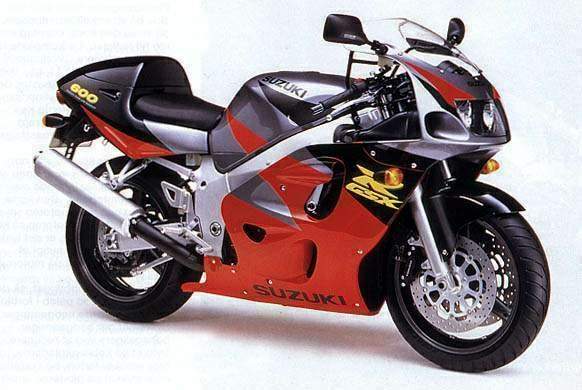
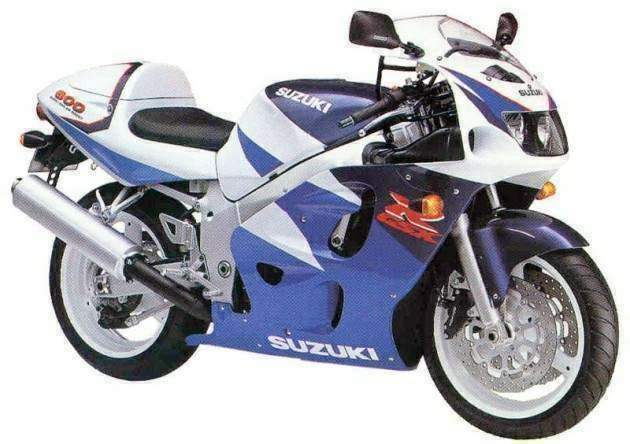
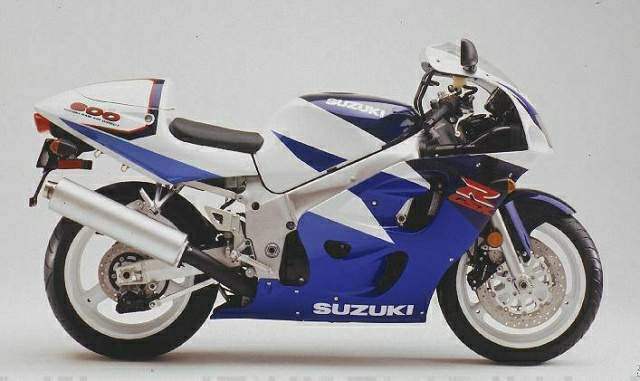
Suzuki GSX-R 600 SRAD
Forget 750s or open-class sportbikes, the real battle for supremacy is waged in the 600 class -- these are the best-selling sportbikes made. Here, manufacturers pump huge amounts of money into research and development to produce the quickest, fastest, best-handling machines possible. This space-race for the 600 title has led to machines that out-perform liter bikes of just a decade ago. But which 600 is best, and more specifically, which is best for you? It was the best of times, for sure: Motorcycle Online recently rounded up the best 600cc Sportbikes produced, dusted off our leathers and fired checks out of the corporate account like a cheap six-shooter, appropriating funds to rent Los Angeles County Raceway's quarter-mile drag strip, Willow Spring Raceway's Streets of Willow, as well as taking over Graves Motorsports' shop for the better part of a week to have the bikes dyno'ed and track prepped. Lastly, we brought in AMA Superbike star Shawn Higbee and reigning Willow Springs Formula One Champion Chuck Graves to assist Editor-in-Chief Brent Plummer and Associate Editor Gord Mounce in the testing. The point? To carve as many canyons as possible, shred a bunch of tires and fry three clutches at the drag strip? That's what the four of us thought until Managing Editor "Big" Tom Fortune brought us all back to reality: "This is a street bike test. Remember, tens of thousands of people around the world are going to plunk down their hard-earned money on one of these machines, and in many cases, it'll be their only bike that they have to live with for years to come, through various conditions such as sport touring, commuting and canyon riding. And less than three percent of the machines will ever see a racetrack. You will evaluate these bikes with that in mind!" That said, we headed to Palomar Mountain, and the testing began...
4. Kawasaki ZX-6R When these four sportbikes of the apocalypse began assembling for our shootout, early predictions rated Kawasaki's ZX-6R as a likely victor. We had all enjoyed the ZX6 tested last month, so the 6R's shorter wheelbase, fully adjustable suspension and 29 fewer pounds promised to make for an even better ride. So how did the Kawasaki come to find itself relegated to fourth place? The answer lies in the vague feedback offered by the 6R's front end, a problem that is compounded by the low-profile stock Bridgestone tire that gives poor traction at full lean. The cumulative result is a front end that "pushes" and "tucks" in corners. Having a poor connection with the front destroys confidence, which in turn slows lap times and canyon cornering speeds. How bad is the feedback from the 6R's front forks? "I knew that the front was there," quipped Graves after his first track session on the 6R, "because at the end of the straight you pop up and hit the brakes, and something slows you down." Higbee also found the ZX-6R's front lacking: "Even at a moderate street pace I had trouble keeping the front tire from sliding out under me, which isn't my idea of fun." This lack of front end feel was responsible for five of our seven testers (Graphic Artist Billy Bartels and Guest Commentator John Slezak also participated in this test) picking the 6R last in this comparison. Handling manners improved after the Metzeler MEZ1 race-compound tires replaced the stock Bridgestones for testing at The Streets of Willow. Now we had more confidence that the tire would stick, but feedback and turn-in manners remained poor. This led Higbee to question the 6R's geometry: "The front end feedback told me that it was turning in too much, a sign that it needs more trail. I also noticed that the triple clamps are narrow, which might explain why the 6R refused to turn properly -- there's not a lot of leverage there." The nail in Kawasaki's coffin comes from the price tag. At $8299 it's $500 more than the second most-expensive bike, Honda's CBR600F3 -- and a whopping $900 more than Yamaha's YZF600R.
1. Yamaha YZF600R
Surprised? We were downright shocked. Yamaha's YZF600R came quietly into this
shootout with no one predicting it would win. At $7,399, we knew the price was
right -- but we doubted the bike's ability to match the competition. Billy
Bartels was first to heap praise on the YZF, as he lauded its comfort after a
ninety-mile ride from Yamaha's headquarters. Soon others began to take a shine
to the bike. We all raved about the awesome front brakes and superior bottom end
on the YZF.
Supersport shootout Highly anticipated and hard fought, it is an annual event with weighty social, political and economic implications. Sort of like Chelsea Clinton's coming-out party with knee pucks and Z-rated rubber. Inked with the same blood-red Sharpie(R) we use to mark Pamplona's running of the bulls, Indy's 500 and Eddie Lawson's birthday, it is Motorcyclist's annual 600cc supersport skirmish. And it is time. Unlike the near-three-mile-per-minute proclivities of Honda's CBR1100XX or the focused, hormonal purity of Ducati's 916, the archetypical 600 sporty bike shines brightest not from any single facet. Instead, following the wonderfully (if you're Honda) frustrating (if you're not) tire tracks of the CBR600 series, the conventional middleweight paradigm aims at that elusive point where the marketeer's price and performance curves cross. That's why the reigning 600cc champion, Honda's F3, spreads its broadband brilliance over most any sort of riding the Great Unwashed Sporting Hordes can think up. It is the proverbial jack-of-all-trades, and master of some. Thus, traditionally, middleweight warfare is a game of inches--millimeters even. But watching Honda kick the can a bit farther than everybody else every year was becoming an exercise in predictability--predictably monotonous. Then, Suzuki shrunk its 750cc GSX-R track-scalpel to 600cc scale and blew the game wide open. It is the first real deal--a no-apologies, no-regrets, take-no-prisoners 600cc racer replica. The 1997 GSX-R600, odds-on wild card in this year's deck, provokes a new question: Does unadulterated sporting brilliance beat all-around aptitude? Is the latest F3 strong enough to keep Honda's middleweight CBR dynasty alive? Can the revamped YZF600R hold its own? Will Sister Ruby overcome brucellosis and a bad NyQuil habit to rejoin the roller derby? Oops, wrong story. What about Kawasaki's highly rapid ZX-6R, then? Keep your shoes and socks on, boys and girls. The answers are just around the corner. The path to conclusive answers starts with knowing where to look. On the advice of Feature Editor Burns's parole officer, we began with a Track Flog at Willow Springs International Raceway. Otherwise, exploring all four corners of a current 600-classer's performance envelope can land you in solitary confinement or intensive care in an L.A.P.D. minute. From there, we hammered the middleweight Class of '97 over the surface streets, interstates, back alleys and Taco Bell drive-thrus of Los Angeles, which led to perfect Sunday morning rides straightening out serpentine blacktop. But first, take a few seconds to get your mind straight. Look closely. Move beyond the obvious similarities in engine size and mission statements. After a few days and miles, each combatant will assert its own distinct character. As the once and future king of seamless, digital refinement, Honda's latest F3 feels small, tight, narrow, agile and ergonomically correct. At 459 pounds soaking wet, it is seven pounds heavier than Kawasaki's more compact ZX-6R. The Ninja's rider and passenger accommodations are less capacious than the Honda's as well, making the Kawasaki a more comfortable ride for the sub-six-foot set. Adjustable brake and clutch levers are exclusive to the Ninja, as is the idiot-resistant neutral finder. On to the Suzuki. Everything from the steep, rakish windscreen and low clip-ons to the high-mount aluminum footpegs and slippery tail section, peg the 440-pound GSX-R as a narrow-focus, no-apologies sporting weapon. Planted on its wide, flat seat, you're further from the pavement than on any of the others. The Suzuki is a track spike among training shoes. Neither short of leg nor faint of heart need apply. Next door, the 485-pound YZF-R is a roomier, more comfortable, everyday fit for most riders--especially tall ones. Along with the extra mass and room comes more faring protection and real space for two. Call it the GT of the bunch. Now start the engines. Blip the throttles. The practiced ear can tell one 600 from another with no help from the practiced eye. The CBR's familiar, veiled gear whine dominates its aural signature. Then there's the throaty, ram-air bark of the otherwise eerily quiet Ninja engine. The GSX-R is a cold-blooded warrior, only settling into a loping, cammy, metallic-raspy idle after it warms up a bit. In contrast, the calm precise-idling YZF four recalls nothing more than a 16-valve Rolex. Once clear of the driveway, all our contestants happily suffer the necessary indignities of urban commuter duty with the sort of athletic moves you'd expect. Still, some suffer more happily than others. Blessed with the lightest steering, bump-erasing suspension, roomiest rider accommodations and marvelously accessible midrange horses, the YZF wins the war between 8:00 a.m. Monday and 6:00 p.m. Friday. The Yamaha's only glitch (and a minor one) is a fragile-feeling clutch with a narrow, sometimes grabby, engagement band. A much-improved transmission cleans up the '97 CBR's urban report card. The Honda's carburetion and driveability are dead-on perfect. Still, this year's more sporting HMAS suspension is a bit less compliant over the post-apocalyptic moonscape of L.A. city "streets." Even less-compliant suspension bits conspire with an exasperating off-idle lean stumble to drop the quicker-steering ZX-6R behind the F3 in urban warfare. In traffic, the GSX-R is a Navy Seal at High Tea: uncomfortable. Despite more humane ergos than its '92-spec predecessor, the GSX-R's warlike riding posture overloads tired wrists around town, enforcing a tuck that, for anybody over 5 foot 9 inches, is too near fetal for comfort. Factor in a nasty 4200-rpm lean spot, a lashy driveline and you have a bike that's (much) happier beyond the stop lights and city limits. No surprise there. Once traffic lights give way to the appropriate on-ramp, the YZF wins again. Plying rain-grooved freeway at a silky-smooth 75 mph, scanning crystal-clear mirrors for Officer Speed, the Yamaha's artfully sculpted one-piece saddle and sport-touring-size fairing let you drain well over 200 miles from every 4.9-gallon tankful. No other 600 comes with a longer leash. With those comfy suspension bits along for the ride, the YZF is the 600cc solution for interstate twisty-road exploration. Second place in the interstate battle is a tie you can settle for yourself. Choose less wind protection and more vibration on the CBR, or the less roomy, slightly better-protected cockpit of Kawasaki's smoother, more powerful ZX-6R. At or around legal freeway speeds, a handful of Kawasaki throttle delivers the most convincing forward thrust of the foursome. Most sub-six-footers will go with the smooth and fast Kawi every time. Despite the least wind protection of the foursome and relatively cruel ergos, the Suzuki's reasonably smooth engine and humane seat make it a survivable freeway ride for the sub-six-foot set. Relatively unforgiving suspension and precious little wind protection make it our port of last resort for high-mileage, straight-line missions. Again, no surprise. But if touring is your central joy in life, try the Gold Wing aisle. All those "practical," comfortable, commuter considerations serve only to begrease, beguile and otherwise mollify the significant-other/live-in loan officer. It takes horsepower to open the doors of your dirty little weekend kingdom. Lots of it. But more, as Pamela Anderson Lee's plastic surgeon has proven, is not necessarily better. Judged on dyno curves alone, the GSX-R and ZX-6R rise to the top with identical outputs of 96 rear-wheel horses apiece. The Suzuki's arrive at 12,000 rpm; the Kawasaki's 250 revs earlier. Differences end there. The GSX-R's steeper trace concentrates the real muscle above the 9000-rpm point, whereas the torquier Kawasaki delivers potent thrust from 7500 rpm, followed by another surge of Green Meanness at 10,000. Source Motorcyclist 1997
|
|
|
Any corrections or more information on these motorcycles will be kindly appreciated. |