|
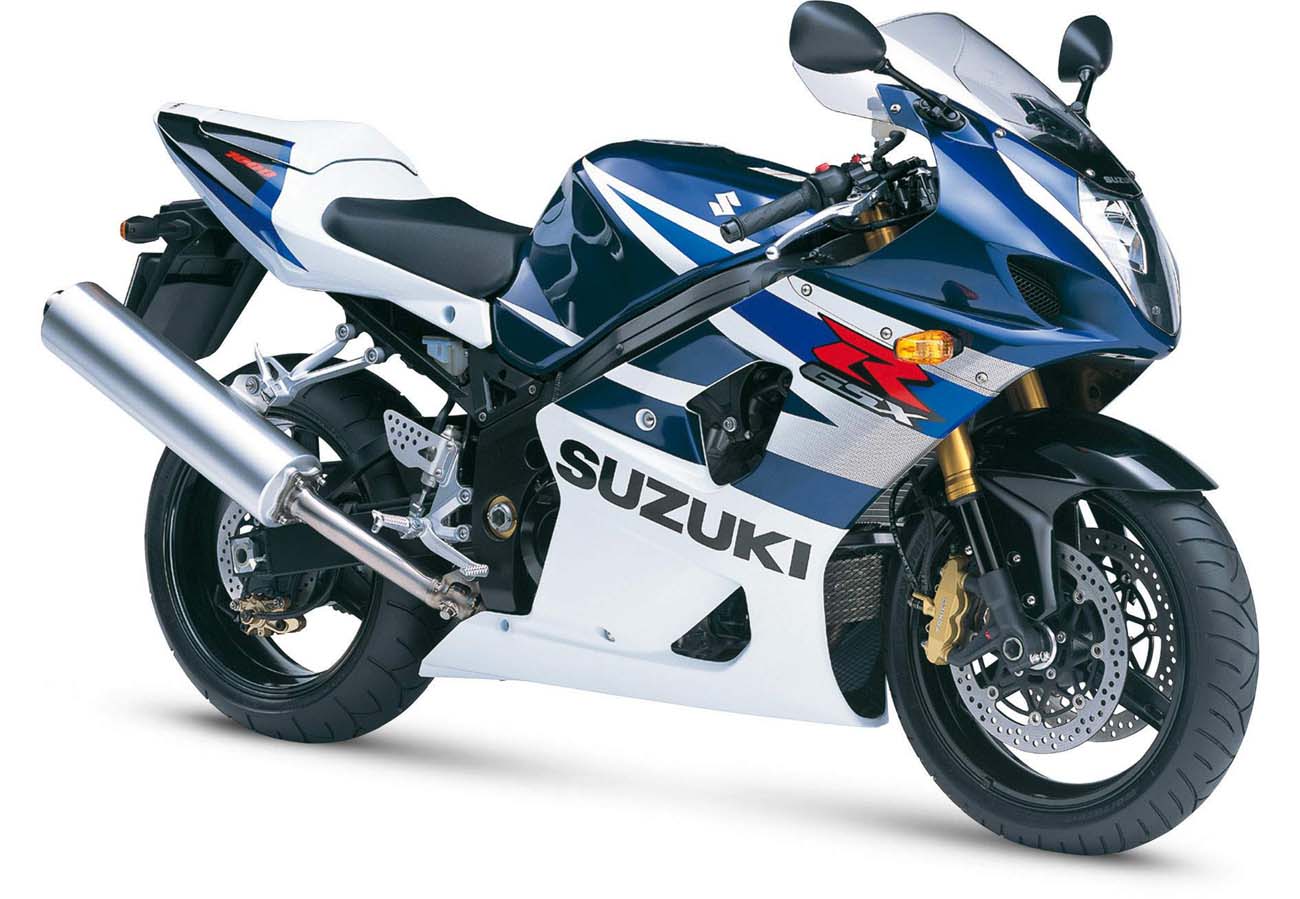
Suzuki GSX-R 1000 K4

|
Make Model |
Suzuki GSX-R 1000 k4 |
|
Year |
2004 |
|
Engine |
Liquid cooled, four stroke, transverse four cylinder, DOHC,
4 valves per cylinder. |
|
Capacity |
988 |
|
Bore x Stroke |
73 x 59 mm |
|
Compression Ratio |
12.0:1 |
|
Induction |
Fuel Injection |
|
Ignition /
Starting |
Digital / electric |
|
Max Power |
164 hp 120,6 kW @ 10800 rpm |
|
Max Torque |
120 Nm11,3
kg-m @ 8500 rpm |
|
Transmission /
Drive |
6 Speed / chain |
|
Front Suspension |
Telescopic, fully adjustable spring preload, rebound
and compression damping. Titanium-Nitride coated stanchions. |
|
Rear Suspension |
Monoshock, fully adjustable spring preload, rebound
and compression damping |
|
Front Brakes |
2x 300mm discs 4 piston calipers |
|
Rear Brakes |
Single 220mm disc 2 piston caliper |
|
Front Tyre |
120/70 ZR17 |
|
Rear Tyre |
190/50 ZR17 |
|
Seat Height |
840 mm |
|
Dry-Weigh |
168 kg |
|
Fuel Capacity |
18 Litres |
|
Consumption average |
18.3 km/lit |
|
Standing
¼ Mile |
10.4 sec |
|
Top Speed |
291.1 km/h / 180.9 mp/h |
|
Reviews |
Sport Rider
1 /
Sport Rider 2
/ Motorbikes Today
/
MCNEWS |
Suzuki's GSX-R 1000 arrived on the scene with a bang
some two years ago with the 'Own The Racetrack' slogan, like many other parts of
the world, it has done just that.
For 2003/04 Suzuki have given the GSX-R 1000 a thorough make-over along with more
power, less weight, a new frame and a host of other changes which make the 2003
GSX-R heavily revised machine.
The GSX-R 1000 engine quickly established new ground with a level of horsepower
out of the crate that the competition could not match, particularly in the area
of mid-range thrust.
An interesting change to the motor has been the addition of new ventilation
holes between adjacent cylinders to help equalize crankcase pressure. Suzuki
claim that these holes allow air to be pushed down by a descending piston escape
through the whole to fill the void left by a rising piston in the adjacent bore.
The new system reduces the distance air must travel to equalise lower cylinder
pressure and in turn is effective in reducing internal crankcase pressure,
windage and associated mechanical losses.
New internal oil passageways feed the automatic, hydraulic cam chain tensioner
which replaces the previous model's external oil feed lines, saving a small
amount of weight and simplifying the design.
The GSX-R's digital engine management system has also been upgraded with a move
to a 32-bit CPU with triple the memory capacity of the previous model's 16-bit
unit. The engine RPM sensor wheel now has 22 sensors, 14 more than in the
previous design which allows for much more accurate control. The ECM carries a
total of eight fuel-injection control maps, two for each cylinder. The system's
'light load' maps calculate fuel injection volume using engine RPM and intake
air pressure while the 'heavy load' maps use engine RPM and throttle opening.
The ECM calculates ignition timing using throttle position and engine RPM.
New dual-piece throttle bodies are lighter, but the individual throttle body
bore diameter and shape is unchanged, tapering down from 50mm at the airbox to
42mm at the engine intake. Each throttle body throat carries a single fuel
injector positioned at a steep 60-degree angle and works with Suzuki's well
established SDTV system of throttle butterflies.
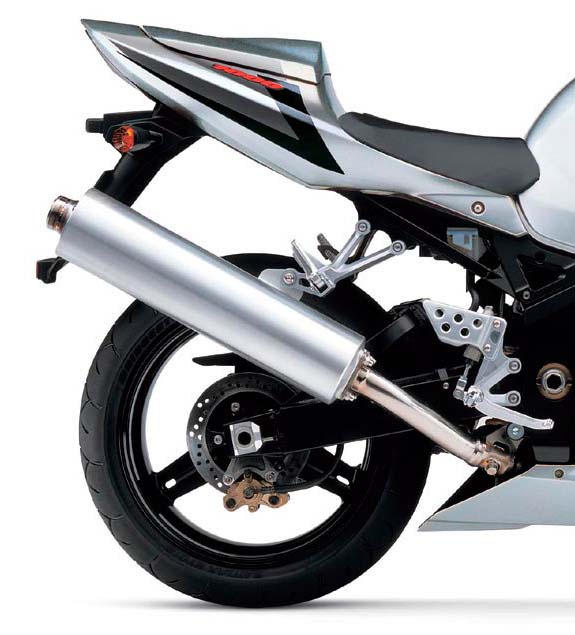
While the original GSX-R 1000 exhaust system combined titanium headers and
titanium collector with a stainless pipe between the collector and muffler, the
2003 model scores a complete titanium system save for the muffler cover which
remains aluminium while the internals are titanium. The muffler itself is 10mm
larger in outside diameter and 100mm longer than the previous model.
Suzuki's have also given the GSX-R 1000 a new look for 2003. Suzuki claim the
styling changes take their cues from aerodynamic development on the GSV-R MotoGP
machine.
A new front guard, rear guard and of course the new vertically stacked headlight
seen on the previous page. Suzuki say this change has been made to allow for the
ram-air ducts to be positioned closer to the machines centreline and therefore
at the highest point of air pressure.
A black painted frame, and swingarm add to the
machines different look. Suzuki have also made the fuel tank slightly narrower
where it meets the seat, adding knee room and making it easier for a rider to
tuck in.
The frame is completely new and uses a cast steering head section and swingarm
pivot plate. Geometry is unchanged from the previous model. However the main
frame spar on each side is now made of an extrusion with three internal
reinforcing ribs. The bolt-on tail section is now simpler, using four straight
pieces of extruded aluminium alloy tubing. Redesigned tail section mounts on the
swingarm pivot plates are less likely to break during a small fall.
For racing the GSX-Rs swingarm pivot position can be adjusted using optional
race-kit parts. The swingarm pivot shaft fits in to a spacer in each side's
swingarm pivot plate; the stock spacer can be replaced by the optional race-kit
spacers with a reposition pivot shaft hole, allowing the swingarm pivot to be
moved up or down to adjust swingarm downslope.
The braced swingarm assembly uses extruded main arms welded between the extruded
pivot tube and link front section and axle mount ends. The extruded arms feature
an internal reinforcing rib, dividing the arm in to two lengthwise sections and
contributing to torsional rigidity.
Source
MCNEWS

* Compact & lightweight 4-stroke, 4-cylinder, liquid-cooled engine refined
for overall weight reduction, improved combustion efficiency and power
delivery
* Redesigned cylinder head featuring a smaller combustion chamber, increased
compression ratio, 2% larger intake ports and 2mm larger exhaust ports for
improved intake and exhaust efficiency and increased power output
* Lightweight titanium valves with steel alloy springs and aluminum spring
retainers operated by thinner-wall hollow camshafts to reduce weight and
inertia
* Lighter weight forged pistons with chrome-nitride-coated upper compression
rings and oil control rings for a harder, more consistent ring finish and
reduced friction
* One-piece cylinder block and upper crankcase section is equipped with
ventilation holes between cylinders to reduce crankcase pressure and
mechanical loss
* New tapered, double-barrel throttle body design features Suzuki's SDTV
throttle valve system, plus multi-hole-type injectors for optimum fuel
atomization and throttle response
* Hydraulic cam chain tensioner fed by new internal oil passageway system -
external oil hose eliminated to reduce weight
* Faster 32-bit ECM with larger ROM memory and new 22 trigger-pole rpm
sensor to provide more precise control of fuel and ignition systems - all
housed in a smaller/lighter control box
* Lighter weight stainless steel exhaust system featuring a higher capacity
muffler with titanium core pipes and aluminum outer sleeve
* Reshaped radiator with 12% more cooling capacity, plus new style cooling
fan assembly designed for improved air flow
* Larger oil cooler with 10% more oil cooling capacity
* Close-ratio, six-speed transmission and cable-operated clutch
New Chassis
* Aggressive new bodywork with less frontal area, plus ram air intake moved
closer to center for higher airbox pressure and intake efficiency
* Vertical-type multi-reflector headlight, plus compact LED taillight and
more aerodynamic turn signals
* Compact instrument cluster features a step-motor-driven analog tach,
digital LCD speedometer and programmable rpm indicator light - also includes
LED indicators for turn signals, high beam, neutral light, coolant temp, oil
pressure and fuel level
* New aluminum frame with extruded main spar design similar to GSX-R1000 for
optimum balance of size, weight and rigidity - includes new sub-frame
mounting points
* Aluminum swingarm with extruded main arms and cast cross brace for
torsional strength and minimal weight
* Compact 17-liter fuel tank - 10mm shorter and 20mm narrower at the rider's
knees for easier rider movement and weight transfer
* Inverted Showa cartridge-type front fork with 43mm inner tubes and fully
adjustable damping and spring preload
* Inverted Showa cartridge-type front fork with 43mm inner tubes and fully
adjustable damping and spring preload
* Fully adjustable Showa piggy-back shock absorber with larger diameter
shock piston rod for improved damping performance
* Radial-mount 4-piston brake calipers for improved braking performance -
calipers are lighter and more efficient allowing for smaller/lighter 300mm
rotors - system includes radial piston front master cylinder for improved
brake lever feel
* Dual-opposed-piston rear brake caliper indexed to the swingarm -
eliminates conventional torque for further weight reduction
* Lightweight cast aluminum wheels and high performance radial tires
|