|
|

|
|
|
|
Classic Bikes
Custom Bikes
Individual
Racing Bikes AJP
AJS
Aprilia
Ariel
Avinton / Wakan
Bajaj
Benelli
Beta
Bimota
BMW
Brough Superior
BRP Cam-Am
BSA
Buell / EBR
Bultaco
Cagiva
Campagna
CCM
CF Moto
Combat Motors
Derbi
Deus
Ducati
Excelsior
GASGAS
Ghezzi Brian
Gilera
GIMA
Harley Davidson
Hero
Highland
Honda
Horex
Husaberg
Husqvarna
Hyosung
Indian
Jawa
Kawasaki
KTM
KYMCO
Laverda
Lazareth
Magni
Maico
Mash
Matchless
Mondial
Moto Guzzi
Moto Morini
MV Agusta
MZ / MuZ
NCR
Norton
NSU
Paton
Peugeot
Piaggio
Revival Cycles
Roland Sands
Royal Enfield
Sachs
Sherco
Sunbeam
Suzuki
SWM
SYM
Triumph
TVS
Ural
Velocette
Vespa
Victory
Vincent
VOR
Voxan
Vyrus
Walt Siegl
Walz
Wrenchmonkees
Wunderlich
XTR / Radical
Yamaha
Zero
Video
Technical
Complete Manufacturer List
|
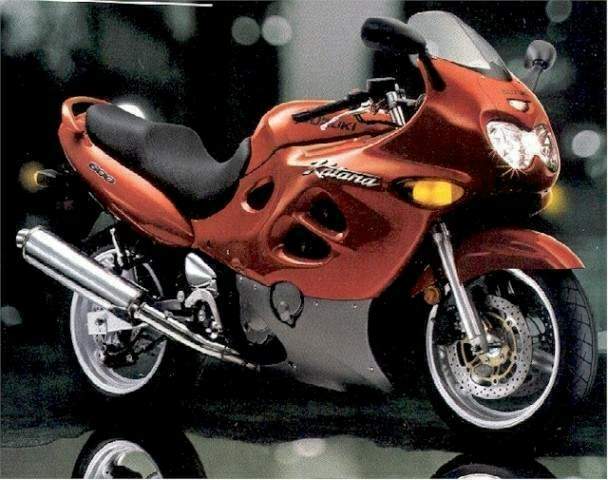
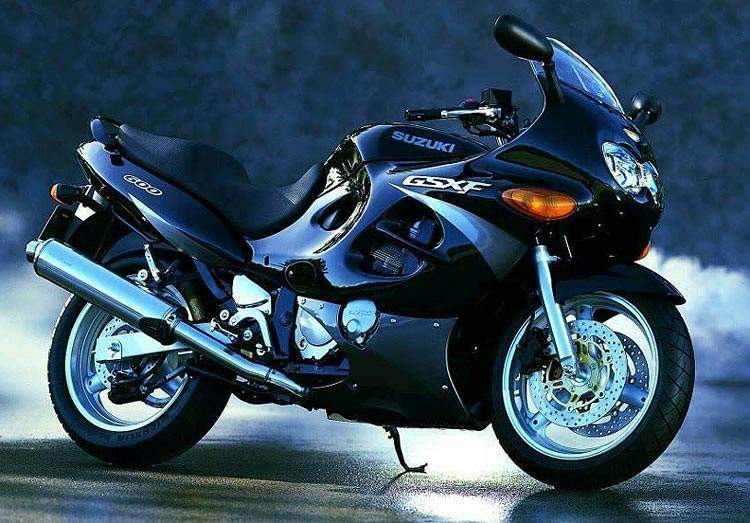
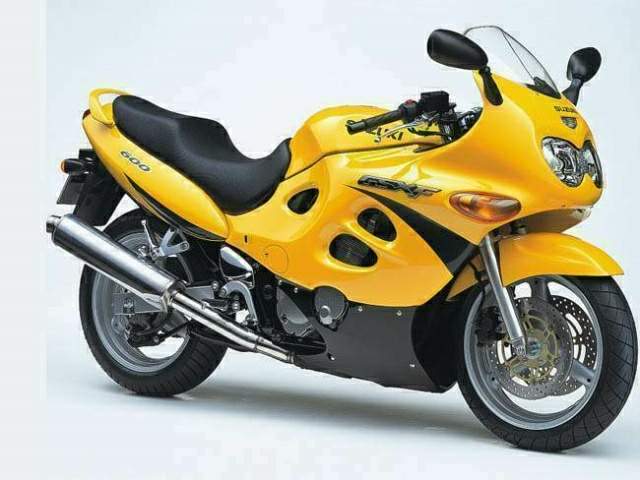
Suzuki GSX 600F Katana
The original GSX600F was launched in 1988 as a sportsbike. At that time, its specification was perfectly acceptable for a performance machine - all-enclosing bodywork, a 16-valve engine and monoshock rear suspension put it on a par with its peer group. Only the slightly bland styling marked the GSX out from its competitors. By 1998, the GSX600F had been relegated to a more pedestrian budget sports tourer role. However, Suzuki gave it a wheels-up makeover anyway. The former 'jellymould' styling was radically altered, but was still not to every rider's taste. The engine and carburation received internal modifications to produce improved low and mid-range power production, at the cost of some top-end power. And a new stainless steel exhaust resists corrosion, while improving power. The engine uses a combination of oil and air cooling. A high-capacity oil pump circulates engine oil through a large oil radiator to cool the engine internals, while fins on the cylinder block also remove heat. Suzuki claims this saves weight over a liquid-cooled engine, while remaining more efficient than an air-cooled design. Compared with modern sports machines, the GSX will disappoint. The brakes are indifferent, while the low pegs reduce ground clearance and soon drag on the ground during committed cornering. The engine's lack of sophistication shows in its harsh, rewy power delivery, and it feels underpowered compared with more modern designs.
However, the GSX600F makes an acceptable budget tourer. A large 20-litre (4.4 gal) fuel tank gives an impressive fuel range of almost 320km (200 miles), while the broad dual seat offers spacious accommodation for rider and pillion. The soft suspension gives a smooth ride and the relaxed steering geometry is very stable at the GSX600Fs maximum speed of around 225km/h (140mph).Twin-beam headlights provide excellent night-time illumination, and the full fairing protects the rider from high-speed wind blast.
|
|
|
Any corrections or more information on these motorcycles will be kindly appreciated. |