|
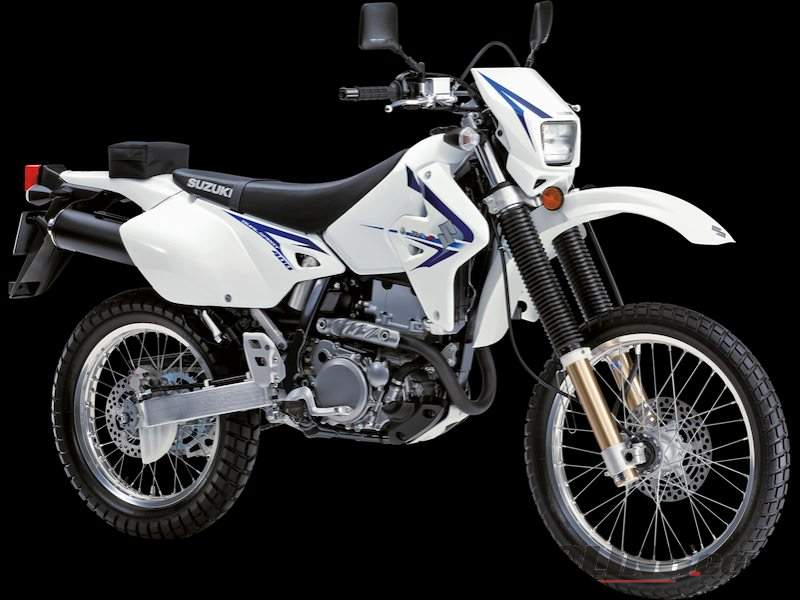
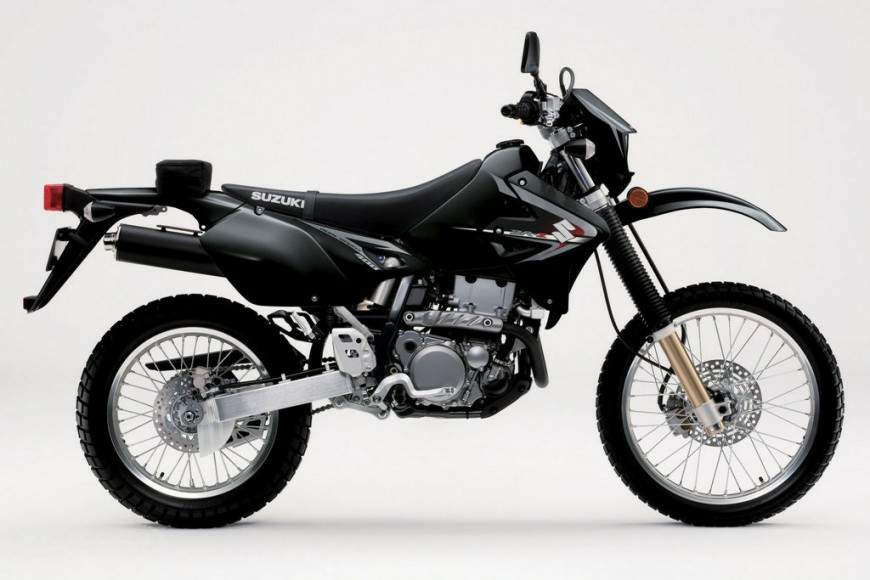
Suzuki DR-Z 400S

|
Make Model |
Suzuki DR-Z 400S |
|
Year |
2010-11 |
|
Engine |
Liquid cooled, four stroke, single cylinder,
DOHC, 4 valve per cylinder. |
|
Capacity |
398 |
|
Bore x Stroke |
90 x 62.6 mm. |
|
Compression Ratio |
11.3:1 |
|
Induction |
Mikuni BSR36 |
|
Ignition /
Starting |
Digital CDI /
kick |
|
Max Power |
40 hp 29.2 kW @ 8500 rpm |
|
Transmission /
Drive |
5 Speed / chain |
|
Front Suspension |
Telescopic, oil-damped,
11-way compression damping, adjustable spring preload |
|
Rear Suspension |
Link-type, fully
adjustable spring preload, 26-way compression damping |
|
Front Brakes |
Single 250mm disc 2 Piston caliper |
|
Rear Brakes |
Single 220mm disc 1 piston caliper |
|
Front Tyre |
80/100-21 |
|
Rear Tyre |
120/90-18 |
|
Seat Height |
935 mm |
|
Dry-Weight |
132 kg |
|
Fuel Capacity |
10 Litres |
|
Consumption average |
21.9 km/lit |
|
Standing
¼ Mile |
13.9 sec |
|
Top Speed |
152 km/h |

The DR-Z400S looks like an off-road machine, and
it is - with all the unmatched performance capabilities you'd expect from a
Suzuki.
But look a little more carefully and you'll see you get a bonus: it's 100
percent street legal. The DR-Z400's exceptional off-road performance should come
as no surprise. After all, it uses the same advanced suspension as the renowned
DR-Z400E. It also has a lightweight, compact design that helps it offer crisp
handling everywhere from tight, technical trails to wide-open fire roads.
Off-road or on the street, the DR-Z400S provides strong torque across the
powerband and amazing throttle response. And it features remarkably smooth
performance, complemented by conveniences such as electric starting and a
compact, easy-to-read instrument cluster.
On the trail or across town, you can't beat the Suzuki DR-Z400S.
Key Features
Suzuki's industry-leading DualSport model that combines the best on and off-road
features in a lightweight package
398cc, 4-stroke, liquid-cooled, DOHC, 4-valve engine produces broad, tractable
power and torque, and features compact, streamlined design for the double
advantage of low engine positioning and extra-slim, off-road rider-friendly
chassis.
Suzuki Composite Electrochemical Material (SCEM) plated engine's aluminium
cylinder for durability, weight reduction and superior heat transfer.
Dry-sump oiling system makes crankcase compact.
Magnesium-alloy clutch, magneto and cam covers contribute to weight reduction.
Digitally mapped DE-CDI system monitors throttle position/engine rpm and adjusts
ignition timing to maintain efficient combustion.
Rider-friendly electric engine starter with compact electric starter motor.
Automatic decompression system lifts one exhaust valve at cranking rpm for easy
starting.
Powerful 250mm front disc brake with dual-piston caliper and 220mm rear disc
brake with single-piston caliper.
Long-travel, cartridge-type front fork with protective rubber boot. Spring
preload and compression/rebound damping are all adjustable, allowing precise
settings.
Progressive-linkage rear suspension with long-travel rear shock absorber,
aluminium swingarm and adjustable spring preload/compression damping.
Narrow frame combines thin, round and rectangular chrome-moly steel tubes for
exceptional torsional rigidity with minimum weight and lightweight aluminium
bolt-on rear subframe.
Air filter can be accessed with your bare hands and clutch cover can be removed
without draining the engine coolant for easy maintenance.
Easy-to-read multi-function digital instrument includes speedometer, odometer,
dual tripmeters with both addition and subtraction functions, clock and
stopwatch with subtraction capability.
Pouch on the rear fender carries tool kit and the owner's manual.
Bright 60/55W H4 halogen headlight, lightweight turn signals and compact
taillight and brake light.
Features and Benefits
Engine Features
398cc, DOHC, liquid-cooled, dry-sump engine produces strong low-rpm power
Additional weight savings with magnesium valve cover, clutch cover, and magneto
cover
Automatic decompression system for quick/easy engine starts
Compact 4-valve cylinder head with 36mm intake valves, 29mm exhaust valves,
narrow 28-degree included valve angle and shim-under-bucket valve adjustment
system
Compact 5-speed transmission utilizes a cable-operated clutch with separate
outer cover for simplified clutch maintenance
Electric start with lightweight starter motor and a compact 6.5 amp
maintenance-free battery
Forged aluminum piston is 10 percent lighter than a cast piston and receives
additional oil-cooling to the piston crown through a crankcase oil jet
SCEM-plated cylinder (nickel-silicon-phosphorous) is lighter and more durable
than an iron liner with excellent heat transfer properties
Smooth throttle response with a Mikuni™ BSR36 CV-type carburetor fed by 6-liter
airbox. The left side cover has quick-release fasteners for easy access to the
air filter
Thermostatically controlled cooling fan mounted to the left radiator helps
maintain consistent operating temperature in traffic
Chassis Features
A bolt-on aluminum subframe helps reduce weight and simplify maintenance
A fully adjustable rear shock absorber with high/low speed compression damping
adjuster and aluminum swingarm for precise rear wheel control
Chrome-moly steel frame is torsionally strong with minimal weight. The backbone
tube, front down tube, and steering head gussets form the dry-sump engine oil
tank
Chrome-moly steel footpegs, aluminum rims/hubs, plus engine guard and rear disc
guard
Compact digital instrument cluster with speedometer, odometer, twin-trip meters
with addition/subtraction capability, clock, timer and stopwatch functions
Long travel, 49mm cartridge-style forks feature adjustable compression/rebound
damping and adjustable spring preload for all types of on/off-road terrain
Narrow profile with smooth transitions between the tank, seat and bodywork
On-road legal lighting with bright 60/55 watt halogen headlight, compact
tail/stoplight, lightweight, rubber-mounted turn signals and horn
Sure stopping power is supplied by a 250mm front disc brake with dual-piston
caliper, and a 220mm rear disc brake with a single-piston caliper

Review
Suzuki is one of those companies where conforming
to the latest hype isn’t necessarily held in top priority. At least that’s the
case with the DR-Z400S. We had plenty of time to evaluate the mid-size
dual-sport before our riding season ran out, and if there’s one thing we
discovered, the 2008 DR-Z is completely comfortable in its own skin.
Suzuki has been selling the DR-Z400 since 2000, and since then has developed a
huge network of loyal customers. With the ultra-popular DR350 as a predecessor,
the 400 has built on that success and continues to this day as a simple,
effective dual-sport machine. The last time we tested a DR-Z400 was back in
2003, and the company was still offering a kickstart-only model. These days,
Suzuki only offers the 400S (dual-sport) and 400SM (motard/DS), neither of which
come with a foot-operated starter.
However, in this day and age of high-po/high-maintenance 450cc dual-sports,
Suzuki has stuck with its winning formula of care-free DS fun in a manageable
dirt-oriented package. We were glad to find that the Z400S is undeniably geared
toward riders who spend more time off-road. For those that want to spend their
time pounding pavement, that’s what the SM model is for.
Our 400S test bike came equipped with Dunlop 606 tires, which aren’t standard
from the factory. But, since we fully intended to beat this thing on the trails,
Suzuki was kind enough to mount up a set of the more aggressive DOT-legal
knobbies. The 606s weren’t ideal for our first voyage which wound up including
far more pavement than we anticipated.
The DR-Z isn't meant for long road trips along the highway, and the Dunlop 606
tires we spooned on aren't either. However, the 400S can handle it if you can.
“On the street the knobbies were unsettling during quick cornering maneuvers,
but that’s a tire issue,” confirms MotoUSA Managing Editor, Bart Madson. “As far
as the bike handling, let’s just say I’m really Jonesing to sample the DR-Z400
supermoto!”
After having suffering numb rear ends for the entire trip, we all agree that the
Z400 suffers from an ailment we call the Yellow Seat Syndrome. Most Suzuki
off-road bikes are uncomfortably hard in the saddle, including the Z’s bigger
dual-sport brother, the DR650. From a street rider’s perspective, the DR-Z is
miserable. “The seat is awful, truly awful,” sobs Madson.
But from a dirt vantage, the seat is actually very good; hard enough for
aggressive riding but softer than a motocross platform, and the tank junction is
fairly flat. Suzuki does offer a gel-seat ($175), but the purpose is to lower
the standard 36.8-inch seat height, not make it easier on the cheeks. The beauty
of a tall and hard saddle is that it forces a rider to stand up, and to
ultimately look for terrain that requires more time on the pegs. The long reach
to the ground makes in-town commuting difficult for shorter riders, but the
benefits on the trail are marked along with the 11.8 inches of ground clearance.
Ultimately this is a trail bike that can legally connect OHV systems.
“Tapping into reserve after 80 miles really limits the adventure,” cautions
Madson. “It’s hard to enjoy the ride when you’re doing math in your head
thinking, can I make it back, or will I be that guy. You know, the moron who
gets stranded out in the woods and his family members are crying on the 6
o’clock news because search and rescue is still looking for him.”
Bear Camp Road is a blast, but we constantly wanted to leave the pavement and go
exploring on the network of surrounding logging roads.
That was definitely on our mind during the first long stint on the DR-Z. We took
it alongside our 650 machines on a trip to the coast via the infamous Bear Camp
Road. We tried to stretch the 2.6-gallon tank further than intended on two
occasions, and even though we had a throttle-happy lunatic in one instance and a
reserved, eco-minded fuel Nazi in the other, they both had the engine cut out at
exactly 81 miles. Switching to reserve, we only stretched our luck as far as 92
total miles before filling up. Throughout our testing we averaged 49 mpg,
compared to the EPA-rated 65 mpg.
As long as we treated the DR-Z appropriately, there’s nothing we really didn’t
like. At 317 pounds ready to go, it’s not a featherweight, but the bike handles
itself well in any situation so long as it isn’t being run at race pace. The
steel backbone frame uses an aluminum subframe and is supported by adjustable
suspension. The fork offers increments for rebound and compression while the
shock can dial in preload and high/low-speed compression.
It's possible to man-handle the Suzuki, but at 317 pounds it takes some effort
at times.
We had a series of testers rotating across the seat, and for the most part it
was comfortable with stock settings. We did increase compression on both ends a
bit for heavier off-road, but absorption of pavement obstacles was better in
softer form. Our dirt specialist had no problem with that, but the
pavement-loving dual-sporters in our group admitted that they might prefer a
bigger, more comfortable machine. That was a justifiable argument for our outing
to the coast, but when we signed up with OMA-KTM for one of their guided tours,
the Suzuki was finally in its element.
Our local area is riddled with logging and access roads that range from level of
maintenance. Our guides know the ins and outs of the terrain and our three days
saw about 50 miles of pavement. We would be camping for this three-day trip and
so a set of Diamond Back Dual Sport saddlebags was bolted on and packed to the
gills. The steel-plated hard cases and mounting bracket added 21 pounds alone,
plus all our clothes, supplies and camera equipment. We quickly found that some
extra preload was necessary to get the bike back into normal handling
characteristics. Obviously the extra weight and width slowed us down on the
trail, but the Suzuki plodded along without complaint.
The DOHC motor keeps things interesting but aftermarket companies have developed
tons of product to boost performance.
We abused the clutch much more with the additional weight and finesse required
in tight sections, but it showed little fade and the pull is reasonable. Gearing
is pretty short which is helpful for technical riding and comforting for novice
riders. However, we felt bad wringing out the DOHC, dry sump motor in long
fifth-gear stints. Without sixth gear and any fairing or wind protection, we
rarely pushed the bike past 75 mph even though it’s capable of more. Zipping
through town was easy but requires a fair amount of shifting. The motor is
strong enough to pull second-gear launches and we easily holeshot autos, busting
moves in and out of traffic with confidence.
The motor is a little cold blooded. Carburetion from the 36mm Mikuni suffers a
burble off the bottom which is exacerbated if not allowed to warm up fully.
However, starting is simple with a key, ignition switch and thumb starter. When
we did stall, the electric system was flawless and got us moving instantly.
Suzuki technicians told us that the 2008 model got a stronger spring for the
automatic cam adjuster, but we still heard plenty of rattle as the chain
stretched over time. As the amount of slack builds, so does the intensity of
noise before the auto adjust does its job and finally kicks in. That was
actually the biggest issue we had with the DR-Z. We were concerned, but never
noticed any ill effects. Manual adjustment is an aftermarket option, but who
wants to deal with that?
Eight years of refinement have created a solid DS platform.
Aside from that the motor was excellent. As accustomed as we are to rip-snorting
motocross and enduro bikes, and even some wicked middle-weight dual-sports, the
DR-Z still provides enough to be effective and evoke grins. With 31 horsepower
and 23 lb-ft of torque, the liquid-cooled mill puts its 90mm bore and 62.6mm
stroke to good use. As much as the motor and gearing can dish out, the brakes
can give right back. A 250mm disc up front uses a dual-piston caliper for grip
and the 220mm out back is pinched by a single-piston.
Suzuki has done a good job of rounding this bike out for its intended uses. The
dual mirrors are usable but inoffensive on the trail, signals and lights offer
safe amounts of visibility and all the controls are simple to use. The DR-Z
comes with one of the better computer displays in that it’s simple to navigate
the options, easily read and has all the necessary functions (speedometer,
odometer, twin-trip meters with addition/subtraction capability, clock, timer
and stopwatch functions). It also features lightweight engine protection on both
sides, underneath and a rear disc guard, and has a quick-access airbox. The only
thing we’d like to see are rim locks for the 18- and 21-inch aluminum. We think
it’s capable of some pretty serious off-roading with a willing rider, so we
would like to see them included.
This could just as easily be a curb at the local shopping center. The DR-Z is
popular for lots of reasons.
With demand for affordable, versatile transportation at a premium, Suzuki has
done well to leave the DR-Z400S alone. There’s really no reason to start
changing things around when the current model is so well-liked and suitable to a
huge demographic of riders. So it isn’t the most powerful bike on the planet,
but who cares? There’s something even more enjoyable in riding a bike to its
limits which is entirely possible with the 400S. It’s been nearly a decade since
the first 400 was introduced and the aftermarket industry hasn’t been
lollygagging. Cult followings of enthusiasts and a strong support network give
even more intrinsic value to an already attractive machine. At the same time,
for only $5599, Suzuki delivers a package that can blend, meld and hold its own
in more situations than most.
Source
Motorcycle-usa.com 2008
|