|
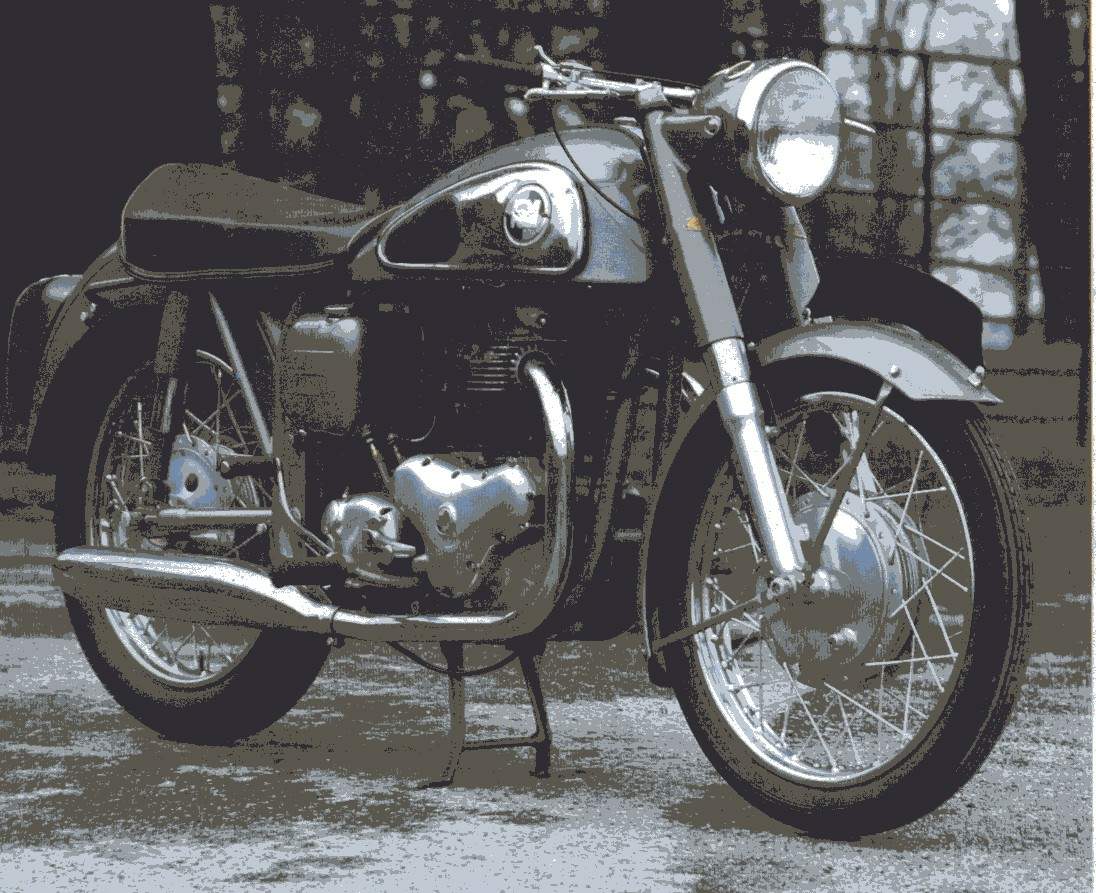
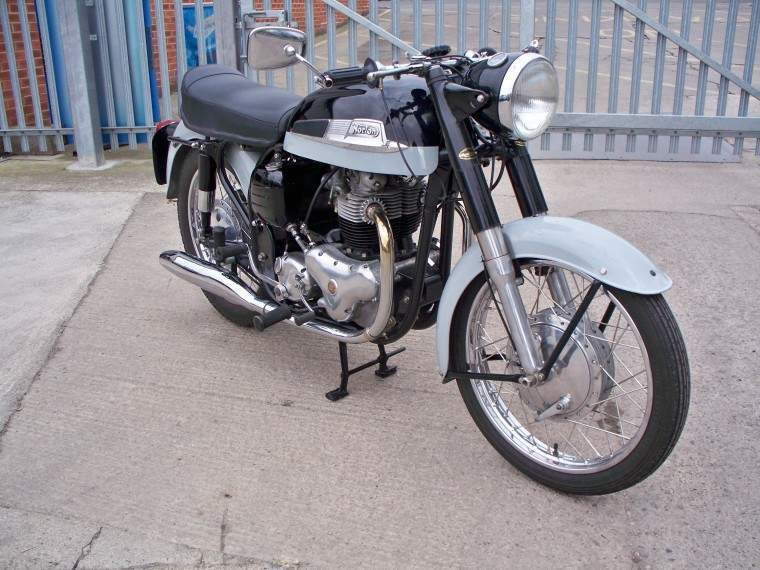
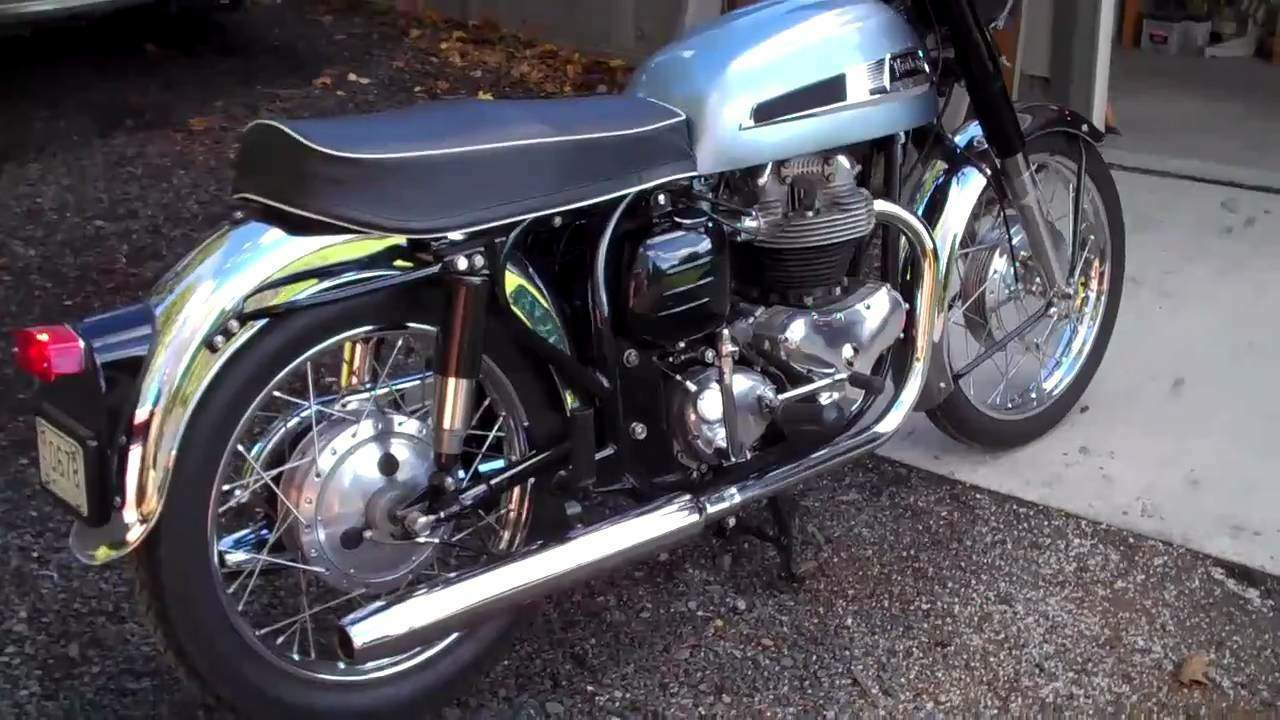
Norton Dominator 99SS

One of the most successful roadsters available
during the 1950s and early 1960s was the Norton Dominator. It caused a sensation
when revealed along with the unusual Velocette at the Earls Court Show of 1948.
Of 497cc the Dominator was designed by the much respected Bert Hopwood who was
formerly associated with the BSA and Ariel concerns. His latest creation was to
set the Norton design trend for many years to come. In fact, even the last model
produced by the Norton company, the 850 Commando, bears a close resemblance to
the Dominator.
The engine employed was of the classic vertical
twin design with push-rod operated overhead valves. Having a bore and stroke of
66 x 73 mm and a compression ratio of 8-5:1, the Dominator engine was tireless
and a cruising speed in the high eighties could be maintained all day long.
In 1953 the original plunger type rear suspension
was replaced by a more efficient swinging-arm arrangement and shortly afterwards
the frame was changed to the famous 'Featherbed'—a legend in itself. These
improvements now gave the Dominator excellent road manners which appealed to the
sports-minded enthusiast, who now could experience the race-bred qualities that
had previously been confined to the track.
The 1961 'sports special' model was typical of
series, despite various modifications over the standard version. Most noticeable
was the absence of a | silencer on the left-hand side. Instead, Siamese j pipes
were utilized and this obviously aided ground clearance when enthusiastic riding
was called for. In fact, ground clearance was so good that only tyre adhesion
determined the angle of lean that, was available.
Handling was also second to none, and on long
twisting country roads the Dominator was a joy to ride. With positive steering
and taut handling it gave the rider an unsurpassed degree of confidence. I
Obviously, the 'Featherbed' frame was partly responsible but the suspension was
also of a high standard. Roadholder front forks were used and these were
complemented at the rear by adjustable hydraulically damped Girling units. The
ride obtained was slightly on the firm side, but neither comfort nor damping
qualities were ever sacrificed j in order to aid handling.
On the sports version the motor produced 36 bhp at 7000 rpm, a good 6 bhp over
the standard unit. I This was mainly due to the twin Amal 'Monobloc' I
carburettors being over bored and used in conjunction with bigger inlet valves
and ports. Also, a special camshaft was fitted and consequently the crankshaft
was slightly strengthened in order to take the extra output obtained.
Generally, the Dominator had a very good
temperament. If starting followed the customary drill, I then no difficulty was
found when starting up a cold motor. After a few kicks the engine would burst
into life and the bike would soon be ready to pull away without argument or
hesitation. In town the Domina- I tor was docile and pleasant to use, but once
on the open road the bike would change into a beast that quickly swallowed up
the miles. Into top and the I power would begin to surge once it got to 50mph.
Brisk acceleration would then continue right past the magic 'ton' until a top
speed of around 110 mph j was reached.
Vibration was always present but it never became
unbearable or excessive even when I the motor was red-lined through the gears.
Even at 7000 rpm in each gear the motor never felt strained, and once the next
cog was chosen, the Dominator would surge on until all four gears had been used
to I the full. All changes needed positive use of the I clutch, but generally
the gearbox was faultless and i never caused concern.
The bike also excelled in braking. Here, each
unit employed was of the drum type with an eight inch at the front and a seven
inch at the rear. These could always be depended on to give surefooted stopping
whenever needed, and remarkably brake fade never occurred, even when high speed
retardation became necessary. In the wet the units remained fully watertight and
only tyre adhesion was responsible for the longer stopping distances produced.
In the dry, however, a distance of approximately 27 feet could be obtained when
braking from 30mph.
Despite some niggling faults the bike was
nevertheless an excellent sports machine. It cried out to be ridden hard and as
a connoisseur's mount the Dominator performed admirably—a true classic.
Specifications
(1961 model) engine
Air-cooled, four-stroke, twin-cylinder. 66 mm (2-6in) bore X 73 mm (2-87in)
stroke = 497cc (30-33cu in). Maximum power 36bhp at 7000 rpm. Compression ratio
8-5:1. Two valves per cylinder operated by pushrods, with twin Amal 'Monoblocs'
1-1/16in bore carburettors transmission Four-speed gearbox, chain drive to rear
wheel frame
Full duplex cradle 'Featherbed' type
suspension
Front - Telescopic forks with coil springs
Rear - Swinging arm with adjustable, three position hydraulically damped Girling
units brakes
Front - 8in diameter drum front Rear - 7in diameter drum rear weight
408lb (185kg) with one gallon of fuel
performance
Maximum speed 110 mph Fuel consumption approximately 63mpg |