|
|
|
|
Classic Bikes
Custom Bikes
Individual
Racing Bikes AJP
AJS
Aprilia
Ariel
Avinton / Wakan
Bajaj
Benelli
Beta
Bimota
BMW
Brough Superior
BRP Cam-Am
BSA
Buell / EBR
Bullit
Bultaco
Cagiva
Campagna
CCM
CF Moto
Combat Motors
Derbi
Deus
Ducati
Excelsior
Fantic
GASGAS
Ghezzi Brian
Gilera
GIMA
Harley Davidson
Hero
Highland
Honda
Horex
Husaberg
Husqvarna
Hyosung
Indian
Jawa
Kawasaki
KTM
KYMCO
Laverda
Lazareth
Magni
Maico
Mash
Matchless
Mondial
Moto Guzzi
Moto Morini
MV Agusta
MZ / MuZ
NCR
Norton
NSU
Paton
Peugeot
Piaggio
Revival Cycles
Roland Sands
Royal Enfield
Sachs
Sherco
Sunbeam
Suzuki
SWM
SYM
Triumph
TVS
Ural
Velocette
Vespa
Victory
Vincent
VOR
Voxan
Vyrus
Walt Siegl
Walz
Wrenchmonkees
Wunderlich
XTR / Radical
Yamaha
Zero
Video
Technical
Manufacturer List Contact
|
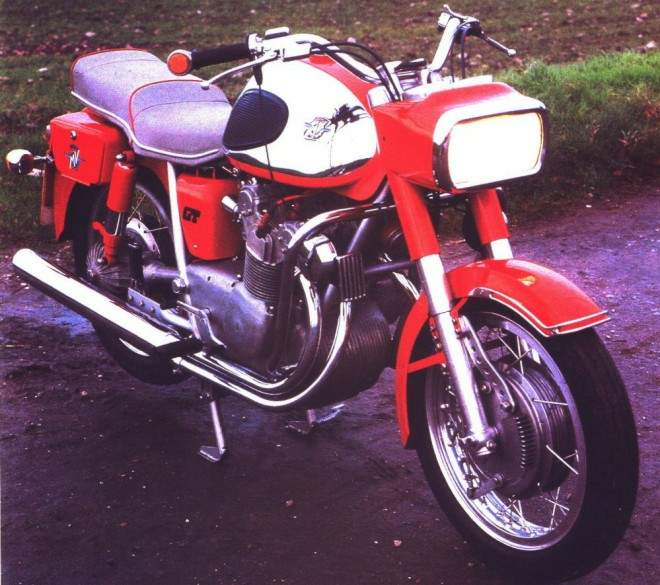
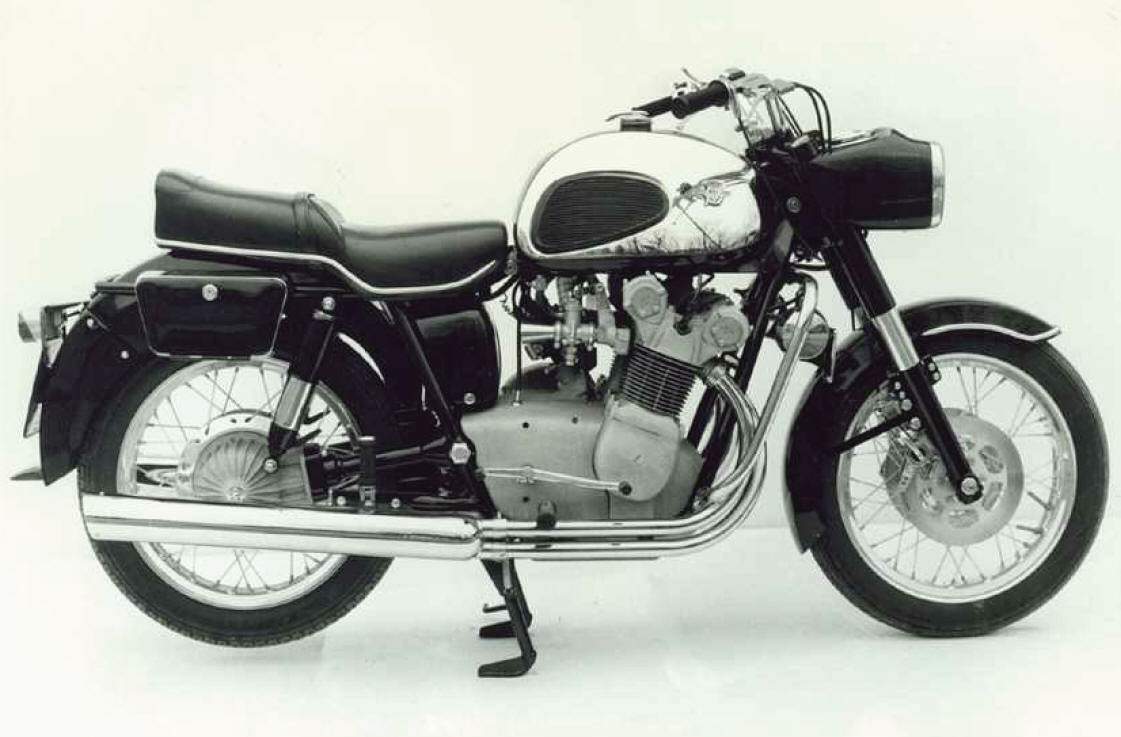
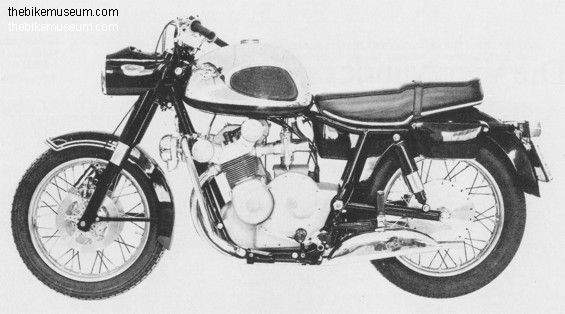
MV Agusta 600 Turismo 4C6
Asmooth rustling whistle, ihe quick tearing of thick
silk, announces arrival of Count Domcnico Agusta's 600-cc Four. This fascinating
sound, an exciting whisper-pitched portent of power, comes as a surprise to
those who recall the thunderous MV Agusta machines of the Grand Prix circuit,
the championship roadburncrs of Hailwood. Agostini and Surtccs. The good Count's racing Super/Fours arc the brutish forebears of the 60O's powcrplant. but in this machine the excessively peaky performance of the competition motorcycles has been replaced by broader, mid-range rpm flexibility that makes this MV perhaps the premier roadster of the world. This statement is bold, indeed, but it is not
made without careful consideration — and a great deal of very pleasurable
riding. The bulk of the MV Four is functional. What needs
to be big is big. Once rolling, the last trace of massive demeanor
disappears completely. If the engine is to be faulted in any respect, it is for lack of flywheel effect. Test riders were forced to maintain an inordinate idle rpm when stopped for traffic lights. Even lacking marked flywheel action, however, the Four delivers adequate getaway power without undue clutch slippage or overly high rpm. Technically sneaking, the powcrpJant is of double overhead camshaft design. The intake and exhaust camshafts both are driven through a gear tower located between No. 2 and No. 3 cylinders of the Four. This particular engine layout is best known for minimization of reciprocating valve train inertia, and for free breathing, as pushrods do not protrude into the intake or exhaust gas streams. Thus, the MV engine's designers weren't forced into parsimony for intake and exhaust port area. The ohc layout, with its straight-cut drive gears, numerous bearings, and lobe-to-stcm cam contact areas, contributes that which is perhaps the MV's outstanding characteristic — the beautiful sound. The valve equipment's audibility is directly attributable to the quietness of the remainder of the MVs power train. The primary gear drive (oil pump and distributor drives, too) also is between the middle cylinders. The constant mesh five-speed transmission delivers power, through the multiple-disc clutch, to a geared, slip-splined cardan shaft which turns the pinion gear, which turns the final drive ring gear.
The drive shaft housing is employed as the
right-hand swinging arm. The MV's shaft drive system showed no slack, or general
jerky looseness, nor the characteristic sounds of chain drive motorcycles.
Indeed. The test machine's induction system was not fitted with any sort of air filtration device. Rather, conical velocity pipes adorned the carburetor inlet orifices. Lack of filtered air may be well and good in a region where streets and highways arc regularly washed with rain, but filtration seems mandatory in areas where abrasive dust is an ever-present fact of life — in the western U. S.. for example. Ample spuce is available under the MV's fuel tank or split level saddle for an air filler cannister. The Count's designers could well busy themselves
in readying such a device for export models of the MV Agusta 600 Four. True,
restriction of intake air would reduce power output of the Four. But what is I
bhp of 50 when a magnificent and expensive Italian engine can be prevented from
grinding itself to usclcssncss with ingested grit? Frustrated is a less than adequate word to describe the feelings of those who were forced to bump-start the hefty tourer so carefully designed and equipped for effortless electrical pushbutton starting. A U. S.-made light aircraft battery would prove a replacement of adequate power output and suitable size. The MV's 12-V. I35-W generator (which doubles as
starter) proved adequate to meet demands of the 45-W The roadable motorcycle, the machine thai is to
be driven at lop legal speeds wherever it goes, musi be equipped with mean* to
decelerate at the rider's chosen A full stop simply is greater lever pressure exerted more quickly — wilh care headlamp and the 25-W power requirement of tail and brake lights. The headlamp — the shape of which is prohibited in some unenlightened states among the 50 — provided a broad swath of brilliant illumination for nighttime operations. The roadable motorcycle, the machine thai is to
be driven at lop legal speeds wherever it goes, musi be equipped with mean* to
decelerate at the rider's chosen Source Cycle World 1968
|
|
|
Any corrections or more information on these motorcycles will be kindly appreciated. |