|
|
|
|
Classic Bikes
Custom Bikes
Individual
Racing Bikes AJP
AJS
Aprilia
Ariel
Avinton / Wakan
Bajaj
Benelli
Beta
Bimota
BMW
Brough Superior
BRP Cam-Am
BSA
Buell / EBR
Bullit
Bultaco
Cagiva
Campagna
CCM
CF Moto
Combat Motors
Derbi
Deus
Ducati
Excelsior
Fantic
GASGAS
Ghezzi Brian
Gilera
GIMA
Harley Davidson
Hero
Highland
Honda
Horex
Husaberg
Husqvarna
Hyosung
Indian
Jawa
Kawasaki
KTM
KYMCO
Laverda
Lazareth
Magni
Maico
Mash
Matchless
Mondial
Moto Guzzi
Moto Morini
MV Agusta
MZ / MuZ
NCR
Norton
NSU
Paton
Peugeot
Piaggio
Revival Cycles
Roland Sands
Royal Enfield
Sachs
Sherco
Sunbeam
Suzuki
SWM
SYM
Triumph
TVS
Ural
Velocette
Vespa
Victory
Vincent
VOR
Voxan
Vyrus
Walt Siegl
Walz
Wrenchmonkees
Wunderlich
XTR / Radical
Yamaha
Zero
Video
Technical
Manufacturer List Contact
|
Moto Guzzi V 7 700
With the Ml Moto Guzzi had built
a big, solid, reliable and comfortable touring machine with an incredibly
flexible motor. At 700 cc, it was bigger than the R60 BMWs and also weighed
more, at a 'heavy' 230-odd kg. It also cost $1500 at a time when an R60 sold
for $1150 and a Triumph Bonneville asked $995. However, if the V7 established
Guzzi's big twins, it also demonstrated quality lapses. The stands were less
than ideal and the paint was below par, among other things. TWs first test
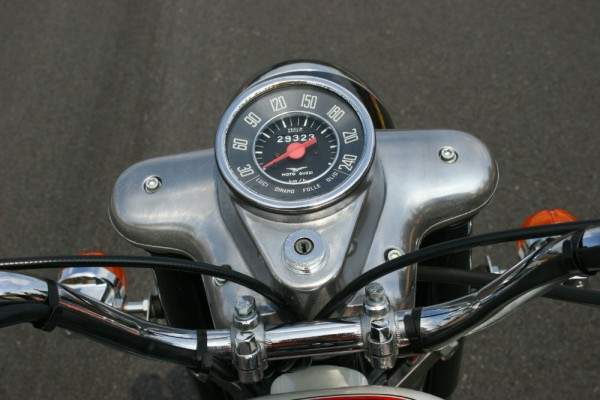
bike had a broken speedo cable, the first of many broken test-Guzzi cables.
Buyers found these things outweighed by the decidedly over-engineered
robustness of the rest of their machines. As long as oil changes were
frequent and regular - these early Guzzi twins had a relatively small sump
and no oil filter - this was a bike which would easily last 100,000 km and
more. 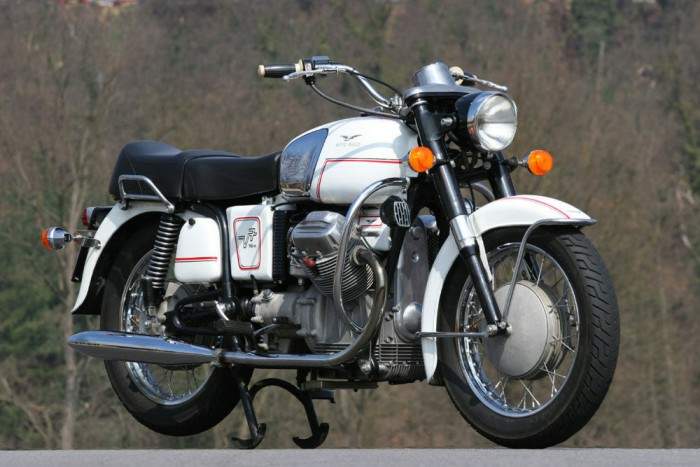
|
|
|
Any corrections or more information on these motorcycles will be kindly appreciated. |