|
|

|
|
|
|
Classic Bikes
Custom Bikes
Individual
Racing Bikes AJP
AJS
Aprilia
Ariel
Avinton / Wakan
Bajaj
Benelli
Beta
Bimota
BMW
Brough Superior
BRP Cam-Am
BSA
Buell / EBR
Bultaco
Cagiva
Campagna
CCM
CF Moto
Combat Motors
Derbi
Deus
Ducati
Excelsior
GASGAS
Ghezzi Brian
Gilera
GIMA
Harley Davidson
Hero
Highland
Honda
Horex
Husaberg
Husqvarna
Hyosung
Indian
Jawa
Kawasaki
KTM
KYMCO
Laverda
Lazareth
Magni
Maico
Mash
Matchless
Mondial
Moto Guzzi
Moto Morini
MV Agusta
MZ / MuZ
NCR
Norton
NSU
Paton
Peugeot
Piaggio
Revival Cycles
Roland Sands
Royal Enfield
Sachs
Sherco
Sunbeam
Suzuki
SWM
SYM
Triumph
TVS
Ural
Velocette
Vespa
Victory
Vincent
VOR
Voxan
Vyrus
Walt Siegl
Walz
Wrenchmonkees
Wunderlich
XTR / Radical
Yamaha
Zero
Video
Technical
Complete Manufacturer List
|
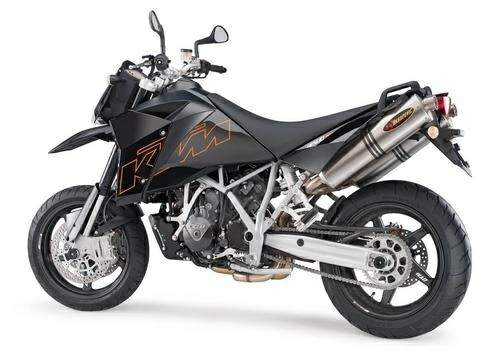
KTM 950 Supermoto
Do you feel guilty when you run a red light in the middle of nowhere at four in the morning? Have you put a quarter in a parking meter after six PM? Did you go down to the Federal Building after accidentally ripping the tag off a mattress to turn yourself in to the Federal Marshals?
If that is the case, you are probably not in the market for a 100 HP super motard. However, if you like to remove your license plate and run toll booths, cheat on your taxes by deducting lap dances as "Business Meeting Expenses", and leave dead fish in pre-paid safety deposit boxes at banks you don't like, I might have a motorcycle for you.
It's orange, looks crazy, and like the most unlikely governor California has ever had, is made in Austria. KTM is one of the biggest players in the high-performance off-road motorcycle market, well-known for their large selection of bright orange single-cylinder motocrossers, dual-sports, super moto bikes and adventure rally-racers. KTM's out-of-the-box racing success is well known; a huge percentage of the grueling Paris-Dakar rally finishers are riding mostly-stock KTMs.
Although KTM has been building motorcycles for over 50 years, they have a limited presence in the American streetbike market. The single-cylinder Duke Supermoto bike has been around for almost 10 years and was arguably the first street-legal Supermoto in the Americas. However, Americans like big, powerful bikes with multiple cylinders; thumpers have always been relegated to second-class citizen status.
In 2003, the winds of change blew an all-new engine onto the scene. First introduced in the Adventurer, KTM's liquid-cooled, 75-degree V-Twin was extremely light and compact. It caused a buzz around the world and the company announced plans to also use the powerplant in a supermoto, a "SuperDuke", and even a roadracer.
The Adventurer appeared in the USA market not too long afterwards to some acclaim. We tested the 2005 version in last year's Adventure Touring comparison, and I was impressed by the bike's agility and light handling on the street, but the heavy dirt focus of the bike -- epitomized by its high, hard seat and uncompromising knobby tires -- made the other bikes more appealing for street use. "But how cool would a Supermoto version be? I wanted to find out."
A call to the local KTM dealer in San Francisco yielded a demonstrator all broken-in and ready for (ab)use. "I know you know what you're doing" said Scuderia's president, Don Lemelin, grabbing my arm and looking at me intensely from behind his sunglasses, "but be careful anyway; if you're expecting dirt bike brakes these can get ya."
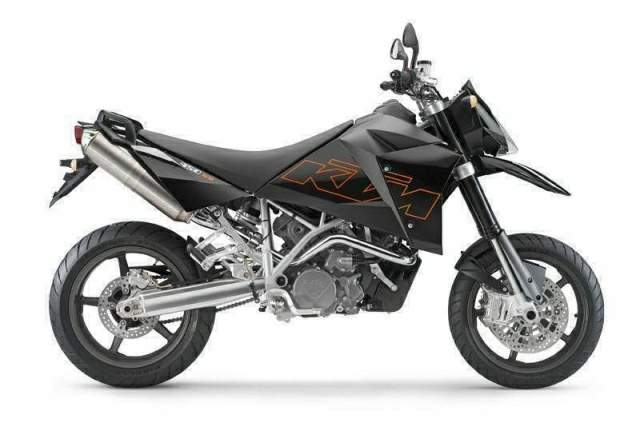
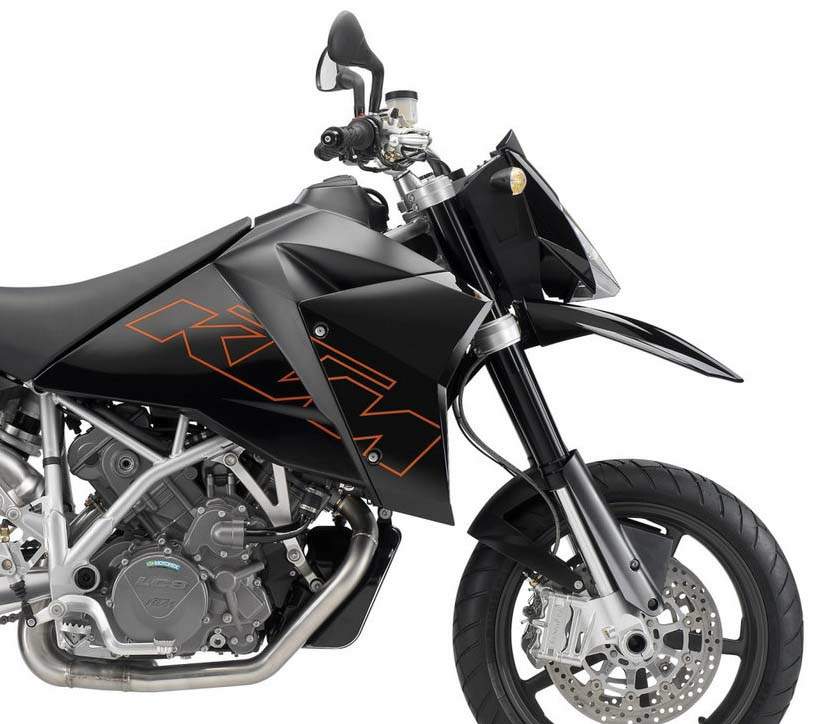
Thus warned, I looked over the tall, brightly-colored machine perched anti-socially on the sidewalk next to the shop. This bike has a visual presence unlike just about anything on the road. A chrome-moly tubular space frame hangs a 942cc 75-degree V-Twin between the wheels. That motor uses a 100mm bore and 60mm stroke to make 95 HP on Scuderia's DynoJet dyno (last year's 950 Adventurer made 91 HP at the back wheel on the MO DynoJet). Is it liquid-cooled? Of course. Four-valve and DOHC? Certainly. Fuel injected? Hey, let's not get greedy, OK? It still uses a pair of 43mm Keihin CV carburetors, like dad used to make in the garage for his alcohol-burning train set. Can't win `em all.
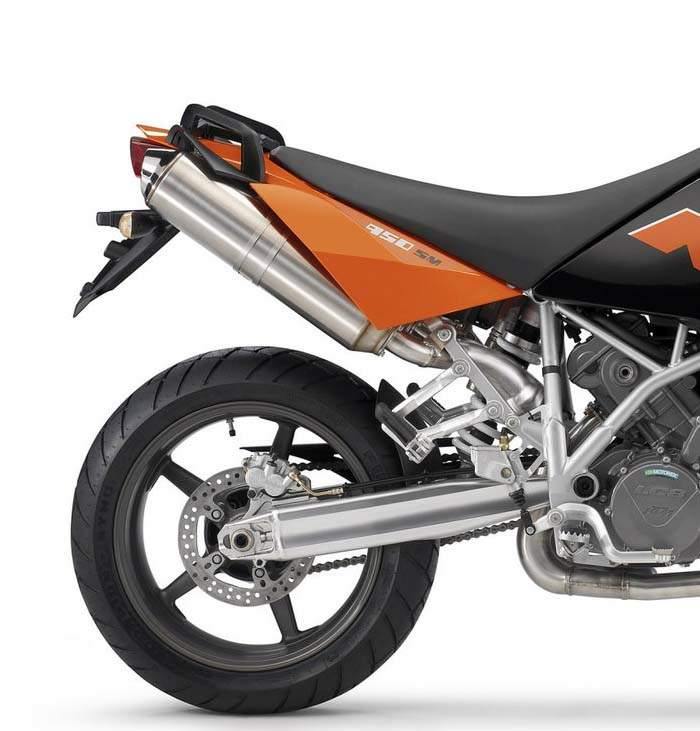
If the carbs are old-school, the suspension and brakes are most decidedly not. A slinky aluminum swingarm holds the 5.5 inch, five-spoke rear wheel, suspended by an expensive-looking WP rear shock (WP used to be called "White Power" because the founder's initials were WP and the springs were always their distinctive white color. In 1991 the company renamed itself WP for obvious reasons -- although White Power might have been a good supplier for Confederate -- and it is now owned by KTM/Husaberg) that works through a linkage to provide 8.27 inches of travel. It's adjustable for preload, rebound and compression damping.
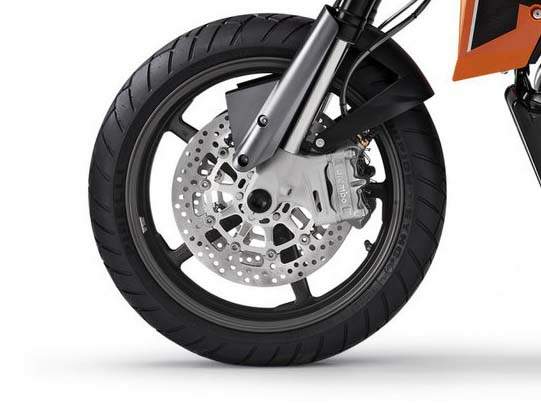
Please do not lick the brakes, tasty-looking as they are. Brake dust is a known carcinogen and tastes awful. However, it might be hard to resist putting your long pink tongue on these four-piston radial-mount Brembo dealy-o's, what with their floating 305mm front discs and steel-braided lines. The master cylinder is a radial-pumping thing as well. The rear stopper is a two-piston floating Brembo caliper with a 240mm disc.
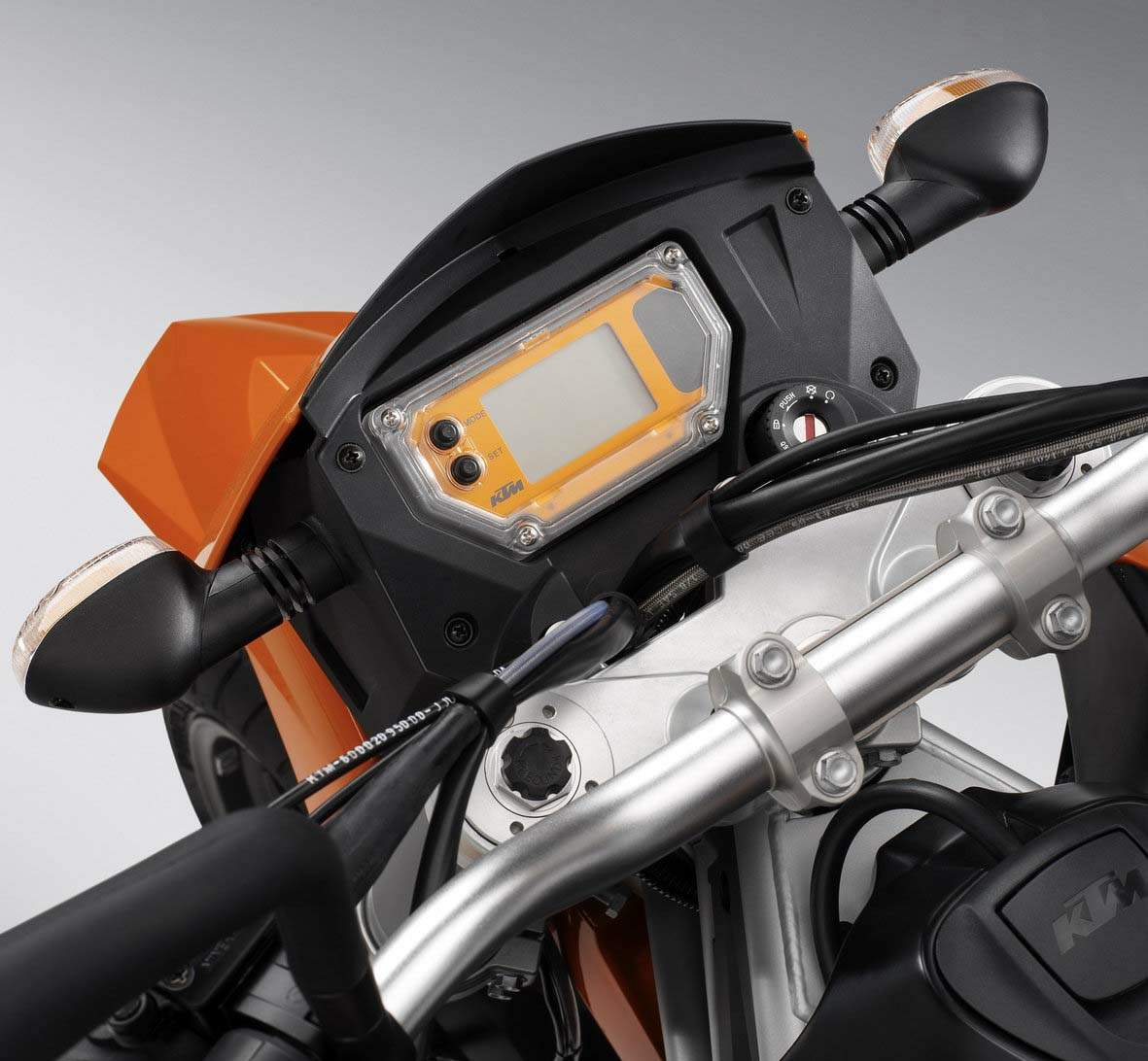
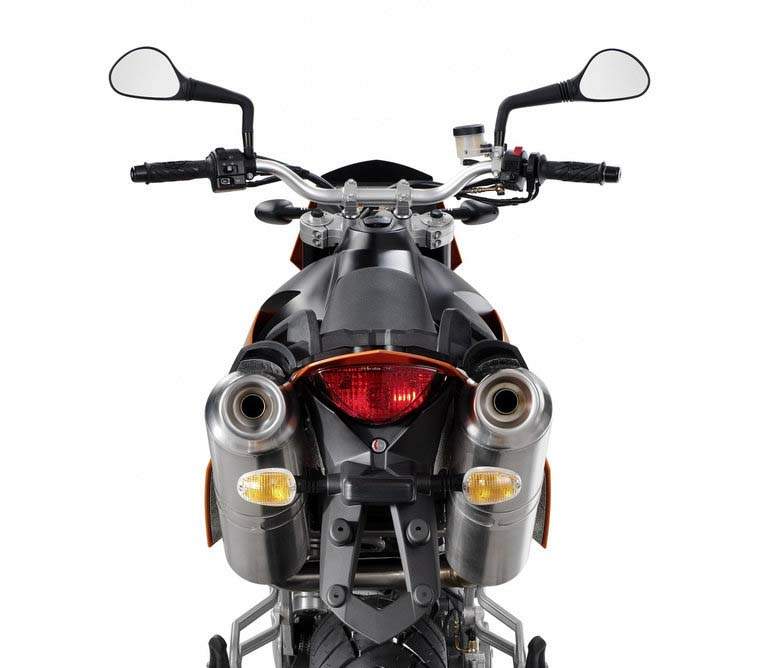
What did we learn about so far? Motor, frame, brakes, suspension...what else is there? Not much, aside from a narrow seat, a fat tapered handlebar, a minimalist instrument panel crouching behind an enduro-style number-plate fairing and a pair of 17-inch wheels (the rear sized for a 180-section tire) shod with most-excellent Pirelli Scorpions. Wait, I forgot about the luggage rack. There's a luggage rack.
It's electric start -- we don't need to be too authentic, do we? -- so I thumb it to life and enjoy the unique sound of the KTM V-Twin. The big upswept mufflers do enough to keep the bike legal, but barely. A mechanical, barking tone emanates from the bike's tail section as it warms up. I toe it into gear -- the clutch and gearbox are smooth and precise, if you're wondering -- and head for the freeway on-ramp. There is mad-cap mayhem the two blocks through traffic to the ramp, mad-cap mayhem going up the ramp, and more silliness as I accelerate onto the freeway south.
"Some buffoon on an open-piped Harley something-or-other came roaring up behind me to do his I'm-a-badass-because-I-have-a-"Hell's Angels Frisco"-sticker-on-my-windshield-roar-past-you thing, so I dropped a gear and twisted Mr. Throttle, turning Johnnie Goatee into a rapidly-shrinking angry black dot in the KTM's blurry mirror."
Why do those guys even try, anyway? Do they crave humiliation?
Recovering from what is a very unique experience on two wheels, I can relate some observations about this big orange fireball. First, it feels much faster than 95 HP. The gearing isn't that short, and the bike isn't really that light, but maybe the bolt-upright seating position makes it feel quicker. Slicing through traffic with the throttle open is great.
Second, the Supermoto sets a new standard for nimble, especially for an open-class, 450-pound (approximate wet weight)V-Twin. Turning this bike is as easy as breathing with the sharp chassis and wide bars. It holds a line well, too, yet doesn't feel twitchy or unpredictable.
Finally, the bike is comfortable, almost too comfortable given the bike's frantic, edgy character. The seat is high, the pegs are motocrosser low, and the bars are in a nice, neutral position, meaning lots of legroom and a very mild reach to the bars. It's like sitting on some kind of demented Scandinavian-designed office furniture. Where most dirt or supermoto bikes are painful in a short amount of time -- the Husaberg 650 SM I tested last year was painful almost immediately -- the narrow, yet soft and supportive bench on the KTM works for an hour or longer, more than enough time to halfway drain the 4.6-gallon tank.
After spending time on a big supermoto on the freeway, you've earned some play time on a twisty road. If you've read a motorcycle review or two in your lifetime, you might be expecting a glowing appraisal of this bike's handling, and in fact, you'd be correct, Nostradamus. In fact, it's one of the best-handling bikes I've experienced. I've read a thing or two in lesser magazines about some problems with the KTM's handling; I experienced none of this. It could be either because I don't ride as hard on public roads as some road-test editors(not that I could ride as hard as certain editors if I wanted to), or that Don Lemelin spun his magic wrenches and set up the KTM properly before I rode it. I suspect it's a combination of both.
Here's what makes the 950 Supermoto so great as a sportbike-eater on two-lane roads: light feel, fast steering, flexible motor and fantastic brakes. The KTM isn't the lightest bike ever, but there is so little of the bike visible and the wide, high bars give so much leverage that it feels like a bicycle. That means you can pick about any line through a turn and correct it multiple times, or late-brake with total confidence, with the motor lugging in low gear or howling near redline.
In other words, you can ride it any way you want, road-racer style with a knee dragging, or supermoto-style, boot dragging on the deck like Cory Call. You can also ride it like the big motocrosser it is, pushing the bars down and away from you and relishing the way the tires grip the pavement like they're held there with Gary Busey's denture adhesive. The front of the seat is well-suited to climb-on-the-tank supermoto action, and there is nothing in the way of your leg when you stick it out to help you slither through slippery corners.
If you get into a corner too hot, you can relax. You can either dial in more lean at the last minute without fear of dragging the pegs or any other parts; there is plenty of cornering clearance available, or you can gently -- gently! -- apply the binders with a single, barely tensed digit. The amazingly strong and sensitive brakes slow you quickly from any speed with no trace of fade or grabbiness at a street pace.
The rear brake does what a supermoto rear brake should do, locking the rear tire when you need it to and letting you trail-brake when you need to do that, if you're the sort of person who trail brakes. If you like to do silly things this bike is a good partner in crime (that's no joke -- wheelies, stoppies and burnouts can get you jail time in most places). The excellent binders will loft the back wheel into the air with great ease, and if you are inclined to a bit of front-wheel hoisting from time to time you will be hard-pressed to find an easier bike to wheelie outside the motocross track. The "Stunta" crowd would love bikes like this if those guys were discerning enough to look beyond chromed delusions of liter-bike grandeur. That's their loss.
A word on suspension: it feels like top-dollar suspension, which is not out of place on a top-dollar bike. Some motorcycles need to have forks and shock removed and shipped to a suspension tuner immediately. Not this one; if the rider weighs more than Joe Peschi but less than Rosie O'Donnell, she should be able to dial in the perfect ride, if she knows what she's doing. The wheels stay planted on all kinds of pavement, without transmitting bumps or jolts to the rider on uneven pavement.
The overall competence of the bike's chassis, motor and other components make me think this would make a good platform for an occasional trackday. KTM designed this motor for competition, so it should endure plenty of prolonged high-RPM usage, and we've established that the brakes and chassis are top-notch. A high-speed track would probably tire the rider, as there is no wind protection at the top speeds this bike is capable of, but at a more technical track like Sears Point or Streets of Willow this bike could produce a hero.
"Compared to a Ducati 999 or MV Agusta Brutale, the KTM is just as exotic, just as fun and exhilarating to ride."
By the time we get back to Scuderia to reluctantly return Don's bike, I'm ready to answer the question: is it worth $13,000? If you think any motorcycle is worth $13,000, then this one is. Compared to a Ducati 999 or MV Agusta Brutale, the KTM is just as exotic, just as fun and exhilarating to ride, and probably more comfortable and practical as a daily driver, what with its good fuel economy, parcel rack and comfortable seating.
Maybe it's better if this bike is regarded as an overpriced oddity. If this bike is a success, other factories will rush to inject similar bikes into the stream of commerce in large numbers, bikes like the Aprilia SX-V 5.5 or the Ducati Hypermotard, or some kind of DRZ-400SM/TL1000-motored Frankenstein. Motorists would see middle-aged men having way too much fun doing stoppies and wheelies or sliding their rear tires into every turn and the resulting public outcry would see motorcyclists hunted down like wild animals or hiding their beloved `motards in their basements like they were practicing a secret religion.
So whatever you do, don't test ride a big supermotard, especially not one as well-built and fun-to-ride as this big orange Katoom. Be happy with your socially-acceptable Big Twin or candy-colored sportbike, happy to be able to ride at all
Notes and Nits Those expecting a silky-smooth V-Twin like a Ducati or Honda should look elsewhere. This is a competition motor that is just civilized enough to be rideable. At the end of a 130-mile test loop the fuel light came on. I suspect the 4.6-gallon tank can actually hold about four gallons with reserve, so I figure fuel economy is somewhere in the high 30s. The SuperDuke model that is soon to come to the States uses the fuel-injected 990 motor. Expect better than 100 HP and a different chassis and suspension.
Source Motorcyc.com
|
|
|
Any corrections or more information on these motorcycles will be kindly appreciated. |