|
|

|
|
|
|
Classic Bikes
Custom Bikes
Individual
Racing Bikes AJP
AJS
Aprilia
Ariel
Avinton / Wakan
Bajaj
Benelli
Beta
Bimota
BMW
Brough Superior
BRP Cam-Am
BSA
Buell / EBR
Bultaco
Cagiva
Campagna
CCM
CF Moto
Combat Motors
Derbi
Deus
Ducati
Excelsior
GASGAS
Ghezzi Brian
Gilera
GIMA
Harley Davidson
Hero
Highland
Honda
Horex
Husaberg
Husqvarna
Hyosung
Indian
Jawa
Kawasaki
KTM
KYMCO
Laverda
Lazareth
Magni
Maico
Mash
Matchless
Mondial
Moto Guzzi
Moto Morini
MV Agusta
MZ / MuZ
NCR
Norton
NSU
Paton
Peugeot
Piaggio
Revival Cycles
Roland Sands
Royal Enfield
Sachs
Sherco
Sunbeam
Suzuki
SWM
SYM
Triumph
TVS
Ural
Velocette
Vespa
Victory
Vincent
VOR
Voxan
Vyrus
Walt Siegl
Walz
Wrenchmonkees
Wunderlich
XTR / Radical
Yamaha
Zero
Video
Technical
Complete Manufacturer List
|
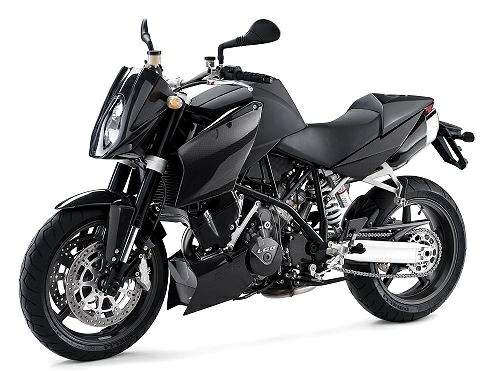
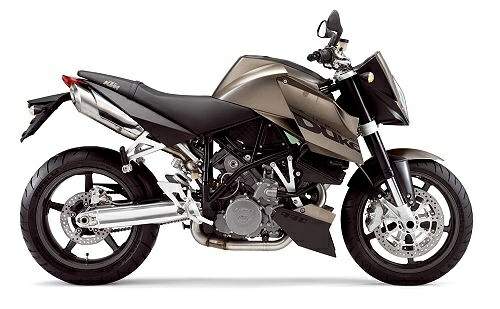
KTM 990 Super Duke RR Titanium L.E
The KTM 990 Super Duke RR has
multiple carbon fiber parts including: front spoiler, front fender, tank
spoilers, side covers, engine sprocket cover, boot protectors on foot pegs,
chain protector, rear splash protector, protectors for ignition and clutch
cover, airbox side covers. Carbon fiber is a composite
material most often found in race cars and expensive supercars although like
all advanced technology it is finding its way into more and more vehicles.
Despite it's expense and high-tech uses carbon fibre is relatively easy to
work with. Review
I think I'm going to give up – for two days now I've
been trying to categorize the KTM Super Duke, but I can't. I've been trying to
decide whether it is a normal naked bike with a touch of Super Moto, or if it's
a Super Moto with a whopping engine. But let's not focus on my dilemma too much
and track back how this story all started.
|
|
|
Any corrections or more information on these motorcycles will be kindly appreciated. |