|
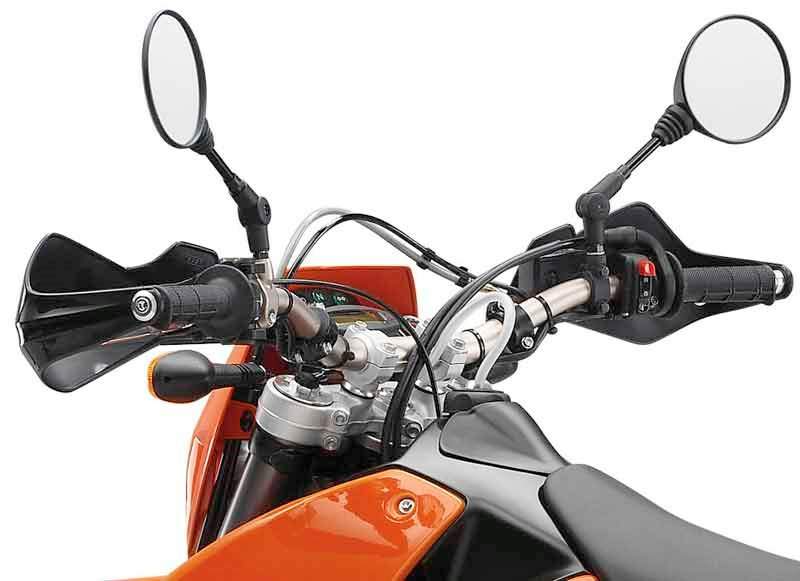
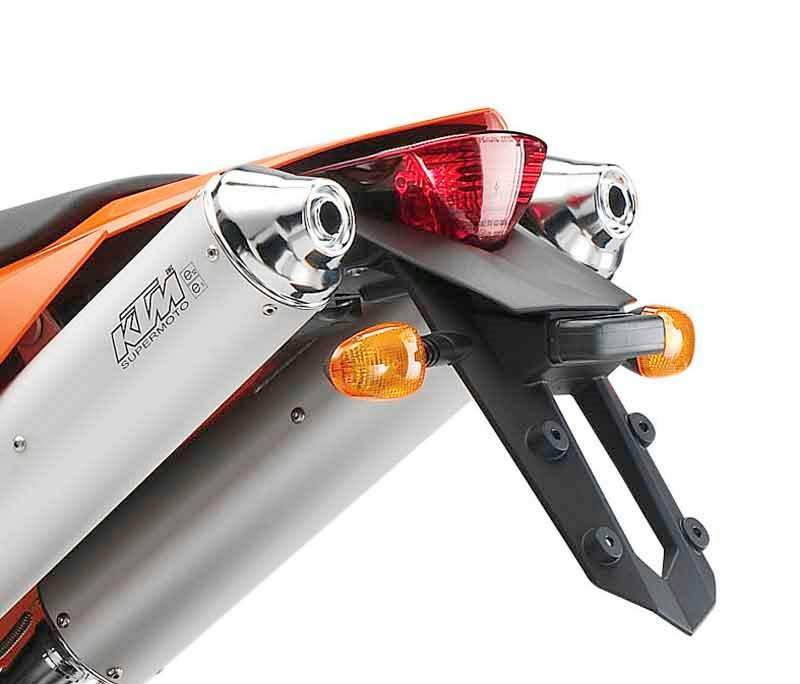
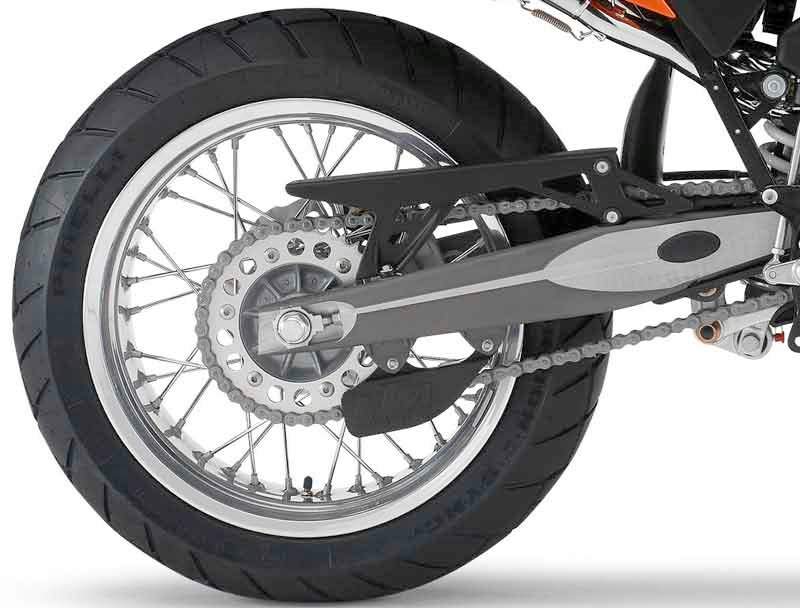
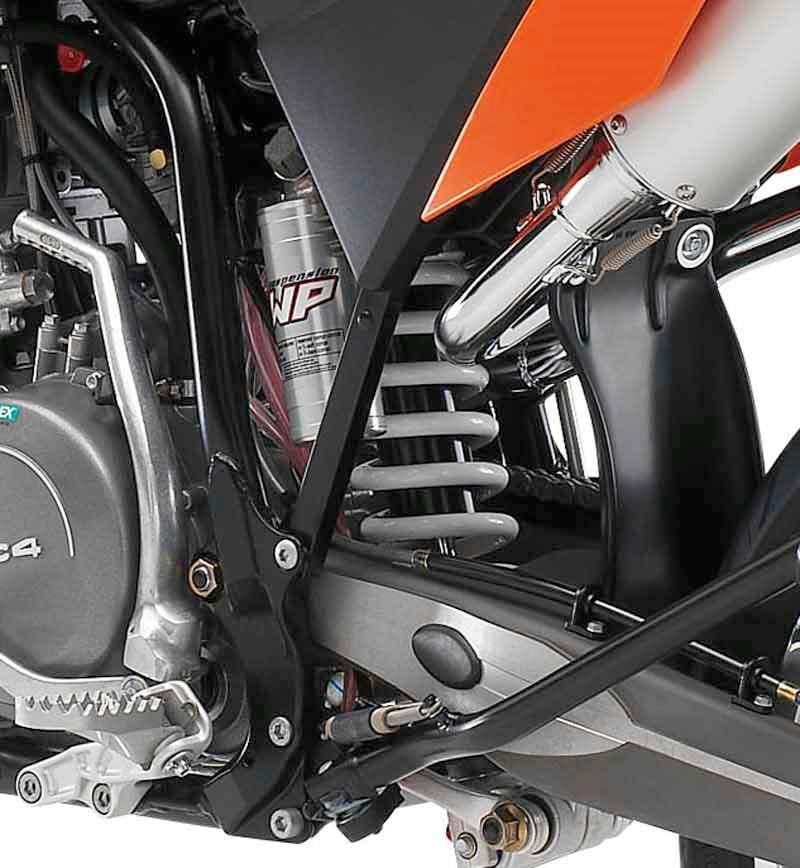
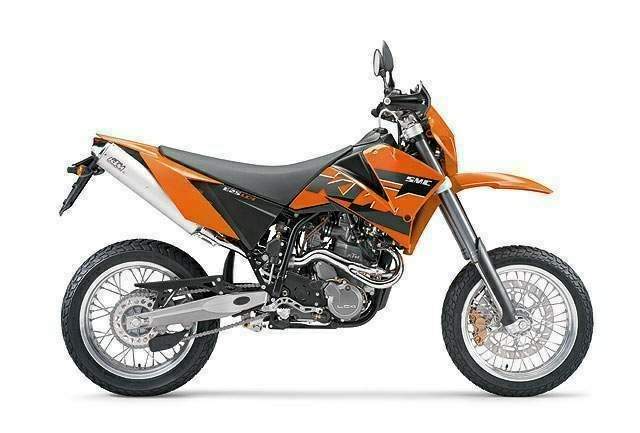
KTM 625 SMC

|
Make Model |
KTM 625 SMC |
|
Year |
2004 |
|
Engine |
Liquid Cooled, four stroke, single cylinder. SOHC, 4 Valve per cylinder, |
|
Capacity |
625 |
|
Bore x Stroke |
101 x 78 mm |
|
Compression Ratio |
11.5:1 |
|
Induction |
Keihin FCR MX-41 |
|
Ignition /
Starting |
Digital / kick & electric |
|
Max Power |
21 KW @ 6000 rpm |
|
Max Torque |
45 Nm @ 3500 rpm |
|
Transmission /
Drive |
5 Speed / chain |
|
Front Suspension |
48mm WP upside-down forks, 275mm wheel travel |
|
Rear Suspension |
WP monoshock, 260mm wheel travel |
|
Front Brakes |
Single 320mm disc 4 piston caliper |
|
Rear Brakes |
Single 220mm disc 1 piston caliper |
|
Front Tyre |
120/70 -17 |
|
Rear Tyre |
160/50-17 |
|
Dry-Weight |
146 kg |
|
Fuel Capacity (res) |
9.5 Litres (2.5L) |
|
Overview |
1000ps.at |
LOOKING FOR MR GOODBIKE
KTM 625 versus 450 versus 300
Many riders looking for a new bike are pointing their search engines at three
models, a 450 four-stroke, a big bore four-stroke, or a two-stroke. Is there a
big difference between a 450 and a big bore four-stroke, and can a modern 300cc
two-stroke keep up? We rode all day through floods, earthquakes and lousy food
to find the good, the bad and the ugly.
(Story: Dr Dan from Motorcycle Trader mag; Pics: Bazz. June 2005)
This whole idea was Rob Moss's fault.
We were having a beer in the cubbyhouse one Sunday arvo when Rob mentioned he
was due for a new bike but didn't know what the next one would be. Rob's current
mount is a KTM640 but he was open to the idea that a new big bore four-stroke,
or even a 300cc two-stroke, might be a good move. Dr Dan chimed in with his
opinions - he's prowling the dealerships himself - and before we knew it we had
an idea for another comparo.
The way we figure it, a lot of blokes looking for a new bike are probably in the
same predicament. New models seem to be coming out all the time, and they're all
brilliant, but which way do you jump? And what about the two-stroke thing?
Two-strokes are coming back into fashion, because they're cheaper to buy and the
average rider can work on them, so maybe we should chuck a ring-a-ding into the
mix just for good measure.
That's pretty much how this comparo came together. It's not really a shootout.
We're not trying to find out which bike is best but what the various
characteristics of these bikes are, and how they might appeal to different
riders. And by the way, that we used KTMs for this story is insignificant. We
have terrific relations with KTM, and they were good enough to supply all the
bikes we needed, so we took advantage of test bike manager Dave Woodward's good
nature and hauled away the models we needed. Our thanks go to KTM for their help
in putting this feature together.
GODZILLA MEETS TRAIL BIKE
The 625SXC is physically the biggest of the three. It's taller, wider and
heavier and shorter riders have to contend with this. The power is broad and
strong, and we mean strong! It revs harder than the old 640 but not as hard as
the 300 or the 450. This bike is the king of torque, but in true four-stroke
style it's easy power to control, and if you want the 625 to be a brute it's
just a matter of dialling in more throttle.
The sheer size of the 625 means you have to be physical when you tip it into the
turns, something our smallest rider struggled with, while the two bigger riders
found it easy. The ergos are not MX; there's a steep climb to the front of the
bike and you can't stay there without pushing up from the pegs. No-one is going
to say they're cramped on this big bore, but if you're under 180cm (6 ft) tall
you'll struggle to reach the ground.
Suspension was on the soft side but it was the only bike that the heavier riders
didn't say needed a heavier spring. It did wallow a bit in the rough stuff, and
off erosion drains, but it handled predictably.
We reckon the standard gearing was ludicrously tall. We pulled 140kph at three
quarter throttle in fifth so who knows what it would max out? The gearing is
just not suitable for the style of riding we do, which is what we consider
average weekend stuff. That said, Peter Martin threw this thing around like a
toy, so if you're built right, and you ride like Pete, you'll be okay.
The brakes are good, and they have to be on a bike that weighs this much,
although the rear lacked feel. You have to brake early on these big bikes. The
rear brake had a folding lever that would fold - and stay folded. It's easy
enough to fix with a bit of filing but it's annoying, and potentially painful
when you go for the rear brake and can't find it.
The biggest drawback with this big bore thumper is the size of the fuel tank, a
piddling nine litres, so coupled with the big engine it doesn't give you much
range. We hit reserve at the 75km mark, and believe us when we tell you, you
don't want to push s big bike like this.
All riders agreed this would be the best tourer of the three but not the best
trail bike. A big guy can throw the 625 through tight stuff and then really
enjoy the more open stuff, but for most of us, the 450 or 300 two-stroke is a
much better trail bike.
MISTER VERSATILE
KTM's 450EXC was the unanimous winner in DBT's recent 450 shootout so it came as
no surprise that all three testers liked it. There's no one attribute of this
450 you'd single out. As an overall package it's an outstanding motorcycle.
Power is broad and smooth, starting with a healthy bottom-end that develops into
a strong midrange and finishes off in a good useable top-end. This ability to
develop usable power everywhere in the rev range is typical of the bet 450s and
enables you to get maximum 'thrust' in all situations. This is not a killer
engine but it's a good strong engine in a user-friendly format that allows you
to hold maximum corner speed and get on the gas early.
Suspension was on the soft side so we adjusted the clickers to stiffen it up.
The two bigger testers are in the 100kg-plus range and found the standard shock
spring too soft. We wound up the spring preload to compensate, sort of, but this
is an issue bigger riders have to contend with on most stock 450s, because every
manufacturer reckons every rider weighs 80kg.
The ergos are very different to the 625's, as you'd expect. The 450 is slim and
sitting up front comes naturally. The layout is good, everything is right where
it should be, and no-one complained about being cramped, not even 190cm tall
Rob. The 450 feels light and is easy to tip into turns. And it's easy to live
with. As Rob Moss said "It's a bike that's hard to fault" - although one of our
testers thought the seat too hard. Picky bastards aren't we.
SON OF MR VERSATILE
The 300EXC and 450EXC feel similar but they have different chassis, and although
the suspension externals are similar, inside they differ considerably. Right off
the bat, the advantage the 300 has over the four-strokes is that it weighs in at
nearly 11kg lighter so it's even easier to tip into corners than a 450.
Switchbacks are a real hoot on the 300; the word 'effortless' comes to mind. The
light weight does have an effect that some people consider a drawback though:
it's more easily deflected over rough terrain than a heavier bike. This isn't to
say the 300 is unsteady, far from it, but this 'twitchiness' is noticeable when
you ride the 450 and then the 300. The two-stroke is more a young man's bike and
a lot more physical to ride than your average thumper. If you want one of these,
get fit first.
The other noticeable advantage the lighter bike has is in braking. With less
mass, it pulls up quicker. It was amazing how much later you could leave the
braking on the two-stroke. If you like scaring your mates by diving passed them
under brakes, this is the bike for you.
But what about the two-stroke zap? It's still there. This two-stroke engine is
amazingly flexible, it's strong off the bottom, has a good mid-range, but it's
the top-end that really sizzles. In a direct comparison with the 450, the 300 is
not as strong off the bottom but much better up top, as you'd expect, in fact
this thing is hell-fast with terrific straight line speed. We had several drag
races with a much heavier rider on the 300 and it still blitzed the 450.
The other point to consider in this discussion is that the 300 is the only bike
of the three not to have electric start. For a big-bore two stroke it's very
easy to start, but nothing is easy to start when your perched halfway up the
widow-maker, trying to stop the bike sliding back down the hill. A small point
perhaps, but one that's an important issue for some.
Overall, the consensus was that the two-stroke was a very good trail bike, but
one that would require a more experienced and fitter rider to get the most out
it.
Opinions
ROB MOSS
"I don't mind the 300cc two-stroke, in fact I've owned one, but I reckon it's a
young man's bike because it's more physical to ride than a 450 or a 625
four-stroke. The 625 LC4 feels faster than my 640, I think it revs a bit harder
and it certainly tips into turns a lot easier. If I was buying a bike purely for
trail riding, though, I reckon I'd go for a 450. It feels light and manoeuvrable,
it's fast enough and it's just such a nice size to ride."
PETER MARTIN
"I agree with Rob. For my money the 625 is a better all-round bike for trail and
adventure riding, to the Cape and that sort of thing, but for trail riding I'd
take the 450. I felt quite comfortable on the big bore but it's more physical to
throw around when you're in tight stuff, even if you're a good rider. I liked
riding the two-stroke but it's definitely not a bike for a novice. It's light,
turns sharp and isn't a bad wheelie machine either, but you could get into awful
trouble on that bike if you didn't know what you were doing. Basically, I reckon
the 450 is the pick of the bunch, but not if you're doing real long distance
stuff.
DR DAN
"For me the 625 was just too much bike. I weigh in at 80kg and I felt like the
big bore was taking me for the ride. It was just too big for me to muscle
through the corners and consequently I was slow. But I had a ball on the
two-stroke. It was light, nimble and could pull up on a five cent piece. Easy to
tip into turns, it was king of the tight stuff, and surprisingly smooth, and it
still had that legendary two-stroke zap. However, as an overall package for
trail-riding I'd take the 450. It's just a smidgeon behind the 300 in terms of
agility, and the engine is silky smooth but still with enough oomph to get the
heart racing. What swings my vote, though, is electric start. It's a small
difference so it shows how close I think these two are."
Source
BikePoint
|