
|
|
|
|
Classic Bikes
Custom Bikes
Individual
Racing Bikes AJP
AJS
Aprilia
Ariel
Avinton / Wakan
Bajaj
Benelli
Beta
Bimota
BMW
Brough Superior
BRP Cam-Am
BSA
Buell / EBR
Bultaco
Cagiva
Campagna
CCM
CF Moto
Combat Motors
Derbi
Deus
Ducati
Excelsior
GASGAS
Ghezzi Brian
Gilera
GIMA
Harley Davidson
Hero
Highland
Honda
Horex
Husaberg
Husqvarna
Hyosung
Indian
Jawa
Kawasaki
KTM
KYMCO
Laverda
Lazareth
Magni
Maico
Mash
Matchless
Mondial
Moto Guzzi
Moto Morini
MV Agusta
MZ / MuZ
NCR
Norton
NSU
Paton
Peugeot
Piaggio
Revival Cycles
Roland Sands
Royal Enfield
Sachs
Sherco
Sunbeam
Suzuki
SWM
SYM
Triumph
TVS
Ural
Velocette
Vespa
Victory
Vincent
VOR
Voxan
Vyrus
Walt Siegl
Walz
Wrenchmonkees
Wunderlich
XTR / Radical
Yamaha
Zero
Video
Technical
Complete Manufacturer List
|
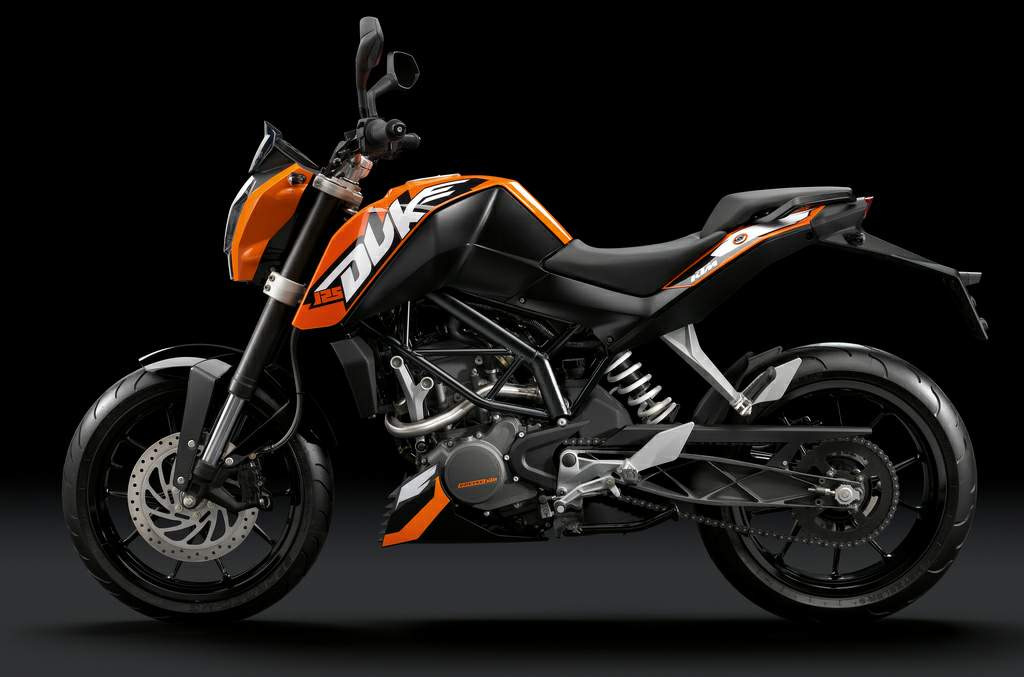
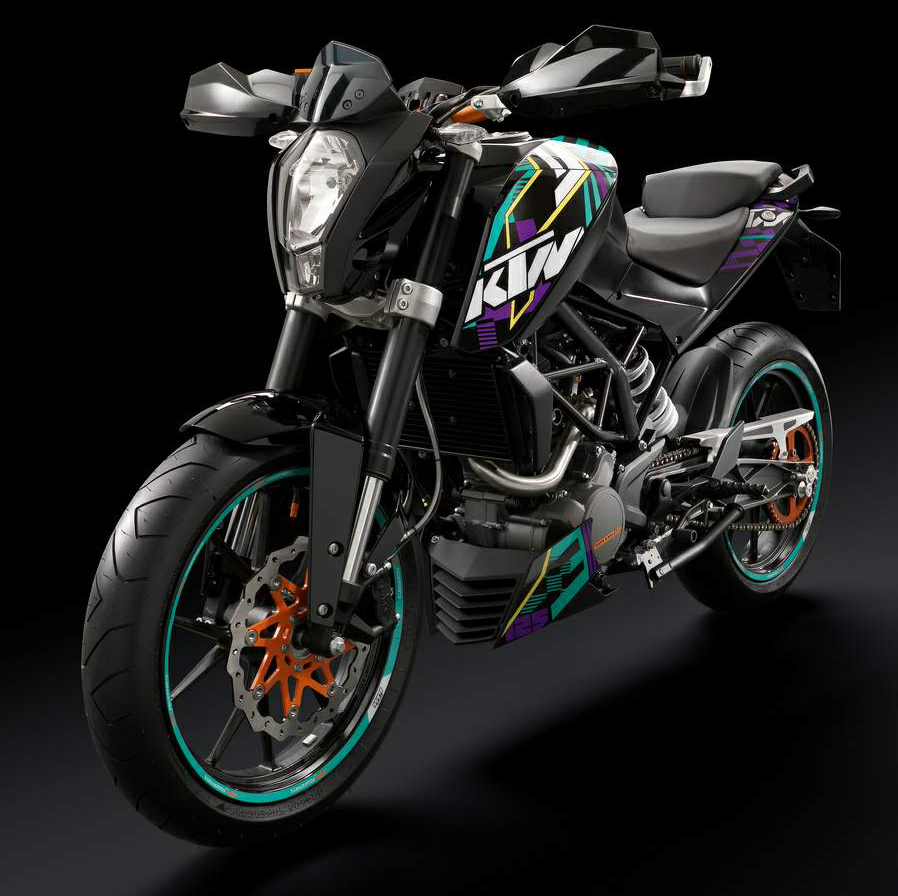
KTM 125 Duke |
|
Make Model |
KTM 125 Duke |
|
Year |
2012 |
|
Engine |
Four stroke, single cylinder, DOHC, 4 Valves |
|
Capacity |
124.7 cc / 7.6 cu-in |
| Bore x Stroke | 58 x 47 mm |
| Cooling System | Liquid cooled |
| Compression Ratio | 14.5:1 |
| Lubrication | Forced oil lubrication with 1 Eaton pump |
|
Induction |
Electronic fuel injection |
|
Ignition |
Contactless, controlled, fully electronic ignition system with digital ignition timing adjustment |
| Starting | Electric |
|
Max Power |
11.3 kW / 15 hp @ 10500 rpm |
|
Max Torque |
12 Nm / 1.22 kgf-m / 8.85 ft-lb @ 8000 rpm |
| Clutch | Multi-disc clutch, operated hydraulically |
|
Transmission |
6 Speed |
| Final Drive | Chain 5/8 x 1/4" X Ring |
| Frame | Space frame in chrome -molybdenum steel tubes Subframe: steel |
|
Front Suspension |
38 mm WP upside-down fork |
| Front Wheel Travel | 160 mm / 6.2 in |
|
Rear Suspension |
WP monoshock. |
| Rear Wheel Travel | 160 mm / 6.2 in |
|
Front Brakes |
Single 280 mm disc |
|
Rear Brakes |
Single 220 mm disc |
|
Front Tyre |
110/70 -17 |
|
Rear Tyre |
150/60 -17 |
| Steering Head Angle | 65° |
| Wheelbase | 1367 mm / 53.8 in |
| Ground Clearance | 170 mm / 6.7 in |
| Seat Height | 810 mm / 31.8 in |
|
Dry Weight |
127 kg / 280 lbs |
|
Fuel Capacity |
11 Litres / 2.9 US gal / 2.4 Imp gal |
The RC125 appeals to the young generation (or the young at heart). Even if
you’ve been riding for over 30 years, rewind the clock to your first bike. If it
was a small capacity machine, you’ll know the fun they can be…
The RC is powered by the same lump that’s in the 125 Duke – a water-cooled,
4-stroke single cylinder – and it’s certainly got some poke. In fact it’s right
at the top of the power restriction for those with an A1 licence at 15bhp. Power
delivery is smooth, and working up the six gears, either through sound and feel,
or using the handy gear shift indicator, there are no uncomfortable vibrations –
even at the top of the rev counter.
KTM has built a partnership with the third largest motorcycle manufacturer in
the world – Indian company Bajaj – working together to produce the bikes in the
range under 400cc, which includes the Duke 125 and 390. After being built, all
the bikes then go through Austria for quality assurance and distribution.
KTM-RC125-029The commitment from KTM is obvious: “Just because it has a smaller
capacity, doesn’t mean it takes less of a priority than any of our other
models.” The company is actively investing in products for a new generation of
riders, and wants to give them the best they can, transferring some of the
learnings from the flagship models such as the Super Duke and Adventure onto the
RC. The suspension is a good example – the RC is fitted with WP upside down
(USD) forks with the same 43mm outer tube diameter as the RC8 R.
Compared to KTM’s 125 Duke, the RC has a stiffer spring inside the fork to give
it more of a supersport feel, and the stroke has been reduced from 150mm to
125mm. The rear shock has 150mm of travel, and features adjustable preload – for
me the standard set-up was fine, with the bike sagging slightly when I jumped
aboard.
The steering head angle has been steepened to 66.5° to give more ground
clearance when leaning round corners, less trail and a shorter wheelbase. The
result is playful handling with increased agility.
Stopping power is provided by a four piston radially bolted caliper on the
front, and a single piston caliper on the rear, developed in cooperation with
Brembo. The bike features Bosch ABS as standard too.
KTM didn’t want the functional items required for riding the bike on the road to
interfere with the overall look of the machine, and intended to replicate the
look of the RC’s racing counterparts. You’ll find the LED indicators cleverly
hidden in the mirrors, and the tail-light positioned under the rear seat cowl.
Sharp styling is key and of course it features those eye catching orange wheel
rims that you’ve come to expect on the KTM machines. There are some innovative
touches, like the pillion seat which looks like a solo seat cowl unit but is
made from rubber. The chunky 150mm rear tyre provides good grip, and viewing the
bike from behind, you could be forgiven for thinking it’s packing more than
124cc under those fairings.
|
Any corrections or more information on these motorcycles will be kindly appreciated. |

