|
|
|
|
Classic Bikes
Custom Bikes
Individual
Racing Bikes AJP
AJS
Aprilia
Ariel
Avinton / Wakan
Bajaj
Benelli
Beta
Bimota
BMW
Brough Superior
BRP Cam-Am
BSA
Buell / EBR
Bultaco
Cagiva
Campagna
CCM
CF Moto
Combat Motors
Derbi
Deus
Ducati
Excelsior
GASGAS
Ghezzi Brian
Gilera
GIMA
Harley Davidson
Hero
Highland
Honda
Horex
Husaberg
Husqvarna
Hyosung
Indian
Jawa
Kawasaki
KTM
KYMCO
Laverda
Lazareth
Magni
Maico
Mash
Matchless
Mondial
Moto Guzzi
Moto Morini
MV Agusta
MZ / MuZ
NCR
Norton
NSU
Paton
Peugeot
Piaggio
Revival Cycles
Roland Sands
Royal Enfield
Sachs
Sherco
Sunbeam
Suzuki
SWM
SYM
Triumph
TVS
Ural
Velocette
Vespa
Victory
Vincent
VOR
Voxan
Vyrus
Walt Siegl
Walz
Wrenchmonkees
Wunderlich
XTR / Radical
Yamaha
Zero
Video
Technical
Complete Manufacturer List
|
Kawasaki ZZ-R 600
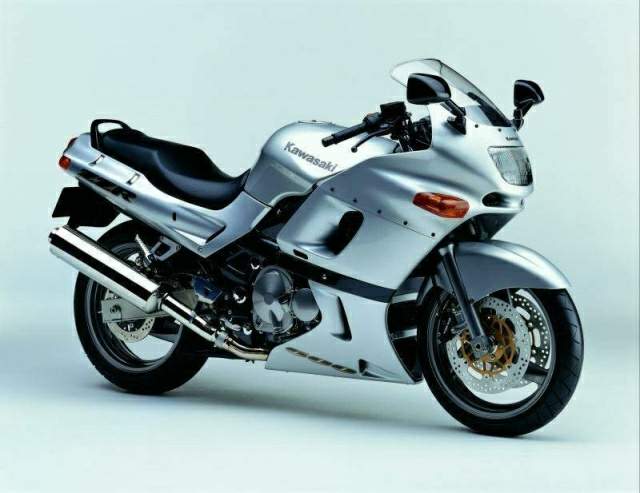
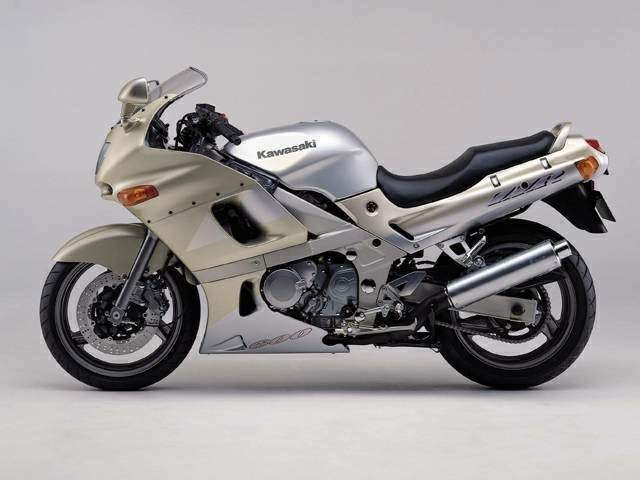
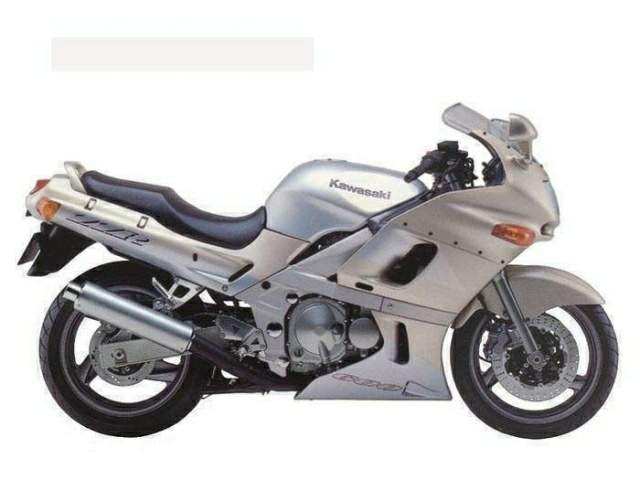
The ZZ-R600 is one of Kawasaki's most successful sports models. First introduced in 1990, along with its 1 lOOcc sibling, the ZZ-R1100, the ZZ-R600 offered an extremely fast and powerful roadbike package. A strong inline-four liquid-cooled engine producing nearly 75kW (lOObhp), aerodynamic bodywork and a power-boosting ram-air intake system all conspired to produce a top speed of well over 240km/h (150mph).
But it wasn't only the ZZ-R's top speed which made it so remarkable. Its advanced, stiff, lightweight aluminium twin-spar frame was unknown in the Japanese 600 class at the time, and it immediately marked the ZZ-R out as a high-quality product. Detail styling cues like the faired-in rear indicators and aerodynamic mirrors all suggested speed, although Kawasaki clearly hadn't forgotten about more mundane matters like chain oiling - a centrestand is tucked neatly away under the twin silencers.
The chassis is less sporting than the strong engine, but is capable of handling most road-based sports riding. Its four-piston front brake calipers give strong, progressive stopping power. But the suspension, updated in 1995, is rather soft, and compromises ultimate braking, as well as offering a rather vague feel when pushing hard on the track. Ground clearance is, again, ample for the road, but is a limit on track. Not that this bothered John Reynolds - the British racer won the 1990 600cc Supercupchampionship on a lightning-quick Team Green ZZ-R600.
Throughout the 1990s, the ZZ-R was a consistently strong seller, even when Kawasaki's own ZX-6R pushed the ZZ-R back into a sports-touring role. The ZZ-R's excellent road manners, high equipment levels and sound build-quality made it the ideal choice for many high-mileage riders. Minor modifications over the years have further refined the ZZ-R600 with a fuel gauge, clock, suspension damping adjustment and improved power delivery.
|
|
|
Any corrections or more information on these motorcycles will be kindly appreciated. |