|
|

|
|
|
|
Classic Bikes
Custom Bikes
Individual
Racing Bikes AJP
AJS
Aprilia
Ariel
Avinton / Wakan
Bajaj
Benelli
Beta
Bimota
BMW
Brough Superior
BRP Cam-Am
BSA
Buell / EBR
Bultaco
Cagiva
Campagna
CCM
CF Moto
Combat Motors
Derbi
Deus
Ducati
Excelsior
GASGAS
Ghezzi Brian
Gilera
GIMA
Harley Davidson
Hero
Highland
Honda
Horex
Husaberg
Husqvarna
Hyosung
Indian
Jawa
Kawasaki
KTM
KYMCO
Laverda
Lazareth
Magni
Maico
Mash
Matchless
Mondial
Moto Guzzi
Moto Morini
MV Agusta
MZ / MuZ
NCR
Norton
NSU
Paton
Peugeot
Piaggio
Revival Cycles
Roland Sands
Royal Enfield
Sachs
Sherco
Sunbeam
Suzuki
SWM
SYM
Triumph
TVS
Ural
Velocette
Vespa
Victory
Vincent
VOR
Voxan
Vyrus
Walt Siegl
Walz
Wrenchmonkees
Wunderlich
XTR / Radical
Yamaha
Zero
Video
Technical
Complete Manufacturer List
|
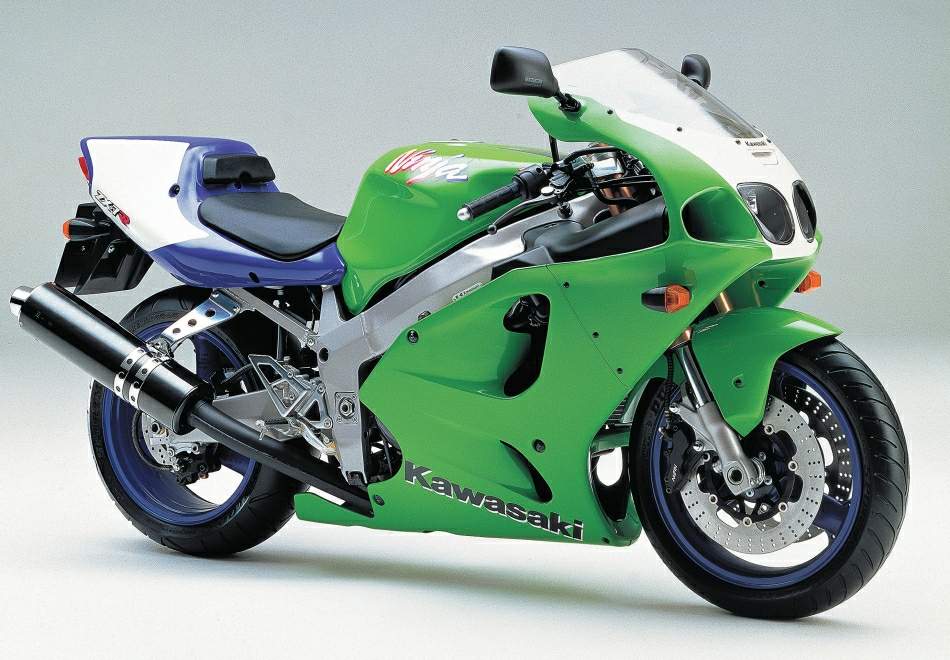
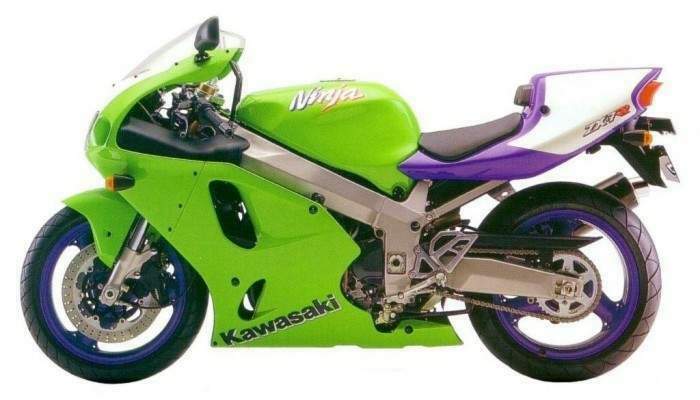
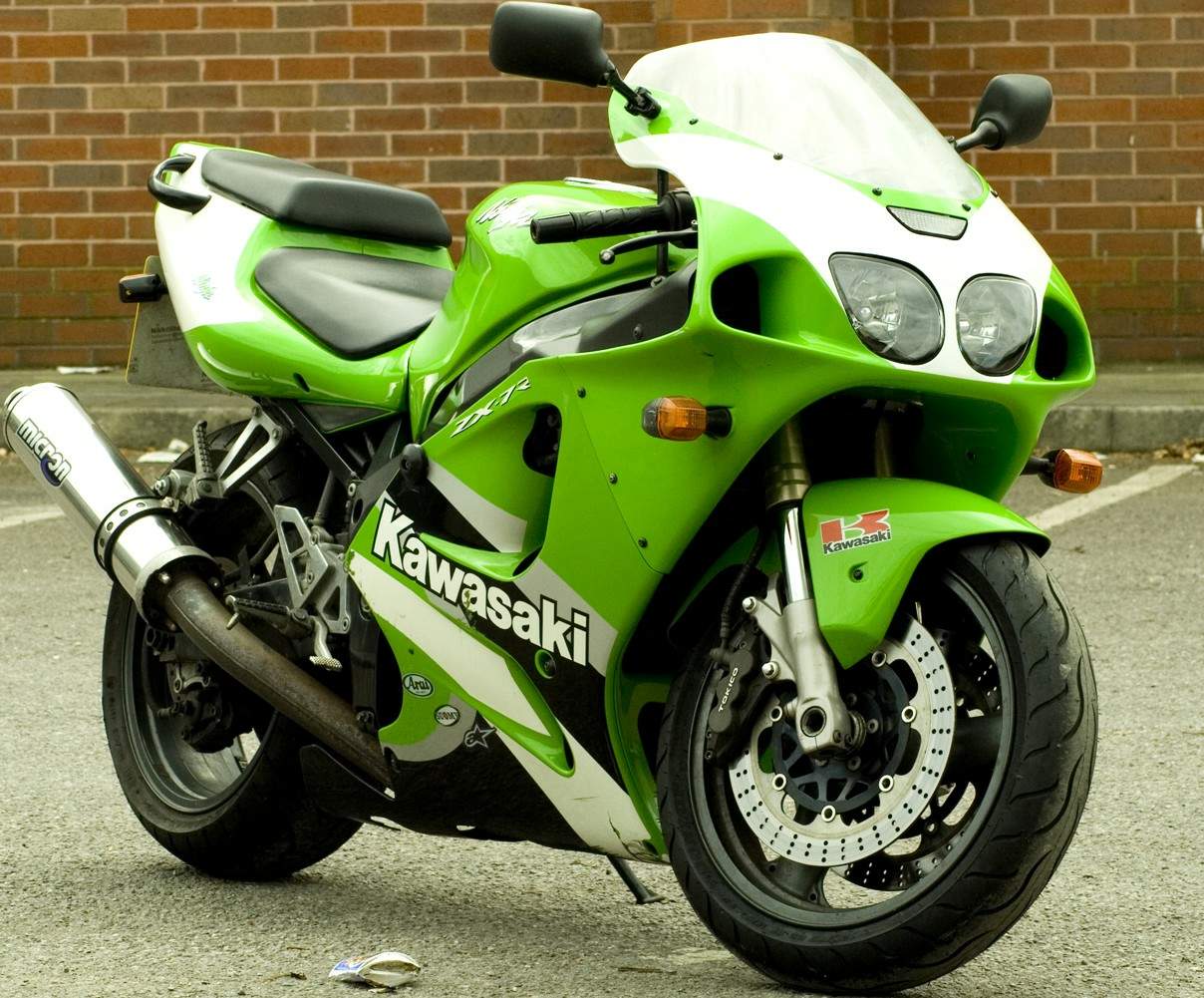
Kawasaki ZX-7RR Ninja
Dreadful carburation Adjustable steering angle Not an instant dream machine If you buy a ZX-7RR, the race version of I Kawasaki's ZX-7R, you're acquiring the m basis of a 1996 World Superbike machine. You're also paying almost three grand more than you would for the standard bike. So you might be expected to want the best engine available. You might even want the thing to carburate properly. But no. As both racers and road-riders have found, the engine gets all choked up the moment you crack open the throttle. When I rode the RR at Snetterton, it was impossible to get clean drive out of corners and power had to be fed in gently. I could understand if the problem only arose at low revs, but it happens right up to the 12,500rpm red line. The crux of the matter lies in the 41mm, flat-slide carburettors, which - depending on who you talk to - run either too rich or too lean, and allow too much fuel into the cylinders, literally drowning the performance. Kawasaki has homologated the RR with both 39mm and 41mm carbs, making both legal to use in racing, and current wisdom is that the smaller-bore units work better.
Reigning British Superbike champion Steve Hislop uses jetted down 39mm carbs. According to the Nemesis Kawasaki rider, the engine performs perfectly with the smaller carbs and is more responsive in the mid-range. Apart from the carburation glitch, the engine has been uprated in two significant ways: the flywheel is 20 per cent heavier than standard, and the crank cases are a lot stronger The lighter flywheel used last year gives better straight-line acceleration, especially in low gears, but makes wheelspin coming out of corners a real problem. The flywheel's extra weight produces more torque effect, allowing the rear tyre to grip between power pulses. Tuners are removing up to ten per cent of the flywheel's weight, but that still leaves it heavier than the road bike's.
This year's crank cases are stiffer with beefed- up journals, but they carry a weight penalty. Racers used to find their crank cases would break up, but that's now been rectified. The close-ratio, six-speed gearbox is sweet, although I managed a few false neutrals when changing down. First gear is a little taller than normal, but perfectly useable on the road. The RR's gearing is slightly taller than the R's, but not appreciably so. The majority of RRs will end up in the hands of racers (of the 50 that came into Britain this year, only 20 went to road riders). It's almost as if Kawasaki assumes that from-the-crate carburation isn't critical, as racers will undoubtedly tune their machines to buggery. For road use, and the occasional track day, the ordinary ZX-7R is sorted and a far better bet. The 200kg claimed dry weight of the racer is just three kilos lighter than the roadster, which is a little bit of a porker anyway. Both machines share the same twin-beam, aluminium frame, but the RR boasts an adjustable steering head, so the rake can be changed from the normal 25 degrees to 24 degrees, which also shortens the trail by 5mm. I rode the RR with the rake at 25 degrees, and unsurprisingly it steered exactly like the standard bike, with a beautifully planted front end. The suspension is more sophisticated than the roadster's, with a far greater range of damping adjustment, but our test bike's shock was set up too hard for Snetterton's bumpy surface, which rather spoiled the ride (we didn't have time to twiddle those knobs). While the standard ZX is fitted with six-pot Tokico front brake calipers, the racer has six-pot Nissin calipers, but quite honestly I couldn't feel any improvement. There's still a slight lag before the pads bite, and the Tokico calipers are massively powerful anyway.
The RR also comes with second rate tyres. You'd expect a thoroughbred to have really sticky rubber, but the Dunlop Sportmaxes took a long time to warm up, and even then they did not inspire confidence. If the ZX-7RR sounds rather disappointing, remember it was not designed as a road bike. Top racers will strip and tune the engine, junk the standard suspension, replace the tyres (for certain), so if the engine doesn't carburate properly, that's tough luck for the few road riders who've bought them. Glitches can be ironed out and once that's done any owner will be left with a stupendous road bike, and a piece of history. It's a stunner as well, with a simple green-and-purple colour scheme, a lovingly sculpted tail unit, and superb finish quality. See one in the flesh and you'll wince at the thought they're ruthlessly pulled apart for racing. * Thanks to Paul Nolloth for letting us ride his ZX-7RR, Source Bike Magazine of 1996
|
|
|
Any corrections or more information on these motorcycles will be kindly appreciated. |