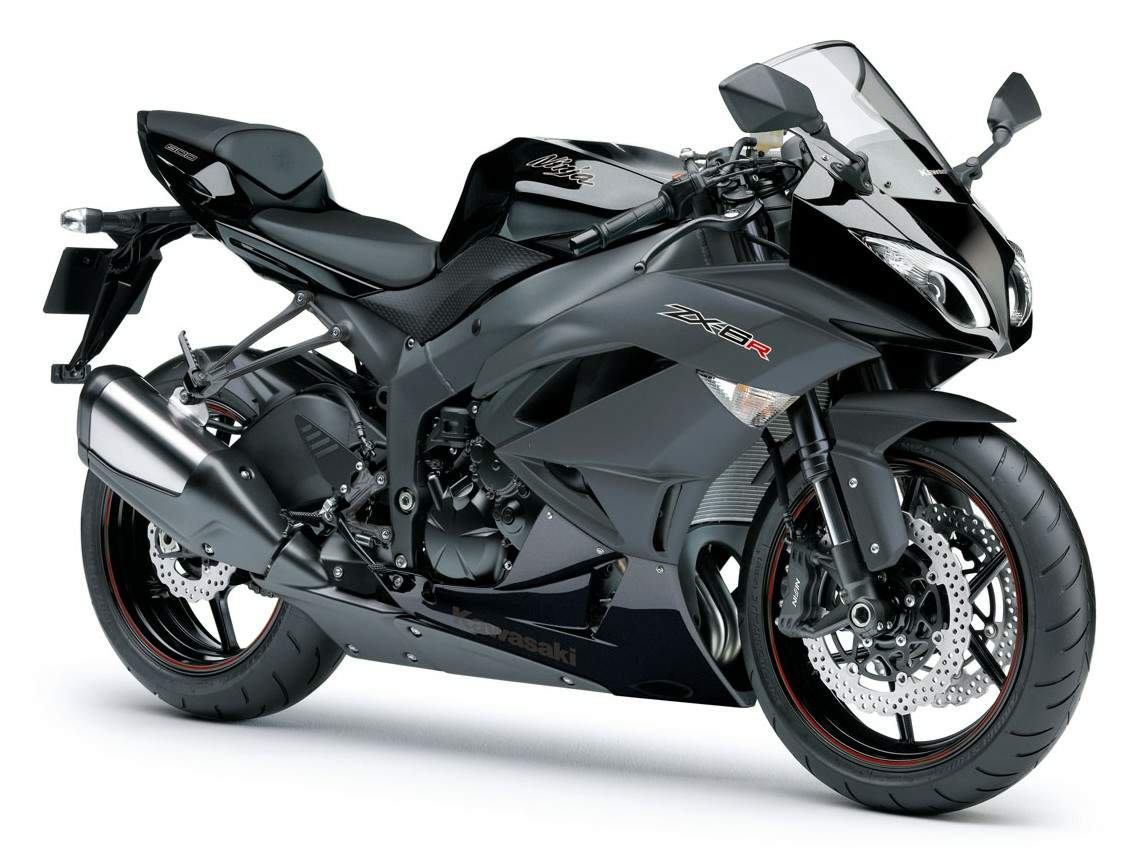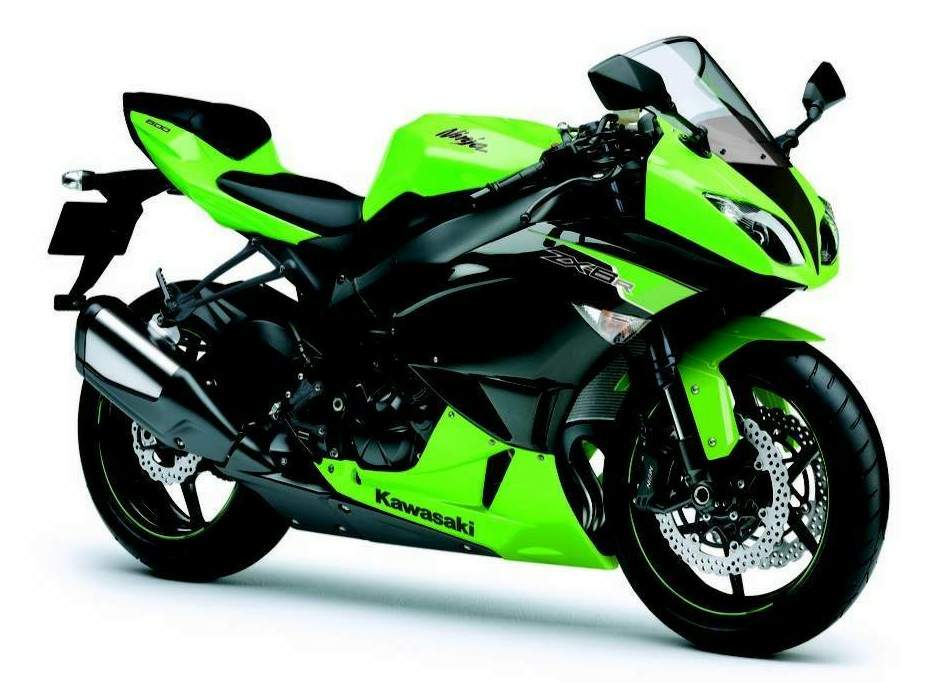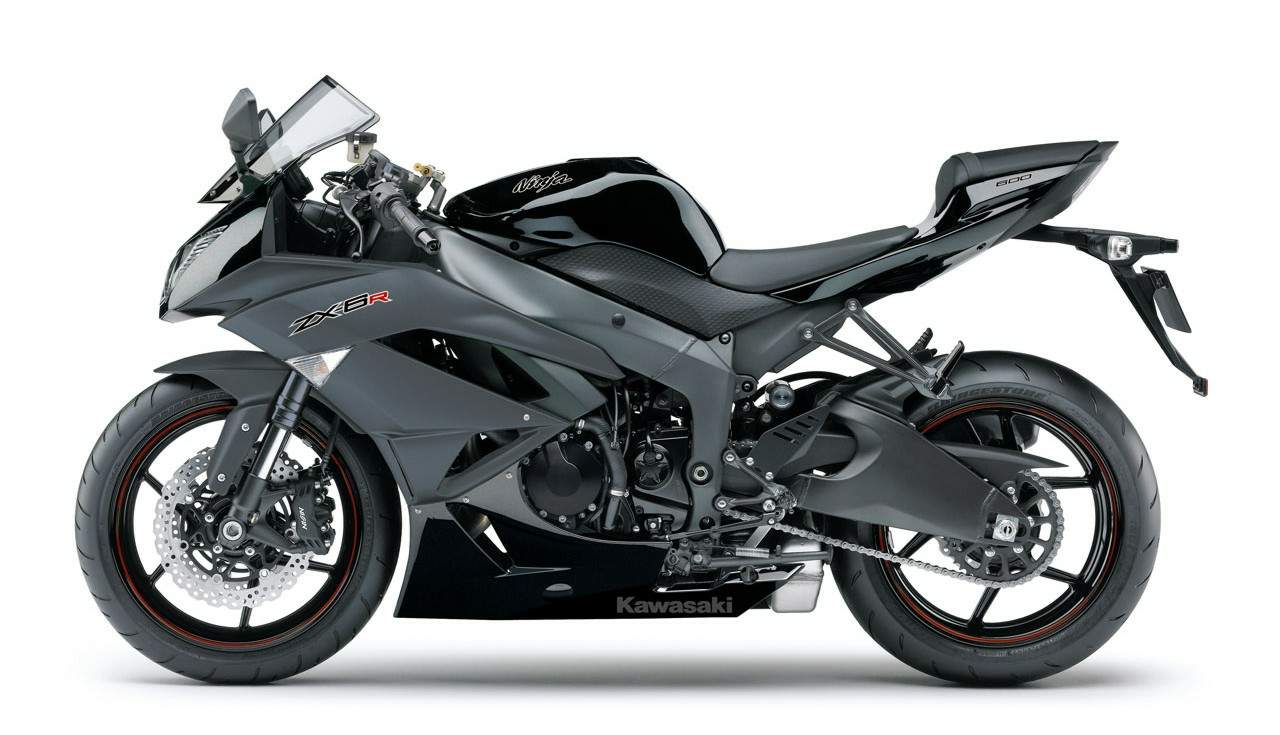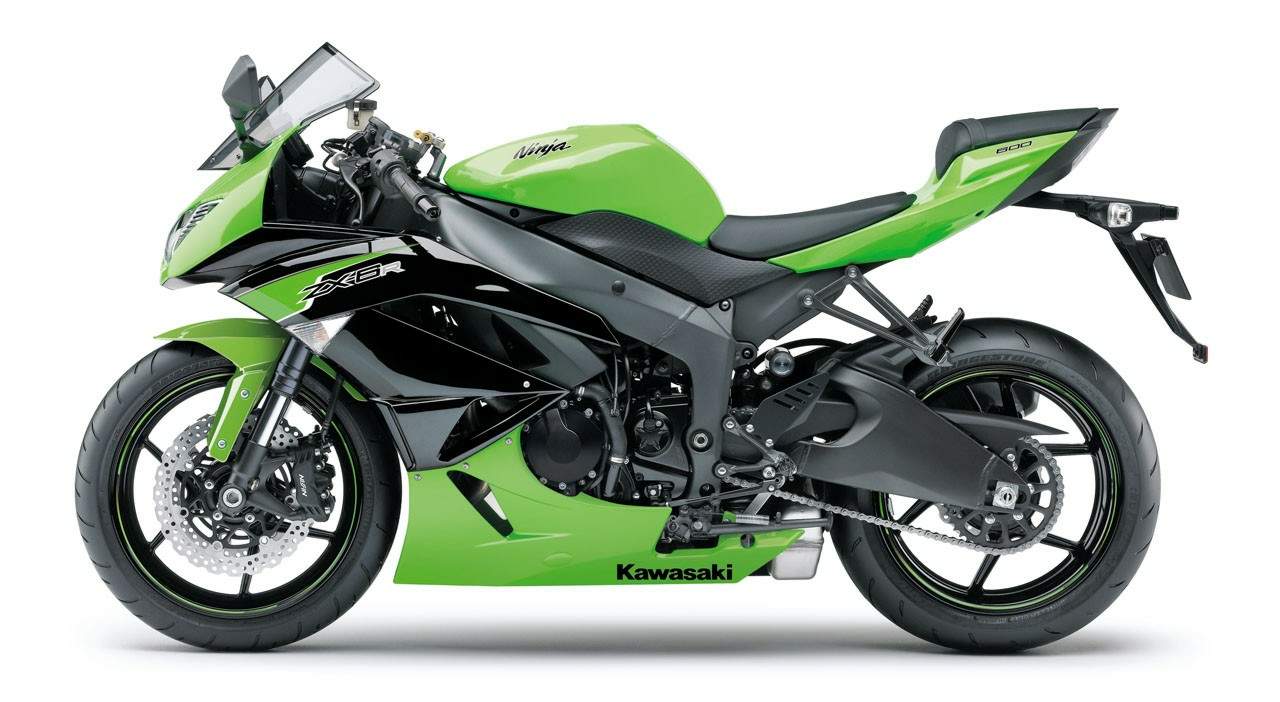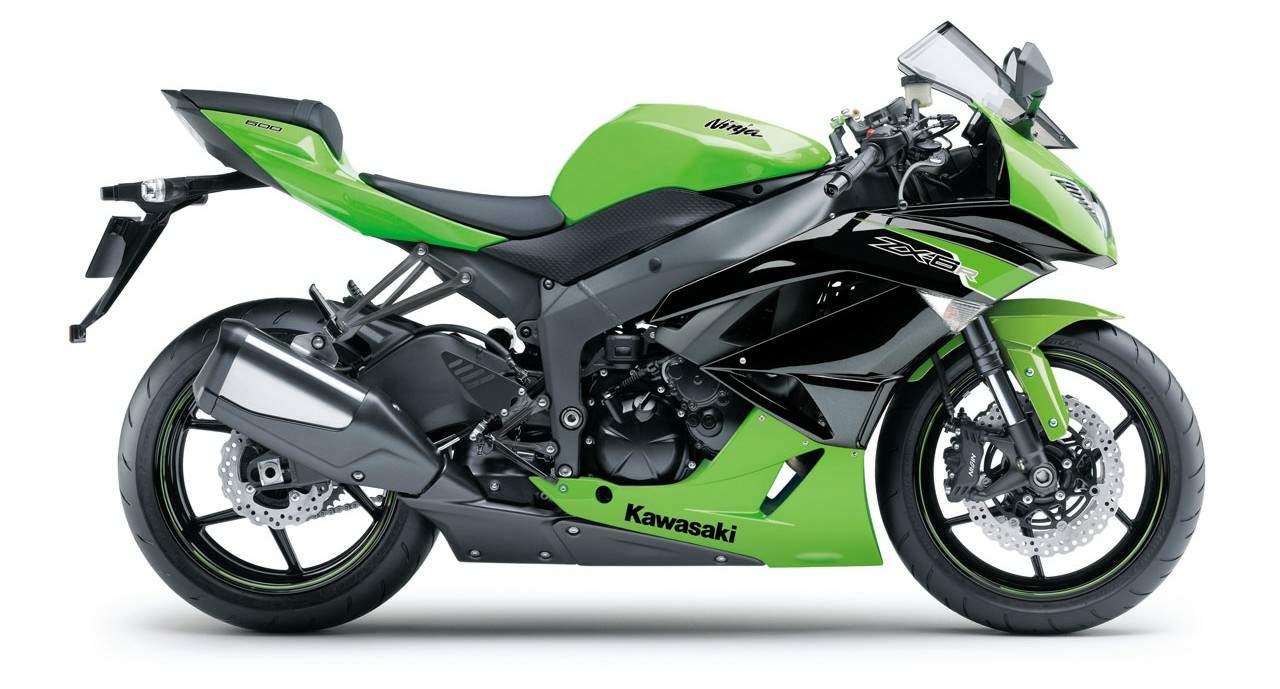
Aluminum perimeter, Rake / trail: 24 deg / 4.0
in.
Front Suspension
41 mm inverted Showa Big Piston Front fork with
top-out springs, stepless compression and rebound damping, fully-adjustable
spring preload,120mm 4.7 in.wheel travel
Rear Suspension
Bottom-Link Uni-Trak® with
gas-charged shock, top-out spring and pillow ball upper mount, dual-range
(high/low-speed) stepless compression damping, 25-way adjustable rebound
damping, fully-adjustable spring preload 134mm 5.2 in. wheel travel
Front Brakes
2x 300mm discs 4 piston calipers
Rear Brakes
Single 220mm disc 1 piston caliper
Front Tyre
120/70 ZR17
Rear Tyre
180/55 ZR17
Seat Height
815 mm / 32.3 in.
Curb Weight
191 kg
Fuel Capacity
17 Litres 4.5 gal
Consumption average
18.9 km/lit
Standing
¼ Mile
11.1 sec
Top Speed
257.8 km/h
Pound for Pound, the Mightiest Middleweight
Sportbike in History
Technological tour de force. That’s the only way to describe the
original Ninja® 600 sportbike of 1985. Packing a liquid-cooled 16-valve
inline-four (the first ever in a middleweight streetbike), wraparound
twin-spar frame, anti-dive fork and aesthetics snatched right from the
Grand Prix circuit, the original ZX600-A1 was a dominant,
bigger-than-life middleweight.
Apparently, some things never change.
The ZX™-6R carries that tradition of middleweight dominance to a
staggering level (one that would’ve blown minds in 1985). And in today’s
ultra-competitive 600 supersport market, where technology, racetrack
success and streetbike acumen can change dramatically year by year,
that’s saying a lot. Don’t believe us? Then ask the many top-level
magazines and web sites that picked the current-spec ZX-6R as Best
Middleweight. It was an absolutely dominating 600 shootout performance –
and one sure to be replicated due to the ZX-6R’s track-honed DNA and
seamless all-around capability.
That DNA begins with a 16-valve, DOHC inline-four engine that’s
everything a top-shelf middleweight powerplant should be: supremely
powerful, smooth, and blessed with hammer-like reliability. Critics
everywhere agree the ZX-6R runs and performs like a larger-displacement
motorcycle, and one that packs a rolling chassis that out-handles and
out-suspends all others. It’s a perfect combination for street riders,
track day junkies and racers alike, a flexibility that helps explain its
many 600 comparo victories.
It all starts with the ZX-6R’s jewel-like
engine, a 599cc assemblage of everything Kawasaki knows about powerplant
building, and the result of untold hours of testing and refinement
garnered from dyno room to racetrack and back again. Squeezing big power
from small displacement has been a Kawasaki forte for many years, from
the 350cc A7 Avenger to the 500cc H1, and from that first Ninja 600 to
this latest ZX-6R, class leading power is a Kawasaki sportbike
birthright.
And there’s more than peaky top-end power, too. The engine’s dual cams,
16 valves, 13.3:1 compression and 38mm throttle bodies produce the sort
of smooth low-end and mid-range power that make dealing with traffic,
surface streets and everyday riding a much more agreeable affair. Add to
that superb throttle response and liquid-smooth control feel and you
have a supersport motorcycle with commuting manners that easily match
its phenomenal racetrack prowess.
Much of this smooth, rheostat-like power delivery is achieved through
outstanding combustion efficiency. Cylindrical guides in the top of the
airbox guide the fuel charge into the intake funnels directly to reduce
buffeting and improve cylinder filling. Advanced cylinder head porting
slams the air/fuel charge into and out of the combustion chamber
post-haste, while high-current secondaries in the ignition coils provide
hot, consistent spark at all rpm for maximum combustion impact. The
engine’s mid-range performance also benefits from double-bore velocity
stacks with inlets at two different heights, special-profile pistons
with low piston-ring tension for reduced friction, and advanced cam
chain guides for the highest degree of cam-chain stabilization.
This ultra-strong midrange power not only
provides arm-stretching drive out of corners. It also offers
unparalleled controllability and the sort of precise throttle control
that pays big dividends when making mid-corner power adjustments while
stringing a set of corners together on a snaky backroad or while
negotiating that tricky set of turns at your favorite racetrack.
In keeping with its racing heritage, the ZX-6R employs a cassette-type
transmission that greatly simplifies gearing changes at the track,
reducing set-up time and allowing more time for riding. A high-tech
slipper clutch – hardware usually found only on high-end racebikes –
allows quick, effortless downshifts when diving into slower corners from
big speed without upsetting the chassis.
Chassis control, of course, is the other half of the 600 supersport
equation, and the ZX-6R once again dominates the field with its
class-exclusive Big Piston Front fork, fully adjustable shock, ideal
engine placement, optimum frame rigidity and the very latest in mass
centralization.
The Ninja ZX-6R’s lean physique is fundamental to its superior handling,
with every component carefully scrutinized for minimal weight. For
instance, the intake resonator box and supports for the instrument panel
and mirrors are unitized with the enlarged – to optimize intake volume –
ram air duct, both of which contribute to weight savings and improved
rigidity. Camshafts are made of lightweight chrome-moly steel, while
magnesium engine covers also help shed pounds. Internal engine parts
such as transmission, oil pump and starter gears are carefully
engineered for maximum strength and minimal weight.
If less weight is great, top-shelf suspension
technology to control it is even better, and the ZX-6R packs plenty. A
perfect example is the ZX-6R’s revolutionary Showa-built BPF (Big Piston
Front fork) front suspension, which is one large technological step
beyond the cartridge-type fork used on other 600s. The magic behind the
Big Piston fork is its larger-diameter internal piston, which allows a
reduction in damping pressure for smoother action and better front end
feedback – especially under braking and initial corner turn-in.
Additionally, the BPF eliminates many of the internal components used in
a cartridge-type fork, simplifying construction and resulting in a
lighter overall fork weight. The result is more control and better
feedback, just what you need while ripping through your favorite
right-hander during a track day, or tip-toeing along that rain-slicked
backroad on your way home from work.
Suspension out back is just as advanced, and includes a gas-charged
shock with dual-range (high- and low-speed) stepless compression
damping, 25-way adjustable rebound damping and fully adjustable spring
preload mated to a bottom-link Uni-Trak® system.
Kawasaki’s acclaimed triple petal disc brake
package – with radial-mount calipers up front – is as refined and
powerful as ever. Highly rigid four-piston calipers and 300mm petal-type
rotors provide awesome power and excellent feel at the front wheel. The
220mm rear petal-type disc features a pedal coaxially mounted with the
footpeg for increased mid-stroke braking efficiency and optimum pedal
feedback. Its master cylinder reservoir mounts forward of the swingarm,
freeing space around the footpeg, reducing parts and contributing to
weight savings. It all adds up to unflappable composure under braking,
and helps provide the precise control and feel that allows supersport
racers to enter corners harder – and everyday riders to slow things down
comfortably and controllably.
To better capitalize on this advanced level of light weight and precise
control response, the 6R’s ergonomics have been fine tuned to enhance
feedback from bike to rider and vice versa. The seat-peg-bar
relationship places the handlebars close to the rider and angled for a
highly intuitive riding position. The fuel tank cover is flared just so
around its top edge, providing a large contact patch and contributing to
excellent rider feedback – similar to the new ZX-10R. A narrow rear
sub-frame and seat leading edge provide a slim, highly flexible riding
position for moving around the bike, as well as a shorter reach to the
pavement.
A highly refined fairing and one-piece front fender provide excellent
aerodynamics and airflow to the radiator, along with superb wind
protection for the rider and minimal crosswind buffeting. An inner rear
fender mounted above the swingarm also reduces turbulence and helps keep
the back of the motorcycle aerodynamically clean. The ZX-6R’s instrument
panel provides plenty of at-a-glance information, while a race-spec
adjustable twin-tube Öhlins steering damper with relief valve completes
the track-ready package.
It’s all here: power, handling, light weight, advanced technology and
typical Kawasaki reliability – exactly what you need to tame the
racetrack, the mean streets – or both.
Kawasaki Ninja ZX-6R Features and Benefits
• Lean physique, low mass, forceful power, controllable power delivery
and precise overall control
• 599cc inline-four with DFI® is lightweight yet powerful
• Fully adjustable front and rear suspension includes the Showa Big
Piston Front fork (BPF), which offers fantastic wheel and chassis
control
• Lightweight aluminum chassis places the engine in the ideal location
for excellent handling and rider feedback
• Radial-mounted front brake calipers and radial-pump front brake master
cylinder offer superb braking power and control
• Race-quality adjustable Öhlins steering damper comes standard
• Slipper-type back torque-limiting clutch offers quick downshifts
without chassis agitation
• Named one of Cycle World magazine’s 10 best bikes
Lightweight Engine
• Camshafts are made of chrome-moly steel
• Lightweight magnesium engine covers are standard
• Lightweight top injector mounting plate
• Lightweight transmission gears and gear dogs
• Lightweight oil pump and starter gears
• Inlet pressure pulse monitor does away with cam angle sensor, further
contributing to lightness
• Cassette-type transmission makes it easy to quickly swap gear ratios,
reducing set-up time at the track
Massive Mid-range Performance
• Double-bore velocity stacks feature inlets at two different heights
for increased performance in both the mid
• and high-rpm ranges
• Cam and tappet nitriding enables high-load cam profiles for maximum
performance
• Crown-finished pistons
• Molybdenum-coated piston skirts for reduced friction and engine
break-in
• Low-tension piston rings reduce mechanical losses
• Advanced cam chain guides stabilize chain motion and further reduce
mechanical losses
• Exhaust collector layout contributes to superb low
• and mid-range performance while maintaining high-rpm performance
Precise Throttle Control
• Cylindrical guides in the top of the air cleaner box ensure accurately
sprayed fuel mist from the secondary injectors into the intake funnels,
improving combustion efficiency
• Long throttle bodies between oval sub-throttles and round main
throttles yield a smooth intake transition for reduced inlet turbulence
and increased efficiency
• Advanced cylinder porting delivers excellent cylinder filling and
scavenging
• High-current secondary coil circuitry for optimum combustion
efficiency
Lightweight Chassis
• Twin spar aluminum frame is both lightweight and rigid, and places the
engine in the optimum position for superb handling and rider feedback
• The sub-frame is a two-piece aluminum die-casting consisting of a
front and rear section
• The lightweight sub-frame is very narrow for a compact and slim rear
end
• Intake resonator box and supports for the instrument panel and mirrors
are unitized with the ram air duct, contributing to weight savings and
increased rigidity
Tuned Chassis Balance and Mass Centralization
• Frame stiffness around the swingarm pivot and the rear engine mounts
optimizes front-rear rigidity balance
• Engine is rotated forward around the output shaft for steeper intake
angle and excellent CG
• Exhaust layout with a short side muffler keeps the weight low
• Exhaust pre-chamber further contributes to mass centralization
Ergonomics and Chassis Feedback
• Seat-peg-bar relationship places handlebars close to the rider; bars
are angled for a highly intuitive and comfortable riding position
• Fuel tank is flared around its top, similar to the ZX™-10R, providing
a large contact patch for excellent rider feedback
• Slim-waisted fuel tank makes it easy for the rider to grip the tank
with their knees, or to hang off in turns
• Sculpted seat allows the rider to shift their body far back on the
rear seat step, helping to reduce rider fatigue
• Steep rake angle for quick steering response and enhanced
communication from the front tire
• Rear brake master cylinder reservoir forward of the swingarm mount
frees up space around the footpeg for simplicity and weight savings
Low Seat Height
• Narrow rear sub-frame makes it easy to reach the ground
• Front of seat is narrow and low for a slim riding position and a short
reach to the pavement
Advanced Suspension
• ZX-6R features Showa’s Big Piston Front fork (BPF) design for
fantastic wheel and chassis control
• The BPF eliminates many of the internal components used in a
cartridge-type fork, simplifying construction and resulting in lighter
overall fork weight
• The large diameter of the BPF’s internal piston allows a reduction in
damping pressure for better feedback and smoother action
Brakes
• Radial calipers and 300mm petal-type discs up front offer superb
braking power and control
• 220mm rear petal-type disc
• Rear brake lever is mounted coaxially with the footpeg for excellent
mid-stroke braking efficiency and optimum feel
Race-quality Steering Damper
• A race-quality adjustable Öhlins steering damper with relief valve and
twin-tube design is fitted as standard equipment
Additional Features
• Highly evolved fairing offers great wind protection and minimizes
cross-wind effects
• Position lamps are integral to the projector beam headlights
• One-piece fender offers excellent aerodynamics
• Inner fender above the swingarm helps to reduce turbulence and keeps
the undertail clean
• Front brake hose routing with a three-way joint at the lower triple
clamp facilitates bleeding air from the brake lines
• Instrument panel gives the rider plenty of information at a glance
NOTE: Some of the photos on
Motorcycle Specs are owned by somebody. If you see any of your
photos, you can let me know so that I can acknowledge it, or if
you object to it, I can remove it altogether. If any copyright
holder objects to their articles being placed on Motorcycle
Specs, it will be removed upon request. Any correction or more
info on these bikes will kindly beappreciated
Contact MePrivacy
Policy
Website Stats