|
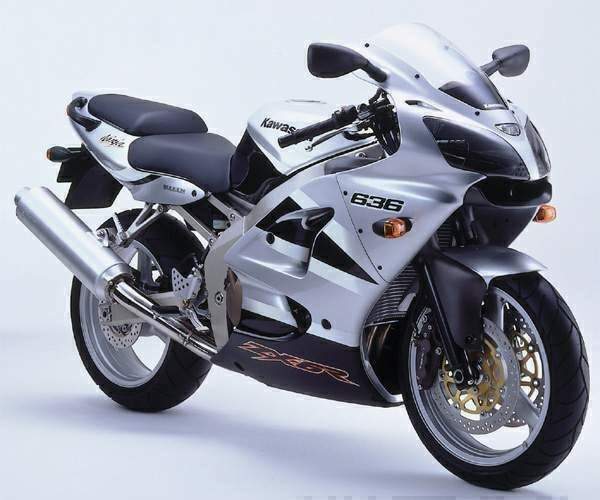
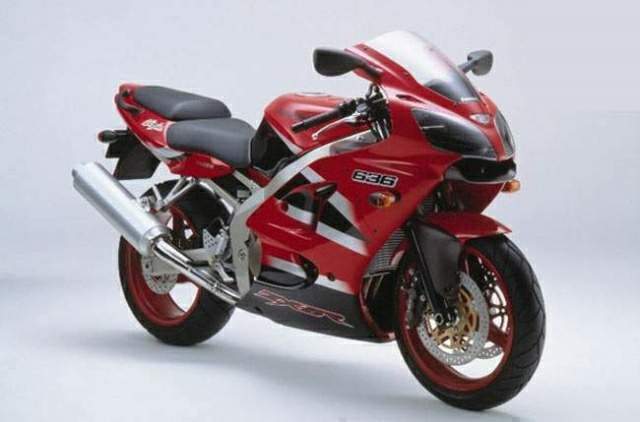
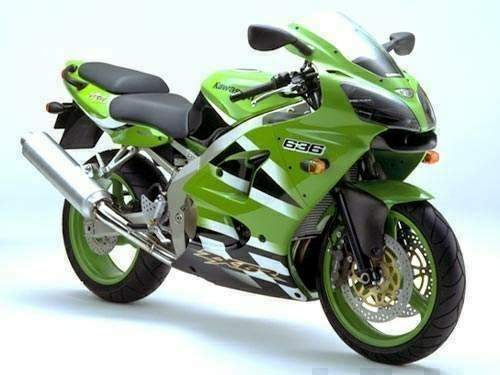
Kawasaki ZX-6R

|
Make Model |
Kawasaki ZX-6R (ZX 636) |
|
Year |
2002 |
|
Engine |
Liquid cooled, four stroke, transverse four
cylinder, DOHC, 4 valves per cylinder |
|
Capacity |
636 |
|
Bore x Stroke |
68 x 43.8 mm |
|
Compression Ratio |
12.6:1 |
|
Induction |
4x Mikuni BDSR36R carbs. |
|
Ignition /
Starting |
Digital /
electric |
|
Max Power |
118 hp 86 kW @ 12500 rpm |
|
Max Torque |
71 Nm @ 1000 rpm |
|
Transmission /
Drive |
6 Speed /
chain |
|
Front Suspension |
46 mm cartridge fork with
12-way rebound, 12-way compression damping and spring preload adjustability |
|
Rear Suspension |
Bottom-Link Uni-Trak with
gas-charged shock, 18-way rebound, 20-way compression damping and spring
preload adjustability |
|
Front Brakes |
2x 300mm discs 6 piston
calipers |
|
Rear Brakes |
Single 220mm disc 1 piston
caliper |
|
Front Tyre |
120/65 ZR17 |
|
Rear Tyre |
180/55 ZR17 |
|
Dry-Weight |
174 kg |
|
Fuel Capacity |
18 litres (3L) |
|
Consumption average |
18.9 km/lit |
|
Standing
¼ Mile |
11.0 sec / 203.0 km/h 127 mp/h |
|
Standing 0 - 1000 m |
20.1 sec / 249.9 km/h |
|
Top Speed |
262. mp/h |
|
Reviews |
Sport Rider
/
Motorbikes Today
|

Kawasaki's ZX-6R was first introduced in 1994 and
has been a source of much success for Kawasaki, both in the sales charts and on
the race track. The race track efforts culminated in Australia's Andrew Pitt
winning the 2001 World SuperSport Championship for Kawasaki.
In a surprising move though Kawasaki has gone over the traditional 600cc
SuperSport capacity limit to produce a new 636cc ZX-6R for the road going
public. Obviously this capacity increase will bring a small boost in both power
and torque.
The increase to 636cc was achieved by the use of a 2mm larger bore, now out to
68mm. BDSR36R carburettors with a throttle position sensor deliver the fuel/air
mixture through a new cylinder head.
The 4-2-1 exhaust system appears externally as a 4-1, but features internal
baffles for improved mid-range. The main collector pipe has a full-diameter,
unobstructed path to the silencer for maximum high-speed exhaust flow. The
Stainless muffler uses a lightweight aluminium cover, the muffler bolts are
treated to resist corrosion.
Like a lot of the 2002 Kawasaki range the ZX-6R scores a larger shift shaft for
improved durability.
Magnesium covers for the head, sump, clutch, generator and sprocket help to
reduce engine weight.
46mm cartridge front forks control the front end and are fully adjustable for
preload, 10-step compression and 12-step rebound damping. The interior finish of
the fork sliders is improve and along with new damping rates delivers a more
responsive action.
A nitrogen charged rear piggyback reservoir shock is fully adjustable and
provides the facility to change the ride height.
Differential bore, 6-piston Tokico front brake calipers deliver superb braking
performance with one 24mm and two 27mm diameter pistons. The semi-floating,
radially drilled 300mm stainless steel front disc rotors are 5mm thick to resist
heat induced warpage. The rear brake caliper assembly comes directly from the
ZX-9R.
An aggressive new ZX-9R style upper fairing gives the 636 a racy appearance.

For 2002, Kawasaki took a novel approach to the
highly competitive 600cc sports class - it simply bored-out its ZX-6R engine
by 2mm (0.07in) to 68mm (2.7in), making the capacity 37cc bigger. This was
made possible by an earlier change - the 2000-model update had replaced the
old engine's steel liners with a plated aluminium bore.
The new design gave extra space round the
cylinders, which allowed the larger bore. The engine cases had to be
modified to provide more gasket area around the larger cylinders, and the
cylinder head was modified to provide the optimum combustion chamber shape
for the new bore size. The rest of the ZX-636R is largely unchanged from the
2001-model ZX-6R.
Stronger. Quicker. Lighter.
Every sportbike rider wants a clear “advantage” — a technological edge the
competition can’t touch. Well, the all-new Ninja® ZX-6R has it. More
displacement equals more muscle, so we gave the ZX-6R’s compact new DOHC
In-Line Four a displacement bump to 636cc. Next, we added wild 12.8:1
lightweight pistons, electronic fuel injection, a stratospheric redline for
peak power, and a close-ratio gearbox to maximize performance. And the ZX-6R
reflects Kawasaki’s passion for turning low mass into precise handling. We
started with a new pressed-aluminum perimeter frame and extruded aluminum
swingarm, then added a class-leading inverted 41mm front fork and
Bottom-Link UNI-TRAK® rear suspension with piggy-back shock. Super-wide
17-inch rims, Z-rated radial rubber, and Moto-GP inspired bodywork complete
this rather tantalizing picture. So let ’em cry foul. You and your advantage
will be long gone by then.
"All-out sportbike performance and aggressive styling" is the best way to
sum up the all-new 2003 Kawasaki NINJA® ZX-6R sportbike. Based on the
limited edition NINJA® ZX-6RR, the radical new ZX-6R boasts a redesigned
engine and crankcase with 37 extra cubic centimeters of displacement, an
electronic fuel injection system and an all-new chassis. These new features,
plus a host of additional design changes, are sure to leave the competition
hung out to dry. +

Features:
• All-new engine displaces 636cc due to a 2mm
larger bore. Composite chrome-plated cylinders with 5mm shorter skirts
reduce weight. The result is more mid-range punch than the competition.
• New cooling passages, new front cylinder head frame mount and oil routing
moved to inside the engine help improve efficiency and reduce weight.
• New camshaft profiles with smaller slotted sprockets, 10mm shorter valve
stems and single intake valve springs help reduce engine height and weight,
and improve power.
• Bottom-Link UNI-TRAK® rear suspension features remote piggy-back style
reservoir, stepless compression and rebound damping adjustment, threaded
rear ride height adjustment and a special top-out spring for more precise
control under heavy braking.
• Lighter, more compact radiator with new ring-style cooling fan.
• All-new Ram Air intake system routes the incoming air through a central
intake. Design of the front cowling directs air into the intake for improved
efficiency.
• Transmission features closer ratios for third through sixth gears. Revised
shift drum cam profile for improved shifting.
• Digital instrumentation in the cockpit includes a compact central
instrument for the following functions: radial tachometer, speedometer,
temperature, odometer, tripmeter, clock and stopwatch. Shift indicator lamp
adjustable for engine rpm and brightness.
• All-new aluminum perimeter frame is lighter, more compact. Rake is 25
degrees. Moving the swingarm pivot forward helps shift weight bias onto the
front wheel.
• New front 41mm inverted Kayaba cartridge fork features stepless adjustment
for compression and rebound damping. New top-out springs offer improved fork
action under hard acceleration.
• Bottom-Link UNI-TRAK® rear suspension features remote piggy-back style
reservoir, stepless compression and rebound damping adjustment, threaded
rear ride height adjustment and a special top-out spring for more precise
control under heavy braking.
• New tail section with lightweight LED taillights and aerodynamic inner
rear fender.
Rear disc brake measures 220mm and improved master cylinder ratios improve
both feel and performance.
• First for a production bike, radially mounted 4-piston front disc brakes
position the lighter yet larger calliper further away from the axle for
improved braking efficiency.
• Individual brake pads for each piston distribute heat more evenly and
offer more bite under hard braking.
• All-new Moto-GP styling and aerodynamic fairing are products of the
research in building the new GP four-stroke race machine.
|