|
|
|
|
Classic Bikes
Custom Bikes
Individual
Racing Bikes AJP
AJS
Aprilia
Ariel
Avinton / Wakan
Bajaj
Benelli
Beta
Bimota
BMW
Brough Superior
BRP Cam-Am
BSA
Buell / EBR
Bultaco
Cagiva
Campagna
CCM
CF Moto
Combat Motors
Derbi
Deus
Ducati
Excelsior
GASGAS
Ghezzi Brian
Gilera
GIMA
Harley Davidson
Hero
Highland
Honda
Horex
Husaberg
Husqvarna
Hyosung
Indian
Jawa
Kawasaki
KTM
KYMCO
Laverda
Lazareth
Magni
Maico
Mash
Matchless
Mondial
Moto Guzzi
Moto Morini
MV Agusta
MZ / MuZ
NCR
Norton
NSU
Paton
Peugeot
Piaggio
Revival Cycles
Roland Sands
Royal Enfield
Sachs
Sherco
Sunbeam
Suzuki
SWM
SYM
Triumph
TVS
Ural
Velocette
Vespa
Victory
Vincent
VOR
Voxan
Vyrus
Walt Siegl
Walz
Wrenchmonkees
Wunderlich
XTR / Radical
Yamaha
Zero
Video
Technical
Complete Manufacturer List
|
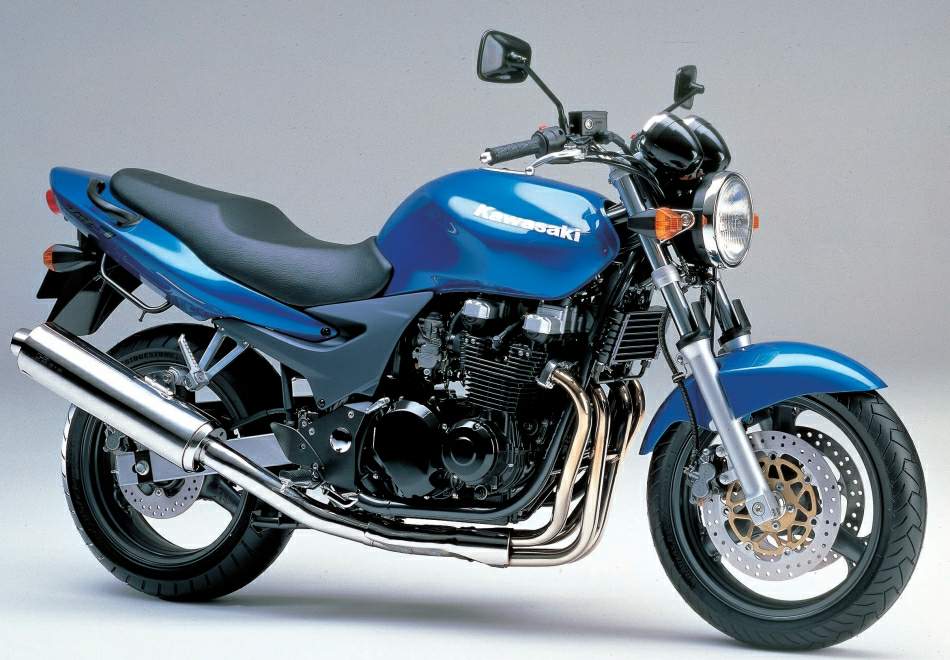
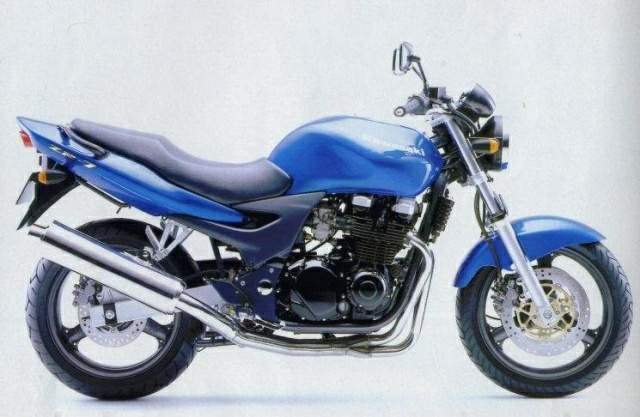
Kawasaki ZR-7
The ZR-7 was first introduced in 1999, although the engine specification could have been from 25 years earlier. That's because the ZR-7 is based around a slightly updated version of the Z750 engine of 1973.
The air-cooled four-cylinder engine is decidedly low-tech, but it offers economical, reliable running, with a lazy, flexible power delivery. The chassis is more up-to-date, but not by much. A steel-tube cradle frame is more than stiff enough for the power, and a monoshock rear suspension unit is adjustable for preload. The twin-piston front brake calipers aren't peformance parts, but provide sufficient stopping power, and the modern tyre sizes allow decent sport-touring rubber to be fitted. Grippy rubber just shows up the lacklustre nature of the rest of the chassis though, and the ZR-7 quickly runs out of ground clearance in fast bends.
However, the ZR-7 does win out in the equipment stakes. The fuel tank holds a massive 22 Litres (4.8 gal), the exhaust is long-lasting stainless steel and in addition there's a large storage space under the comfortable dual seat. For 2001, Kawasaki launched a faired version of the ZR-7, the ZR-7S. While the small half-fairing certainly improved the bike's practicality and distance capability, the extra weight didn't help either the engine or the brakes, and the ZR-7S was still outclassed by Suzuki's Bandit, Yamaha's Fazer and the faired Honda Hornet'S' in almost every way.
Kept in a low-performance commuting or novice bike role, the ZR-7 is just about up to the job. But it is the superiority of its competitors that relegates the ZR-7 to the bottom of many riders' list. Having said that, the ZR-7 has proved popular in some continental markets: extreme customized ZR-7s are, strangely, a common sight in France.
|
|
|
Any corrections or more information on these motorcycles will be kindly appreciated. |