|
|
|
|
Classic Bikes
Custom Bikes
Individual
Racing Bikes AJP
AJS
Aprilia
Ariel
Avinton / Wakan
Bajaj
Benelli
Beta
Bimota
BMW
Brough Superior
BRP Cam-Am
BSA
Buell / EBR
Bultaco
Cagiva
Campagna
CCM
CF Moto
Combat Motors
Derbi
Deus
Ducati
Excelsior
GASGAS
Ghezzi Brian
Gilera
GIMA
Harley Davidson
Hero
Highland
Honda
Horex
Husaberg
Husqvarna
Hyosung
Indian
Jawa
Kawasaki
KTM
KYMCO
Laverda
Lazareth
Magni
Maico
Mash
Matchless
Mondial
Moto Guzzi
Moto Morini
MV Agusta
MZ / MuZ
NCR
Norton
NSU
Paton
Peugeot
Piaggio
Revival Cycles
Roland Sands
Royal Enfield
Sachs
Sherco
Sunbeam
Suzuki
SWM
SYM
Triumph
TVS
Ural
Velocette
Vespa
Victory
Vincent
VOR
Voxan
Vyrus
Walt Siegl
Walz
Wrenchmonkees
Wunderlich
XTR / Radical
Yamaha
Zero
Video
Technical
Complete Manufacturer List
|
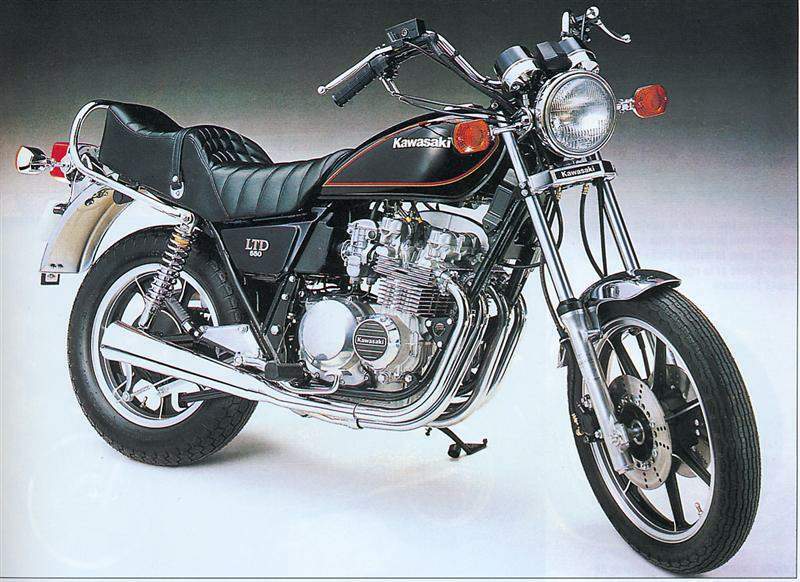
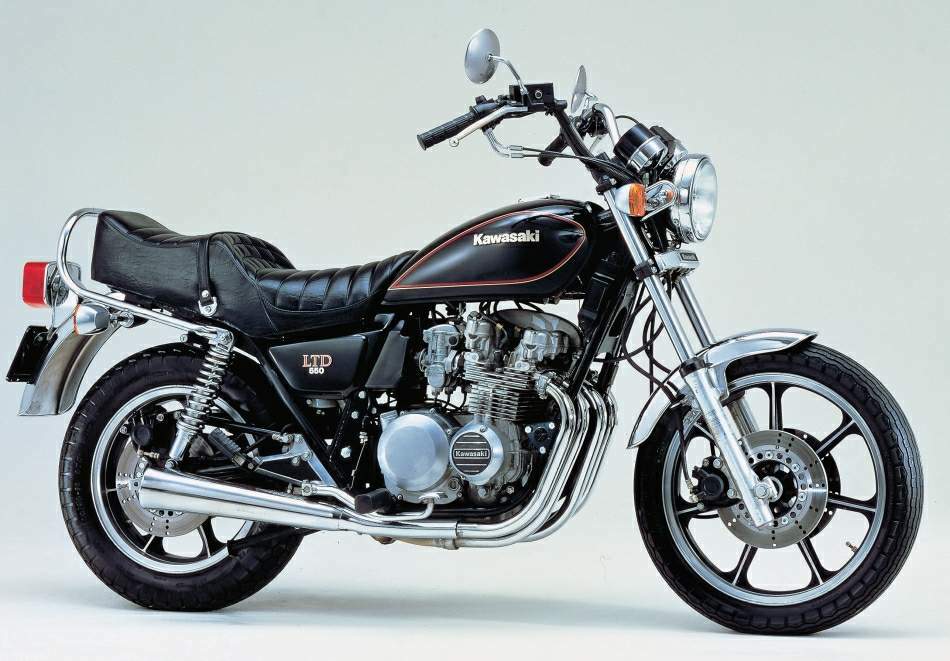
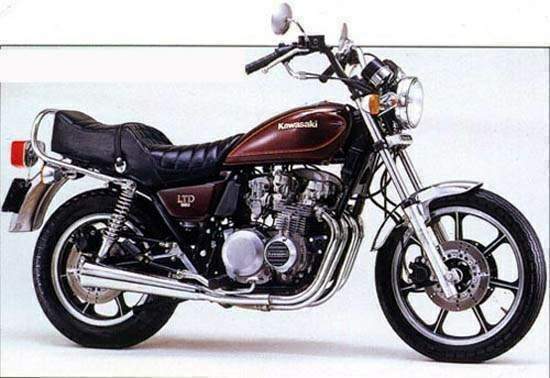
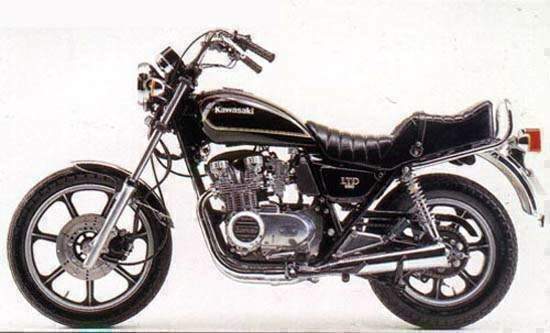
Kawasaki Z 550LTD
Updated 1980 version of the earlier, unsung 500-4, the Z550 was to suffer, in its turn, from the attention given a few months later to a more developed model, the GP550. But in the period before that startling newcomer arrived, the 550 was able to establish something of a reputation for itself as a crisp-handling middleweight giving away very little in speed to the old-established 650 from the same factory. It marked also the beginning of a new styling phase at Kawasaki in which colour-matching (generally in rather understated shades) and an angular line, replacing the adipose curves of the 1970s' models, were to be carried through the range. Thus the 550 was finished in one colour — usually silver-blue — on tank, side-covers, seat support and tail, and front mudguard, with the cast-aluminium wheels in matt-black picked out with polished metal. There was little chromium plating other than on the exhaust system, which was arranged as two-into-one, for each side, with megaphone-shape silencers taken up at an appreciable angle towards the rear-wheel spindle. The slightly inclined engine was black finished, the edges of the fins being polished. The front fork was of leading-axle type in the style favoured by Kawasaki for some others — but, inexplicably, not all — among their sporting bikes. Braking was by new, lightweight twin discs at the front anda7indiameterdrumintherearwheel. Minor 'convenience' features abounded on the 550, including combined ignition and steering-lock control, view windows for checking fluid levels in front-brake hydraulics and crankcase, stoplight-failure light and an interlock system requiring the clutch lever to be pulled in before the engine would fire. With a six-speed gearbox (with patent neutral-finding device) and a wide spre** of power from 3,000 rpm to near the redline limit of 9,500, the Z550 was a M» faster, in all circumstances, than the 50U. Small wonder that the canny men a US styling for Kawasaki's 750-4: the Z750 LTD has a high-rise handlebar and stepped dualseat, and became increasingly popular in the UK during the early 1980s
|
|
|
Any corrections or more information on these motorcycles will be kindly appreciated. |