|
Make Model |
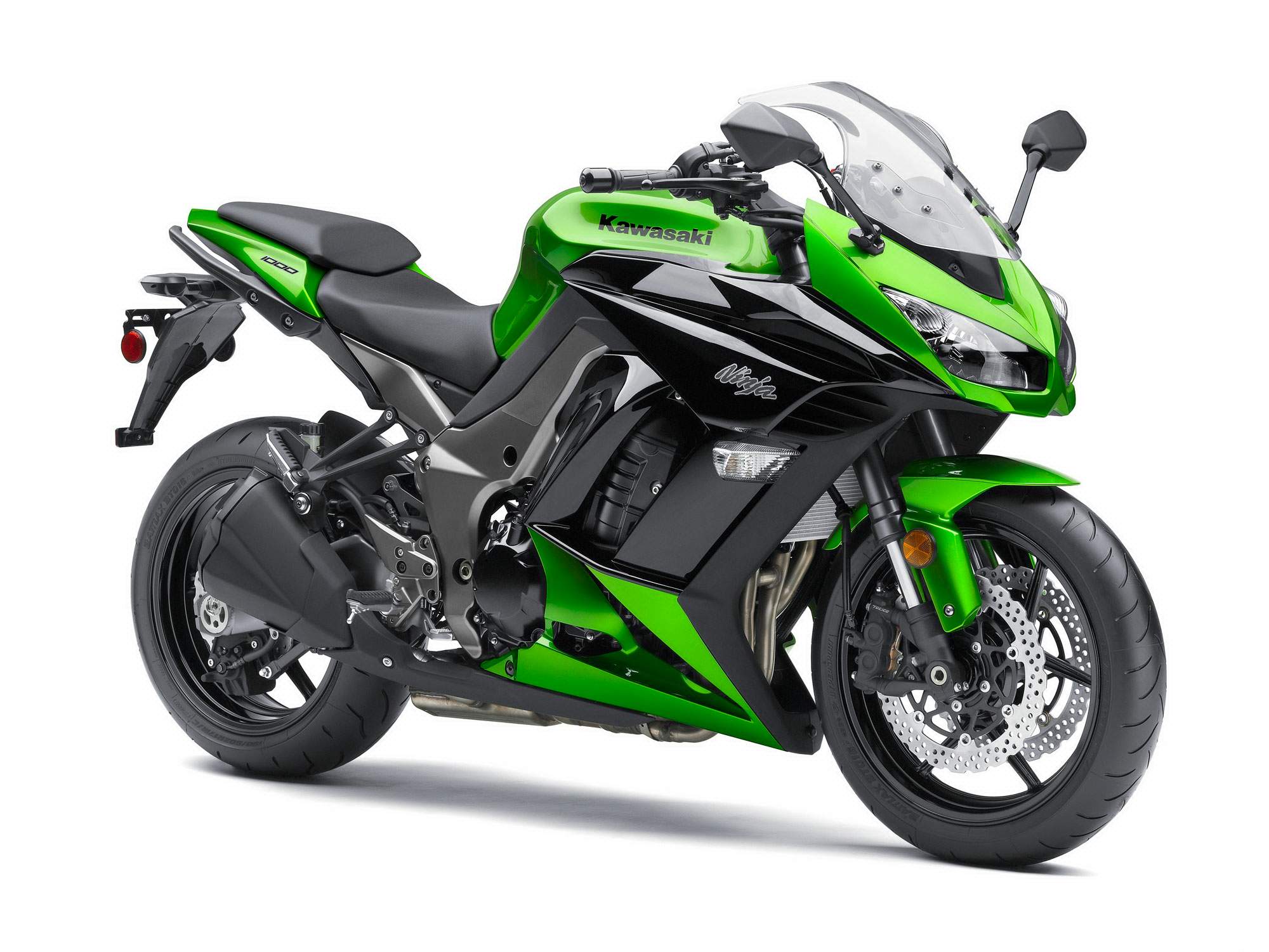
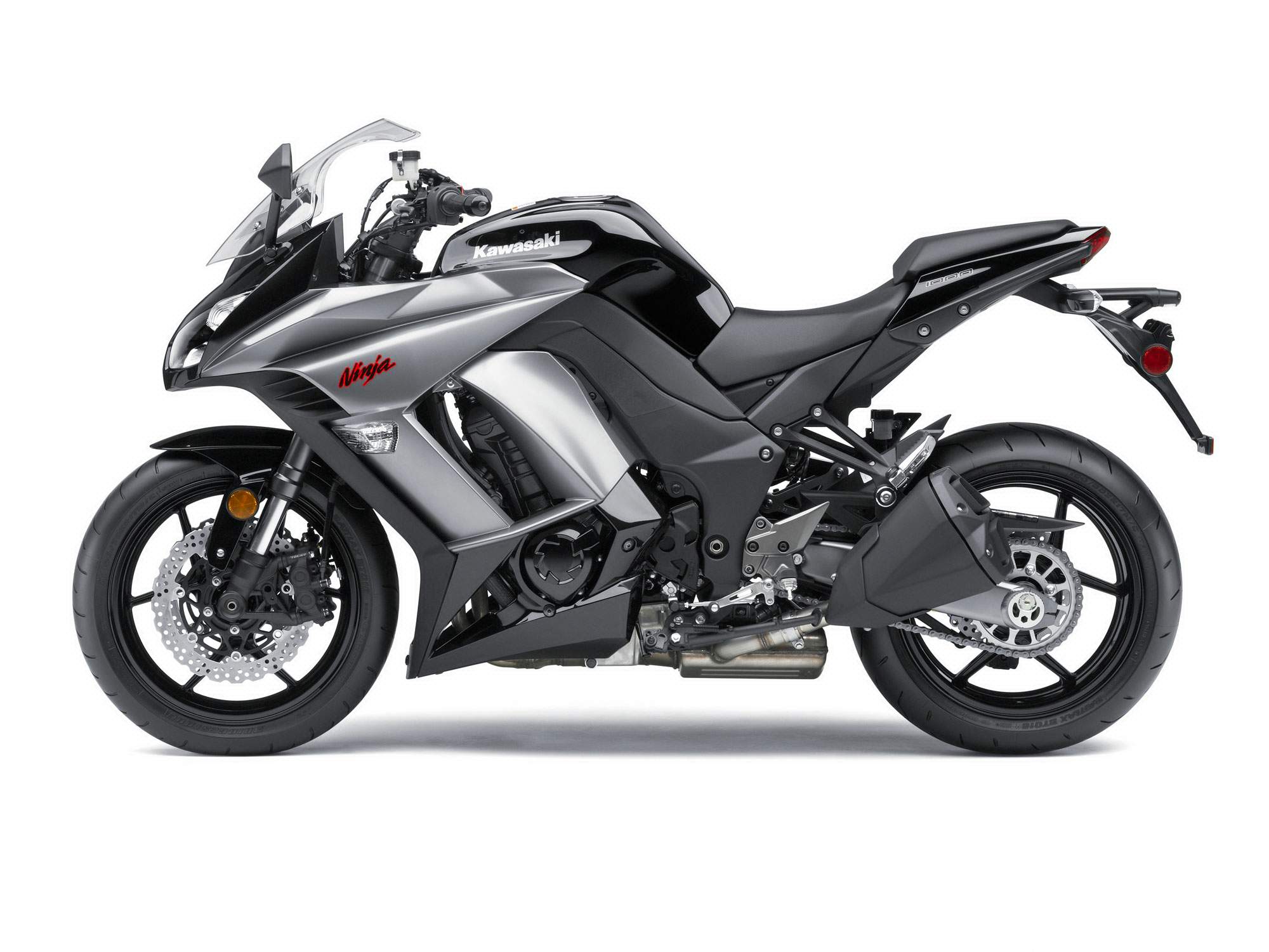
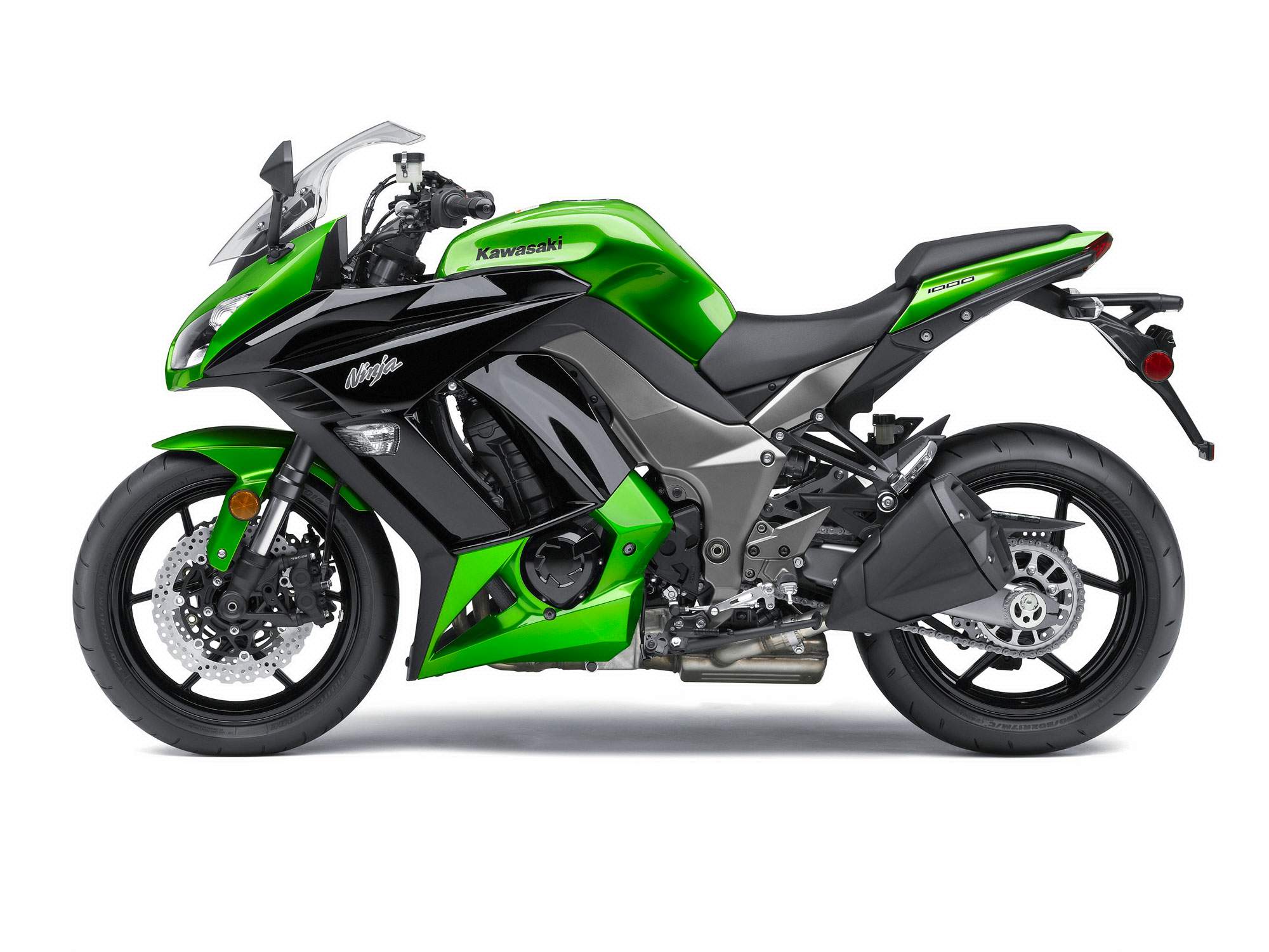
Kawasaki Ninja 1000 |
|
Year |
2012 |
|
Engine |
Liquid cooled, four
stroke, transverse four cylinder, DOHC, 4 valve per cylinder. |
|
Capacity |
1043 |
|
Bore x Stroke |
77.0 x 56.0mm |
|
Compression Ratio |
11.8:1 |
|
Induction |
DFI® with four 38mm Keihin throttle bodies, oval
sub-throttles |
|
Ignition /
Starting |
TCBI with digital advance
/ electric |
|
Max Power |
101.5 kW 138 hp @ 9600 rpm |
|
Max Torque |
110 Nm 11.2 kg-fm @ 7800 rpm |
|
Transmission /
Drive |
6 Speed / chain |
|
Gear Rato |
1st 2.600 (39/15) 2nd 1.950 (39/20) 3rd 1.600 (24/15) 4th
1.389 (25/18) 5th 1.238 (26/21) 6th 1.136 (25/22) |
|
Frame |
Type: Aluminum Backbone |
|
Rake/Trail |
24.5 degrees / 4.1 in. |
|
Front Suspension |
41 mm inverted fork with rebound damping and progressive compression and
preload adjustment |
|
Rear Suspension |
Back-link rear horizontal coupling charged gas, progressive rebound damping
and spring preload adjustment |
|
Front Brakes |
2x 300mm discs 4 piston caliper |
|
Rear Brakes |
Single 250mm disc 1 piston caliper |
|
Front Tyre |
120/70 -R17 |
|
Rear Tyre |
190/50- ZR17 |
|
Seat Height |
822 mm / 32.3 in. |
|
Weight |
228 kg - 231 kg ABS / 509.4 lb |
|
Fuel Capacity |
19 Litres /
5.0 gal. |

From the earliest days of Japan Inc.’s legendary
chokehold on the open-class streetbike category, Kawasaki has been right there,
building motorcycles that have blown away the press, the public and nearly every
performance record of note. From the original Z-1 to the ZZR®1200, these
do-it-all motorcycles combined the power, handling, comfort and aesthetic appeal
that repeatedly dominated their categories.
And in the case of the ultra-capable 2012 Ninja® 1000, little has changed.
Like the original – and highly acclaimed – Ninja 1000 of 1986, the 2012 version
delivers a dominating mix of power, handling, looks, technology and rideability.
Here’s a sportbike that delivers an aesthetic uppercut the instant you lay eyes
on it – and then follows up the punch with brilliant all-around performance
you’ll quickly learn to love. And for those who want the ultimate in braking
technology and performance, Kawasaki offers an ABS version of the Ninja 1000 for
2012. This system offers confidence-inspiring braking action on all types of
surfaces.
The Ninja is blessed with rideability – an incredible blend of ability on the
street and extreme ease of operation. The source of all this two-wheeled
goodness is Kawasaki’s own – and now legendary – Z1000 super standard, the
engine and chassis platform upon which the Ninja 1000 is based. The Z1000 has
earned some of motorcycling’s highest accolades, including the prestigious
Motorcycle of the Year "MOTY" award from Motorcyclist magazine and a slot in
Cycle World’s Ten Best collection as the "Best Standard" for 2010 and 2011. With
guts like that, it’s easy to see where the big Ninja’s impressive chops come
from.
With the Z1000’s impressive engine and chassis package as a starting point,
Kawasaki engineers added beautifully swooping bodywork and a handful of
brilliant features (including optional ABS this year), all of which combine to
make the 2012 Ninja 1000 an amazingly capable all-around sporting machine.
Power comes by way of a highly advanced inline-four – a 1,043cc, DOHC,
liquid-cooled, 16-valve engine featuring a long-stroke design for instantaneous
power, a smooth-shifting six-speed gearbox with ideal ratios, and no-fuss
electronic fuel injection for absolutely seamless throttle response – warm or
cold. There’s plenty of power, too – way over 100 rear wheel horses.
But this engine’s magic is more about flexible and easy-to-use oomph than simply
peak horsepower numbers. This dead-reliable inline-four produces the sort of
power that launches you out of corners and away from stops in a way that’ll keep
you entertained – and your riding buddies impressed – for years to come. At
seemingly every rpm level, the Ninja 1000 engine produces smooth, instant-on
thrust many hardcore sportbikes simply can’t match.
Kawasaki’s perfectly calibrated electronic fuel injection helps make this so.
The four 38mm Keihin downdraft throttle bodies inject a perfect mix of fuel and
air into each combustion chamber with help from an advanced ECU, oval
sub-throttles and a cool air intake system that routes fresh air to the airbox
via ducts at the front of the bike. A balance shaft driven off the crankshaft
keeps the solidly mounted engine operating smoothly, while a beautifully styled
4-into-2-into-2 catalyzer-equipped exhaust system offers a pleasing growl
without being overly loud. It’s a perfect engine for a road-going sportbike –
smooth, powerful, flexible and blessed with the legendary reliability Kawasakis
are known for.
Like the superb-handling Z1000, the Ninja 1000 features an advanced aluminum
frame similar in design to the Ninja ZX™-10R’s. The lightweight assembly curves
over the engine, cradling it from above and bolting solidly to it in three
places, with a rubber-backed fourth mount provided for added vibration isolation
and torsional rigidity. This design allowed engineers to keep the bike’s waist
narrow for superb rider interface and maximum comfort and control. The main
frame and swingarm pivot pieces are cast as a single unit, with welds eliminated
wherever possible for seamless aesthetics.
The wheels, brakes and suspension bits that allow the Ninja to move so
gracefully and swiftly are truly state-of-the-art. Suspension is handled by a
fully adjustable 41mm inverted fork up front and a preload- and
rebound-adjustable single-shock system in back, the ideal scenario for dialing
in the perfect settings for your weight and riding style. The single-shock
system features a damper mounted nearly horizontally above the swingarm for
optimal mass centralization and heat resistance. The gas/oil shock offers superb
wheel control whether you’re hammering along some deserted backroad or bopping
along a pothole-infested city street. On the Ninja 1000, you’ll always know
what’s happening at the contact patches.
Stopping power is provided by race-spec brakes – 300mm petal-type rotors up
front squeezed by ultra-rigid radially mounted calipers fed hydraulic pressure
by an equally race-spec radial pump master cylinder. In back is another
tech-savvy disc. Braking power and feel at both ends is amazing, giving rookies,
pros and everyone in between a feeling of supreme confidence. And new for 2012,
the Ninja 1000 is available with confidence-inspiring optional anti-lock brake
system (ABS).
The wheels working with those brakes – lightweight six-spoke supersport-style
units – are also the latest in lightweight production technology. They not only
reduce unsprung weight, which allows the suspension to function optimally, but
carry the latest in radial tire technology. The result is superb grip, precise
handling and reasonably long tread life.
But easily the most stunning aspect of the Ninja 1000 is its sleek, wraparound
bodywork. Designed with an eye on Kawasaki’s race-ready ZX-6R and ZX-10R, the
Ninja offers a thoroughly radical look, but one that’s unique and memorable.
Despite the edgy, rakish look, the bodywork carves a surprisingly large hole in
the atmosphere, giving riders a quiet cocoon in which to work. A manually
adjustable, 3-position windscreen helps, allowing riders to pick just the right
setting for their height and riding style. Faired-in front turn signals, a
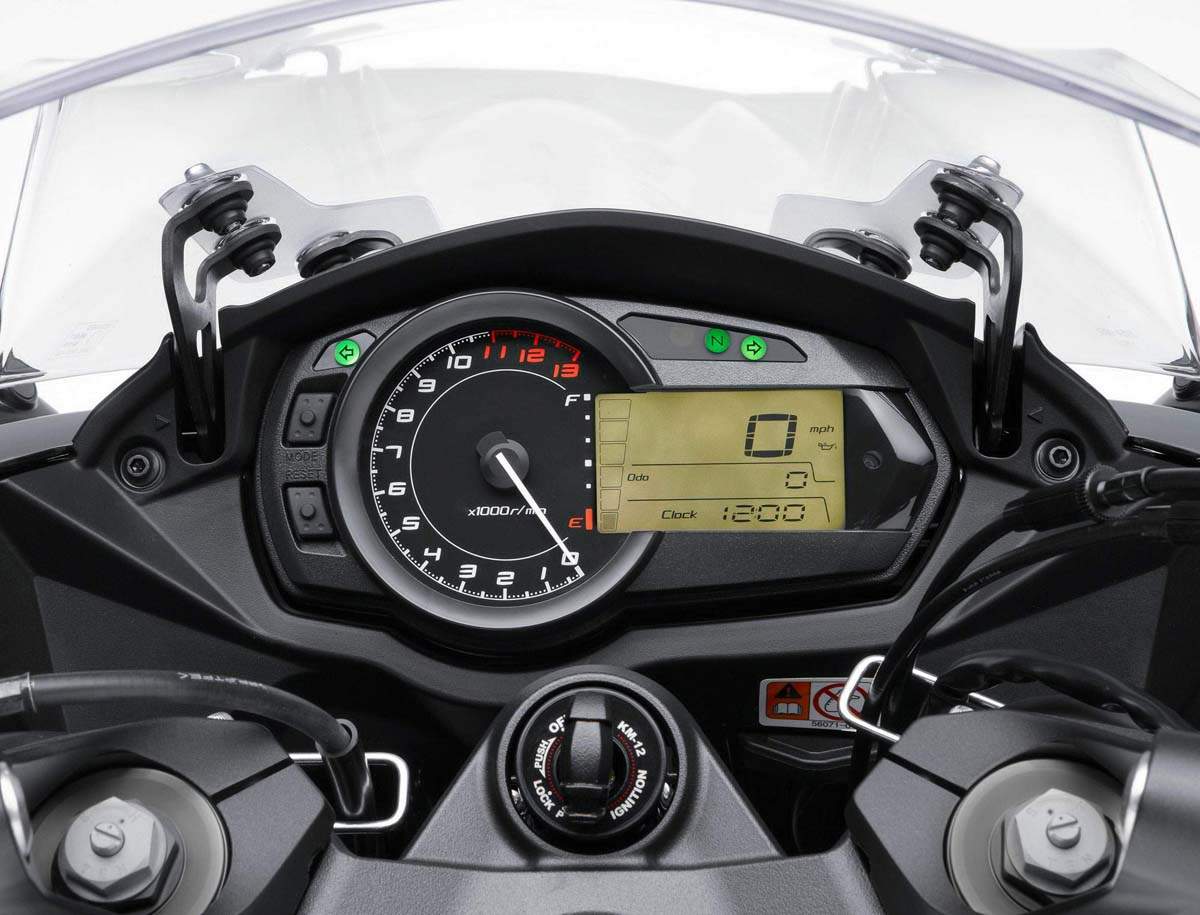
ZX-6R-spec front fender, a stylish tail-section and a full-featured instrument
panel right off the Ninja ZX-6R (with custom graphics, of course) complete the
look.
And despite its radical look, the Ninja 1000 offers surprisingly comfortable
ergonomics. The handlebars are mounted higher than on a true supersport machine,
the pegs a touch lower, all of which makes the Ninja 1000 a capable short-haul
tourer, and certainly a sportbike you can spend the day aboard without undue
strain. To sweeten the day- or weekend-trekking deal even more, Kawasaki offers
a line of optional touring-oriented accessories, including hard-case saddlebags
and top trunk, heated grips and more.
It’s rare to find such all-around functionality in a sporting motorcycle today.
But the 2012 Ninja 1000 is a different beast – one with wide-ranging talent in
sport, sport-touring and commuting roles. As Motorcyclist magazine wrote
recently: “In the real world we ride through every day, it doesn’t get much
better than the Ninja 1000.”
Supersport Seduction with Everyday Versatility
The Ninja 1000 ABS offers street riding excitement wrapped in seductive
full-fairing styling that embodies its sporty performance. Add a number of
convenience features and the result is a unique package more than able to
satisfy a rider's every desire.
Whether looking to move on from a supersport or super-naked ride, or step up
from a mid-size sport model, the Ninja 1000 ABS offers the performance and
versatility for a fuller bike life than ever experienced.

Kawasaki Ninja 1000 ABS Features and Benefits
Key Features
• 1,043cc inline-four with DFI® offers prodigious torque for effortless passing
and backroads entertainment
• Lightweight aluminum frame is narrow and tuned to transmit optimal feedback to
the rider
• Fully adjustable inverted fork has settings designed for sporty performance
and ride quality
• Design of horizontal back-link rear suspension contributes to mass
centralization
• Radial-mounted front brake calipers combine with the radial-pump front brake
master cylinder to offer superb control and feel
• Sleek, supersport styling gives the Ninja® 1000 a distinctive look
• Relaxed, upright riding position contributes to all-day comfort
• Larger fuel capacity offers substantial range
• Windscreen is adjustable to three positions, allowing for optimum wind and
weather protection
DOHC, 16-valve, 1,043cc Engine
• Liquid-cooled inline-four offers true open-class power from idle to redline
• Easily accessible torque offers instant thrust for maximum rider satisfaction
• Bore and stroke dimensions of 77.0 x 56.0mm offer an ideal balance of peak
power and low
• and mid-range flexibility
• 38mm Keihin throttle bodies cram the air/fuel mixture directly into combustion
chambers via downdraft intakes for maximum power
• Oval sub-throttles help keep the engine slim, and a slim midsection allows an
ideal bike/rider interface for maximum comfort and control
• Engine’s rev limiter comes into play “softly,” providing usable overrev
character because power doesn’t drop off suddenly at high rpm
• The engine’s relatively low crankshaft position allows a moderately long
stroke without adding engine height
• A secondary engine balancer, driven off a gear on the sixth web of the
crankshaft, eliminates excess vibration and contributes to rider comfort
Cool Air System
• Intake system routes cool air to the airbox via ducts in the fairing,
minimizing performance loss due to heated intake air
• Duct positioning – close to the rider – allows the intake howl to be heard and
enjoyed
• Airbox resonator reduces noise at low rpm and enhances intake sound at higher
revs
Exhaust System
• The exhaust system features a 4-into-2-pre-chamber-into-2 layout. Silencer end
caps maintain the quad-style image
• Main and pre-catalyzers ensure cleaner emissions
• Thanks to the under-engine pre-chamber, silencer volume is reduced, and
silencer weight is low. Exhaust system offers excellent mass centralization and
contributes to a low center of gravity
Slim-type Fuel Pump
• Slim-type fuel pump features an integral fuel gauge
• Fuel tank design and slim-type fuel pump minimizes dead volume inside the
tank; fuel capacity is 5.0 gallons
Bodywork
• Supersport-style full-fairing bodywork gives the Ninja 1000 a distinctive,
head-turning look, and also offers plenty of wind and weather protection for
short-tour ability
• The fairing’s slat-style leading edges direct wind around the bike, allowing
the fairing to be narrower at the middle
• The fairing flares at the rear, keeping hot engine air off the rider’s legs
• Front turn signals are integrated into the fairing and are attached to the
inside of the fairing with rubber mounts that minimize damage if the bike falls
over
• ZX-6R-spec front fender contributes to excellent aerodynamics and racy looks
• Slim and compact tail cowl moves mass physically and visually toward the front
of the bike
• LED taillight features red bulbs and a red transparent lens
• Slim rear fender gives the bike a light-looking rear end
• Windscreen is manually adjustable for optimum wind/weather protection
• Windscreen has three available positions spanning approximately 20 degrees and
ranging from sporty to maximum wind protection. Adjustment can be done by hand
(no tools required) by depressing the release button below the instrument panel.
Windscreen adjustment should always be done with the bike stopped
Aluminum Backbone Frame
• Aluminum backbone frame is similar in concept to the Ninja ZX-10R’s, and helps
make the bike narrow and easy to grip with the knees for maximum rider comfort
and feedback
• The frame is lightweight and highly rigid, and uses the engine as a stressed
member for solid handling and optimum stability
• Frame elements are tuned to transmit optimal engine feedback to the rider
• The frame’s five-piece construction consists of steering stem, left and right
main frames, and two cross pieces. The two main frame components have open
C-shaped cross sections
• Welds were eliminated wherever possible for simplicity and appearance; the
frame beams and swingarm brackets are single die-cast pieces
• The new frame uses four engine mounts, three of which are rigid, one of which
(the upper rear crankcase mount) is rubber
• Rear subframe is a three-piece aluminum die-casting assembly that’s light,
strong and optimizes mass centralization
• The sub-frame is an example of form and function combined, negating the need
for side covers and allowing underseat narrowness for a shorter reach to the
ground
Horizontal Back-Link Rear Suspension
• All-new rear suspension design positions the shock unit and linkage above the
swingarm where it’s less exposed to exhaust heat and contributes to mass
centralization
• Visible from the outside, the horizontal monoshock contributes to the Ninja
1000’s ultra-sporty appearance
• Linkage characteristics are the same as those of a standard Uni-Trak® system:
Wheel movement versus shock stroke is the same ratio
• The shock features stepless rebound damping and spring preload adjustability
for a custom-tuned ride
Fully Adjustable 41mm Fork
• The Ninja 1000’s inverted fork is adjustable for compression damping, rebound
damping and spring preload – and is protected from harm by a cool-looking shroud
• Settings are designed for both sporty performance and ride quality
Rider Interface
• Separate, raised handlebars contribute to the sporty, comfortable riding
position; bar stays are mounted to the fork tube tops, which extend above the
top clamp
• A thick urethane seat provides a high level of rider and passenger comfort
• Tapered-type grips, like those used on supersport models, offer a more direct
feel
• Ninja ZX-10R-style footpegs with knurled surfaces offer secure grip, direct
feel and control, and no-nonsense looks
• The passenger footpeg brackets incorporate convenient luggage hooks
Instrumentation
• Sporty instrument panel features a large analog tachometer and multi-function
LCD screen. It’s a design based on the ZX-6R’s unit, but which features original
graphics and coloring
• Functions include speedometer, tachometer, fuel gauge, odometer, clock, dual
trip meters and warning lamps
• Hazard switch located on left bar pod
Brakes
• 300mm front petal-type brake discs are gripped by opposed four-piston
radial-mount calipers. (Caliper piston size is 4x30mm)
• A radial-pump front brake master cylinder contributes to the superb control
and feel offered by these high-end calipers
• The rear brake is a single-piston, pin-slide caliper gripping a 250mm
petal-type disc. The caliper is mounted below the swingarm, and located by a
torque rod
Anti-Lock Braking System (ABS)
• Small and lightweight ABS unit with a high-spec ECU is capable of detailed
calculations for ultra-smooth operation
• A low-battery mode maintains ABS function as best as possible when the battery
charge is low. In this mode, ABS timing and pressure relief functions are
maintained to help preserve brake effectiveness (although riders will notice
that ABS operation is less smooth than in normal mode)
Large-volume Fuel Tank
• Five-gallon (19L) fuel tank offers substantial range
• Steel construction facilitates use of magnetic tank bag
• Tank shape (flared edges and a trim shape at the back) allows riders to easily
grip tank with their knees