|
|

|
|
|
|
Classic Bikes
Custom Bikes
Individual
Racing Bikes AJP
AJS
Aprilia
Ariel
Avinton / Wakan
Bajaj
Benelli
Beta
Bimota
BMW
Brough Superior
BRP Cam-Am
BSA
Buell / EBR
Bultaco
Cagiva
Campagna
CCM
CF Moto
Combat Motors
Derbi
Deus
Ducati
Excelsior
GASGAS
Ghezzi Brian
Gilera
GIMA
Harley Davidson
Hero
Highland
Honda
Horex
Husaberg
Husqvarna
Hyosung
Indian
Jawa
Kawasaki
KTM
KYMCO
Laverda
Lazareth
Magni
Maico
Mash
Matchless
Mondial
Moto Guzzi
Moto Morini
MV Agusta
MZ / MuZ
NCR
Norton
NSU
Paton
Peugeot
Piaggio
Revival Cycles
Roland Sands
Royal Enfield
Sachs
Sherco
Sunbeam
Suzuki
SWM
SYM
Triumph
TVS
Ural
Velocette
Vespa
Victory
Vincent
VOR
Voxan
Vyrus
Walt Siegl
Walz
Wrenchmonkees
Wunderlich
XTR / Radical
Yamaha
Zero
Video
Technical
Complete Manufacturer List
|
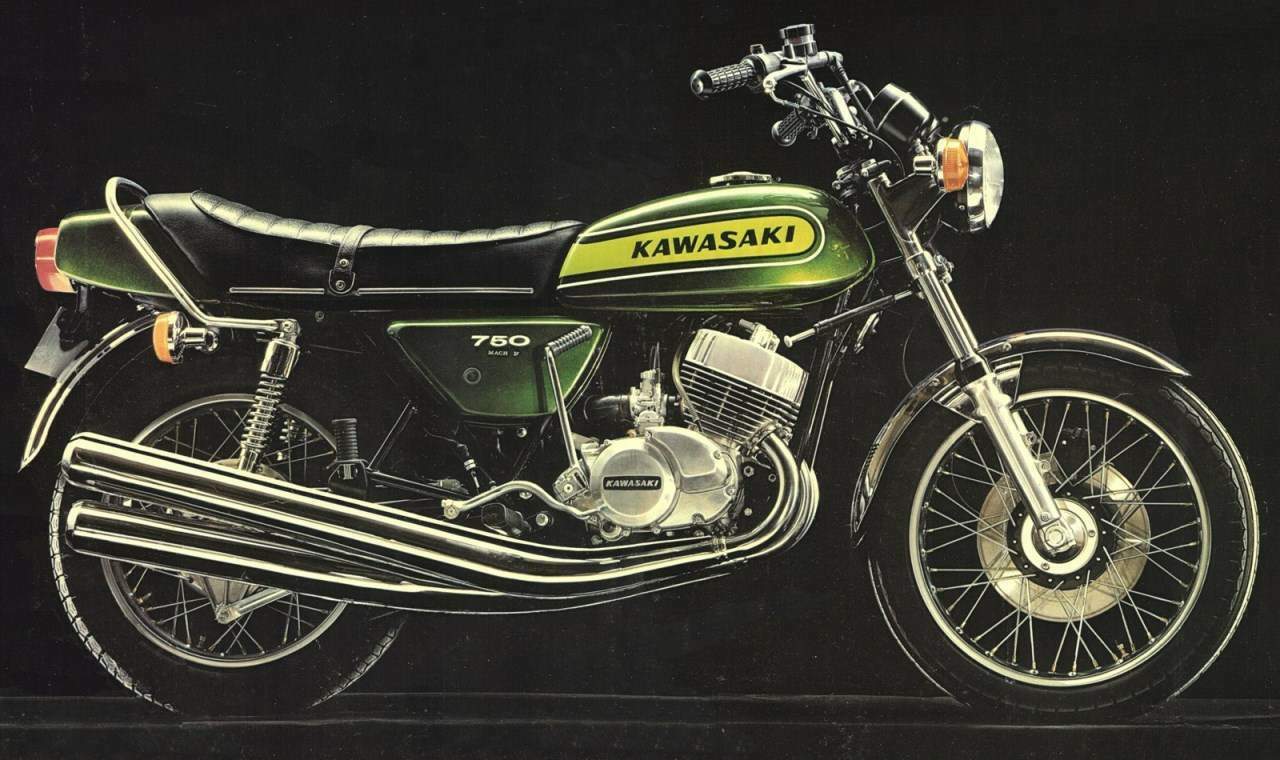
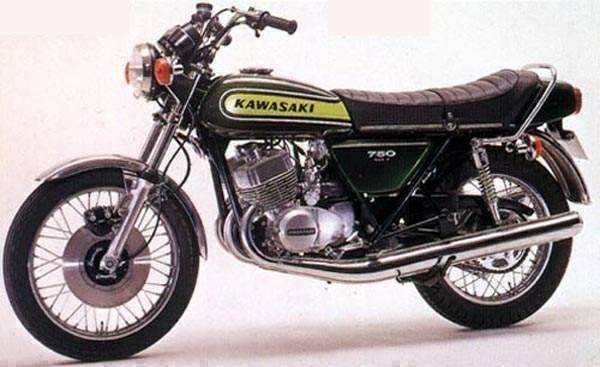
Kawasaki H2B 750 Mach IV
Take a ride on Kawasaki's 750 H2 now, in these times of safety-consciousness and environmental awareness, and the legendary two-stroke triple would seem like a bike from another planet. Fast, loud, smoky, vibratory, thirsty and evil-handling, the H2 and its predecessor the Mach IV were outrageously anti-social even by the somewhat lax standards of the early Seventies. Kawasaki pulled no punches in setting out to establish the snarling stroker's performance credentials. The first paragraph of their brochure read: ' The Kawasaki 750 Mach IV has only one purpose in life: to give you the most exciting and exhilarating performance. It's so quick it demands the razor-sharp reactions of an experienced rider. It's a machine you must take seriously.' They weren't joking. The original aircooled 748cc motor put out 74bhp, which was enough to send the triple screaming to 120mph while spewing clouds of oily blue smoke from its exhausts. Light weight and a short wheelbase meant fearsome acceleration and plenty of wheelies. Awful fuel consumption - around 22mpg was common - necessitated frequent fill-ups, but the upright riding position and tingling engine vibration meant the rider was often relieved to stop. And sometimes relieved to be alive, for the triple's handling was even more notorious than its engine performance. The Mach IV, in particular, was distinctly lively, combining a none-too-strong frame with crude suspension with the result that its chassis was all too prone to high-speed tankslappers.
Add in the poor wet-weather tire and braking performance typical of the bikes of the time, and the results were frequently disastrous. The H2, introduced a year later in 1974, was slightly more sane all round. Its motor was less smoky (and 3bhp less powerful); its chassis more stable thanks to less-steep forks and a longer wheelbase. But the H2 was still by far the nastiest, most aggressive and most outrageous bike on the street. Racing was an obvious progression, and the Kawasaki factory triples, nicknamed 'Green Meanies,' notched plenty of wins in the mid-Seventies, notably in the hands of Mick Grant, Barry Ditchburn and Yvon Duhamel. But tightening emission controls, especially in California, spelled doom for big road-going two-strokes. The H2's reign of motorcycling terror was relatively short.
|
|
|
Any corrections or more information on these motorcycles will be kindly appreciated. |