|
|
|
|
Classic Bikes
Custom Bikes
Individual
Racing Bikes AJP
AJS
Aprilia
Ariel
Avinton / Wakan
Bajaj
Benelli
Beta
Bimota
BMW
Brough Superior
BRP Cam-Am
BSA
Buell / EBR
Bullit
Bultaco
Cagiva
Campagna
CCM
CF Moto
Combat Motors
Derbi
Deus
Ducati
Excelsior
Fantic
GASGAS
Ghezzi Brian
Gilera
GIMA
Harley Davidson
Hero
Highland
Honda
Horex
Husaberg
Husqvarna
Hyosung
Indian
Jawa
Kawasaki
KTM
KYMCO
Laverda
Lazareth
Magni
Maico
Mash
Matchless
Mondial
Moto Guzzi
Moto Morini
MV Agusta
MZ / MuZ
NCR
Norton
NSU
Paton
Peugeot
Piaggio
Revival Cycles
Roland Sands
Royal Enfield
Sachs
Sherco
Sunbeam
Suzuki
SWM
SYM
Triumph
TVS
Ural
Velocette
Vespa
Victory
Vincent
VOR
Voxan
Vyrus
Walt Siegl
Walz
Wrenchmonkees
Wunderlich
XTR / Radical
Yamaha
Zero
Video
Technical
Manufacturer List Contact
|
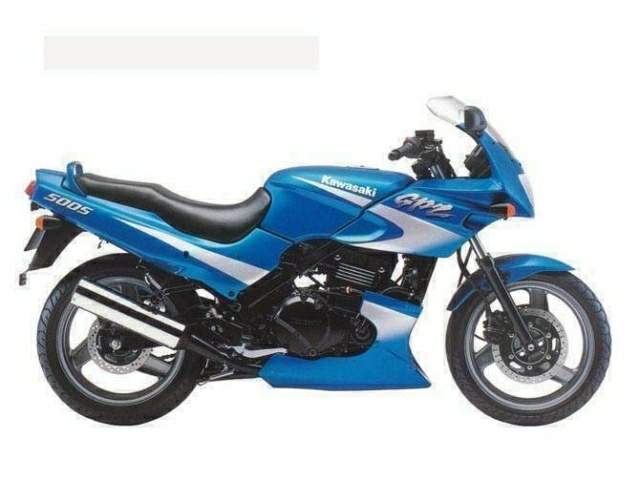
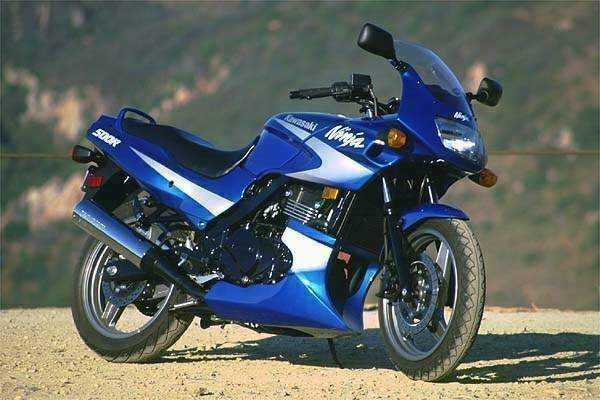
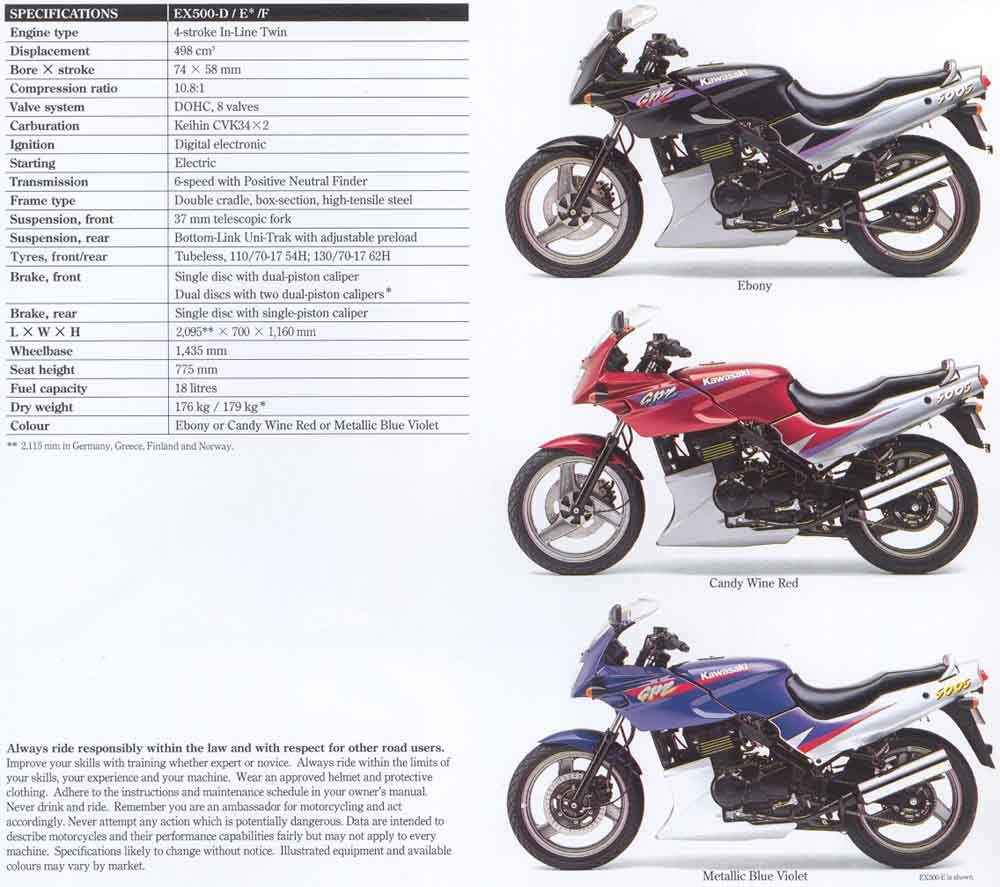
Kawasaki GPz 500S / EX 500R Ninja
First launched in 1987, the GPZ500S was Kawasaki's attempt at a modern, lightweight sportsbike. Its parallel twin engine owes much to the GPZ900R of 1984: in many ways, it resembles half a GPZ900R engine. The chassis is dated, but is still capable of being hussled down a fast back road or round a track. The suspension is too soft to offer truly sporting performance, but the brakes work well if kept in good order, and the relaxed steering geometry means predictable handling. In 1994, the GPZ500 received a facelift. New bodywork gave a more up-to-date appearance, while 43cm (17in) wheels allowed modern rubber to be fitted. Wider 37mm (1.5in) front forks stiffened the chassis.
|
|
|
Any corrections or more information on these motorcycles will be kindly appreciated. |