|
|
|
|
Classic Bikes
Custom Bikes
Individual
Racing Bikes AJP
AJS
Aprilia
Ariel
Avinton / Wakan
Bajaj
Benelli
Beta
Bimota
BMW
Brough Superior
BRP Cam-Am
BSA
Buell / EBR
Bultaco
Cagiva
Campagna
CCM
CF Moto
Combat Motors
Derbi
Deus
Ducati
Excelsior
GASGAS
Ghezzi Brian
Gilera
GIMA
Harley Davidson
Hero
Highland
Honda
Horex
Husaberg
Husqvarna
Hyosung
Indian
Jawa
Kawasaki
KTM
KYMCO
Laverda
Lazareth
Magni
Maico
Mash
Matchless
Mondial
Moto Guzzi
Moto Morini
MV Agusta
MZ / MuZ
NCR
Norton
NSU
Paton
Peugeot
Piaggio
Revival Cycles
Roland Sands
Royal Enfield
Sachs
Sherco
Sunbeam
Suzuki
SWM
SYM
Triumph
TVS
Ural
Velocette
Vespa
Victory
Vincent
VOR
Voxan
Vyrus
Walt Siegl
Walz
Wrenchmonkees
Wunderlich
XTR / Radical
Yamaha
Zero
Video
Technical
Complete Manufacturer List
|
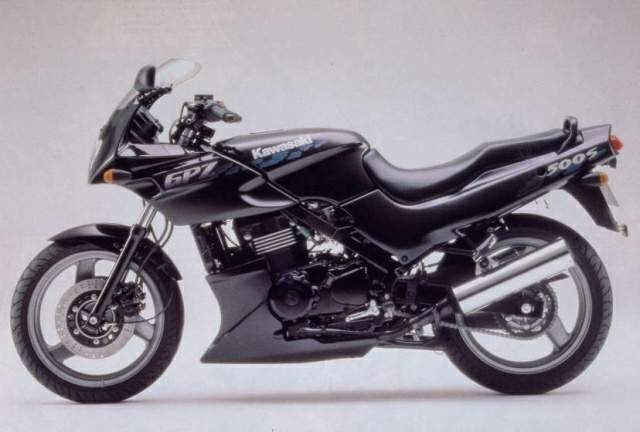
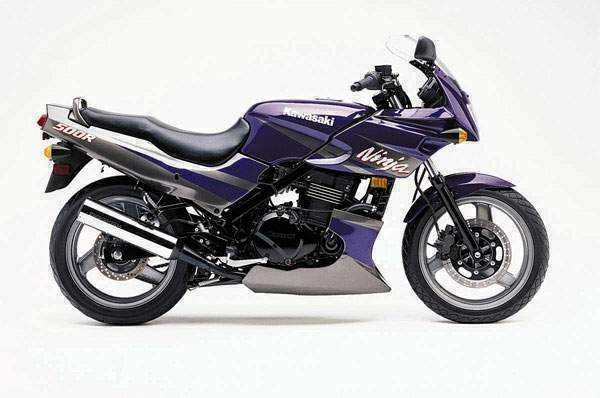
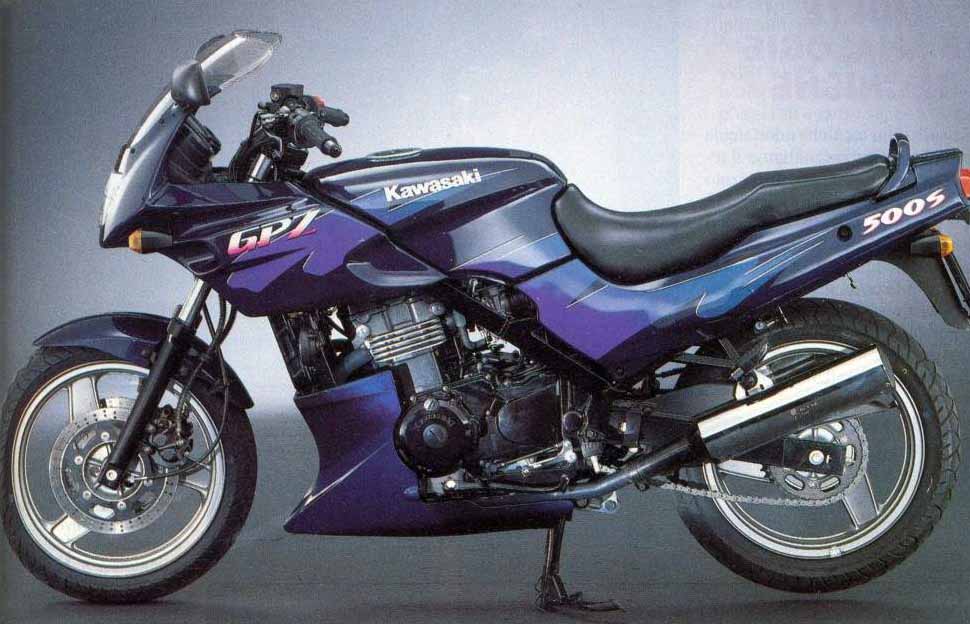
Kawasaki GPz 500S / EX 500R Ninja
Yes, America, there are great sport bikes under 600cc
illustrators: Scott Killeen
With today's economy still barely climbing out of its late-'80s
doldrums, the so-called budget-bike market has enjoyed a relatively healthy
existence. People looking for the most capability for the least amount of
money in a new motorcycle have been drawn to bikes such as Kawasaki's EX500,
which could probably lay claim to being the harbinger of this now increasingly
popular class. A sprightly performer wrapped up in an economical,
easy-to-live-with package, the EX struck a chord with the frugal-minded buying
public. However, the other manufacturers have since jumped on the bandwagon,
and after many years of heading the list of best buys, the EX500's position
has dropped a notch or two.
Rather than start with a fresh sheet of paper, Kawasaki decided to keep the proven basic formula and revise the supporting ingredients. You don't want to mess with success, and coming up with a brand-new bike that could match the EX's sensible appeal could prove to be a difficult proposition. So, by raiding the parts bins of some of the EX's more upscale brethren, along with adding some upgraded chassis pieces and swoopier bodywork, Kawasaki created an EX500 with a sporting attitude serious enough to warrant the addition of the Ninja label. The EX500's liquid-cooled, eight-valve, double-overhead-cam twin engine hasn't really changed much since its inception (with the exception of a digital electronic ignition replacing the previous analog version), but then again, it doesn't really need to. With a quarter-mile time of 12.98 seconds at 99.0 mph and a 118-mph top speed, the Ninja 500 clearly has the most bang for the buck of any bike in its class. The engine is a willing revver, with a generous amount of midrange grunt and an even more surprising top-end rush that belies its "entry-level" status. Even with this type of power, the 498cc mill can be coaxed out of 50 miles per gallon under a mellow throttle hand. The Ninja 500's chassis, however, received a thorough going-over for this year. Wider 17-inch rims replace the skinny 16-inch hoops of the original EX, and the 37mm Kayaba front fork boasts 1mm larger stanchion tubes than last year's. The brakes were also upgraded, with a new twin-piston caliper grabbing a 280mm disc up front, and a disc setup replacing the previous drum components in back. A redesigned swingarm, pirated from the European market KLE500 (Kawasaki's Paris-Dakar replica), supplants the original's somewhat wimpy-looking stocker. The original EX500's bodywork was deep-sixed in favor of a nicely redesigned front fairing that offers slightly more wind protection, along with a headlight sourced from the ZX-6 that projects a much better beam at night than its forerunner. The rear tail section and side covers were also carefully reshaped, with turn signals, taillight and mirrors courtesy of a ZX-7 completing the picture. Starting up even in some of the colder mornings requires only a bit of choke, with the engine accepting throttle almost instantly. Once you're underway, the light, agile handling combined with a very spirited motor make the Ninja 500 a joy to work with in the urban jungle of the city or the tightly swooping curves of a canyon road. The brakes offer more than adequate stopping power and feel, although the stock Bridgestone Excedras are somewhat budget-grade in the traction department. The updated chassis components inspire enough confidence for the rider to try more aggressive cornering maneuvers, but until premium rubber is fitted, those moves should be approached with some discretion. The ergonomics are plush, with a fairly flat, wide, well-padded seat and a wonderfully contoured semi-sport riding position combining to provide enough comfort to give the bike significant touring capabilities. Unfortunately, the mirrors are positioned too far away from the rider and are a bit too small, giving a narrow field of vision rearward. However, smart little touches abound, such as adjustable brake and clutch levers, dual tripmeters and retractable bungee cord hooks. All of the various improvements to Kawasaki's budget bullet could not be achieved without a price: at $4399, the new Ninja 500 costs $700 more than its predecessor. But when you take into account that the Kawasaki delivers performance easily topping everything in its class (while basically sipping its fuel), and that the host of improvements have created an even more comfortable, capable and fun motorcycle that experienced riders as well as novice pilots can enjoy, then the song still remains the same: Kawasaki's new Ninja 500 is one of the best motorcycling deals around. Source Sports Rider
|
|
|
Any corrections or more information on these motorcycles will be kindly appreciated. |